

Can i bring a disposable vape on a plane? As of 2026, the short answer is yes — with rules.
We advise packing all disposable vapes in carry-on luggage only. Lithium-ion batteries must stay in the cabin to reduce fire risk. Vaping during flight is banned worldwide, and airlines enforce that rule strictly.
Penalties can be steep. Some countries levy fines up to $12,500 for illegal use or import. Confiscation, denied boarding, or travel delays are common if rules are ignored.
This guide is updated for 2026 and blends safety, compliance, and travel tips. We cover airline policies, customs risks, venue bans, and simple steps to avoid accidental activation and leaks.
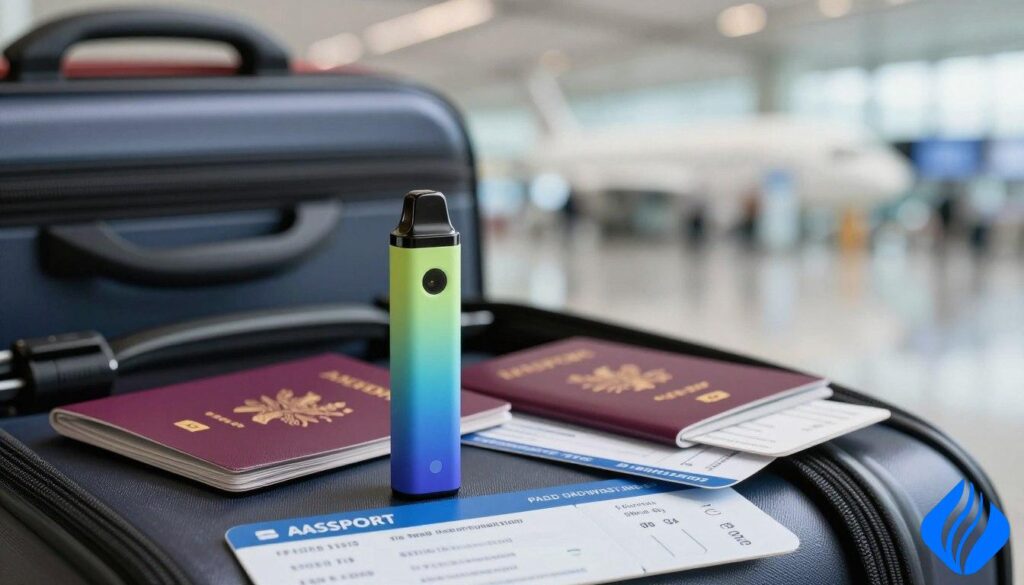
Key Takeaways
- Pack disposable vapes in carry-on only; never in checked luggage.
- Keep lithium batteries in the cabin and protect terminals from short circuits.
- Vaping in flight is prohibited; expect enforcement and penalties.
- Verify destination laws — some places fine travelers heavily.
- Follow airline rules and secure devices to avoid confiscation or delays.
As of 2026, what’s changed for flying with disposable vapes in the United States
In 2026 the law’s core stayed the same, but destination crackdowns and airline policies grew stricter. We still follow federal battery-safety baseline set by TSA and FAA. Yet airlines and some countries now enforce limits more tightly.
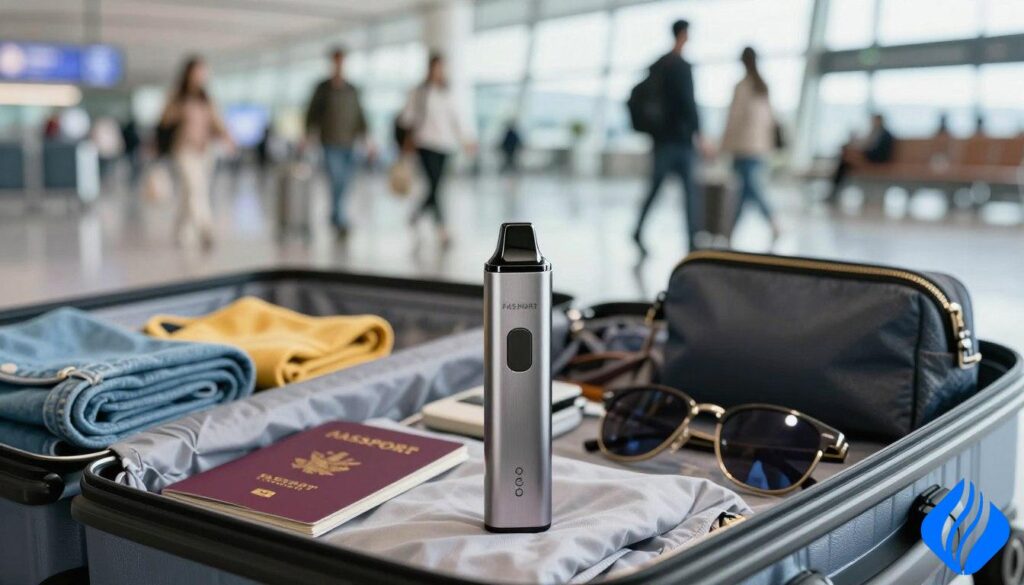
Why TSA, airlines, and destination laws can differ — and which one wins
Think of rules as three layers:
- Federal baseline: TSA/FAA set safe transport standards and treat lithium items as hazardous.
- Airline limits: Carriers may add stricter rules for carry-on quantities or packaging.
- Destination laws: Local laws or a country’s bans control possession and use once you land.
“You must satisfy the strictest rule in the chain; the strictest one is the rule that can stop your trip.”
What “portable electronic device” language means for travelers
Vapes are commonly treated as portable electronic devices. That ties them to battery safety rules used for power banks and laptops.
| Authority | Main focus | Traveler impact |
|---|---|---|
| TSA / FAA | Battery safety for transport | Carry in cabin; no checked batteries |
| Airlines | Operational limits and packaging | May restrict quantities or require protective cases |
| Destination / Country | Possession and use laws | May ban items entirely; fines or seizure possible |
What changed most since 2020 is enforcement intensity, not the core battery rule. To avoid trouble, we recommend this quick habit before travel:
- Check TSA baseline rules.
- Review your airline’s dangerous goods page.
- Confirm destination legality and local regulations.
For more details and a practical checklist, see our guide at flying with vapes.
Can i bring a disposable vape on a plane under TSA/FAA rules?
TSA and FAA rules make one point non-negotiable: lithium batteries belong in the cabin. That means all e-cigarette devices and batteries must travel in carry-on luggage, not checked luggage.
Don’t assume checked bags are safer. Fires in the hold are far harder to detect. Keep devices with you to reduce risk and comply with security rules at the airport.
What to expect at the checkpoint
Expect your bag to go through X-ray screening. An officer may ask simple questions about the items.
Present devices calmly. Say they are disposable for personal use. Avoid jokes about batteries or hazardous items.
- X-ray: devices visible in the bin may be inspected.
- Visual check: officer may request to handle a unit or see packaging.
- Answer clearly: confirm personal use and trip length if asked.
How many units are reasonable?
TSA does not publish a fixed number for personal quantities. However, airlines and customs may. Large stacks that suggest resale can trigger extra screening or seizure.
- Pack what matches your trip length and usage.
- Avoid bulk counts or retail-style packaging.
- Check your carrier’s dangerous-goods page before travel.
We recommend keeping spares minimal and documented. That keeps security checks smooth and reduces the chance of being flagged for “intent to sell.”
Battery safety rules every traveler must follow
Lithium power cells pose the single biggest in-flight hazard for personal devices. Federal and airline rules place those cells in the cabin for one clear reason: a battery event in checked luggage is harder to spot and far harder to fight.
Why carry-on luggage is non-negotiable
Keep lithium batteries in carry-on luggage. If a pack overheats in the hold, crew cannot access it mid-flight. That risk drives the rule and outweighs any temptation to hide items in checked bags.
Prevent accidental activation and overheating
- Power off devices when possible and remove any caps or clips that press buttons.
- Store units away from keys, coins, and other metal that can short terminals.
- Avoid leaving packs in hot cars or under heavy items that can compress the unit.
What to do if a device is damaged or hot
If a device is swollen, cracked, leaking, or feels hot, do not bring it aboard the plane. These are signs the battery is unstable.
- Set the unit aside in a non-flammable container if available.
- Tell airline staff or TSA immediately and follow their disposal instructions.
- Do not try to repair or tape a damaged battery; do not transport it.
Make sure you follow these steps every trip. For full TSA guidance and practical tips, see our travel checklist and the official travel guide at TSA vape travel guide and an extra resource on flying with devices at flying with vapes.
How to pack disposable vapes for air travel without leaks or mess
Cabin pressure and temperature swings make pod seals fail more often than travelers expect. That can push e-liquids through tiny gaps and leave stains in your bag.
Why pods leak during flight
Pressure drops and warm cabin temps change internal pressure inside cartridges. Thin seals flex and may weep under stress.
Even new products can release small amounts of liquid when altitude changes. Plan for that risk.
Leak-prevention packing
Use clear zip-top bags for each unit or small groups. Seal them fully to trap any seepage.
- Keep devices upright when possible.
- Avoid tight corners that compress pods in your luggage.
- Place soft padding around items to prevent pressure on seals.
Storing multiple units without raising flags
Keep similar items together in original boxes or a tidy pouch. Neat presentation reduces security questions.
A single neat pouch looks more like personal supplies than bulk stock, which is a good idea.
Where to put used devices
Put used devices in a separate sealed bag. This prevents residue and odor from contaminating clothes or electronics.
If a device leaks, wipe it down and rebag it before security to avoid extra screening.
| Packing step | Action | Benefit | Notes |
|---|---|---|---|
| Individual sealing | Zip-top bags for each unit | Contain leaks | Use clear bags for quick inspection |
| Upright storage | Pack vertically in carry-on | Reduces pressure on seals | Use narrow side pocket if available |
| Grouping | Original box or pouch | Looks personal, not commercial | Limits security questioning |
E-liquids and the 100 ml rule: what applies to disposables vs. bottles
Understanding how the 100 ml liquids rule applies to vaping supplies avoids surprises at the gate. We explain the practical split between prefilled devices and bottled e-liquids so security checks go smoothly.
What counts as a liquid item at TSA
TSA treats vape juice like toiletries. Any bottled nicotine liquid is a liquid item. That means it must meet the same airport rules as shampoo or perfume.
How to pack extra e-liquids in a clear, resealable bag
Follow these steps for fewer delays:
- Keep bottles ≤100 ml each.
- Place all bottles into one clear resealable bag.
- Keep the bag accessible for screening.
- Tighten caps and use secondary containment to prevent leaks.
“Organized packing speeds screening and reduces the chance liquids are discarded at the checkpoint.”
| Item | Allowed? | Packing tip |
|---|---|---|
| Prefilled device (sealed) | Yes — carry-on | Pack with devices; no extra bag required |
| Bottled e-liquids | Yes if ≤100 ml | Clear resealable bag; one bag per traveler |
| Large refill bottles | No in carry-on | Ship or buy locally to avoid seizure |
Airport rules in the U.S.: where vaping is allowed and where it isn’t
If signage doesn’t say smoking is allowed, assume vaping is not permitted inside the terminal. We advise treating most airport indoor spaces as smoke-free. This keeps you out of trouble and speeds your trip through security.
Designated smoking areas: what to look for
Designated smoking areas are usually outdoors. Look near terminal exits, curbside zones, or clearly marked outdoor shelters. Some airports have small, ventilated lounges, though those are rare.
What happens if you use vapor products in restrooms or non-smoking zones
Vaping in restrooms or gates often triggers the same response as smoking. Expect warnings, possible removal from the terminal, and involvement of airport security.
- Airport survival: find smoking areas before security; post-security options may be limited.
- Detection: modern sensors and staff respond quickly — one puff can cause enforcement.
- Alternatives: nicotine gum or pouches are safer when stuck in no-smoking areas.
| Location | Typical status | Likely action |
|---|---|---|
| Outdoor curbside | Often allowed | Marked area; minimal enforcement |
| Terminal interior | Usually banned | Warning or security escort |
| Restrooms | Prohibited | Fines or removal possible |
On the plane: why vaping is prohibited worldwide and what penalties look like
Using vapor inside a cabin risks serious penalties and endangers everyone onboard. Vaping is prohibited worldwide in commercial aircraft. That rule is universal: no exceptions for low-emission devices.
Cabin detectors and why “stealth vaping” gets flagged
Modern cabins have sensitive smoke and vapor detectors. Restrooms often have direct sensors or high staff attention.
Even a discreet puff can set off alarms or be seen by crew and passengers. Trying to hide use usually fails and makes matters worse.
What crew can do: confiscation, fines, and diversion risk
- Immediate action: crew will stop use, document the event, and confiscate devices.
- Penalties: written reports, fines, and possible arrest when laws are broken.
- Operational risk: serious incidents can lead to flight delays or even diversion for safety and enforcement.
Airlines treat this strictly for safety — fire risk from batteries and federal smoke-free rules drive enforcement.
“One bad choice can affect every passenger and crew member on board.”
For cravings, we recommend nicotine gum or pouches. They are legal, discreet, and keep your trip calm and trouble-free.
Should you charge a vape on a plane or in the airport?
Pulling a charger from your bag mid-flight often draws more attention than you expect. Even simple charging can be mistaken for use and spark crew intervention.
Unpacking an electronic unit in the cabin can look like someone is preparing to use their device. That visibility may lead to a written report or device confiscation.
Even if your intent is only to charge, perception matters for enforcement.
Safer alternatives: charge pre-flight and carry a backup device
- Charge fully before boarding. That removes temptation and reduces risk during security checks and in the cabin.
- Pack one spare device for longer trips so you won’t hunt for outlets in the terminal.
- Do not rely on airport outlets as your primary plan. Pack enough units for your trip length.
- Avoid charging any unit that looks damaged or gets unusually warm; that signals a faulty battery and must not be used.
Quick rule: charge pre-flight, keep devices packed in carry-on, and move to designated areas after landing if you need to use or recharge. For more travel-focused guidance, see our note about flying with vapes.
Airline policy differences as of 2026: what to confirm before you fly
Policy differences across carriers affect how many units you may carry and how they must be packed. As of 2026, most airline rules build on the TSA/FAA baseline, but details vary.
Typical limits you’ll see are often around 15–20 disposable vapes or spare batteries. Some airlines set lower caps or require original packaging. Exceeding visible personal quantities risks extra screening or seizure.
What major carriers commonly align on
Most U.S. airline policies echo TSA/FAA: keep batteries and devices in carry-on, and never use them during flight. Crew enforce handling and report violations.
How to check quickly before departure
- Search your airline site for “dangerous goods,” “lithium batteries,” and “e-cigarettes.”
- Screenshot the policy page and save it for the gate.
- Recheck rules within 24–48 hours of departure for updates.
“Confirming ahead prevents gate surprises and last-minute disposal at the airport.”
| Topic | What to confirm | Why it matters |
|---|---|---|
| Quantity | Allowed units per passenger | Avoid seizure |
| Packing | Original box or zip bags | Smooth screening |
| Usage | Onboard use policy | Prevent fines and delays |
Do’s and Don’ts Traveler’s Checklist for U.S. flights with disposable vapes
A clear checklist is the fastest way to avoid security delays and fines at the gate. We give a short, practical list you can screenshot before you pack.
Do
- Keep all items in carry-on luggage. Lithium cells and small devices belong in the cabin, not checked bags.
- Make sure each device is powered off and protected from accidental activation.
- Separate units from keys and coins. Use zip bags or original packaging to shield terminals and battery contacts.
- Carry only what you need for the trip. Pack spares but keep quantities reasonable for personal use.
Don’t
- Never put them in checked luggage; that increases fire risk and violates FAA guidance.
- Do not attempt vaping onboard, including in restrooms. Crew enforce bans and may file reports.
- Avoid bulk retail packaging that looks like inventory; customs or security may suspect intent to sell.
“Pack smart, stay legal, and keep devices off until you reach a permitted area.”
Quick TSA-ready packing tip
Group all vapes and related bottles neatly in one accessible pouch. That speeds screening and reduces questions from TSA or airline staff.
| Focus | Action | Why it matters |
|---|---|---|
| Packing | Carry in one clear pouch inside carry-on luggage | Smooth security checks |
| Power | Device off; protect battery terminals | Prevents accidental activation and short circuits |
| Quantity | Match trip length; avoid bulk counts | Reduces seizure risk and customs scrutiny |
Legal reminder: local laws may be stricter than federal rules. Check destination rules before travel and keep receipts or original packaging when possible.
Traveling internationally with vapes: customs risks, bans, and confiscation
Crossing borders with battery-powered nicotine devices exposes travelers to three distinct risk levels. Know which bucket your destination falls into before you fly.
Countries with outright bans vs. heavy restrictions vs. regulated markets
Outright bans make possession illegal and may lead to fines or seizure. Some countries treat devices as contraband.
Heavy restrictions limit import, sale, or use. These places may allow certain products but require declaration or special packaging.
Regulated markets permit possession under clear rules. Travelers still must follow local age limits and product regulations.
How to avoid “intent to sell” red flags at customs
Large counts, mixed brands, and retail-style packaging raise suspicion. Keep quantities reasonable for trip length. Keep items grouped and neat to show personal use.
Documentation tips and honesty at inspection
Carry receipts and original packaging for some units. Answer questions directly. Honest declarations reduce delays and lower seizure risk.
Backup nicotine options when use is restricted
If use is banned, consider nicotine gum or pouches. They are discreet, legal in many places, and lower enforcement risk.
“Declare what you must; concealment is what turns routine customs checks into serious problems.”
| Risk bucket | Typical outcome | Traveler action |
|---|---|---|
| Outright ban | Seizure or fine | Avoid bringing devices |
| Heavy restriction | Inspection, partial allowance | Declare and show receipts |
| Regulated market | Allowed with rules | Follow local laws and pack proof of purchase |
Mexico and other high-risk destinations: fines, confiscation, and how to stay safe
Expect higher scrutiny in Mexico and similar countries; enforcement can be uneven and strict. Travel reports frequently cite unexpected inspections and device seizure. For many, that risk makes conservative choices the smart move.
Treat these places as high-friction destinations. Authorities may apply local laws and restrictions with little warning. Confiscation happens even when intent is personal use, and fines are possible.
Do’s and Don’ts Traveler’s Checklist for Mexico
- Do keep quantities small and well-organized. Pack units neatly in one pouch and retain receipts.
- Do verify current local laws and restrictions before departure; rules change fast.
- Don’t carry retail-style packaging or large mixed brands that suggest resale.
- Don’t vape in public or near officials; enforcement is common in tourist areas.
Bring nicotine gum or pouches as a legal backup. If inspected, stay calm and honest. Our priority is a smooth trip, not testing enforcement boundaries.
“A safe vacation starts with conservative choices and respect for local laws.”
Disney parks and major venues: vaping rules, designated areas, and enforcement
Before you enter, learn where permitted smoking areas sit so you avoid long exits and re-entry hassles.
What “smoking area” policies usually mean
Most parks treat vapor the same as smoking. Use is limited to marked outdoor smoking areas. Staff expect guests to follow those rules for family comfort.
Do’s and Don’ts Traveler’s Checklist for Disney-style venues
- Do find permitted smoking areas before you enter the gate.
- Do stow devices in a small pouch inside your bag to prevent accidental activation.
- Don’t vape in lines, restrooms, or indoor attractions.
- Don’t argue with staff about venue restrictions; comply and relocate if asked.
Enforcement reality: venues prioritize family comfort and will act fast if guests use vapor outside allowed zones. Consequences range from warnings to removal for repeat breaches.
“Find the zone, secure your gear, and use alternatives if you expect long indoor stretches.”
For long waits, consider nicotine gum or lozenges. They follow venue rules and reduce the risk of fines or ejection.
Cruises: where you can carry, store, and use vapes onboard
Cruise lines limit where nicotine devices may be used to protect guests and avoid fire risks. Rules are often stricter than hotels because ships manage confined-space hazards closely.
Most lines allow smoking and vaping only in marked outdoor decks or fenced smoking areas. Many forbid use in cabins, balconies, restaurants, and pools.
Common cruise line policies: cabin vs. designated smoking decks
Designated decks are the usual allowed areas. Cabins may accept storage but not use, depending on the carrier.
Battery and charging safety in cabins
Battery safety matters more at sea. Store devices where they won’t be crushed or in direct sun. Only charge in a ventilated area while attended. Do not use damaged batteries or improvised cords.
Do’s and Don’ts Traveler’s Checklist for cruises
- Do keep devices secured in one pouch and carry proof of purchase if asked.
- Do use only marked smoking areas on deck.
- Don’t vape in staterooms, restrooms, or indoor venues unless the line allows it.
- Don’t leave batteries charging unattended or exposed to heat.
| Topic | Best practice | Why it matters |
|---|---|---|
| Use areas | Designated outdoor decks only | Reduces complaints and legal incidents |
| Storage | Soft pouch away from heat | Prevents leaks and crush damage |
| Batteries | Charge only when present; avoid damaged units | Prevents fire risk and cabin alarms |
Hotels, hospitals, and public buildings: spotting vape detectors and avoiding penalties
Spotting installed sensors early helps travelers avoid alarms, fees, and awkward confrontations. Many facilities now include vaping in smoke-free policies. That means an indoor puff can trigger removal or charges.
How detectors are typically placed
Detectors sit near room ceilings, in hallways outside elevators, and inside restrooms. Hotels often place units near vents or light fixtures for fast detection.
Signs a building is zero-tolerance
Look for no-smoking icons that show e-cigarette graphics, check-in policy sheets, and room placards that warn of cleaning fees. Posted language that bans “smoking” often includes vaping.
Do’s and Don’ts Traveler’s Checklist for hotels and hospitals
- Do step outside to designated outdoor areas to use nicotine products.
- Do keep devices switched off and stored inside your bag while indoors.
- Don’t assume odor-free means no enforcement; sensors are sensitive.
- Don’t test policies in restrooms or stairwells; that’s where alarms trip most.
“When in doubt, step outdoors or use gum or pouches — it avoids fines and preserves your stay.”
| Location | Common detector placement | Risk to traveler |
|---|---|---|
| Guest rooms | Ceiling near vent or light | Cleaning fee, eviction |
| Hallways | Outside elevators, soffits | Security response, warning |
| Restrooms | Near ceiling or mirror area | Immediate alarm and staff intervention |
For technical details on sensor types and coverage, see our vape detectors guide. Following these simple steps keeps travels calm and compliant.
Choosing travel-friendly devices: why reliable disposable vapes are often best on trips
Travelers often pick ready-to-use units because they simplify packing and reduce surprises at security. Prefilled options remove chargers, tanks, and fuss so you focus on the journey.
What makes a unit travel-ready
Travel-ready gear has a solid build and consistent performance. That lowers the chance of messy leaks and accidental activation.
- Minimal parts: no external tanks or removable batteries to misplace.
- Secure packaging: protective caps or boxes that prevent button presses.
- Predictable draw: steady output so you don’t troubleshoot mid-trip.
Where quality matters for safety and consistency
Lower-quality products risk overheating, breakage, or poor seals. That creates safety issues and extra screening at checkpoints.
“Choose devices from reputable sellers to reduce the odds of malfunction and delays.”
We recommend selecting trusted retailers like Sokvape.com for reliable nicotine products. Remember: keep all items in carry-on and never use them during flight.
Conclusion
Good travel habits reduce risks and keep your plans on schedule when battery cells travel with you.
Three essentials: keep devices in carry-on luggage, power units off and protected, and never vape during flight. As of 2026, this remains the safety-first approach for travel with vapes.
Keep quantities reasonable for personal use to avoid customs suspicion. Any bottled e-liquid must follow the 100 ml rule and go in a clear bag for screening. Confirm airline and destination rules before departure; laws differ by country and may lead to confiscation or fines.
If long no-vaping stretches are likely, pack nicotine gum or pouches as a legal, discreet alternative. For practical, up-to-date guidance about disposable vapes on flights see our note at disposable vapes on an airplane.
We aim for one result: a smooth trip with no delays, fines, or last-minute confiscations.
 English
  German
  Dutch
Dutch  Danish
  Czech
Czech  Italian
  Slovenian
  French
  Hungarian
  Spanish
  Polish