

Can the dentist tell you vape is a common search from adults 21+ who want clear, clinical answers about oral findings linked to modern devices such as dual mesh coils and smart screens.
We explain which oral signs correlate with vaping. Dentists often note dry mouth, gum inflammation, higher plaque, and subtle chemical odors. These markers do not prove use, but they help clinicians document oral changes and tailor care.
This guide previews clinical signals, long-term oral health effects, hands-on testing notes, and device specs (mAh, ml, nicotine, coil type, USB‑C). We also compare value by Puffs per Dollar and flavor consistency versus Geek Bar, Lost Mary, Raz.
We are informational only. For deeper detail and links to brand hubs and category pages see our page at can dentists tell if someone vapes. Discuss habits with a licensed provider before procedures.
Nicotine warning: Nicotine is an addictive chemical. Products with nicotine are for adults 21+ and not for pregnant or nursing individuals.
Key Takeaways
- Dentists document oral changes that often align with vaping habits.
- Common signs: xerostomia, gum inflammation, increased plaque, faint chemical scent.
- Device specs and nicotine strength affect mouth dryness and healing.
- We compare Puffs per Dollar and flavor fade across major disposable brands.
- Regular checkups and honest disclosure improve screening and outcomes.
Why dentists can spot vaping during a routine dental exam
A standard check-up often reveals patterns in saliva, soft tissue, and plaque that raise clinical questions. We focus on observable findings, not judgments, to guide preventive care.
Dry mouth and reduced saliva flow
Dry mouth (xerostomia) shows as sticky tissues and decreased lubrication. Reduced saliva flow impairs pH control and bacterial clearance.
That change raises risk for faster plaque maturation and early enamel breakdown.
Gum inflammation without classic tobacco staining
Gum inflammation often appears as redness, swelling, or bleeding while lacking heavy brown stains seen with smoke.
We document those soft-tissue changes during a soft-tissue check and periodontal evaluation.
Plaque buildup and higher cavity risk
A drier mouth promotes plaque buildup. Clinicians may note increased risk for cavities and localized tooth decay near fissures and the gumline.
Breath odor and subtle chemical cues
Odor is usually faint. Some practitioners record a sweet or chemical note when combined with dryness and irritation.
“Findings are pattern-based, not proof. We document changes and adjust preventive care accordingly.”
- Typical exam steps: soft-tissue check, gum eval, plaque/tartar assessment, caries risk review, odor cues.
- Common next steps: document findings, ask about habits, and recommend targeted prevention—fluoride, hydration, improved interdental cleaning, and shorter recall intervals.
| Finding | What we see | Preventive action | Clinical note |
|---|---|---|---|
| Dry mouth | Sticky tissues, low saliva production | Hydration, saliva substitutes, topical fluoride | Monitor for rapid plaque changes |
| Gum inflammation | Redness, swelling, bleeding | Improved interdental cleaning, periodontal care | No heavy tobacco staining |
| Plaque & cavities | High plaque retention, early enamel lesions | Frequent fluoride, shorter recall, targeted restorations | Linked to reduced saliva flow |
How vaping affects oral health over time
Chronic inhalation of heated aerosols alters saliva, tissues, and healing. That shift creates a clear pathway: dryness → more plaque and bacteria → higher decay and gum inflammation. We review each step and explain why screenings matter.
Xerostomia and why saliva matters
Xerostomia reduces saliva’s buffering, mineral delivery, and antimicrobial action. Less saliva lets acids persist and bacteria thrive.
That environment raises tooth and teeth decay risk. Simple hydration and topical fluoride help but may not reverse long-term change.
Nicotine, blood flow, and slower healing
Nicotine causes vasoconstriction. Reduced blood flow slows tissue repair after extractions, implants, or gum therapy.
We advise clinicians to factor nicotine exposure into healing timelines and recall frequency.
Enamel erosion, sensitivity, and periodontal signals
Heat and acidic ingredients can weaken enamel. Patients may report sharper sensitivity as dentin becomes exposed.
Over time, deeper pockets, recession, and mobility risk can follow if home care and recall intervals do not adapt.
Irritation, sores, thrush, and oral cancer awareness
Persistent dryness and irritation may lead to mouth sores and shifts in oral tissues that favor Candida overgrowth.
Oral cancer risk linked to aerosols is still being studied. Screenings remain essential because early detection improves outcomes.
“Findings follow patterns, not proof; screening and early intervention reduce long-term harm.”
- Pathway: dryness → plaque/bacteria → decay → gum disease and periodontal disease risk.
- Prevention: hydration, topical fluoride, tighter recall intervals, and professional evaluation for persistent lesions.
| Issue | Mechanism | Clinical action |
|---|---|---|
| Xerostomia | Reduced saliva, less buffering | Hydration, saliva substitutes, fluoride |
| Delayed healing | Nicotine-driven vasoconstriction | Adjust surgical timelines, monitor closely |
| Enamel erosion & sensitivity | Heat + acidic aerosols | Desensitizing agents, remineralization |
| Oral infections | Altered ecology, tissue irritation | Evaluate for thrush, treat as indicated |
Can the dentist tell you vape based on your teeth and gums?
Oral exams often reveal a pattern of soft-tissue changes that prompt further questions about recent inhaled exposures.
Visual signs clinicians document
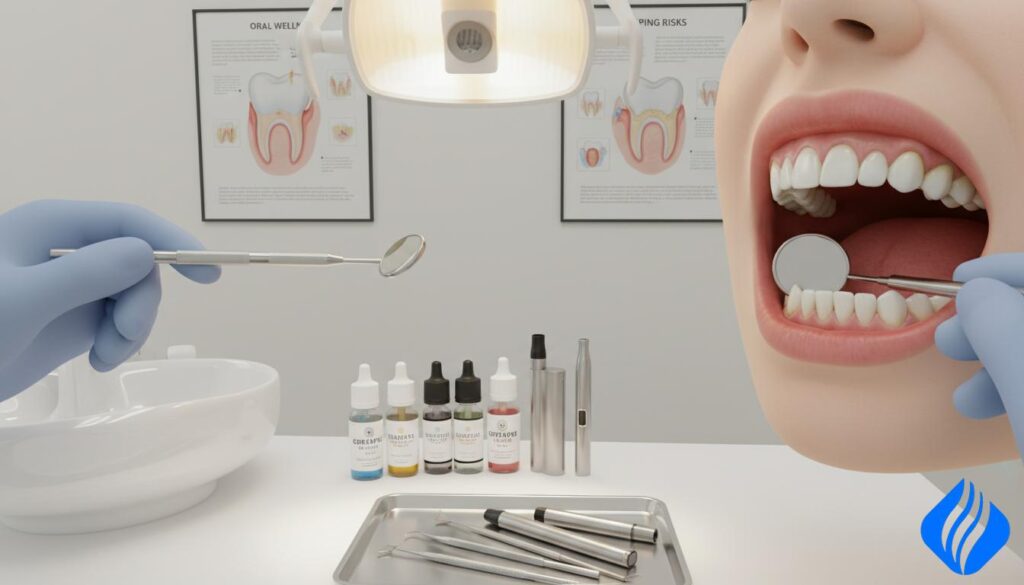
We record redness at the gingival margin, localized swelling, and bleeding with gentle probing. These are routine periodontal chart entries.
We also note tissue dryness and areas where plaque clings more than expected. Those entries guide preventive care and risk scoring.
Hidden clues that raise clinical suspicion
Delayed healing after extractions or implants is a key flag. It often shows before obvious surface changes.
Recurring irritation, sensitivity without clear abrasion, and plaque “hotspots” at certain teeth also appear in charts. These patterns help shape follow-up care.
How vaping signs differ from traditional smoking
Traditional smoking usually shows pronounced brown staining and persistent smoke odor. In contrast, heated aerosol patterns often look cosmetically cleaner yet show dryness and subtle biologic stress.
Both paths increase gum disease risk, but the visual profile and odor clues often differ.
“Findings form a pattern, not proof; our aim is risk reduction and tailored care.”
We often suspect use from the constellation of findings, yet the most reliable step is an honest history. For more context and resources on how clinicians assess oral changes, see our assessment guide.
| Category | Typical clinical finding | Action |
|---|---|---|
| Visible inflammation | Redness, swelling, bleeding gums | Document, improve interdental care, consider periodontal therapy |
| Dryness-related issues | Sticky tissues, plaque retention, sensitivity | Hydration, saliva substitutes, topical fluoride |
| Healing & irritation | Delayed wound closure, recurrent sores | Adjust surgical timing, monitor, counsel on exposure reduction |
What to tell your dentist and why honesty improves treatment outcomes
Clear information about exposure guides practical changes in cleaning, fluoride, and follow-up plans. We ask for straightforward details so that care becomes individualized rather than generic.
How disclosure affects cleanings, fluoride recommendations, and gum care
Tell us frequency (daily or occasional), nicotine strength (2% vs 5%), device type (disposable, pod, mod), and symptoms like dry mouth, sensitivity, or bleeding.
When patients share these facts we target plaque hotspots during cleanings and coach on specific home steps. That shifts hygiene from broad advice to focused training on interdental tools and technique.
Fluoride strategy changes when saliva flow drops. We may use in‑office varnish, prescribe higher‑strength toothpaste, or add topical gels to lower decay risk.
When more frequent checkups and preventive care are recommended
Persistent inflammation or delayed healing raises disease risk. In those cases we shorten recall intervals from six months to three or four months.
Early periodontal charting and closer monitoring of pockets and recession let us intervene before advanced disease or tooth decay occurs.
“Honest history allows precise prevention and better healing outcomes.”
| What to disclose | Why it matters | Possible clinical change | Patient benefit |
|---|---|---|---|
| Frequency & device type | Predicts dryness and plaque pattern | Targeted cleaning, plaque-focus coaching | Fewer lesions, better hygiene |
| Nicotine strength | Impacts healing capacity | Adjust surgical timing, monitor wound healing | Lower complication risk |
| Symptoms (dry mouth, bleeding) | Signals higher decay and gum risk | Fluoride varnish, saliva support, closer recall | Reduced decay, less progression to disease |
| If not quitting | Enables harm-reduction planning | Hydration plans, saliva substitutes, focused plaque control | Reduced tissue irritation and slower disease progression |
Hands-on testing: popular disposables and what they mean for mouth feel
We ran controlled hands-on testing across common disposables to log practical mouth sensation and performance over repeated use.
Testing setup and evaluation lens
Hands-on testing tracked draw resistance (MTL vs looser airflow), perceived throat hit, vapor temperature, flavor stability, and subjective mouth dryness after extended use.
Throat hit observations
Stronger nicotine salts (5% vs 2%) produced a more intense throat strike. That felt peppery or tingly for some, versus a softer inhale on lower salt levels.
Why it matters: greater throat intensity often meant users reported more mouth and throat dryness during sessions.
Vapor output and airflow effects
Higher vapor output and warmer vapor felt harsher. Looser airflow increased moisture loss sensation in the mouth.
Propylene glycol content also reduced perceived moisture, which links to dry mouth and related oral issues.
Flavor consistency after ~5000 puffs
Top notes—bright fruit or menthol—faded first. Sweetness flattened next. Users often took longer pulls to chase flavor, raising puff count and potential risks to good oral balance.
“Puff counts are manufacturer-rated and vary by draw length; our goal is comparative, not absolute.”
| Test aspect | What we observed | Oral impact |
|---|---|---|
| Throat hit (nic salt) | 5% = stronger, 2% = smoother | Stronger hit tied to more mouth dryness |
| Vapor output & temp | High output = warmer, harsher feel | Warmer vapor increased irritation risk |
| Flavor after ~5000 puffs | Top-note fade, sweetness flatten | Leads to longer pulls, higher exposure |
Device specs that influence throat hit, dryness, and flavor consistency
Small hardware choices drive large differences in warmth, flavor stability, and mouth comfort. We review core specs and how they map to sensation and oral effects.
Battery capacity and charging
Battery (mAh): typical disposable‑rechargeable designs run about 500–1000 mAh. Stable output keeps vapor temperature steady, which helps flavor stay consistent as charge drops.
Charging: modern models use USB‑C. Reliable charging reduces overheating and harsh draws that raise irritation in oral tissues.
E-liquid volume and longevity
E-liquid (ml): common reservoirs hold 12–20 ml. More liquid plus efficient coils extends usable life, but puff count still varies by draw length and user behavior.
Nicotine strength and oral impact
Compare 2% vs 5% nic salt. Higher nicotine gives stronger throat strike and may increase sensation of dry mouth. Nicotine also constricts blood vessels, which affects gums and slows healing.
Coil type: mesh vs dual mesh
Mesh coil uses a single wide surface. It heats evenly and often yields cleaner mid‑life flavor.
Dual mesh raises surface area and vapor production. That can boost warmth and throat hit but may dry the mouth more if heat and airflow are high.
“More power and heat tend to intensify throat hit and dryness; efficient coils help preserve flavor and reduce burnt notes.”
- More power/heat: stronger throat strike, more moisture loss.
- Efficient coils: steadier flavor and less off‑taste late in life.
- Higher nicotine: greater impact on gum blood flow and saliva production.
| Spec | Typical range | Experience effect | Oral health link |
|---|---|---|---|
| Battery | 500–1000 mAh | Stable voltage → steady flavor | Less overheating → lower tissue irritation |
| E-liquid | 12–20 ml | Longer life per device | Fewer refills → lower chance of burnt taste and harsh draws |
| Nicotine | 2% vs 5% nic salt | 5% = stronger throat hit | Higher levels → reduced gum blood flow, slower healing |
| Coil type | Mesh vs dual mesh | Dual mesh = more vapor, warmer temp | Increased warmth → higher perceived dryness in mouth |
Comparison: Puffs per Dollar and flavor consistency vs Geek Bar, Lost Mary, and Raz
Shoppers often equate headline puff counts with value, but usable flavor life matters more. We compare Geek Bar, Lost Mary, and Raz on specs and real‑world performance so buyers in the US can estimate cost and oral impact.
Puffs per Dollar: estimating usable value
Use this quick formula: usable puffs ÷ price. Cross‑check with ml since rated counts vary by draw length.
- Record battery (mAh), e‑liquid (ml), nicotine (2%/5%), coil (mesh/dual mesh), USB‑C.
- Example specs: Geek Bar ~600–800 mAh, 12–15 ml, 2%/5% nic, mesh; Lost Mary ~650 mAh, 13–16 ml, dual mesh; Raz ~700 mAh, 12 ml, mesh or dual mesh, USB‑C on some models.
Flavor consistency and throat hit
Past mid‑tank and after ~5,000 puffs, top notes fade first. Sweetness flattens and menthol sharpness drops. Dual mesh yields stronger vapor and throat hit; that often raises mouth dryness and irritation.
“Value depends on steady taste, not just a big number on the box.”
Compare current listings at Disposable Vapes and Hot Sale. Whether smoking or vaping, dental care and screenings remain important to monitor risks to gums and teeth.
Practical guidance for users: knowing it’s empty, recharging safely, and authenticity checks
We offer a compact safety FAQ to reduce user error and limit avoidable mouth irritation tied to extended use or poor charging.
How to know it’s empty
Signs a unit is spent: vapor weakens, flavor drops sharply, a burnt or char note appears, LEDs blink, or airflow feels restricted as the wick dries out.
Performance‑to‑oral‑health link: pushing past these signs raises harshness and perceived dryness, which can aggravate mouth irritation and complicate oral hygiene.
How to recharge safely with USB‑C
Use a reputable low‑output adapter. Avoid overnight or unsupervised charging. Stop if the device becomes warm to touch.
Avoid high‑power fast chargers unless the manufacturer explicitly supports them. Heat during charging increases risk of hardware faults and harsher draws that affect oral health.
Is it authentic?
Check the packaging QR code and confirm it routes to the official domain via this link: https://www.google.com/url?sa=E&source=gmail&q=sokvape.com.
Authentic products reduce unknown ingredients and variable hardware that raise safety and health risks.
Where to browse and brand hubs
For model and coil comparisons visit our category pages:
- Disposable Vapes
- Hot Sale
Compare coil formats at these brand hubs:
- RandM hub
- Bang hub
“Simple checks and safe charging cut avoidable risks and help preserve oral health.”
| Issue | Quick action | Benefit to mouth |
|---|---|---|
| Weak vapor / burnt taste | Stop use; replace or recharge | Less harsh draws, reduced dryness |
| Heat during charging | Unplug, switch adapter | Lower hardware failure risk |
| Unknown packaging | Scan QR, confirm official domain | Avoid unknown ingredients and device issues |
Practical baseline: maintain hydration, use saliva support like sugar‑free gum if suitable, and keep routine dental visits to manage oral health and related issues.
Conclusion
Clinical patterns often point toward heated‑aerosol use when oral dryness, gum irritation, and plaque hotspots align. These signs help dentists infer recent inhaled exposures even when heavy stains from smoking are absent.
We summarize key long‑term concerns: persistent xerostomia, higher cavity rates, gum recession, slower healing, and occasional irritation or thrush. Our hands‑on testing showed throat hit, vapor warmth, airflow, and coil design alter mouth dryness and flavor stability after about 5,000 puffs.
Practical steps: disclose habits and nicotine strength so care teams can adjust fluoride, cleaning frequency, and recall timing. Judge value by Puffs per Dollar plus Flavor Consistency, and verify authenticity before use.
Nicotine warning: Nicotine is an addictive chemical. Use nicotine products only if 21+ and keep them away from children and pets.
 English
  German
  Dutch
Dutch  Danish
  Czech
Czech  Italian
  Slovenian
  French
  Hungarian
  Spanish
  Polish