

Can you get herpes from a vape? We open with a clear, evidence-based answer: it is possible, but the realistic risk is typically low compared with direct oral contact.
We examine how HSV spreads, what lab and field data show about survival on surfaces, and which device features matter for hygiene. Our hands-on testing looked at mouthpiece materials, airflow, USB‑C charging habits, and puff counts across competitors like Geek Bar, Lost Mary, and Raz. We assess Puffs per Dollar and flavor consistency while noting how fresh saliva and active lesions raise transmission probability.
We are not diagnosing. If someone has sores, pain, or exposure concerns, seek medical care. For broader context on sharing and infection risk, see the reporting on hidden risks of sharing personal items at sharing risks and hygiene.
Key Takeaways
- Possible but low risk: Transmission via shared mouthpieces is feasible, yet less likely than direct oral contact.
- Critical factors: Fresh saliva, active lesions, and short time between users increase risk.
- Device design matters: Mouthpiece material, airflow, and hygiene habits influence contamination.
- Practical steps: Avoid sharing, clean mouthpieces, and swap disposable tips to reduce exposure.
- Seek care: Symptoms require professional diagnosis; this page informs, not replaces medical advice.
What herpes is and how HSV spreads in everyday life
We explain this plainly. Herpes refers to infection by the herpes simplex virus. It is common, treatable for symptoms, and not curable. The virus establishes lifelong presence in nerve tissue.
HSV‑1 vs. HSV‑2: mouth, genitals, and where outbreaks show up
HSV‑1 typically affects the mouth and spreads via saliva and kissing. HSV‑2 is more common on the genitals and spreads by sexual contact. Either subtype may appear in either site, so location is typical but not exclusive.
Why many people have no symptoms but can still transmit the virus
Many people show no visible symptoms. Despite that, the virus sheds intermittently. This process, called asymptomatic shedding, allows transmission even when skin looks normal.
When herpes is most contagious: open, wet sores vs. asymptomatic shedding
The highest risk occurs with open, wet sores or fresh lesion fluid. During an outbreak, viral levels are highest and direct contact yields the greatest transmission probability.
Shedding without sores remains a lower but meaningful risk. Secretions such as saliva and genital fluids can contain virus. Direct mucosal contact—kissing or oral sex—remains the primary transmission route.

| Feature | Typical pattern | Transmission relevance |
|---|---|---|
| HSV‑1 | Oral sores, cold sores | Spreads via saliva, kissing; can affect genitals via oral sex |
| HSV‑2 | Genital sores | Spreads mainly by sexual contact; may rarely infect mouth |
| Asymptomatic shedding | No visible sores | Lower viral load but still capable of transmission |
| Active outbreak | Open, wet sores | Highest transmission risk; avoid direct contact |
Can you get herpes from a vape: what the science says about risk
Laboratory evidence and real-world behavior together shape the realistic risk profile for shared devices.
Skin-to-skin contact vs. objects: where a mouthpiece fits
Primary spread happens via skin-to-skin contact. Objects are secondary vectors, called fomites.
We place a mouthpiece in the fomite category with caveats. Direct lip or mucosal contact carries much higher transmission probability than touching a surface.
How long the virus survives outside the body and why timing matters
HSV survives on surfaces for only hours, and infectivity drops fast over time. That makes immediate, back-to-back sharing the higher concern.
Why metal/plastic mouthpieces and heat/air exposure reduce viability
Most mouthpieces are metal or plastic. They are exposed to air and warmth during use. These conditions dry secretions and lower viral survival compared with moist tissue.
Realistic scenarios where transmission is more plausible
The clearest risk: someone with an active cold sore deposits fresh saliva on the tip, then another person uses it right away. No blood is required—fresh secretions plus direct lip contact matter most.
Summary: Transmission via shared devices is not zero but is generally low. Risk rises with visible outbreak or obvious sores. When concerned, avoid sharing and use personal tips.
Sharing a vape vs. other common situations people worry about
We compare common routes of exposure so readers see where shared mouthpieces sit on the risk scale.
How vaping compares with kissing, oral sex, and other direct-contact routes
Kissing and oral sex involve direct mucosal contact. That makes them the highest-probability routes for transmission. Open sores or wet secretions are the main drivers of risk.
Shared mouthpieces rank lower. Most devices use metal or plastic. Heat and airflow dry secretions. Still, close timing after an active lesion raises risk for someone else.
“Direct mucosal contact remains the dominant way for infection; objects are secondary.”
Toilet seats, water bottles, utensils: what sources say about “objects” and HSV
Objects rarely sustain the virus long enough to matter. Casual sharing of bottles, utensils, or toilet seats is practically negligible unless multiple rare conditions align: fresh lesion contact, skin cuts, and immediate reuse.
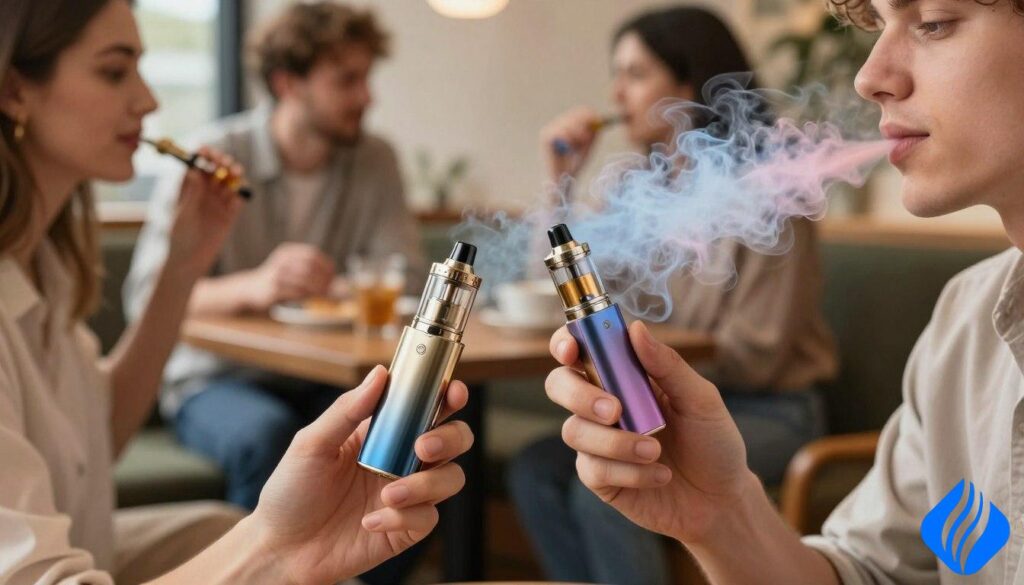
| Route | Mechanism | Typical risk | When risk rises |
|---|---|---|---|
| Kissing / oral sex | Direct mucosal contact | High | Active sores, fresh secretions |
| Shared mouthpiece | Fomite with lip contact | Low to moderate | Immediate reuse after lesion contact |
| Water bottles / utensils | Surface transfer | Very low | Immediate use with fresh saliva |
| Toilet seats | Surface with skin contact | Extremely low | Open lesions + abrasions + instant reuse |
Takeaway: Treat shared mouth-contact items cautiously. Avoid sharing during suspected outbreaks to reduce overall risk.
Hands-on testing insights: what happens when people share devices in real life
In live group trials we tracked condensation, saliva transfer, and how quick wipes affect visible residue.
Our setup replicated casual use. We passed devices between people, noted handling, and timed reuse intervals. This is observational work, not clinical transmission testing.
What we observed at the mouthpiece
Condensation forms inside seconds. A faint film of saliva appeared after a few pulls. Visible moisture returned rapidly during back-to-back use.
Throat hit and vapor production during shared sessions
Smoother pulls led to longer lip contact. Stronger throat hits caused quick, repeated handling. That change in behavior affects direct mouth contact and overall exposure time.
Flavor evolution after 5000 puffs
After heavy use, flavor dulled and sweeteners shifted. Some people passed devices less. Others tried to finish the device faster, which altered sharing patterns and increased reuse frequency.
| Observation | Immediate effect | Hygiene implication |
|---|---|---|
| Condensation | Visible inside mouthpiece after pulls | Promotes quick recontamination |
| Quick wipes | Removes visible moisture | Does not reliably remove microbes |
| Long lip contact | Encouraged by smooth vapor | Raises chance of saliva transfer and infections |
Summary: Sharing mouth-contact items can spread infections through saliva. HSV is most contagious with open, wet sores. Cleaning limits exist for quick wipe-downs. Minimizing direct sharing is reasonable to reduce overall health risk.
Product spotlight with core technical data and what it means for hygiene
Technical specs shape handling, and handling changes exposure. We link common device features to real hygiene outcomes so readers judge risk by design, not marketing.
Battery capacity and charging port
Battery size (mAh) predicts how often a device is recharged or handled. USB‑C ports encourage frequent plugging and finger contact. More interaction means more contact points on the mouthpiece and body of the device.
E-liquid volume and nicotine strength
Most disposables list e-liquid in ml and nicotine at 2% or 5% nicotine salt. Higher strengths may trigger cough reflexes in some users, which raises saliva droplets at the tip and elevates infection risk for the next person.
Coil type and airflow
Mesh or dual mesh coils and tighter airflow affect vapor warmth and moisture. Warmer, denser vapor creates more condensation at the mouth. That condensate can carry virus if fresh saliva is present.
| Spec | Typical range | Hygiene impact |
|---|---|---|
| Battery (mAh) | 250–1500 mAh | Higher mAh = more handling for recharging, more touch points |
| E-liquid (ml) | 2–20 ml | Larger reservoirs mean longer shared use; more condensation builds |
| Nicotine | 2% / 5% nic salt | Higher strength can increase coughing and saliva transfer |
| Coil | Mesh / Dual mesh | Dual mesh = denser vapor, more mouth moisture |
| Charging | USB‑C | Reusable port increases device handling frequency |
Specs do not prevent herpes or other infection. They inform behavior. We recommend avoiding shared tips, using personal barriers, and checking product pages like Disposable Vapes, Hot Sale, RandM, and Bang for full listings.
Comparisons vs. Geek Bar, Lost Mary, and Raz: puffs per dollar and flavor consistency
Price claims and coil design shape both value and handling. We use a simple method to compare devices and to flag which units invite more sharing in groups.
Puffs per dollar: a practical method
Method: divide listed puff count by purchase price. Adjust for e-liquid ml and draw style—MTL draws reduce actual puff count versus loose DTL pulls.
Flavor consistency after heavy use
Sweet or fruit profiles often fade first after extended draws. We saw flavor shift and sweeter notes turn muted after long sessions. That change makes people pass devices more to chase the original taste.
Coil, airflow, and nicotine strength effects
2% vs 5% nic salt: higher strength yields harsher throat hit and more cough reflexes. That raises saliva and brief wiping between pulls.
| Brand | Puff claim per $ | Coil / Airflow | Flavor stability |
|---|---|---|---|
| Geek Bar | High (steady claim) | Mesh / moderate airflow | Good for first 2000 puffs |
| Lost Mary | Moderate | Dual mesh / denser vapor | Sweet fade after heavy use |
| Raz | Value-focused | Mesh or single coil / warmer | Consistent but dulled at end |
Takeaway: Denser vapor and dual mesh increase mouth moisture and condensation. Stronger vapor also raises sharing temptation among people. Health and infection risk hinge on behavior—avoid sharing during an outbreak or if visible sores are present.
Practical safety steps to reduce herpes transmission risk when vaping
We offer clear, practical steps to cut transmission risk when mouth-contact devices are shared. These measures focus on timing, handling, and simple hygiene so risk stays low in real life.
Quick risk-reduction hierarchy
- Don’t share mouthpieces whenever possible.
- Do not share during any suspected oral outbreak or if a visible sore exists.
- Use personal silicone tips or disposable barriers when sharing is unavoidable.
- Clean mouthpieces with alcohol wipes and let them dry fully between uses.
- Wash hands after touching lesions to avoid spreading HSV to another part of the body.
FAQ
How to know if it’s empty? Signs include much lower vapor, a sudden flavor drop, or a burnt taste. Some devices blink or cut out. Dry hits irritate lips and make users touch the mouth more, raising transfer risk.
How to recharge safely? Use a reputable USB‑C cable and adapter. Avoid charging unattended or near flammable items. Stop use if the device gets very hot or shows damage.
Is it authentic? Check the QR code on the device and verify at: https://www.google.com/url?sa=E&source=gmail&q=sokvape.com. Authentic verification reduces risk of faulty batteries or seals that alter handling.
Cleaning, barriers, and outbreak rules
Wipe the mouthpiece exterior with 70% isopropyl alcohol and allow full drying time. Personal tips lower saliva-to-saliva transfer.
If a cold sore or any suspicious symptom appears, avoid sharing entirely. Treat uncertain lesions as contagious until evaluated by a clinician.
“Avoid sharing during active sores; hygiene steps reduce but do not eliminate risk.”
Nicotine warning: nicotine is an addictive chemical; keep devices away from children and pets.
Conclusion
We draw a concise lesson from lab results, field tests, and device comparisons. Transmission of the herpes simplex virus via shared mouthpieces is possible but generally a lower-probability route than direct oral contact.
Key drivers of transmission are active sores, fresh saliva on the tip, and short intervals of reuse while the virus survives outside body. Device design influences moisture and handling, which affect risk more than brand alone.
Practical checklist: avoid sharing during outbreaks, use personal tips or barriers, clean mouthpieces with alcohol and let them dry, verify device authenticity, and keep charging safe. These steps cut infection risk and support better public health.
 English
  German
  Dutch
Dutch  Danish
  Czech
Czech  Italian
  Slovenian
  French
  Hungarian
  Spanish
  Polish