

Direct answer: Delay nicotine inhalation for at least 24 hours and preferably 24–72 hours to lower risk of impaired healing, reduced blood flow, and increased chance of early filling failure.
This guide explains what “safe” means in clinical terms: stable filling material, protected gum tissue, and minimal irritation to the tooth and mouth. Heat, suction, and nicotine-related vasoconstriction raise discomfort and infection risk during the first 24–72 hours.
The decision framework used by safety-focused clinicians rests on time since the procedure, material type, numbness or biting risk, nicotine exposure, and symptoms such as pain or swelling. For material-based timing and personalized advice, consult a dentist or review guidance from trusted sources like Northside Dental on post-filling risks.

Key Takeaways
- Wait at least 24 hours; 24–72 hours is often safer depending on the filling.
- Heat and suction can disturb bonding and irritate tissue during the critical window.
- Nicotine reduces blood flow and may increase infection risk and dry mouth.
- Material type and procedure depth change recommended timing for safe return.
- If pain, swelling, or a high/loose filling occurs, seek prompt dental follow-up.
Key Takeaways for Vaping After a Dental Filling
Key Takeaways:
- Default wait: at least 24–48 hours; 72 hours is safer for deeper restorations or irritated gums.
- Highest-risk window: the first 24–72 hours when the filling-tooth interface and soft tissues adapt.
- Main stressors: heat, suction, and dry mouth raise irritation, infection risk, and early bonding stress.
Why timing matters: Nicotine causes vasoconstriction, which reduces blood flow to gum tissues and slows healing. Reduced saliva from dry mouth removes a key protective barrier and raises infection risk.
Practical guidance
During the critical 24–72 hour period, avoid oral heat and strong suction to limit irritation and bonding disruption. If tissues feel sore or the bite is high, pause inhaled use and contact a dentist promptly.
For those seeking nicotine relief, non-inhaled options such as patches or lozenges avoid local heat and suction and lower the chance of complications.
Supportive care
Maintain strict oral hygiene: gentle brushing, careful flossing, frequent water rinses, and good hydration to help saliva restore protective function and speed healing.
Quick Reference Table: Wait Time After Filling vs Activity and Risk
Use this concise chart to match common materials to conservative wait intervals and specific risks. The table emphasizes cautious behavior during the first 24–72 hours after the procedure.
Typical guidance by material
| Filling material | Typical minimum wait | Safer / ideal wait | What to avoid | Why it matters |
|---|---|---|---|---|
| Composite (white) | 24 hours | 48–72 hours | Heat, strong suction, hot drinks | Bonding interface sensitive; heat and suction raise irritation |
| Amalgam (silver) | 24–48 hours | 48–72 hours | High chew force, thermal stress | Gradual hardening; early stress can alter contour or seal |
| Glass ionomer | 48 hours | 72 hours | Heat, alcohol mouthwash, crunchy foods | Material more moisture- and temperature-sensitive early on |
| Temporary filling | 24 hours (fragile) | 48–72 hours | Strong suction, hard/chewy foods, heat | Lower strength; risk of displacement or early failure |
Activity and risk notes: Inhaled heat and suction, smoking, alcohol rinses, and crunchy foods increase mechanical and thermal stress. These actions raise the chance of irritation, dry mouth, and early seal failure.
Clinical reminder: This table offers general guidance. Follow specific dentist instructions for the individual procedure and signs that require prompt follow-up.
Can you vape after getting a cavity filled?
Return to inhaled nicotine should follow confirmed resolution of numbness and minimal local irritation. Safe to vape clinically means the patient feels normal temperature and bite, the filled tooth is not painful when chewing, and nearby gums show no redness or swelling.
Minimum wait times US dentists commonly recommend
Baseline guidance: Many dentists advise at least 24–48 hours for routine composite or amalgam work. Glass ionomer and temporary restorations often need 48 hours or more. A 72‑hour buffer is conservative for most people.
When to wait longer than 48 hours
Wait longer if any of the following apply:
- Deep decay near the nerve or a pulpal liner was placed.
- Multiple fillings in one visit or extensive work on the same quadrant.
- Visible gum inflammation, persistent pain, or ongoing swelling in the treated area.
- Known slow healing, immunosuppression, or heavy nicotine use that impairs blood flow.
Practical symptom rule and final advice
If vaping raises pain, throbbing, or new sensitivity in the treated tooth or gums, stop and allow more healing time. Follow specific dentist instructions, especially when a liner, base, or temporary restoration was used. This limits risk and supports a stable healing process.
Why vaping too soon can cause problems for your tooth, gums, and filling
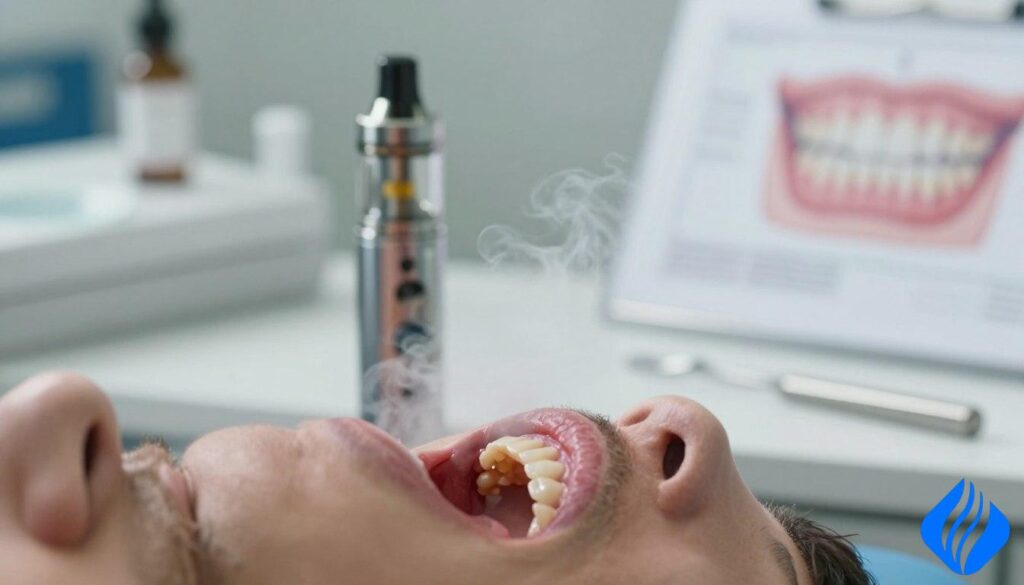
New exposure to warm aerosol and nicotine stresses recently treated tooth structure and nearby soft tissues in measurable ways.
Heat exposure and temperature shifts
Warm aerosol and repeated temperature swings increase sensitivity in a recently repaired tooth. Thermal cycling can strain the margin where restoration meets enamel and may alter the seal.
Nicotine-driven vasoconstriction
Nicotine narrows small blood vessels, reducing local blood flow. Reduced flow limits oxygen and immune cell delivery and slows the healing process in gums and soft tissues.
Dry mouth, saliva loss, and bacteria risk
PG/VG carriers and nicotine often cause dry mouth. Less saliva means weaker buffering, more bacteria, and higher risk of tooth decay at restoration margins.
Chemical irritation and inflammation
Aerosol chemicals can irritate tender tissues and raise local inflammation. Increased irritation boosts discomfort and may increase infection risk if oral hygiene slips.
Suction, dry socket, and mechanical effects
Dry socket is an extraction-specific issue caused by clot loss. After a restoration there is no clot, but strong suction still worsens dryness and pressure-related irritation of gums.
Staining, wear, and ingredient safety
Nicotine users often show faster composite staining and higher long-term restoration needs. Common aerosol ingredients include PG/VG and nicotine salts. Diacetyl concerns are formulation-dependent; choose transparently tested products when concerned.
| Mechanism | Immediate effect | Clinical concern | Practical note |
|---|---|---|---|
| Heat and thermal cycling | Increased sensitivity | Seal stress at margin | Avoid hot aerosols in first 24–72 hours |
| Nicotine vasoconstriction | Reduced blood flow | Slower healing process | Limit nicotine to reduce risk |
| Dry mouth (PG/VG + nicotine) | Lower saliva | Higher bacteria load and decay | Hydrate and use saliva-supportive measures |
| Chemical irritation | Local inflammation | Discomfort and infection risk | Prefer tested, transparent formulations |
Evidence-forward guidance: These mechanisms explain why clinicians advise a conservative wait and symptom-based return. For detailed clinical notes on post-oral surgery timing, review post-oral surgery guidance and introductory recommendations in this starter guidance.
How to vape more safely after the waiting period
A staged, cautious return limits stress on the treated tooth and nearby tissue while reducing complication risk.
First-day return plan: Begin with shorter sessions and smaller puffs. Pause longer between draws and limit total sessions that day. Stop immediately if the treated area feels sharp, pressured, or sensitive.
Device and draw guidance
Reduce wattage and avoid high-heat settings to prevent “hot” hits. Select higher airflow and take gentle, relaxed draws to lower suction pressure and minimize dry mouth and irritation.
Nicotine and cravings strategy
Temporarily lower nicotine strength to reduce vasoconstriction effects and support healing. Use non-inhaled alternatives—patches, gum, or lozenges—when cravings spike or the mouth feels dry.
Quality and oral hygiene
Prefer authentic, traceable brands to limit unknown chemicals; examples include Geek Bar and Raz as verifiable options. Maintain strict oral hygiene: gentle brushing near the restoration, daily flossing, water rinses after sessions, and steady hydration to counter dry mouth.
When to call a dentist
Seek prompt care for pain when chewing, swelling, a high or loose filling, visible cracks, new margin discoloration, or persistent sensitivity beyond the expected recovery window.
For safer product choices and verified stock, consider browsing premium vapes as part of a quality-assurance approach.
Conclusion
Prioritizing rest for the treated site reduces stress on the filling margin and supports steady tissue recovery.
Practical takeaway: Most patients lower complication risk by waiting at least 24–48 hours, with 72 hours as a safer default when uncertainty exists about material setting or tissue irritation.
Why this matters: nicotine narrows blood vessels, aerosol can irritate delicate tissue, and reduced saliva raises bacterial activity—together raising the chance of pain, infection, and shorter restoration life.
Use a symptom-led approach: increased pain, swelling, or bite changes are reasons to stop inhaled use and seek dentist evaluation rather than continuing through symptoms.
Long-term oral health depends on hydration, meticulous hygiene, and routine dental follow-up more than any single workaround. For more detail, see this post-filling guide.
Medical Disclaimer: This information is educational and not a substitute for professional medical advice. Consult a dentist or healthcare provider for personalized guidance based on the specific procedure and clinical findings.
 English
  German
  Dutch
Dutch  Danish
  Czech
Czech  Italian
  Slovenian
  French
  Hungarian
  Spanish
  Polish