

Direct answer: Avoid using vaping devices immediately following professional whitening; wait at least 48 hours and preferably 1–2 weeks to reduce rapid re-staining and sensitivity.
Expert view from SokVape’s senior safety consultant: Professional whitening uses hydrogen peroxide or carbamide peroxide, which leaves enamel briefly more porous. This higher porosity raises stain uptake and sensitivity risk during the first 24–72 hours.
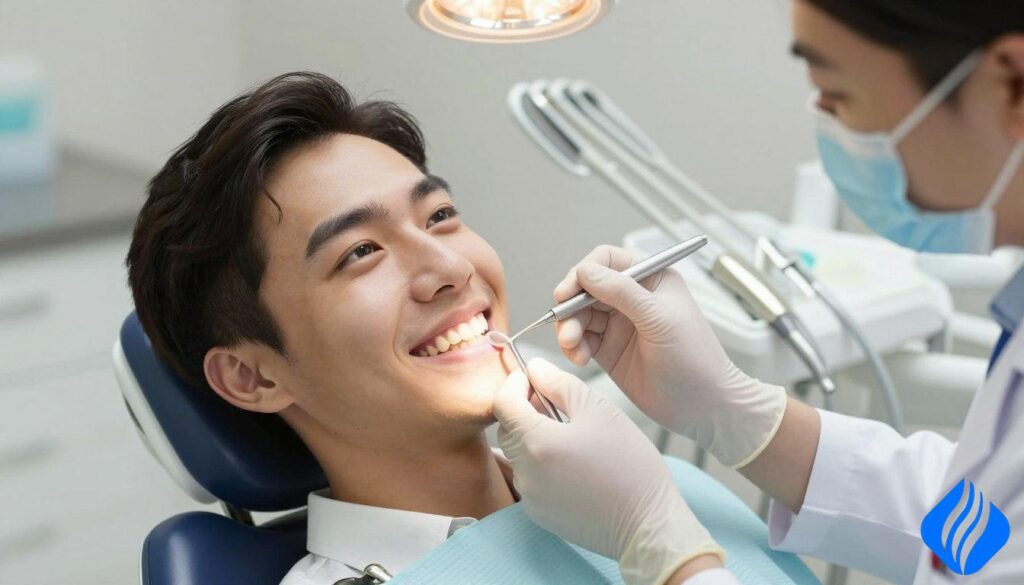
The article explains why the early window matters. It covers peroxide-induced porosity, nicotine oxidation that promotes pigment bonding, heat-triggered sensitivity, and PG-linked dry mouth that lowers saliva protection. Guidance varies by in-office versus at-home treatments and by baseline enamel or gum status.
Key Takeaways
- Avoid vaping for at least 48 hours; 1–2 weeks is best for cosmetic stability.
- “Safe to resume” means lower risk of rapid re-staining, less sensitivity, and less gum irritation.
- The first days are biologically vulnerable: enamel and soft tissues are still recovering.
- SokVape emphasizes ingredient exposure, device quality, and harm-reduction steps for users who resume.
- Later sections include a timeline and a stepwise lower-risk protocol.
Key Takeaways for Vaping After Teeth Whitening
The initial 24–72 hours are critical for protecting newly lightened enamel. This boxed summary gives clear minimums and the rationale in plain clinical terms.
The minimum wait time most patients should follow
Minimum: the least hours most patients should wait is at least 48 hours.
Waiting 24 hours still carries high staining and sensitivity risk; many clinicians advise 48 hours as a practical baseline. Best-practice time for cosmetic stability is 1–2 weeks.
The biggest risks to results and oral tissues
- Rapid discoloration from pigment and nicotine oxidation that bind to newly permeable enamel.
- Sharp sensitivity from heat or chemical exposure while tubules remain open.
- Delayed gum recovery and increased irritation if soft tissues were affected during treatment.
The safest way to reduce staining if not quitting
Delay exposure through the critical window, then resume with steps that lower risk.
- Choose lighter, low-pigment liquids and avoid dark flavors.
- Rinse with water after each session and keep well hydrated to support saliva.
- Monitor baseline mouth health—recession or enamel erosion increases risk.
Protecting results is a time-and-exposure equation: less contact during recovery equals better long-term results. For detailed, evidence-based post-care and timing, see this post-whitening guidance.
Quick Reference Table: Post-Whitening Timeline vs. Vaping Risk
This quick reference condenses timing and exposure risks into an easy-to-scan chart for practical use.
First 24 hours: peak porosity and sensitivity window
Highest-risk period. Enamel permeability and nerve sensitivity peak. Complete avoidance is recommended when possible.
24–48 hours: high staining risk remains
Porosity stays elevated and saliva balance may still be disrupted. Risk of rapid discoloration is high.
48 hours to two weeks: when results stabilize the most
Enamel begins to re-seal. Cosmetic stability improves, with the best protection at one to two weeks.
| Time Since Whitening | What’s Happening Biologically | Vaping Risk Level | Safer Choice |
|---|---|---|---|
| 0–24 hours | Peak enamel porosity; open tubules; high nerve sensitivity | Very High | Avoid completely |
| 24–48 hours | Porosity remains high; saliva function still recovering | High | Wait least hours: 48; avoid if cosmetic priority |
| 48–72 hours | Enamel re-sealing begins; many still report sensitivity | Moderate–High | Long wait recommended: 72+ hours for better retention |
| 3–14 days | Surface stabilization; shade becomes more stable | Lower | Long wait vape best practice: resume with mitigation |
| Least hours vaping vs. wait least hours | Compromise threshold vs. protective recommendation | 48 hrs (compromise) vs. 72+ hrs (protective) | Least hours vaping: 48; wait least hours: 72–336 (1–2 weeks) |
Note: If pain, gum inflammation, or a chalky enamel sensation persists, extend the no-exposure period and consult a dentist.
How Teeth Whitening Works and Why the First 24-48 Hours Matter
Hydrogen peroxide moves through microscopic pathways in enamel to oxidize chromogens and lighten shade.
Oxidizing agents in professional treatment diffuse into the outer enamel and break stain molecules into smaller, less colored fragments. This chemical action explains rapid cosmetic change.
Describing enamel as having tiny pathways or “pores” is a useful simplification. After treatment, permeability briefly increases, so the surface is more reactive to environmental pigments and irritants.
Why fresh surfaces take stains more easily
When chromogens from food, drink, or aerosols contact reactive enamel, they can re-bind more readily. That raises the chance of early staining and dulling of results.
What sensitivity reflects physiologically
Peroxide can transiently affect dentinal tubules and irritate the pulp. Dehydration of the outer layer also heightens nerve response, producing short-term sensitivity.
| Window | Biologic change | Clinical risk |
|---|---|---|
| 0–24 hrs | Peak permeability | Very high staining and sensitivity |
| 24–48 hrs | Re-sealing begins | High; caution advised |
| 48–72 hrs | Surface stabilizes | Moderate; protection still helpful |
Red flags: spontaneous sharp pain, swelling, or prolonged severe discomfort require dental review.
Can You Vape After Teeth Whitening?
Direct answer: Not immediately. Immediate exposure to flavored aerosols raises both staining and sensitivity risks on freshly treated enamel. For clarity, the question “can you vape after teeth whitening” receives a cautious, time-based reply rather than a simple yes/no.
Why the safest answer is “not immediately”
Peroxide-based procedures temporarily increase surface permeability and soft-tissue reactivity. Early contact with pigments, heat, or drying agents worsens staining and discomfort.
Least hours to wait vape versus best-practice wait
Least hours: a practical compromise is 48 hours; this reduces the highest short-term risk.
Best-practice wait: one to two weeks gives the best protection for cosmetic results and comfort.
Professional teeth whitening vs. at-home kits: does timing change?
In-office work often uses higher peroxide and may spike sensitivity quickly. At-home kits deliver repeated exposure that can prolong vulnerability. The more intensive the treatment and the more sensitive the mouth, the longer the recommended wait.
- Decision rule: more sensitivity or gum issues = longer delay.
- If gingival irritation or recent dental work exists, consult the treating dentist before resuming use.
| Scenario | Least hours | Best wait |
|---|---|---|
| Standard in-office professional teeth whitening | 48 hrs | 1–2 weeks |
| Extended at-home treatment | 48–72 hrs | 1–2 weeks |
| Existing sensitivity or gum recession | 72 hrs+ | 2 weeks+ |
What Happens If You Vape Too Soon After Whitening
Within the first 24–72 hours, environmental pigments and chemical vapors meet a more reactive enamel surface. This creates a short window of elevated risk for both color change and discomfort.
Nicotine oxidation drives fast yellow-brown staining. Free nicotine oxidizes on contact with air and deposits more easily on freshly permeable enamel. That process can make stains appear within a few sessions.
Heat and exposed tubules increase sensitivity. Warm aerosol and airflow can irritate dentinal tubules while nerves remain reactive. Sensitivity often peaks during the critical 24–72 hour period.
Gum tissue also heals slowly. Aerosols and minor dehydration from propylene glycol prolong gingival irritation and delay recovery.
Dry mouth is a key mechanism. Propylene glycol is hygroscopic, reducing saliva volume. Less saliva lowers buffering, impairs natural rinsing, and raises plaque risk.
| Mechanism | Immediate effect | Short-term risk |
|---|---|---|
| Nicotine oxidation | Yellow-brown residues form | Fast staining of reactive enamel |
| Heat from aerosol | Stimulates exposed tubules | Increased sensitivity |
| PG-induced dryness | Reduced saliva | Higher plaque and acid exposure |
| Chemical irritants | Mucosal inflammation | Slower gum recovery; enamel stress over time |
Practical point: resuming exposure too soon combines staining, sensitivity, gum irritation, and dry mouth—undermining cosmetic gains and comfort. Persistent sharp pain or visible mucosal injury warrants stopping exposure and seeking dental review.
The Science of Vape Ingredients and Oral Effects
Ingredient profiles in modern e-liquids influence oral surface chemistry and short-term recovery of treated enamel.
Propylene glycol (PG) carries flavor and gives a sharper throat sensation. It is hygroscopic and lowers saliva volume, which reduces buffering and rinsing in the mouth. Low saliva raises plaque acidity and makes pigment uptake more likely.
Vegetable glycerin (VG) produces denser vapor and a thicker residue. That film can trap colorants and alter biofilm structure, increasing the chance that pigments will bind to surfaces during the vulnerable period.

Nicotine strength and staining risk
Higher nicotine concentrations oxidize faster and form pigmented residues. That chemistry speeds visible discoloration when enamel is temporarily more permeable.
“Nicotine-free” liquids are not stain-free. Many nicotine-free formulas still use colored flavorings and acids that can stain or erode softened plaque films.
Diacetyl and quality control
Diacetyl is a buttery-flavor compound with a documented inhalation history in occupational settings. Responsible manufacturers test and disclose ingredient panels to lower uncertainty.
Ingredient transparency and third‑party testing reduce chemical surprises during the post-treatment window and are a reasonable harm‑reduction step.
Flavors to avoid while surfaces recover
- Acidic citrus and sour blends — increase demineralization pressure and soften films.
- Strong dark or heavily colored dessert flavors — raise pigment load on enamel and biofilm.
- Menthol/cooling blends — can mask irritation and promote longer inhalation times.
| Ingredient | Oral Effect | Post-treatment Risk |
|---|---|---|
| PG | Reduces saliva; increases dryness | Higher plaque acidity; greater pigment adhesion |
| VG | Leaves thicker residue | Thicker biofilm; increased stain retention |
| Nicotine (high) | Oxidizes to pigmented compounds | Accelerated discoloration |
| Diacetyl (if present) | Inhalation safety concern historically | Prefer tested, transparent products |
Clinician-style takeaway: Limit exposure to unknown chemicals and strong flavor systems during the critical recovery window. When resuming use, favor clear, simple formulations with documented testing and minimize session length to protect cosmetic results and oral health.
For practical post-care recommendations and product transparency guidance see this post-treatment guidance.
How Long Should You Wait to Vape After Teeth Whitening for Best Results
Timing post-treatment matters because enamel and soft tissues recover on a predictable schedule.
The 24–72 hour critical window: In the first day to three days, enamel permeability and gum reactivity peak. Heat, dryness, and colored aerosols meet a surface that still accepts pigments more readily. This raises both cosmetic setback risk and short-term irritation.
Why many dentists recommend at least 48 hours minimum: By two days most patients report reduced sensitivity and a measurable decline in surface reactivity. Waiting this minimum lowers the chance that newly deposited pigments become a lasting change in shade.
Why one to two weeks best protects whitening results: Over 7–14 days the enamel surface and pellicle layer stabilize. Allowing this interval makes it far less likely that early exposure defines the post-treatment baseline, reducing touch-ups and discomfort.
“Delay exposure while tissues normalize; when the mouth no longer feels overly sensitive to cold, it is usually safer to resume routine exposures.”
| Recovery Window | Biologic Change | Practical Advice |
|---|---|---|
| 0–24 hours | Peak porosity and sensitivity | Avoid all aerosol exposure if possible |
| 24–48 hours | Porosity declining; sensitivity often reduces | Minimum delay recommended: 48 hours |
| 3–14 days | Surface and pellicle stabilize | Best cosmetic protection: wait 1–2 weeks |
Nuance for higher-risk mouths: Recession, thin enamel, or multi-day at-home protocols extend vulnerability. If cold stimuli still cause a zing, extend the delay until that sensation resolves.
Practical rule: Treat timing as risk management. Longer delays reduce the chance of discoloration and the need for retreatment.
For clinical post-care guidance refer to this resource on managing exposure timing: post-whitening exposure guidance.
How to Vape With Less Risk After Teeth Whitening
Small, evidence-based adjustments help protect results while oral tissues heal.
Select clear or light-colored liquids
Choose clear or pale fluids to lower pigment load on enamel during the first weeks. Color intensity often predicts staining potential.
Minimize direct tooth contact
Position the mouthpiece so aerosol bypasses the front surfaces. Avoid holding vapor in the mouth; inhale and exhale promptly to reduce residency on the tooth surface.
Rinse with water after use
Rinse immediately with plain water to dilute residues and reduce dryness. This step supports natural buffering and lowers short-term residue build-up after vaping.
Gentle oral hygiene and timing
Maintain oral hygiene with soft brushing and daily flossing. Wait about 30 minutes to brush if the mouth feels acidic or sensitive. Introduce whitening toothpaste only after acute sensitivity subsides.
Hydration and saliva support
Drink water often and chew sugar-free gum to stimulate saliva. Increased flow helps neutralize acids and reduces film that traps pigment during healing.
| Action | Why it helps | When to apply |
|---|---|---|
| Clear/light liquids | Lower pigment exposure | First 1–2 weeks |
| Mouthpiece positioning | Less aerosol on front teeth | Every session |
| Rinse with water | Dilutes residue; reduces dryness | Immediately after use |
| Gentle hygiene & gum | Protects enamel; boosts saliva | Daily; after sensitivity eases |
Safety checkpoint: persistent burning, bleeding gums, or rising sensitivity requires reduced exposure and dental review.
Quality and Safety Controls: Avoiding Counterfeit Vapes and Choosing Authentic Brands
Product authenticity directly affects what enters the mouth and how oral tissues respond.
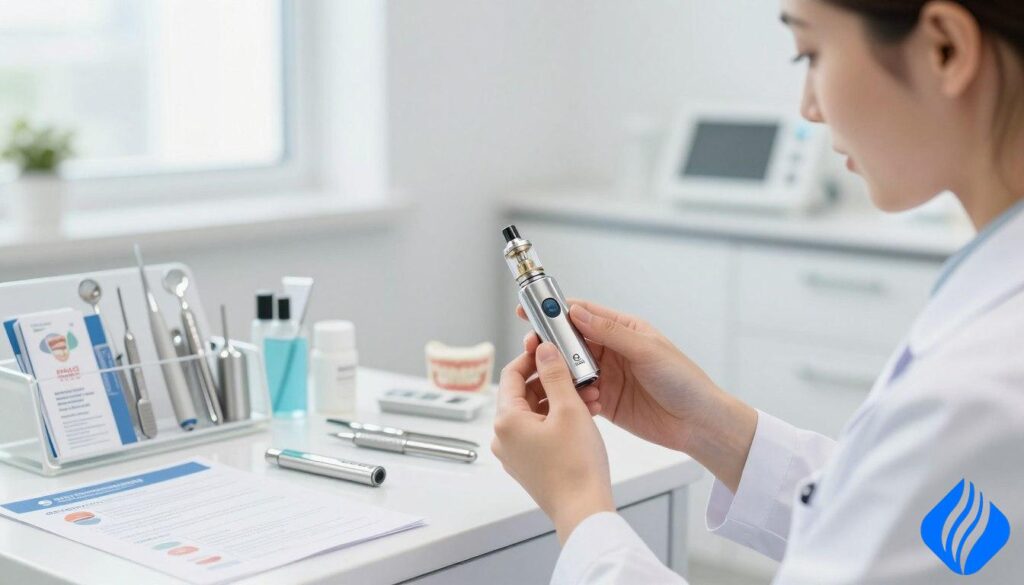
Counterfeit or unverified devices introduce uncertainty into exposure profiles. Unknown liquid composition, inconsistent coil metals, and unstable heating change aerosol chemistry. That raises the chance of irritation, dryness, and faster staining when oral tissues remain sensitive.
Why counterfeit devices increase exposure uncertainty
- Unknown liquids may contain undisclosed additives or dyes that increase pigment load on enamel.
- Inconsistent coil materials and poor thermal control produce varied by‑products during heating.
- Poor sealing and labeling make traceability and recall impossible if problems arise.
Authenticity, traceability, and safer choices
Quality assurance does not eliminate harm, but it reduces unknowns. Brands with clear batch codes, lab testing, and consistent manufacturing lower exposure uncertainty during the first weeks of recovery.
Examples: Geek Bar and Raz are commonly cited as authentic alternatives with stronger traceability norms compared with counterfeit supply chains. This mention is informational and not a medical endorsement.
- Buy from reputable retailers with return policies.
- Verify packaging, QR codes, and batch information when available.
- Avoid unusually cheap products with vague labeling or no ingredient disclosure.
| Feature | Counterfeit / Unverified | Authentic / QA-focused |
|---|---|---|
| Ingredient disclosure | Often missing or false | Transparent lab reports or clear labeling |
| Heating consistency | Variable; potential for unusual by‑products | Controlled tolerances; consistent output |
| Traceability | Limited or none | Batch codes, retail records |
“Reducing uncertainty is a practical harm‑reduction step; choose traceable products and maintain post‑treatment care to protect results.”
Final note: Even with authentic devices, safer behavior matters—delay exposure during the critical window, rinse, hydrate, and keep gentle hygiene to support oral health and comfort.
Conclusion
Conclusion
In summary, delaying exposure and following simple care measures gives the best chance to preserve a bright smile.
Practical guidance: avoid aerosol exposure for at least 48 hours as a minimum; waiting one to two weeks offers stronger protection for whitening results and comfort. Peroxide treatment temporarily raises enamel permeability, so heat, dryness, and residues increase staining and sensitivity risk.
High‑risk mouths (recession, thin enamel, recurrent sensitivity, or repeated treatment) should extend the delay and use conservative care. Maintain gentle brushing, flossing, hydration, and regular professional cleanings to support lasting results.
Harm‑reduction note: when resuming, choose low‑pigment, clear liquids, rinse with water, and boost saliva flow. If pain, swelling, or worsening irritation occurs, stop exposure and seek dental review. For detailed post-care, see this post-whitening guidance.
Medical Disclaimer: This content is informational and not a substitute for professional dental advice. For personalized evaluation and treatment recommendations, consult a licensed dentist.
 English
  German
  Dutch
Dutch  Danish
  Czech
Czech  Italian
  Slovenian
  French
  Hungarian
  Spanish
  Polish