

As of 2026, we answer this directly: most venues assume no unless a venue posts clear permission. Penalties are real — some countries fine offenders (Mexico fines up to $12,500), and lithium batteries must stay in carry-on for safety.
We frame this as a U.S.-focused travel and safety guide for vapers that sets expectations. State and local smoke-free laws often control vaping in public. Property policies frequently add stricter limits.
Read signs fast. A plain “no smoking” sign often covers vaping. Staff will enforce simple, visible rules rather than nuanced exceptions. That keeps enforcement quick and fair for all people, including families and those with asthma.
We preview practical tools: a location-by-location playbook, battery safety callouts, and quick alternatives like nicotine gum or stepping outside. This guide gives compliance tips and travel-ready checklists — not legal advice — updated for 2026.
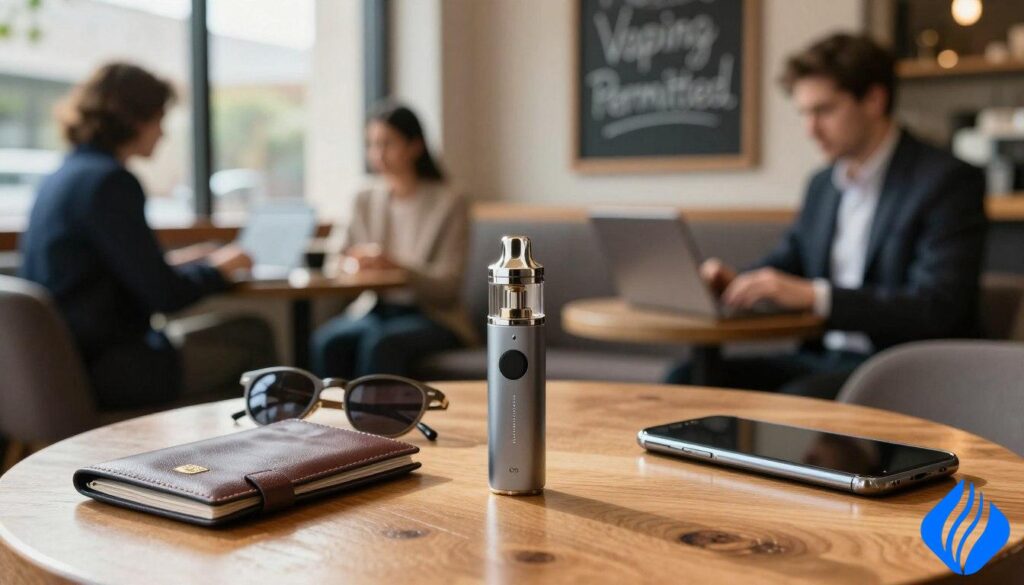
Key Takeaways
- Assume no unless a venue posts explicit allowance.
- State/local laws plus property policies both matter.
- Look for signs and follow staff directions immediately.
- Keep lithium batteries in carry-on; follow airline rules.
- Use discreet alternatives and show courtesy to other people.
As of 2026, what “vaping indoors” usually means in the United States
As of 2026, travelers should expect that enclosed public areas usually prohibit aerosol emissions as if they were cigarette smoke. This is a practical baseline that reduces disputes and speeds enforcement.
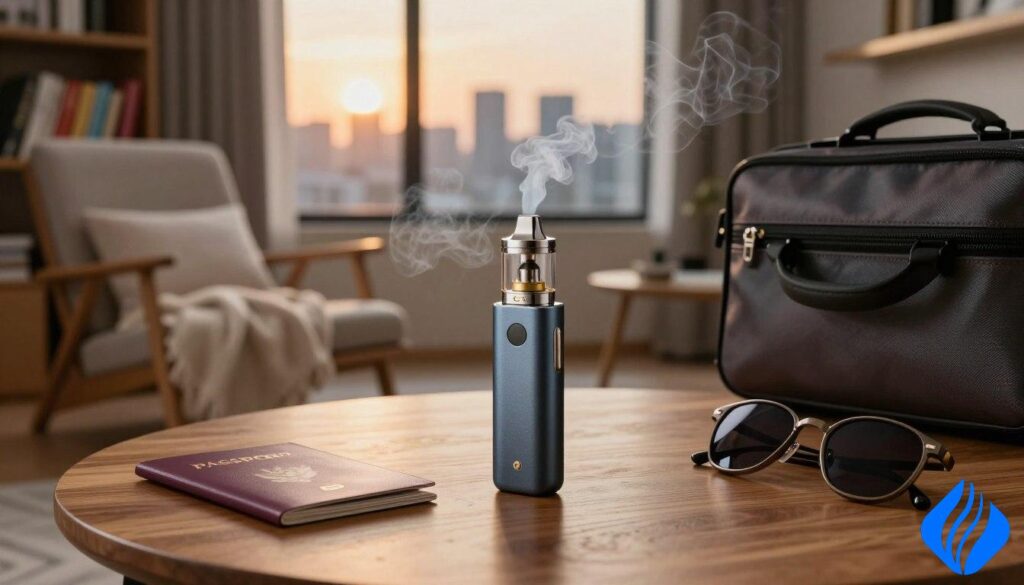
How we define it: in U.S. travel terms, “vaping indoors” covers any enclosed area open to the public or shared with others. That includes semi-enclosed patios and covered entryways that feel like interior spaces.
- Why spaces treat aerosols like cigarettes: visible clouds, scent complaints, and enforcement burden make blanket bans simpler.
- Policy history: smoke-free systems grew from smoking and tobacco rules and often extend to aerosol devices even when statutes differ.
- Law vs. house rules: local law matters, but property owners can set stricter limits and ask noncompliant guests to leave.
Expect enforcement through staff, security, and reporting systems in hotels, transit hubs, and venues. Start with these baselines, then confirm the local yes/no quickly — for a practical primer see our notes on indoor etiquette and laws at indoor vaping guidelines.
Can you vape inside public places? Start with these baseline rules
Most public spaces treat aerosol emissions like smoke; default to no-use indoors. We give a clear baseline so travelers avoid fines and awkward confrontations.
Baseline rule: if a venue does not post explicit permission, assume indoor use is prohibited and look for a designated area.
How to spot no-vaping signs and shared “no smoking” language
Look for plain language that folds e-cigarettes into smoke-free rules. Common labels say “no smoking or electronic smoking devices” or “smoke-free campus.”
If a sign names tobacco, e-cigarettes, or aerosol emissions, treat that as a ban.
What counts as “inside” vs. covered patios, entryways, and lobbies
Inside includes enclosed rooms, restrooms, hallways, stairwells, elevators, and many lobbies. Covered patios and entryways that trap air often function like indoor spaces and fall under the same systems.
Real-world consequences: complaints, removal, fines, and device confiscation
A typical enforcement chain is: complaint → staff warning → removal. Visible vapor speeds escalation.
- Trip risks: posted fines, local citations, and being asked to leave.
- Hardware: in some settings a device may be confiscated as evidence.
- International part: enforcement can be stricter abroad; Mexico and other destinations may impose higher penalties and confiscation risk.
Do this instead: step fully outside and away from doors and vents, or use nicotine gum, pouches, or film strips when stepping out is not possible. For travel-specific packing and carry rules, see our note on bringing devices on flights at bring a vape on a plane.
Workplaces and office buildings: vaping, HR policies, and designated areas
Office policies set the ground rules for use, regardless of municipal wording. HR handbooks, building management, and lease terms often ban aerosol devices even when law is vague.
Managers control where devices are allowed, break timing, and whether a designated outdoor area exists. Follow posted rules and respect any requests from building staff.
Simple script: “Where’s the designated smoking/vaping area, and how far from entrances do you want us?” Use that line when clarifying expectations with supervisors.
Respect and health
Respiratory conditions matter. Coworkers with asthma, COPD, pregnancy, or scent sensitivity may face real health risk from light aerosol. Treat shared spaces as shared responsibility.
- Step outside with smokers and keep distance from doors and vents.
- Avoid vaping in vehicles, conference rooms, or near common HVAC intakes.
- When unsure, ask HR for written guidance to avoid complaints.
| Who sets rules | Typical limits | Quick compliance tip |
|---|---|---|
| HR & company policy | Indoor bans; designated outdoor spots | Follow handbook; ask in writing |
| Building management | Lease-level rules; lobby and garage limits | Use approved outdoor areas |
| Managers | Break timing; vehicle and meeting rules | Confirm break zones and times |
Do: step outside, keep distance, and lead with policy. Don’t: assume tolerance or use shared spaces when others are present.
Restaurants, bars, and nightlife: why most venues don’t allow vaping indoors
Bars and restaurants usually outlaw visible clouds to protect guests and simplify staff duties. Visible vapour looks like smoke and triggers complaints. Staff must investigate, which disrupts service and wastes time.
Operational logic: venues prefer blanket bans. Diners expect clean air. A single cloud can prompt multiple complaints and force managers to choose sides.
- Quick checks: read entrance signs, menus, or ask staff before sitting.
- Gray areas: rooftop patios and semi-enclosed decks often count as indoor spaces under house rules.
- Policy reality: even where law treats aerosol differently from cigarettes, most venues treat them the same for clarity.
Compliant fallbacks: nicotine gum, pouches, and dissolving film strips are discreet alternatives when stepping out mid-meal isn’t realistic.
Etiquette: step fully outdoors and move away from doors and crowds. That shows respect and keeps service running smoothly.
Hotels and resorts: room rules, cleaning fees, and vape detectors
House rules in hotels favor clear no-use policies to protect the next guest and HVAC systems. Treat a non-smoking room as off-limits unless the property posts an explicit allowance.
Why hotels ban aerosol use: odor and residue cling to curtains, bedding, and upholstery. That residue moves through HVAC systems and creates guest complaints and extra staff time.
How hotels detect aerosol: dedicated detectors sense particle clouds differently than smoke detectors. These devices often trigger staff alerts or log incidents in real time.
Where detectors sit and what detection triggers
Look high on ceilings and walls in the room, hallways, and balcony corridors—often near vents or entry points. Detection can prompt a room check, instant fees, or an incident report.
| What | Typical cost | Likely action |
|---|---|---|
| Deep-clean fee | $150–$300 | Room out of service; extra charge |
| HVAC maintenance | $200–$500 | System cleaning; logged incident |
| Policy fine / eviction | $100–$250 (fine); $1,000+ if alarms) | Eviction without refund; legal risk for tampering |
Hotel do’s and don’ts checklist
- Do ask at check-in where use is allowed and watch posted signs.
- Don’t assume bathrooms hide emissions; vents circulate air to other rooms.
- Do use designated outdoor areas and follow balcony rules.
- Don’t tamper with detectors—legal trouble and felony charges exist in many states.
- Pro tip: a compact disposable product helps reduce mess when use is permitted.
Respect saves time. Quick compliance avoids fees, complaints, and stress for staff and fellow guests.
Hospitals and healthcare campuses: strict indoor rules and outdoor boundaries
Hospitals set strict perimeter rules to protect vulnerable visitors and clinical operations. These grounds often ban aerosol use at entrances, courtyards, and near emergency (ER) doors.
Why ER entrances and patient areas are high-risk
Patient safety leads policy. Respiratory patients and people on oxygen face heightened exposure risk from vapour and ultrafine particles.
Aerosols may carry nicotine, VOCs, heavy metals, and leave thirdhand residue that lingers on surfaces.
“Protecting indoor air in clinical areas is essential—small emissions create big risks for fragile people.”
Do’s and don’ts checklist for hospitals
- Do look for boundary signs and ask security or the desk where permitted areas are.
- Do walk fully to designated outdoor spots well away from doors and vents.
- Don’t use restrooms, entryways, or parking garages as cover—these areas are often restricted.
- Don’t approach patients after recent use; wash hands and change an outer layer first.
- Do choose a nicotine alternative when visiting sensitive wards.
| Area | Typical rule | Quick action |
|---|---|---|
| Main entrance / ER | Strict ban within sightlines and building perimeter | Step to marked zone; ask staff if unclear |
| Courtyards / patios | Often limited or moved farther from doors | Follow signs; stay downwind of entrances |
| Parking and garages | May be restricted if vents connect to HVAC | Use campus-designated area or leave site |
For a practical hospital-focused guide, see our full notes on rules at hospital vaping guidance.
Public transportation and rideshares: buses, trains, platforms, and cars with kids
Crowded platforms and trains make aerosol rules strict to protect shared air and reduce disputes.
Why transit bans exist: limited ventilation, heavy foot traffic, and rapid complaint volume force clear, enforceable limits. Systems often ban use on vehicles, stations, and platforms. Follow posted rules and staff directions.
Driving, distraction, and visibility
Handling a device while driving raises risk. Filling or adjusting gear diverts attention. Big clouds also reduce window clarity and distract other drivers.
Child safety warning
Do not use in any car with children. Secondhand and thirdhand residue clings to seats, clothing, and toys. E-liquid access is a poisoning hazard; keep devices and pens locked away and out of reach.
“Never vape in a vehicle with minors—residue lasts long and risks young lungs.”
Transit and rides checklist
- Don’t use on buses, trains, or platforms; assume enforcement includes cameras and staff.
- Don’t stealth use in taxis or rideshares; the driver’s rules apply.
- Don’t operate devices while driving; stop safely first.
- Do step well outside station doors and away from vents.
- Do choose nicotine alternatives on long trips when breaks are impossible.
- Do store gear securely so others can’t handle or spill e-liquid.
| Setting | Typical rule | Quick tip |
|---|---|---|
| Local transit | No emissions on vehicles or platforms | Respect posted signs; move outside |
| Rideshare / taxi | Driver’s vehicle—likely no-use | Ask before boarding; assume no |
| Private car with children | No use; secure gear | Never use; store devices out of reach |
For system-specific rider rules, check regional guidance such as local transit rider rules. We recommend planning nicotine alternatives before boarding to avoid fines and protect young passengers.
Airports and flying with vapes as of 2026: TSA/FAA rules you must follow
Flight hubs treat lithium batteries and aerosol products as a priority safety issue. Federal rules and airport policy work together to reduce fire risk and protect cabin air.
Non‑negotiable rule: lithium batteries MUST be in carry-on luggage—never in checked bags. Cargo holds are harder to monitor, and thermal events escalate fast.
Lithium battery safety and what to pack
Keep the device and spare batteries in protective cases to prevent short circuits. Pack e-liquid where TSA can screen it.
Separate batteries from metal objects and label spares if possible. Follow airline staff instructions at security.
Where use is allowed and in‑flight risk
Airports only permit use in designated smoking or vaping areas. Restrooms and gates are off-limits.
“Attempting to use a device on board is illegal and can lead to fines, arrest, and airline bans.”
Do’s and don’ts checklist for air travel
- Do keep batteries and devices in carry-on and protected from shorts.
- Do plan last permitted use time before security and find any post‑security smoking area.
- Don’t charge in-seat if the airline forbids it.
- Don’t attempt use during flight; enforcement is strict and risk is high.
- Do use nicotine alternatives for long flights to avoid conflicts and fines.
For a focused TSA travel primer, see our detailed guide on TSA vape travel rules.
Theme parks and cruises: Disney-style policies, ships, and port rules
Major venues prioritize clean air; that leads to blanket bans and a few well-marked exceptions.
Why large attractions enforce simple limits
High-density spaces filled with families and strollers drive strict public rules. Parks treat emissions like smoke to avoid disputes and speed enforcement.
Designated areas exist, but they are few and often far from main paths. Step outside those zones at risk of removal or fines.
Cruises: ship policy versus port law
Onboard rules may be tougher than local port law. Cabins and balconies are frequently non-smoking. Using a device in a stateroom is a fast route to fees or disciplinary action.
International ports add complexity. In places such as Mexico enforcement and confiscation risk are higher. Store gear securely and research rules before docking.
Do’s and don’ts checklist for parks and cruises
- Do find designated zones early and note staff guidance.
- Do store your device safely to avoid pocket activation.
- Don’t use in lines, restrooms, or staterooms.
- Don’t test balcony boundaries or argue with staff.
- Do consider a reliable disposable product for long days; use it only where allowed and dispose responsibly.
| Setting | Typical rule | Quick tip |
|---|---|---|
| Theme park grounds | Blanket bans; few zones | Locate zone at park entry |
| Cruise ship decks | Outdoor decks allowed; cabins banned | Confirm deck hours and signage |
| International ports | Local law varies; higher enforcement | Secure gear; check country rules |
Travel packing and safety for vapers: leak-proofing, e-liquid, and the easiest setups
Pack for travel with leaks in mind; pressure shifts and jostling trigger most seepage. Store pods upright and keep spare tanks sealed. Use a small zip bag and travel wipes for quick cleanup.
Preventing leaks
Pressure changes and movement cause most leaks. Keep devices upright and capped. Place pods in rigid cases to avoid crushing and spills.
Nicotine and e-liquid handling
Protect children first. Lock away all bottles and parts. Nicotine is toxic if swallowed. If exposure happens, seek medical help immediately.
Choosing travel-friendly products
Reliable disposable vapes reduce refill handling and leak points. Travelers who want low maintenance often pick high-quality disposables (for example, options at Sokvape.com) and use them only where allowed.
“Store gear securely, wash hands after use, and avoid vaping near shared bedding or clothes.”
| Pack | Avoid | Confirm |
|---|---|---|
| Rigid cases, battery protectors | Loose pods, open bottles | Hotel rules and airport battery limits |
| Zip bags, wipes, spare mouthpieces | Tampering with detectors or hiding use | Local laws—Mexico has higher confiscation risk |
| Nicotine alternatives (gum) | Using near children or in shared cabins | Airline carry-on battery rules |
Conclusion
As of 2026, travel-wise the safest rule is simple: treat indoor vaping like smoking unless a venue posts clear permission. This reduces fines and disputes and protects shared spaces.
Follow a three-step flow: check local law, check the property policy, then check the crowd and entrances before any use. Visible vapour draws a lot of attention and speeds enforcement.
The non-negotiables are clear: keep lithium batteries in carry-on, no use on aircraft, hotels may detect emissions and charge fees, and healthcare campuses often enforce zero-tolerance. These rules lower safety risk for others.
Plan ahead: know designated areas, pack dependable products and devices, and secure gear when travelling—Mexico and some destinations enforce stricter penalties. We want travel to stay calm, compliant, and respectful for everyone sharing the trip.
 English
  German
  Dutch
Dutch  Danish
  Czech
Czech  Italian
  Slovenian
  French
  Hungarian
  Spanish
  Polish