

Nicotine warning: This content is for adults 21+. Nicotine is addictive and not a weight-loss tool.
We start with a clear fact: modern vaping tech, like dual-mesh coils and smart screens, changes use patterns and can influence appetite and cravings.
On paper, e-liquid contains trace caloric value from PG/VG, but inhalation differs from digestion. We will explain ingredients, approximate calorie math, and why typical vaping rarely counts as dietary intake.
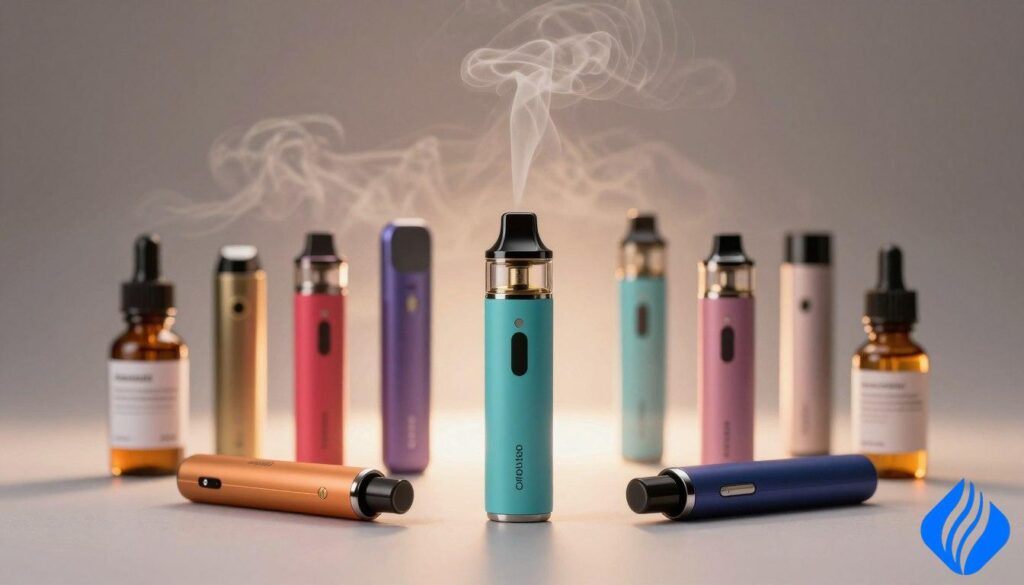
We outline device specs (mAh, ml, nic strength, coil type, USB‑C), hands-on notes (throat hit, vapor, flavor fade near ~5000 puffs), and competitor comparisons (Geek Bar, Lost Mary, Raz). We also flag safe purchasing and authenticity checks with SokVape.
We are not giving medical advice. People with pregnancy, heart conditions, or nicotine sensitivity should consult a clinician. Our aim is objective, technical guidance so readers can judge health effects and product choices.
Key Takeaways
- E-liquid hosts minor lab calories, but inhalation rarely equals dietary intake.
- Nicotine drives appetite and behavior more than any direct caloric absorption.
- We will verify ingredients, math, and absorption pathways in later sections.
- Device specs and usage patterns affect cravings and overall effects.
- Buy authentic products and verify supply reliability; SokVape is named for sourcing checks.
Why people ask about vaping calories, weight gain, and dieting in the US
Search queries often hide the real concern. We find that most queries are about habit change, appetite shifts, and how a sweet flavor affects snacking — not literal energy from inhaled vapor.
Calories vs. cravings: what users actually mean when they ask about “vapes calories”
We see three drivers behind these searches. First, U.S. culture emphasizes strict calorie tracking and diet apps. Second, people confuse sweet flavors with sugar. Third, nicotine can alter appetite and shift cravings.
Many queries about intake are really about whether vaping reduces or raises snacking. That explains why users ask, “Will this cause weight gain?” rather than asking about lung absorption.
How sweet flavors and appetite suppression can confuse the question
Sweet or dessert-style profiles can trigger food-related cues. For some users, that boosts hunger and cravings. For others, nicotine suppresses appetite and feels like a diet aid.
We position this as a risk tradeoff: short-term appetite changes do not equal sensible weight control. For more technical context, see our vaping and calories study.
Do disposable vapes have calories? What the science-based answer really means
On paper, vape juice contains measurable energy; in practice the body processes vapor differently.
Yes—the base mix in most e-liquid, notably propylene glycol and vegetable glycerin, stores chemical energy similar to other carbs. Lab figures often cite ~calories per gram in the same range as food components.
No—inhaling aerosol is not the same way the gastrointestinal tract absorbs nutrients. The lungs are optimized for gas exchange, not caloric uptake. Published physiology reviews show aerosolized VG/PG is largely exhaled or metabolized differently than swallowed liquid.
- Short answer: measurable in the bottle, negligible for typical caloric intake tracking.
- Why it matters: nicotine, habit, and flavor cues affect weight and appetite more than the tiny energy potential of vape juice.
- What’s next: we will run simple math and lung-vs-gut physiology to estimate real-world impact.
![Jason Derulo - Ridin' Solo [Official HD Music Video]](https://www.sokvape.com/wp-content/cache/flying-press/6df6e15946097a457b61a9307496b69e.jpg)
What’s inside vape juice: ingredients that sound like food but aren’t treated like food
Many ingredients in e-liquid read like food chemistry, but the route of exposure changes everything.
Typical ingredients are simple: propylene glycol (PG), vegetable glycerin (VG), flavorings, and nicotine. Brands may add sweeteners or cooling agents. We list each in plain terms below.
Propylene glycol and the “4 calories per gram” context
Propylene glycol is a thin, food-grade carrier. Labs sometimes cite ~4 calories per gram as a reference. That figure is a chemical energy metric, not a guarantee the lungs will absorb that energy like the gut.
Vegetable glycerin and why “carbohydrate-like” doesn’t equal diet intake
Vegetable glycerin is thicker and classed with carbs chemically. When vaporized, most VG exits or follows metabolic paths different from eaten food. It rarely converts into meaningful dietary energy when inhaled.
Flavorings, sweeteners, and sugar misconceptions
Most e-liquid contains no table sugar. Sweetness comes from flavor chemistry or small amounts of sucralose and similar agents. Those additives can gunk coils faster, affecting mesh and dual‑mesh performance.
Nicotine content: appetite effects, not caloric value
Nicotine has no calorie content. It can alter appetite and suppress appetite for some users. We reinforce: nicotine is addictive. We do not recommend vaping to control weight or replace food.
How many calories are in a disposable vape, approximately?
We present a simple, transparent method to convert e-liquid volume into on‑paper energy estimates.
Rule of thumb: assume ~4 calories per gram for PG-like components and a similar number for VG on a mass basis. Multiply that by total ml and adjust for base ratio and density to get a bottle‑level figure.
Example estimates and assumptions
Baseline: a small 2 ml unit typically equals single‑digit totals on paper—often ~8 (range ~6–10) depending on VG/PG mix. A 10 ml bottle reads near ~40 by the same math.
Factors that change the estimate:
- Amount of e-liquid: more ml raises the on‑paper total.
- Higher VG blends raise density, nudging totals upward slightly.
- Larger 2026 formats with >6 ml will show higher liquid energy on the label.
Important: these are label-level figures. The real question is whether lungs convert that labeled energy into usable food energy — which we address next.
Can you absorb calories from vaping? What happens in the lungs vs. the gut
A focused look at lung physiology shows why airborne aerosol rarely converts into usable dietary energy.
The body absorbs most energy through the gastrointestinal tract. Digestion breaks compounds into small molecules. The gut then moves those molecules into the bloodstream.
The lungs serve a different way. They exchange gases. They can absorb small, volatile chemicals like nicotine quickly. They are not structured to digest or extract bulk energy the way the gut does.
What you inhale vs. what you exhale
During a puff, aerosol reaches airways and alveoli. Some molecules cross into blood. A large fraction is exhaled or trapped in mucus.
Nicotine absorbs efficiently via lungs, producing systemic effects. Most VG/PG aerosol droplets do not convert into meaningful dietary energy after inhalation.
Practical impact on intake, fasting, and weight
For calorie tracking or fasting windows, the net calories absorbed from inhaled aerosol are negligible. Nicotine can change appetite and behavior, which may alter intake indirectly.
If users notice weight shifts, the usual drivers are appetite changes, habit substitution, or metabolic effects of nicotine—not direct caloric absorption from vapor.
| Pathway | Main role | Typical absorption | Relevance to calorie intake |
|---|---|---|---|
| Gastrointestinal tract | Digest and absorb nutrients | High for macronutrients | Direct and significant |
| Respiratory tract | Gas exchange, rapid drug uptake | Selective for volatile/small molecules | Minimal for dietary energy |
| Exhalation & mucociliary clearance | Remove particles and residues | Removes large fraction of aerosol | Reduces potential energy uptake |
In summary: the lung is a fast route for certain chemicals but a poor route for calorie absorption. The small impact on energy balance is dwarfed by behavioral and nicotine-related effects that shape overall health.
Does nicotine affect weight, hunger, and metabolism more than “calories” do?
Nicotine’s role in body weight is complex: its pharmacology and behavior effects shape outcomes more than the tiny energetic content in e‑liquid. We stress a clear health warning: nicotine is addictive. It is not a safe weight loss strategy and is not for youth or pregnancy.
Appetite suppression and cravings: what research suggests
Short-term studies show nicotine can suppress appetite and reduce snack intake for some people. Others report later compensation and stronger cravings once dosing drops.
Quitters often report increased hunger and weight gain. That rebound is behavioral and physiological, not a function of inhaled energy.
Metabolism effects: indirect and individual
Nicotine can slightly raise basal metabolic rate in some users. The effect is modest and varies by person.
Any net change in body mass usually reflects altered eating patterns and nicotine exposure, not significant metabolic overhaul.
Hand-to-mouth behavior and real user patterns
We see two common patterns. For some adults, a hand‑to‑mouth habit replaces snacking and helps control intake. For others, constant flavor cues prolong cravings and trigger extra food.
Practical guidance: prioritize stable meals, protein and fiber, hydration, and planned snacks. Consult a clinician about nicotine, addiction risks, and weight concerns.
Hands-on testing: flavor consistency, throat hit, and vapor production over time
We performed hands-on testing to record how flavor, throat hit, and cloud change from first use through extended runs. Our notes focus on consistency, not marketing claims.
Throat hit profiles: a 2% nic salt blend feels smoother and more forgiving. A 5% strength produces a stronger sensation and can amplify dryness or irritation for sensitive users. Nicotine level directly alters perceived sharpness.
Vapor production: higher VG liquid yields denser, cloudier draws. That thicker output stresses wicking in compact units and can cause muted taste if the coil struggles to feed juice fast enough.
After ~5000 puffs sweetness often dulls first. Cooling agents may become uneven. Overall intensity drops as mesh or dual-mesh coils collect residue and wicks foul, especially with sweetener-heavy content.
Warning signs: a burnt taste, harsh throat hit, or muted flavor suggests a dry wick, coil buildup, or nearing empty reservoir. Users sometimes chain-vape chasing lost flavor, which raises nicotine intake and other unintended effects.
Core technical data to look for when buying a disposable in 2026
Buying in 2026 means looking past marketing and checking core specs that affect uptime and flavor. We focus on measurable fields you can compare across products.
Battery capacity (mAh): real-world uptime
mAh predicts how long a device runs between charges. Higher mAh gives longer uptime, fewer voltage drops, and steadier flavor late in life. For mouth‑to‑lung use, 500–1500 mAh spans typical ranges. For direct‑to‑lung or heavy users, aim higher.
E-liquid volume (ml) vs claimed puffs
ml is more comparable than marketing puff counts. Puff claims vary by draw length, airflow, and coil power. Use ml and base ratio to estimate how long a unit will last in real use.
Nicotine strength basics: 2% vs 5%
Choose nic salts to match tolerance. 2% suits lighter dependence or gradual reduction. 5% fits higher dependence but raises risk of nausea or dizziness if misused. Match strength to experience and monitor effects closely.
Coil type: mesh vs dual mesh
Mesh increases surface area for cleaner flavor. Dual mesh extends consistency and delays flavor drop‑off when part of the wick fouls. For longer-lasting taste, dual mesh often holds an edge in 2026 designs.
Charging port: why USB‑C matters
USB‑C brings standardized cables, better connector durability, and more reliable charging than older ports. Use quality adapters and stop using a unit if it overheats or leaks.
- Buyer’s checklist: battery (mAh), e‑liquid (ml), nicotine strength, coil design, charging port.
- Compare ml and coil type before trusting puff claims.
- Prioritize reputable products and safe charging practice.
Comparison spotlight: puffs per dollar and flavor consistency vs. Geek Bar, Lost Mary, and Raz
A fair comparison balances price, usable puff range, and real liquid capacity. Marketing puff counts mislead unless cross-checked with ml and realistic puff estimates. We focus on specs that shape late-life taste and total value.
Puffs per dollar: method and quick guide
Compute puffs per dollar using price ÷ realistic puff range, then verify against e‑liquid ml. That avoids inflated claims and shows true cost per usable puff.
Flavor consistency: mesh vs dual mesh
Mesh yields clear early flavor. Dual mesh tends to hold flavor deeper into the run. Sweet or heavily flavored liquid speeds coil build‑up and shortens peak taste.
Battery and charging: why USB‑C changes value
Rechargeable units with USB‑C often extract more total liquid by preventing premature battery loss. That improves overall puffs per dollar versus single‑use units that die before liquid runs out.
| Model profile | mAh | ml | Nic | Coil | USB‑C |
|---|---|---|---|---|---|
| 2026 rechargeable profile | 1000–1500 | 8–12 | 2% / 5% | Dual mesh | Yes |
| Geek Bar | 500–800 | 2–6 | 2% / 5% | Mesh | No (varies) |
| Lost Mary | 600–1000 | 6–10 | 2% / 5% | Mesh / dual mesh | Some models |
| Raz | 700–1200 | 5–9 | 2% / 5% | Dual mesh (many) | Some models |
- How to read this: prioritize ml and coil design over claimed puff counts.
- Late-device impact: dual mesh + steady power = better flavor retention.
- Value tip: consult a best disposable guide at best disposable guide when comparing price and specs.
How to know if it’s empty and how to recharge safely
A few clear indicators tell you when a unit needs rest, recharge, or retirement. We explain signs that mean the liquid is nearly gone and offer safe charging steps to protect device function and user health.
How to tell it’s empty
Look for a sudden flavor drop and much thinner vapor. LED blink patterns often signal end of charge or empty reservoir.
If you get repeated dry or harsh hits that rest does not fix, the wick is likely starved. That shortage can create a burnt taste because the coil overheats without enough liquid.
How to recharge safely
Use a quality USB‑C cable and a low‑output wall adapter. Prefer 5V/1A adapters unless the device specifies higher support.
Avoid fast-charging bricks for phones or laptops. Do not charge unattended or on soft surfaces. Stop if the unit becomes hot while charging.
When to stop using it
- Overheating or swelling — stop immediately.
- Persistent leaking or crackling beyond normal use.
- Ongoing burnt taste or unusual odors.
| Signal | Meaning | Action |
|---|---|---|
| Weak vapor / thin draws | Low liquid or low battery | Charge, then test; replace if persists |
| Blinking LED | Battery alert or end-of-life | Recharge; stop if repeats after charge |
| Dry/burnt hit | Wick overheating | Stop use; do not chain-vape; replace unit |
Safety note: Keep devices away from children and pets. If you feel dizzy or nauseated, stop use — excess nicotine exposure can affect the body in serious ways. We recommend cautious charging and retiring any unit that shows overheating, leaking, or persistent burnt taste.
Is it authentic? How to verify a disposable vape before you use it
Before you inhale, verify the unit’s origin and serial data to avoid unknown formulations or battery faults. Quick checks reduce exposure to erratic performance and questionable content.
Scan the QR code and follow the official path
Scan the device QR code and follow the verification flow via the official SokVape link: https://www.sokvape.com/. Do not trust random landing pages that mimic branding.
Authenticity red flags
- Poor packaging: misspellings, low print quality, or missing batch/serial info.
- Odd taste or chemical harshness on first use; sudden burnt notes.
- Inconsistent output: erratic airflow, rapid flavor collapse, or uneven hits.
- Unusual battery behavior: swelling, rapid drain, or heating during charging.
- Unexpected effects or formulations not listed on the label.
Where to shop for safer sourcing
We recommend verified sellers and brand pages on SokVape for lower risk. Check category links before purchase: Disposable Vapes, Hot Sale, RandM, Bang.
Authenticity matters for user safety. Counterfeit units can deliver inconsistent nicotine, unsafe batteries, and unknown e-liquid content. We encourage careful verification and to stop using any unit that fails checks. For adults considering alternatives to cigarettes or traditional smoking, remember non-use is safest and nicotine carries addiction and health risks.
Conclusion
Our verdict: measurable energy exists in e-liquid because of PG and VG, but inhaling aerosol is not the same as eating food. Lung absorption does not convert that labeled energy into meaningful dietary intake for most adults.
What matters more: nicotine, habit, and flavor cues drive appetite and weight changes. Quitting cigarettes often shifts hunger and can lead to weight gain via behavioral compensation.
Buyer checklist (2026): check mAh and ml, match nicotine strength (2% vs 5%), prefer mesh or dual mesh for lasting flavor, and favor USB‑C charging. Compare puffs per dollar and late‑life flavor when weighing Geek Bar, Lost Mary, or Raz.
Safety note: nicotine is addictive and not for minors or pregnancy. Verify authenticity via QR on SokVape and stop use if you notice adverse effects.
 English
  German
  Dutch
Dutch  Danish
  Czech
Czech  Italian
  Slovenian
  French
  Hungarian
  Spanish
  Polish