

Do vapes have lithium batteries is a common question as new features like dual mesh coils and smart screens raise power demands. We answer that plainly and with data.
Most modern disposable devices use lithium-ion cells; some use lithium‑polymer. Typical capacity ranges from 150–500 mAh, and average lithium content sits near 0.15 g per unit.
We will explain battery chemistry, how to read packaging, and why energy and e‑liquid volume both shape runtime. We preview hands‑on testing notes (including device behavior after 5,000 puffs), product specs (mAh, ml, nic salts, mesh/dual mesh, USB‑C), and methods to compare puffs per dollar and flavor stability.
Safety matters. Cells are safe when used correctly but fail if crushed, overheated, or charged incorrectly. We link to a close look at hidden fire risk in disposables for context: hidden fire risk study.
This product contains nicotine. Nicotine is an addictive chemical. For adults 21+ only.
Key Takeaways
- Most disposables use lithium‑ion chemistry with 150–500 mAh capacity.
- Runtime depends on mAh, coil type, and e‑liquid volume—not battery spec alone.
- Safe handling and proper disposal reduce fire risk and environmental harm.
- We provide hands‑on metrics: puffs per dollar, flavor drift, and long‑run notes.
- Look for clear packaging: mAh, ml, nic strength, and charging type when comparing devices.
Do disposable vapes use lithium-ion batteries in 2026?
In 2026, most disposable puff products rely on a compact cell chemistry that balances runtime and size. We confirm this based on market designs and common part choices.

Why this chemistry is the default
High energy density lets manufacturers pack usable charge into tiny housings. That lowers weight while keeping output steady during typical use.
Stable output means a smoother vapor curve and fewer abrupt performance dips as charge drops. This benefits flavor and consistency for vapers.
Lithium-ion vs. lithium-polymer
Both are lithium‑based and rechargeable in design. Li‑polymer often uses pouch cells for flexible shapes. Safety and runtime depend more on protection circuitry and build quality than on chemistry alone.
What capacity (mAh) means for users
Capacity is stored charge measured in mAh. Typical disposables list between 150–500 mAh. Higher mAh can extend run time but does not guarantee longer life if e‑liquid volume or coil efficiency limit use.
| Feature | Li‑ion (common) | Li‑Polymer (pouch) |
|---|---|---|
| Energy density | High | High |
| Typical form | Cylindrical/prismatic | Pouch/flexible |
| Common capacity (mAh) | 150–500 | 150–500 |
| Safety factors | Protection circuitry, build quality | Same—packaging and protection |
Safety note: Any cell can become hazardous if overheated, punctured, or shorted. Proper design and user handling matter as much as the printed specs.
How to tell what cell is inside your unit without opening it
Start by inspecting packaging and product pages; most clues are printed or listed openly. We recommend the non-invasive way first. This keeps you safe and protects the internal cell.
Check labels and listings
Look for chemistry codes such as IMR, ICR, INR or the term lithium-ion batteries on the box, manual, or online spec sheet. These codes indicate rechargeable cell families and confirm the battery type without disassembly.
Integrated vs. removable cells
Many vape pens use integrated cells. Advanced mods often use removable cells with clear size and format specs.
Disposable devices normally include an internal, non-serviceable cell. If a listing omits battery details, treat that as a quality signal.
Why you should not open the shell
Disassembly carries serious risks. Puncturing a cell or shorting terminals can trigger rapid heat, smoke, and thermal runaway. That event is hard to stop once it starts.
“Never open sealed cells at home. Teardowns should be left to trained technicians with proper safeguards.”
- Safer approach: check box, device print, or retailer listing for Li‑ion language and IMR/ICR/INR codes.
- Compatibility note: removable-cell devices list size and charging specs; sealed devices do not.
- Protection varies: some devices include overcurrent and charge protection, but quality differs by maker.
| Method | What it shows | Reliability |
|---|---|---|
| Packaging/Manual | Chemistry codes, mAh, charging type | High |
| Product listing | Detailed specs, user reviews, seller transparency | High–Medium |
| Device markings | Model number and basic codes | Medium |
| Physical teardown | Exact cell type and protection board | Low for consumers (high risk) |
If information is missing, choose reputable retailers with clear specs. That protects performance expectations and reduces safety risks.
do vapes have lithium batteries in disposable models?
A compact sealed cell often powers the entire unit in modern throwaway vape designs. We answer plainly: yes—most disposable models include a small internal lithium cell, usually lithium‑ion, even when marketed as single‑use.
Quick identification checklist for disposable vapes sold today
Use this short checklist at purchase time. Each item is visible without opening the shell.
- Labeling: Look for “Li‑ion” or manufacturer chemistry codes on the box or spec sheet.
- Charging port: Presence of USB‑C or any port often indicates a rechargeable internal cell.
- Rated capacity: Confirm mAh on the panel; that number clues you to runtime and cell size.
- Retail transparency: Prefer sellers that list battery protections and cell type.
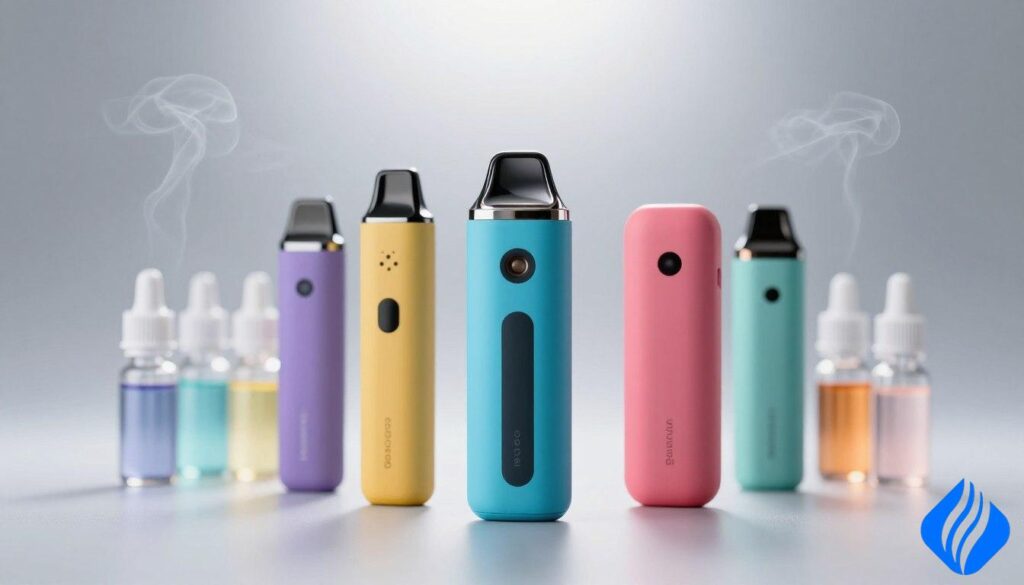
How much lithium is typically inside a disposable
Typical amount per unit is small—around 0.15 g of elemental lithium for many standard models. That is minor per piece but adds up across large sales volumes.
Because these devices contain lithium chemistry, treat spent units as e‑waste. Send them to battery recycling or designated drop‑off points. Avoid loose storage in bags or pockets to reduce shorting risk. For charger and runtime questions, see our guide on how long to charge disposable vape.
Specs that matter in real use: battery mAh, e-liquid ml, nic strength, coil, charging port
Practical runtime and flavor depend far more on listed specs than on marketing claims. We highlight five attributes that predict daily outcomes.
Battery capacity and real-world support
Battery capacity ranges from 150–500 mAh in typical disposables. Higher capacity usually gives steadier heat and longer runs, but it does not equal exact puff counts.
E-liquid volume vs. lifespan
Capacity of e-liquid (ml) often limits life before the cell runs out. A large cell with small ml will stop when liquid is gone. Balance matters for a consistent vaping experience.
Nicotine strength
In the U.S., most units use 2% or 5% nicotine salts. Higher nicotine can shorten use because users take shorter intervals but may puff more often.
Coil type and consistency
Mesh coils and dual mesh increase surface area and improve flavor stability. Dual mesh often keeps taste steadier later in life, assuming good wicking and power management.
Charging port standards
USB‑C is the preferred charging option for safety and fit. Use quality chargers and avoid unattended charging to reduce risk.
| Spec | Typical Values | Impact |
|---|---|---|
| Battery capacity | 150–500 mAh | Runtime, steady power |
| E-liquid | 10–20 ml (varies) | Device lifespan |
| Nicotine | 2% / 5% (nicotine salts) | Throat hit, consumption rate |
| Coil | Mesh / Dual mesh | Flavor stability |
| Charging | USB‑C preferred | Convenience & safety |
For shoppers, compare spec sheets and vendor notes. Browse our Disposable Vapes and current Hot Sale listings. For tips on safe use, see our guide on how to use.
Main product vs. competitors: puffs per dollar and flavor consistency
We compare a flagship USB‑C rechargeable disposable and two common rivals to show real-world value and taste retention. The goal is practical guidance for shoppers who care about long-term performance and steady flavor.

Main product spec snapshot
Sokvape Dual Mesh USB‑C Disposable (Main Pick)
- Battery: 500–850 mAh
- E‑liquid: 12–20 ml
- Nicotine: 2% or 5% nic salt
- Coil: mesh / dual mesh
- Charging: USB‑C
Geek Bar vs. the main pick
Geek Bar models often sit at a lower street price but advertise fewer puffs. For value math we use advertised puffs and apply a 20–40% real‑world variance.
| Model | Street price (approx) | Advertised puffs | Realistic puffs | Puffs per $ (conservative) |
|---|---|---|---|---|
| Sokvape Dual Mesh | $18 | 8,000 | 5,600–6,400 | 311–356 |
| Geek Bar (rechargeable) | $14 | 6,000 | 3,600–4,800 | 257–343 |
Flavor note: Geek Bar flavor tends to soften earlier as coil deposits form and voltage drops.
Lost Mary vs. the main pick
Lost Mary often scores high on initial taste. Mid‑life performance depends on wicking and coil geometry.
| Model | Mid‑life flavor | Coil type | Comment |
|---|---|---|---|
| Sokvape Dual Mesh | Stable | Dual mesh | Maintains sweetness and clarity longer |
| Lost Mary | Noticeable decline | Single mesh / mesh | Sweetness fades; slight burnt notes possible |
Raz benchmark (battery consistency)
Raz models highlight whether charging cycles keep output steady. We watch for throttling and mismatched indicator behavior as signs of weak power management.
How to calculate “puffs per dollar”
Use this formula: advertised puffs × realistic factor ÷ price. Apply a conservative factor (0.6) and a best‑case factor (0.8) to reflect puff length and airflow.
What “flavor consistency” measures
Flavor consistency tracks four user‑visible changes: burnt notes onset, sweetness fade, cooling/menthol drop, and airflow changes from condensation.
These shifts usually stem from coil wear and slower wicking. Mesh coils and dual mesh designs give steadier taste under sustained load and better power distribution.
“Puffs per dollar and sustained flavor are the clearest signals of a well‑designed disposable device.”
Explore related options from RandM and Bang to compare coil types and charging standards within the same retailer.
Hands-on testing insights: throat hit, vapor production, and flavor after 5000 puffs
After extended runs, we measured throat sensation, output, and taste at the 5,000-puff mark under consistent user cadence. Our protocol used steady puff duration and rest intervals to isolate changes in power delivery and coil wear.
Throat hit profile
Nicotine strength drives the sensation. A 5% nic salt reads stronger and faster than 2%.
Airflow matters: tighter draws concentrate heat and feel harsher. Wider airflow softens the hit by diluting the inhaled mix.
Vapor production consistency
We tied perceived drop-off to voltage sag and simple regulation. Devices with better power management kept steady output longer.
When energy falls, vapor volume and warmth decline. Poor regulation amplifies that fade.
Flavor evolution after 5000 puffs
The first shifts: sweetness flattens and cooling notes fade. Next, a faint papery or dull tone can appear.
Causes include wick lag, coil deposit buildup, and concentrated heat on a worn element. Dual mesh often holds saturation longer, but it can expose dryness sooner during heavy chain-use if wicking lags.
When the battery outpaces the liquid
- Low-voltage cutoff triggers and stops output.
- Coil failure or open circuits end function.
- Blockage or condensation can starve the coil and mimic battery loss.
- Protection circuitry may interrupt power after abnormal draw.
“Stop using any device that gets hot, swells, or emits odd smells. Those are signs of a serious fault, not normal end-of-life.”
Safety note: Avoid unattended charging and discard damaged units via proper recycling. Proper handling reduces risks and preserves the intended vaping experience.
Conclusion
Conclusion
Many disposable vapes contain small lithium cells—typically lithium‑ion or pouch types that deliver compact energy. The elemental amount per unit is small (around 0.15 g), but each item combines a cell, metal contacts, and some plastic, so it should be treated as e‑waste.
Practical takeaways: rely on packaging and spec sheets to identify battery types. Never open a sealed unit. Match mAh, e‑liquid ml, nicotine strength, and coil design to predict real life and flavor.
For end-of-life, use certified recycling or dedicated battery recycling points. Verify authenticity by scanning the product QR code and confirming via Sokvape. Check listings like Disposable Vapes, Hot Sale, RandM, and Bang for transparent specs.
Quick FAQ
How to know if it’s empty? Look for flavor loss, low vapor, blinking LEDs, or a draw that heats no longer—these signal end of life or cutoff.
How to recharge safely? Use the manufacturer‑recommended USB‑C cable and a modest power adapter, stop if the device warms, and never charge unlabeled non‑rechargeable models.
Is it authentic? Scan the QR code and confirm on the maker’s site. Inspect seals, serials, and packaging consistency.
This product contains nicotine. Nicotine is an addictive chemical. For adults 21+ only.
 English
  German
  Dutch
Dutch  Danish
  Czech
Czech  Italian
  Slovenian
  French
  Hungarian
  Spanish
  Polish