

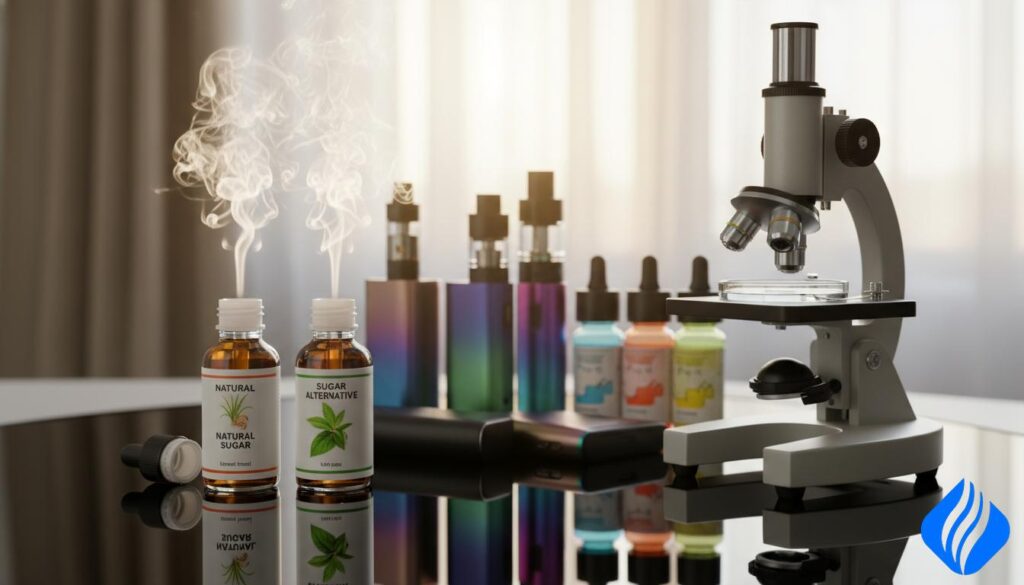
We answer the core question with a clear distinction: table sugar (sucrose, glucose, fructose) is not what creates the sweet taste you notice from most vape juice.
Most commercial e-liquids lack granulated sugars because those molecules break down at coil temperatures and foul hardware. Instead, sweetness comes from vegetable glycerin (VG), concentrated flavor chemistry, and high-intensity sweeteners such as sucralose or ethyl maltol.
Nicotine warning (21+): Nicotine is an addictive chemical and can affect the cardiovascular system and metabolism. Avoid use if pregnant and consult a clinician for personalized advice.
We will cover sweet taste versus table sugar (Section 2), ingredient breakdown and added sweeteners (Section 3), blood-glucose implications (Section 4), heating byproducts (Section 5), and device specs, hands-on tests and comparisons (Section 6). For related data on caloric uptake and aerosol chemistry, see our detailed notes on calories and absorption here: calories in a vape.
Key Takeaways
- Table sugar rarely appears in modern vape juice; sweetness usually stems from VG and flavorings.
- Added sweeteners mimic sweet taste but differ chemically from dietary sugars.
- Nicotine is addictive; this guide is for adults 21+ and not medical advice.
- Later sections detail ingredient lists, lab considerations, and blood-glucose questions.
- We prioritize technical accuracy and hands-on verification for readers seeking informed choices.
Do vapes have sugar in them, or just a sweet taste?
Sweet perception in many e-liquid mixes stems from formulation choices, not spooned granules. Table sugar (sucrose) decomposes above roughly 149°C, and coils commonly exceed that temperature. Adding sucrose would foul coils and cut flavor clarity.
Why traditional sugars don’t belong at vape temperatures
At elevated heat, sucrose breaks down and chars. That residue reduces coil life and creates off notes rather than a clean sweet taste. For practical engineering reasons, manufacturers avoid using table sugar in products.
How vegetable glycerin naturally tastes sweet
Vegetable glycerin (VG) is a sugar alcohol with a mild sweet profile. VG-heavy juice yields denser vapor and a perceived sweeter note without adding dietary sugar. Many vapers notice sweetness even in simple blends for this reason.
Flavor concentrates vs. “sugar”
Perfumer-style flavor chemistry and high-intensity sweeteners create dessert and candy profiles. Aroma compounds and enhancers deliver sweetness through olfactory cues, not sucrose. If a device tastes intensely sweet, it’s usually the flavor system or added sweeteners at work.
| Factor | What it is | Effect on sweetness |
|---|---|---|
| Table sugar (sucrose) | Granulated carbohydrate | Decomposes above ~149°C; not used |
| Vegetable glycerin (VG) | Sugar alcohol humectant | Mild natural sweetness; denser vapor |
| Flavor concentrates | Concentrated aroma compounds | Drive dessert/candy sweetness |
| High-intensity sweeteners | Sucralose, ethyl maltol, etc. | Amplify perceived sweet taste |
For more on why a vape tastes sweet, see this short explainer: why a vape tastes sweet. For related notes on caloric uptake, consult calories in a vape. We now move to a detailed ingredient breakdown to show what actually creates sweetness in modern e-liquids.
What’s actually in vape juice: ingredients that create sweetness
Commercial e-liquid formulas rely on core solvents and targeted additives to produce sweet notes. Standard mixes list propylene glycol (PG), vegetable glycerin (VG), optional nicotine, and concentrated flavorings.

PG and VG bases
Propylene glycol is a sharp flavor carrier and raises throat hit. Higher PG ratios make flavors pop but feel harsher.
Vegetable glycerin smooths the draw, boosts cloud density, and adds mild perceived sweetness.
Artificial sweeteners and enhancers
Sucralose is used for intense sweetness but often leaves sticky residue that builds on coils. Ethyl maltol gives a cotton‑candy roundness without tasting like table sweetener.
Other sweetening agents
Stevia and erythritol appear in some blends. Erythritol can feel cleaner; stevia may still deposit on coils depending on device power.
Coil gunk and practical advice
Sweet additives can carbonize over time, darken coils, mute flavor, and shorten coil life. If longevity matters, choose less‑sweet profiles or formulations made to minimize residue.
| Ingredient | Role | Effect |
|---|---|---|
| Propylene glycol | Flavor carrier | Sharper taste, stronger throat hit |
| Vegetable glycerin | Humectant | Smoother draw, mild sweetness |
| Sucralose / Ethyl maltol | Sweeteners | Boost sweetness; may foul coils |
Health considerations in the US: blood sugar, diabetes risk, and what nicotine does
Nicotine exposure changes how the body manages glucose. This matters for people who track blood sugar and for those at risk of diabetes. Even if e-liquid lacks dietary sweeteners, nicotine can alter blood sugar levels through hormone pathways.

Nicotine can spike blood sugar and increase insulin resistance over time
How it works: Nicotine triggers adrenaline and cortisol. Those hormones signal the liver to release glucose. The result is a temporary rise in blood sugar.
Repeated exposure across years may raise insulin resistance. Effects vary by nicotine strength, frequency, and individual health status. Both vaping and smoking deliver nicotine; neither is metabolically neutral.
Why vaping before labs may skew glucose readings and other blood work
Vaping shortly before fasting glucose or metabolic panels can elevate results. Clinicians often advise fasting and avoiding nicotine prior to testing to reduce false highs.
- For people monitoring glucose: Log vaping timing alongside readings.
- Caregivers: Note patterns in sugar levels and symptoms; share with clinicians.
- Practical: Follow pre-test instructions to avoid the impact blood tests show.
| Topic | Short summary | Action |
|---|---|---|
| Nicotine effect | Raises glucose via stress hormones | Limit use before testing; consult clinician |
| Short-term spike | Temporary increase in blood sugar | Avoid vaping before fasting labs |
| Long-term risk | May increase insulin resistance over years | Monitor trends; consider alternatives for nicotine delivery |
We keep the tone factual: nicotine can impact blood sugar but is not the sole cause of diabetes. Next, we review chemical byproducts formed when sweeteners and solvents are heated.
What happens when sweeteners are heated: flavor chemistry and potential byproducts
Heating common e-liquid components alters molecular structures and can produce new, sometimes harmful, byproducts. Even without dietary sweeteners, thermal stress changes PG, VG, and concentrated flavors into different chemical species. In some conditions, researchers note formation of formaldehyde, acetaldehyde, and benzene.
Heating PG/VG and flavorings
Higher coil temperatures and dry wicking raise the risk of breakdown. Studies highlight that these byproducts increase with power, long draws, and aged coils.
Sweetener-heavy mixes can encourage longer pulls and higher wattage. That behavior amplifies thermal stress and may raise exposure to flagged compounds.

Respiratory and oral-health concerns
Sticky residue from sweeteners and flavor components deposits on coils and mouth surfaces. This can cause dry mouth, coated taste, and localized irritation.
Clinically, residue may contribute to plaque buildup and oral discomfort. Long-term inhalation effects are still under study and differ from food safety data.
How flavor changes over time
Users often notice bright sweetness at first. Over time, residue accumulates and the same flavor can become muted.
Eventually the profile shifts toward harsh or burnt notes as coils foul. At that point, thermal breakdown and unpleasant byproducts rise.
- Practical steps: Run moderate power, avoid chain-puffing, and replace coil heads or disposables once flavor turns burnt.
- Testing note: We will evaluate sweetness retention, throat hit, and flavor stability in hands-on trials to link chemistry with device performance.
- Further reading: For related chemical concerns, see our primer on diacetyl and flavor safety at what vapes have diacetyl.
| Factor | Risk pathway | Action |
|---|---|---|
| High power / dry wick | More thermal breakdown; formaldehyde, acetaldehyde | Lower wattage; maintain wick |
| Sweetener-heavy mixes | Sticky residue; longer draws | Limit chain-puffs; clean or replace coils |
| Old coils / disposables | Muted flavor; burnt byproducts | Replace when taste shifts |
Hands-on testing and product comparison: sweetness, specs, and value across popular disposables
We tested several popular disposables to measure how sweetness holds up under extended use. Our goal was clear: rate devices by Puffs per Dollar and Flavor Consistency while tracking coil gunk linked to sweeteners like sucralose.

Core technical data to check before purchase
Verify these specs on packaging or listings before you buy:
- Battery capacity (mAh)
- E-liquid volume (ml)
- Nicotine strength (typical 2% or 5% nic salt)
- Coil type (Mesh vs Dual mesh)
- Charging port (prefer USB‑C)
Comparison snapshot: Main pick vs Geek Bar, Lost Mary, Raz
We compared a baseline disposable to Geek Bar, Lost Mary, and Raz. Key metrics:
| Product | Battery (mAh) | Liquid (ml) | Nicotine | Coil |
|---|---|---|---|---|
| Main pick | 950 | 16 | 5% nic salt | Dual mesh |
| Geek Bar | 700 | 13 | 5% nic salt | Mesh |
| Lost Mary | 650 | 11 | 2% nic salt | Mesh |
We calculate Puffs per Dollar from the advertised puff count divided by price and note real-world variance from draw length.
Hands-on testing notes
For each device we logged three outcomes after extended use (up to 5000 puffs):
- Throat hit: smooth vs strong depending on nic and airflow.
- Vapor production: low/medium/high and whether it stayed stable.
- Flavor after 5000 puffs: clean sweetness, muted, or shifted harsh/burnt; sweet formulas with sucralose tended to gunk coils and reduce flavor consistency.
User FAQ
How to know if it’s empty? Reduced vapor, muted taste, blinking lights, or dry hits signal end of life. Stop use to avoid burnt taste.
How to recharge safely? Use the device’s USB‑C port with a reputable cable. Avoid overnight charging and stop if the device heats abnormally.
Is it authentic? Inspect packaging and scan the QR code to verify. For retailer checks see our Disposable Vapes and Hot Sale collections: Disposable Vapes, Hot Sale. For brand options, browse RandM and Bang.
Conclusion
Conclusion
In short: most modern e‑liquids do not contain sugar in the dietary sense. The perceived sweet note comes from VG, concentrated flavor systems and added sweeteners.
Ingredients matter. Traditional table sugar breaks down at coil temperatures and fouls hardware. That is why manufacturers use humectants and flavor chemistry instead of granulated sweeteners.
Practical takeaway: sweeter profiles can leave more residue, shorten coil life, and reduce flavor consistency. Check device specs, Puffs per Dollar, and our hands‑on comparison and FAQ before you buy.
Health note: nicotine can raise blood sugar and alter blood sugar levels. Avoid vaping right before lab work. This guide is for adults 21+. Nicotine is an addictive chemical. If you monitor glucose, consult your clinician.
 English
  German
  Dutch
Dutch  Danish
  Czech
Czech  Italian
  Slovenian
  French
  Hungarian
  Spanish
  Polish