

does seven eleven sell vapes is a common search for U.S. shoppers seeking quick access to disposable vape products at a convenience store counter.
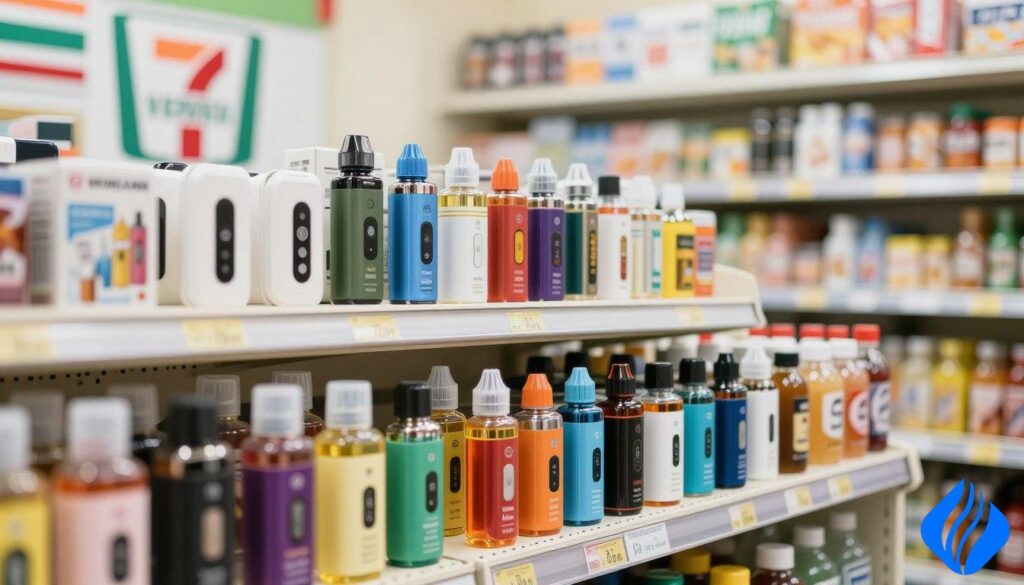
We answer what to expect in real-world availability, and we state the key constraint up front: convenience locations favor fast-moving, low-complexity items, so selection is narrower than specialty shops.
WARNING: This product contains nicotine. Nicotine is an addictive chemical. 21+ YOUTH PREVENTION for existing adult smokers and vapers only.
Our approach is technical and hands-on. We report specs — battery, nicotine strength, coil type, and charging port — plus throat hit and flavor stability from testing. We also benchmark common counter brands (Elf Bar, FLUM, RELX) against Geek Bar, Lost Mary, and Raz using puffs-per-dollar and consistency metrics.
For broader selection or bulk pricing and reliable supply chains, see our linked resource at premium vape products. We focus on safety and compliance; our guidance is for adults 21+ and existing adult smokers and vapers only.
Key Takeaways
- Convenience stores carry a limited range of disposable vape products and stock varies by location.
- We prioritize transparent specs and hands-on testing for battery life, nicotine level, and flavor stability.
- Puffs‑per‑dollar comparisons help weigh counter buys against specialty and online options.
- Safety first: nicotine warning and 21+ restriction apply to all recommendations.
- For wider selection or bulk savings, check reputable online suppliers like the linked premium vape products page.
Quick Answer for US Shoppers: Availability at 7‑Eleven Stores Today</h2>
Yes. Many 7‑Eleven locations in the United States stock vape products, but availability shifts by neighborhood, store franchise, and state. We recommend treating each store as its own inventory point: what one location carries may differ from the next.
Why selection varies by location and region
Local laws and enforcement priorities shape what a store can offer. Distribution agreements and corporate policies also affect shelf decisions.
What you’re most likely to see at the counter
The default convenience option is disposable vapes. They are grab‑and‑go, require no separate parts, and fit impulse purchase behavior.
Common names such as Elf Bar, FLUM, and RELX appear in many areas but are not guaranteed at every checkout.
In-store vs. dedicated vape retailers
Convenience stores offer a limited range. Dedicated vape shops and reputable online sellers carry a wider range of nicotine strengths, coil types, and device formats.
Practical takeaway: call ahead or check in person for a specific brand or flavor. Purchases are age‑restricted and must follow local rules and store policies. For a quick reference on nearby options, see our linked resource at nearby convenience options.
does seven eleven sell vapes? What You Can Usually Buy at the Counter
We observe that checkout counters in U.S. convenience stores prioritize simple, grab‑and‑go nicotine devices. These are designed for quick purchase and high turnover. Selection is narrower than at specialty vape shops.

Disposable vapes vs. rechargeable devices
True single‑use disposables arrive prefilled and are discarded when empty. They require no charging or coil changes.
Rechargeable disposables look similar but include a charging port so a user can finish remaining liquid. They remain broadly single‑use in practice.
Typical brands and what you might find
Commonly seen names include Elf Bar, FLUM, and RELX. Stores usually stock a few SKUs from each brand rather than every flavor line.
Why flavor choice is limited
Retailers optimize shelf space and minimize regulatory risk. Local laws and corporate compliance often shrink flavor variety. That means fewer nicotine strengths and fewer coil or airflow types than at dedicated shops.
| Category | What you’ll see | Buyer tip |
|---|---|---|
| Single‑use disposable | Popular flavors, fixed nicotine | Good for emergencies; check seal |
| Rechargeable disposable | Limited SKUs, USB port | Verify port condition and authenticity |
| Rechargeable pod systems | Rare at counters | Better bought at vape shops or trusted retailers |
Buyer protection: if packaging looks tampered with or lacks authenticity markers, prefer established retailers. Counter buys are convenient, but they rarely match the value, variety, or consistent flavor performance found from specialty outlets.
Core Technical Data: Specs to Check Before You Buy Any Disposable
Before you pick a disposable at the counter, check a few hard specs that determine performance and safety. We list the fields to read on the box and explain what each number means for real use.
Battery capacity (mAh)
What to read: battery mAh on the package.
Real terms: higher mAh usually supports longer runtime and steadier output. Match battery size to coil demand—small batteries can drop voltage under heavy draw.
E-liquid volume (ml) vs puff claims
What to read: e‑liquid ml and advertised puff count.
Use ml as the honest capacity metric. Puff counts are estimates and vary by inhale length and power draw.
Nicotine strength: 2% vs 5%
What to read: nicotine % (nic salt). 5% is stronger with a firmer throat hit; 2% is smoother for lighter users. Remember nicotine is addictive and not risk‑free.
Coil type: mesh vs dual mesh
What to read: coil description on the box. Mesh increases flavor by expanding surface area. Dual mesh can stabilize flavor and vapor during long sessions.
Charging port basics
What to read: port type—prefer USB‑C on rechargeable disposables. USB‑C reduces cable mismatch and supports safer charging when used with an appropriate power source.
- Box‑check checklist: battery (mAh), e‑liquid (ml), nicotine (2%/5%), coil (mesh/dual mesh), charging port (USB‑C).
- Brand variability: Elf Bar, FLUM, and RELX list different numbers by model. Verify exact specs on the package rather than assuming uniformity by brand.
- Don’t buy if: nicotine labeling is missing, manufacturer info is absent, no batch/QR code, or print quality is poor.
| Spec | Why it matters | Box label to verify |
|---|---|---|
| Battery (mAh) | Runtime and steady output | e.g., 350–1000 mAh |
| E‑liquid (ml) | True capacity vs puff marketing | e.g., 2 ml, 6 ml, 10 ml |
| Nicotine (%) | Throat hit and satisfaction | 2% or 5% nic salt |
Hands‑On Testing Insights: Throat Hit, Vapor Production, and Flavor After 5000 Puffs
Our hands-on testing focuses on throat hit, vapor density, and how flavor changes during extended use of common disposable devices. We evaluate patterns, not every SKU, to give practical guidance for everyday users.
Throat hit drivers
Nicotine strength is the main factor. 5% nic salt usually creates a firmer throat hit. 2% feels smoother.
Airflow matters too. Tight, MTL-style airflow intensifies perceived hit even at the same nicotine level.
Vapor expectations
Most convenience-counter devices aim for steady, moderate vapor rather than large clouds. That design favors battery life and simple user experience.
Flavor evolution and red flags
After roughly 5,000 puffs, flavors often flatten and sweetness can mute. Cooling agents may taste sharper as coils age and wicks struggle.
- Red flags: burnt notes, sudden airflow restriction, early blinking errors, and dry‑hit scratchiness.
- If a device tastes burnt, stop using it to avoid irritation.
Practical takeaway
Devices with mesh or dual‑mesh coils tend to keep flavor longer and avoid abrupt harshness. For more predictable long‑term performance, consider higher-volume, reputable options and see our best disposable vape 2025 resource.
Puffs per Dollar: 7‑Eleven Pricing vs. Online and Vape Shops
A straight puffs‑per‑dollar metric cuts through brand claims and shows real value for buyers.
Many disposable devices at U.S. convenience stores land in a typical price range of about $10–$25. Prices vary by brand, city taxes, and store margins. That band is noticeably higher than bulk options from online retailers or some local vape shops.
What drives the markup
Overhead, smaller SKU depth, immediate availability, and regional excise taxes raise counter prices. Limited shelf space also reduces the selection and variety on offer.
How to calculate puffs per dollar
Use this simple formula:
Advertised puff count ÷ price = puffs per dollar.
Then sanity‑check with e‑liquid volume: more milliliters usually yield more real puffs. If two devices claim 5,000 puffs but one has 10 ml and the other 6 ml, the 10 ml unit will likely deliver more usable puffs under similar draws.
| Metric | How to use it | Practical note |
|---|---|---|
| Advertised puffs | Divide by price | Marketing estimates; vary by inhale |
| E‑liquid (ml) | Compare true capacity | Better predictor than puff claims |
| Price band | $10–$25 at convenience stores | Online and shops often undercut on bulk buys |
| Decision rule | Immediate need vs. long‑term value | Buy in store for emergencies; buy online for selection and deals |
When a counter buy is worth it
Choose a store purchase for immediate replacement, travel, or late‑night needs. For repeat purchases, broader selection and better value are usually found online or at specialty shops.
Comparison: 7‑Eleven Options vs Geek Bar vs Lost Mary vs Raz</h2>
We compare typical counter grab‑and‑go options to benchmark competitors to highlight real value and performance. Our scope covers common counter brands you might find (Elf Bar, FLUM, RELX) and three widely discussed rivals: Geek Bar, Lost Mary, and Raz.
Puffs per dollar showdown
Counter convenience devices cost more per puff due to retail markup. Online best‑value devices often offer higher e‑liquid ml and rechargeable designs that lower cost per puff.
Flavor consistency and coil design
Mesh coils improve flavor stability. Dual‑mesh often delays flavor fade during long sessions. In our testing, Geek Bar and Lost Mary generally keep sweetness longer than many counter SKUs.
Rechargeability and USB‑C
Rechargeable disposables with USB‑C let users finish remaining liquid safely. Raz and some Geek Bar models offer USB‑C; that matters for heavy users who want to avoid waste.
Who each option fits best
Beginners: simple counter disposables. Predictable draw and zero setup.
Flavor chasers: choose devices with mesh or dual‑mesh coils for steadier taste.
Heavy users: prefer rechargeable models with larger ml capacity and better airflow stability.
| Metric | Counter options (Elf Bar/FLUM/RELX) | Geek Bar / Lost Mary / Raz |
|---|---|---|
| Puffs per dollar | Lower value; higher retail price | Better value online; higher ml or rechargeable |
| Flavor consistency | Mix of mesh types; variable | More consistent with mesh/dual‑mesh |
| Rechargeability | Some rechargeable SKUs; often micro‑USB | More USB‑C options; safer charging |
Objective takeaway: 7‑Eleven is a convenience option for immediate needs. For optimized puffs‑per‑dollar, sustained flavor, and safer USB‑C recharge, compare Geek Bar, Lost Mary, and Raz before buying.
Where to Buy Beyond Convenience Stores: Better Selection and Fast Shipping</h2>
Digital catalogs surface detailed device specs, making it easier to choose nicotine strength, coil type, and airflow that match real needs.
Shop broader choices online: Disposable Vapes
We recommend checking dedicated collections to compare battery (mAh), e‑liquid (ml), and coil design side‑by‑side. For quick browsing, visit Disposable Vapes. Online retailers list specs, which helps validate puff claims against actual ml capacity.
Find rotating deals and bundles: Hot Sale
For repeat buyers, rotating promos can lower cost per puff. See Hot Sale for bundles and time‑limited discounts. Deals often improve the puffs‑per‑dollar math versus single counter purchases.
Brand collections to compare quickly: RandM and Bang
To compare within a brand family, use the RandM and Bang category pages. Browse RandM and Bang to filter by model, capacity, and coil type.
| Channel | Strength | Practical note |
|---|---|---|
| Online retailers | Wide range | Clear specs, faster comparison |
| Convenience counter | Limited range | Good for immediate replacement |
| Specialty shops | Moderate–wide range | Hands‑on testing and guidance |
“Compare specs, not just puff claims; ml and mAh give a truer cost picture.”
Safety note: Regardless of channel, prioritize transparent labeling, authenticity checks, and reputable sellers with clear inventory handling and return policies.
How to Tell If Your Vape Is Empty
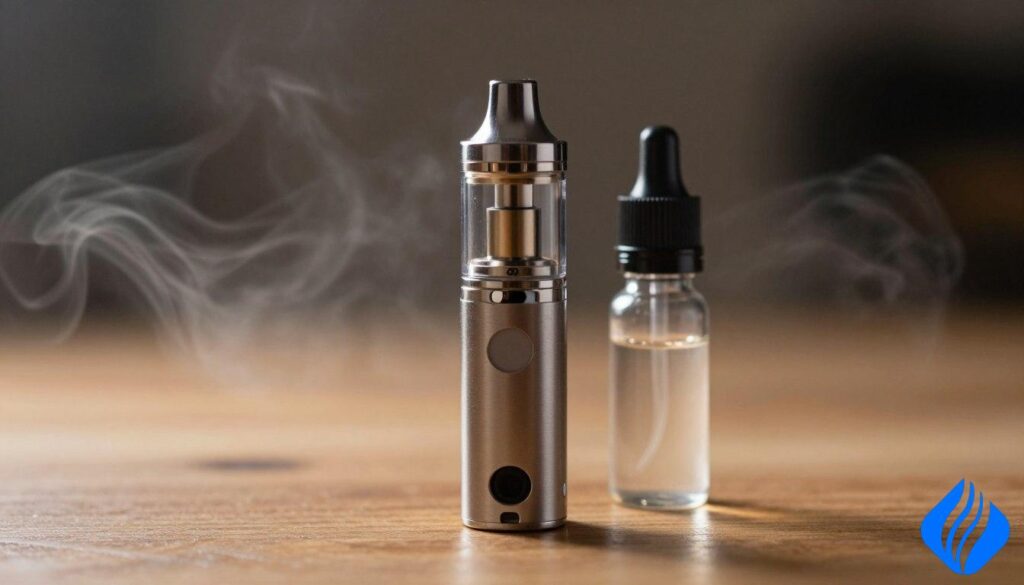
You can tell a disposable is finished by checking a few simple performance cues. These signs help separate true depletion from early failures caused by coil or wick issues.
Common end‑of‑life signs
Weak vapor, a clear drop in flavor, repeated blinking indicator lights (if present), and a dry‑hit scratchiness are the most common signals that a product is near the end.
What weak vapor usually means
Weak vapor can indicate a low battery, low e‑liquid, or an airflow obstruction. Check whether the device is rechargeable before assuming it’s done.
Depletion vs. early failure
Coil saturation or wick flooding can cause dry hits even when liquid remains. Chain vaping or storing a device in heat increases this risk.
After heavy use—roughly 5,000 puffs on higher‑capacity units—flavor flattening and airflow restriction often mimic empty symptoms. Our hands‑on testing shows mesh and dual‑mesh coils hold quality longer.
Practical decision rule
If charging restores vapor but flavor stays burnt or harsh, the coil is likely compromised. Stop using the device for comfort and safety.
- Checklist: weak vapor, flavor drop, blinking lights, dry‑hit scratchiness.
- Consider battery status and rechargeability before discarding.
- Different models age differently by coil type and e‑liquid viscosity.
| Symptom | Likely cause | Action |
|---|---|---|
| Weak vapor | Battery or low liquid | Try charging; if unchanged, stop use |
| Burnt flavor | Coil compromised | Do not continue; dispose responsibly |
| Blinking light | Protection or low power | Refer to manufacturer guidance |
Responsible disposal: once truly empty or malfunctioning, follow local e‑waste and battery guidelines rather than tossing the device in household trash. This preserves user safety and environmental quality.
How to Recharge Safely and Verify Authenticity
Safe charging and a quick authenticity check cut the risk of device failure and wasted liquid. We outline clear steps to protect performance and confirm a product is legitimate before you use it.
Safe recharging basics
Use the included or compatible cable and prefer USB‑C when available. USB‑C reduces connector mismatch and supports safer charging.
Choose a reputable low‑power USB source. Avoid high‑current fast‑charge bricks unless the device documents support for them.
Stop charging if the unit grows hot, emits unusual smells, or blinks abnormally. Never leave charging unattended or overnight.
What a rechargeable disposable means and when to stop
Rechargeable disposable devices are meant to let you finish the liquid after a battery drop. They remain single‑use for e‑liquid lifespan and should be discarded when empty.
Disconnect at full indicator or after a short top‑up. If flavor degrades, or charging no longer restores vapor, stop and dispose responsibly.
Authenticity checks
Counterfeits exist; packaging, batch codes, and print quality matter. If a QR code is present, verify it via Sokvape and follow on‑site steps.
| Check | Action | Why it matters |
|---|---|---|
| Cable type | Use USB‑C or included cable | Safer charging and proper fit |
| Charging source | Low‑power reputable USB | Prevents overheating |
| QR/label | Verify on sokvape.com link | Confirms authenticity and quality |
| Legal guardrails | Follow age checks and local laws | Retail policies and regulations apply |
“Prioritize safety and verification—whether you buy at a corner store or through online retailers, the same checks keep risk low.”
Conclusion
Bottom line: convenience locations often offer basic disposable options, not the widest selection or the best value.
In the U.S., many 7‑Eleven stores carry vape products, but availability and flavor variety vary by location, region, and local regulations. Expect mostly disposables and a few recognizable brands at the counter.
Quick checklist: confirm battery (mAh), e‑liquid (ml), nicotine (2% vs 5%), coil type (mesh or dual‑mesh), and whether a rechargeable unit uses USB‑C.
From hands‑on testing, expect flavor fade after roughly 5,000 puffs. Treat burnt notes, muted sweetness, and airflow restriction as red flags. Use the puffs‑per‑dollar rule and sanity‑check puff claims with ml for value.
For consistent flavor and better pricing, compare options online or at dedicated vape shops. For immediate needs, a local store can fill the gap. Verify authenticity via QR codes and recharge safely with a proper power source.
WARNING: This product contains nicotine. Nicotine is an addictive chemical. 21+ YOUTH PREVENTION for existing adult smokers and vapers only.
 English
  German
  Dutch
Dutch  Danish
  Czech
Czech  Italian
  Slovenian
  French
  Hungarian
  Spanish
  Polish