

Does vape juice have sugar? We begin with a technical fact: modern coil designs and smart screens changed how liquids heat, so traditional table sugar is rarely used in e-liquids.
We explain why this question matters for adult vapers. Sweet-tasting blends can shorten coil life and change mouthfeel. They also affect flavor fade and maintenance schedules.
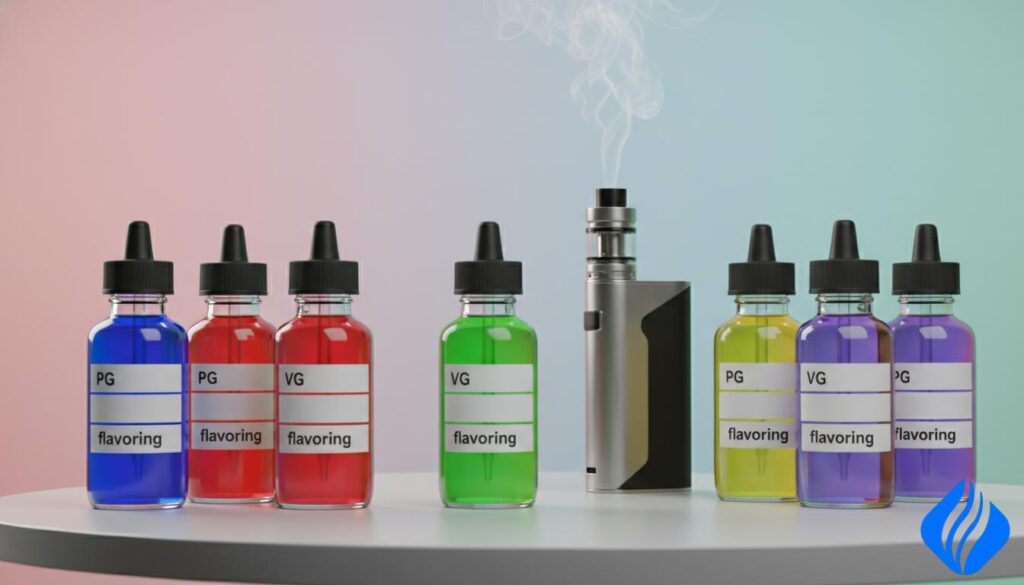
What most e-liquid contains is simple: vegetable glycerin (VG), propylene glycol (PG), concentrated flavor systems, and optional nicotine. Manufacturers often keep flavor formulas proprietary, which is why labels can be vague.
Later, we will show how to read labels, choose cleaner options, and test products. We will also cover disposable specs and safety notes for those transitioning from smoking.
Key Takeaways
- Most e-liquids do not contain table sugar; sweetness comes from bases and flavors.
- Sweetness can accelerate coil gunk and alter taste over time.
- Check ingredient lists for VG/PG, flavor systems, and nicotine.
- We will provide hands-on testing and disposable comparisons later.
- Information is aimed at informed, adult vapers making device and product choices.
What Makes Vape Juice Taste Sweet Without “Real” Sugar?
Not all perceived sweetness is from edible sugar; device chemistry and ingredients shape the sensation.
Why table sugars fail in e-liquid
Traditional table sugar (sucrose, glucose, fructose) decomposes at elevated temperatures and chars near coil temperatures above ~149°C. That breakdown fouls coils and won’t deliver a consistent sweet taste. Using table sweeteners would shorten coil life and raise maintenance needs.
Base liquids: vegetable glycerin vs propylene glycol
Vegetable glycerin (VG) is viscous and tastes mildly sweet. Higher VG ratios boost visible vapor and can make a blend seem sweeter without extra sweetener.
Propylene glycol (PG) is thinner and carries aroma compounds sharply. Higher PG can make flavors pop but may feel harsher and alter perceived sweetness.
Flavor concentrates and proprietary blends
Flavor systems contain many compounds. Ingredients like ethyl maltol mimic cotton-candy or candy notes without acting as table sweetener. Manufacturers often keep exact formulas private to prevent copying. That limits transparency but is common in the industry.
- Nicotine formulation (freebase vs salts) affects throat hit and can change how sweet a mix tastes over time.
- Maintenance: Even without table sweeteners, some sweeteners and concentrates can speed coil residue and dull taste.
Does vape juice have sugar, or is it sweeteners like sucralose?
Manufacturers often rely on targeted sweeteners and flavor chemistry to create candy-like notes. Most e-liquids do not contain table sugars such as sucrose or fructose.
Common sweet-taste culprits
Sucralose, ethyl maltol, erythritol, stevia, and monk-fruit-style notes are the main drivers of intense sweetness. Sucralose gives a sharp candy edge. Ethyl maltol rounds flavors and adds a cotton-candy character without acting like table sugar.
How ethyl maltol works
Ethyl maltol boosts perceived candy notes and softens harsh top notes. It is used to shape flavor profiles, not to provide dietary sweetening. That makes it attractive for dessert-style blends.
Coil gunk and practical signs
Watch for rapid darkening of the coil, sticky mouthfeel, or the so-called “sugar lips” sensation. These signs point to heavy sweetener use and faster residue buildup that dulls taste.
What “sugar alcohols” means for VG/PG
VG and PG are often labeled as sugar alcohols chemically, but that term does not mean they are dietary sugars. They act as carriers and affect throat hit and vapor, not as table sweeteners.
“Check labels and performance in use—transparency is the only reliable guide when profiles vary.”
For a short primer on calories and related questions, see our guide on how many calories in a vape.
How to Check If Your E-Liquid Contains Sweeteners (and Choose Cleaner-Tasting Options)
A short decision framework helps shoppers identify hidden sweeteners and match liquids to devices. Use these steps to limit unwanted sweetness, protect coil life, and get a predictable feel from your kit.
Label reading and nicotine levels
Check nicotine in mg/mL. That number tells you strength and expected throat hit. Identify nic salt vs freebase. Salts feel smoother at higher levels.
PG/VG ratios for taste and body
Choose ratios to control perceived sweetness. Higher PG carries sharper flavor and a cleaner note. Higher VG boosts vapor and can read subtly sweet.
Profile selection and practical signs
Dessert and candy profiles usually taste sweeter and can coat coils faster. Fruit or menthol blends often stay crisper and fatigue the palate less.
- Label checklist: nicotine mg/mL, nic salt vs freebase, generic “flavor” may hide sweeteners.
- Brand signals: full disclosure, lab reports, and clear ingredient lists reduce risk.
- Device match: MTL (low watt) works well with higher PG; DTL (high watt) favors high-VG blends.
Test method: buy a single small bottle, run one coil at normal power, and note coil darkening. Rapid change suggests added sweetener or heavy concentrates.

“Treat selection as repeatable testing: label → ratio → profile → device.”
Hands-On Testing: Sweetness, Throat Hit, Vapor, and Flavor After Heavy Use
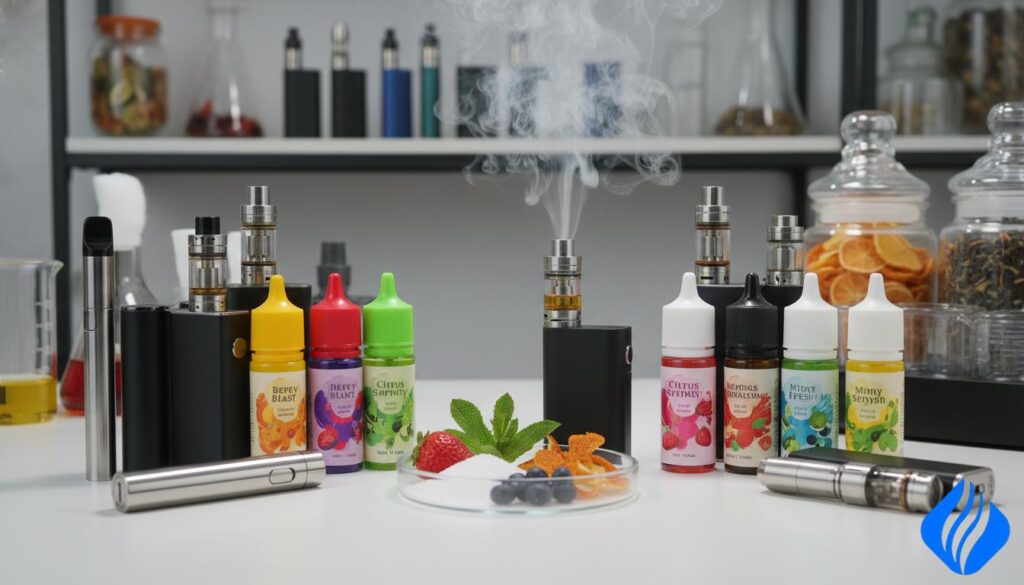
We ran a controlled routine using the same device class, fixed power ranges, and a steady puff cadence. Evaluations were recorded at checkpoints up to roughly 5,000 puffs. This gives a repeatable view of performance under heavy use.
Throat feel and nicotine type
Nicotine salts often deliver a smoother throat than freebase at similar mg levels. Freebase shows a sharper hit that some people prefer. We logged perceived harshness and noted when hits grew warmer as coils aged.
Clouds and base liquid
Higher VG reliably increased cloud density. It also softened sharp edges of some flavors, changing how sweetness reads on the palate. Larger clouds can mask subtle top notes over time.
Flavor shift after 5,000 puffs
Bright top notes—especially citrus and some light fruit—fell first. Dessert and candy profiles felt fuller early, then became flat or syrupy as residue built up.
Coil life and sweetener impact
Sucralose-forward blends showed faster coil gunk and reduced wicking. That led to dull taste, shorter coil life, and more frequent replacements. For guidance on caloric and ingredient questions refer to our brief on calories in a vape and check product transparency at label guidance.
“More sweeteners generally mean faster buildup; maintenance matters more with dessert profiles.”
Disposable Vape Specs and Comparisons: Puffs per Dollar and Flavor Consistency
We compare technical specs that matter when shopping for single‑use kits and show how sweetness and coil design change real performance.
Main product technical snapshot
- Battery: 650 mAh
- E-liquid: 10 ml
- Nicotine: 5% nic salt
- Coil: Dual Mesh
- Charging: USB‑C
Puffs per dollar — methodology and quick comparison
We use the simple formula: listed puff count ÷ price. It’s imperfect but useful for same‑class comparisons.
| Product | Listed puffs | Price ($) | Puffs/ $ |
|---|---|---|---|
| Main product (Dual Mesh) | 3,000 | 18 | 167 |
| Geek Bar | 2,500 | 15 | 167 |
| Lost Mary | 1,800 | 12 | 150 |
Interpretation: identical puffs per dollar can mask coil type and flavor fade. Dual Mesh may keep output steadier; listed counts assume ideal conditions.
Flavor consistency vs end‑of‑life taste
In our trials, Lost Mary and Raz models often deliver bright early flavor but show quicker sweetness dulling when sweeteners such as sucralose are heavy. Mesh and dual mesh coils resist hot spots better, so dessert and candy profiles stay balanced longer.
Watch for darkened coils, sticky residue, or a syrupy finish—signs sweeteners or concentrated flavors are coating the coil.
User FAQ (quick)
- How to know it’s empty: weaker vapor, muted flavor, blinking LED patterns, or a dry/overheated taste.
- How to recharge safely: use a known‑good USB‑C cable, low‑output adapter, don’t charge overnight, keep port dry and stop if the device heats or swells.
- Is it authentic: verify packaging and check the QR code via Sokvape Email and buy from reputable sellers.
Shop comparisons and category pages: Disposable Vapes, Hot Sale, RandM, Bang.
Nicotine can raise blood glucose and affect insulin sensitivity; absence of table sweetener does not eliminate metabolic or device‑risk pathways.
This product contains nicotine. Nicotine is an addictive chemical.
Conclusion
In closing, we clarify how perceived sweetness links to ingredients and device wear.
Most evidence shows that e-liquids contain little or no table sugar. Sweetness usually comes from VG, flavor systems, and targeted sweeteners such as ethyl maltol or sucralose.
Practical steps: read labels for nicotine and PG/VG ratios, favor brands with transparency, and treat dessert or candy profiles as higher risk for faster coil buildup and flavor fade.
Our hands‑on tests (≈5,000 puffs) found coil condition and sweetener load drive end‑of‑life taste. Nicotine can affect insulin and the body, so adults managing glucose should act cautiously.
Compare disposables by puffs per dollar and flavor consistency, verify authenticity (QR), charge safely with USB‑C, and stop if a unit tastes burnt or overheats. We recommend informed, conservative choices for adults transitioning from smoking.
 English
  German
  Dutch
Dutch  Danish
  Czech
Czech  Italian
  Slovenian
  French
  Hungarian
  Spanish
  Polish