

We start with a clear fact: modern coils and smart screens change aerosol behavior, yet indoor odor can still persist because PG/VG droplets condense and trap scent particles.
We explain how flavorings and nicotine oxidation drive noticeable scent and why most people notice clouds for about 10 minutes on average. Ventilation, room size, and e-liquid makeup control how long an aroma lingers.
In this guide we will review device variables—e-liquid volume, coil type (including mesh), nicotine strength, and battery efficiency—and compare one main product versus Geek Bar and Lost Mary on Puffs per Dollar and Flavor Consistency.
Our recommendations are based on hands-on testing: throat hit, cloud output, and flavor stability after 5,000 puffs. We also preview practical removal steps and a QR code authenticity check.
Safety note: content covers nicotine products for adults 21+. See disposable collections at Disposable Vapes and current offers at Hot Sale.
Key Takeaways
- PG/VG residue and flavorings are the main drivers of lingering odor.
- Average detectability drops near 10 minutes, but varies by room and frequency.
- Device specs—coil type, e-liquid, battery—change aerosol output and persistence.
- We test for throat hit, vapor production, and flavor after 5,000 puffs to judge odor impact.
- Practical fixes include ventilation, targeted cleaning, and filtration.
- Adults 21+ only; nicotine is addictive and safety guidance follows later.
What Vape Smell Is and Why It Happens Indoors
We define the indoor smell as two linked components: floating aroma in the air and a thin PG/VG film that deposits on nearby surfaces. The film can later re-release scent, so a room can seem to carry a trace long after the last session.
How PG and VG create residue that can hold onto scent
PG and VG are mostly odorless but condense as tiny droplets. Those droplets form an almost invisible film on walls and fabrics. Over repeated use, this film traps flavor molecules and acts as a scent carrier.
Why flavorings drive most “sweet” vape odors
Flavor compounds are the main source of noticeable aroma. Dessert or candy profiles use complex molecules at higher concentration, so their scent lasts longer than light mint or simple blends. Sweet profiles often register on fabrics and paint faster.
How nicotine vapor can turn stale over time through oxidation
Nicotine vapor is generally low-odor at first. With time and oxygen it can oxidize and develop a stale note. That change makes a space smell “old” even when the original aroma was pleasant.
VOCs in e-liquids and why they can linger
Some additives release volatile organic compounds (VOCs) that stay in enclosed air and settle into curtains or upholstery. Poor ventilation raises indoor concentrations and increases residue buildup.
| Factor | Effect on Scent | Consumer Note |
|---|---|---|
| High e-liquid volume | More aerosol; greater residue | Raises indoor scent load |
| High-output coils (mesh/dual mesh) | Denser vapor; stronger flavor | Produces more deposition on surfaces |
| Sweet flavorings | Persistent aroma; higher VOCs | More likely to cling to walls and fabrics |
| Poor ventilation | VOC and residue buildup | Clean and increase air exchange |
Practical takeaway: higher e-liquid use and high-aerosol coils increase indoor deposition. Less scent does not mean no exposure. We recommend reducing aerosol load, improving air exchange, and cleaning residue before it accumulates.
Does vape smell linger like cigarette smoke?
Aerosol generally clears faster than burned tobacco. In most rooms, vapor is largely gone within about 10 minutes if airflow is good. Still, device output and repeated sessions change that rule.
Why vapor usually dissipates faster than cigarette smoke
Vapor lacks combustion byproducts. That lowers persistent particles and many strong odors. Smoke from cigarettes contains tars and ash that embed in fabrics. Vapor deposits a thin film, but it breaks down and disperses sooner.
When odor becomes noticeable in a room or house
Noticeable scent appears with frequent sessions, sweet flavoring, low airflow, or many soft furnishings. Dense clouds and steady output raise deposition.

How long the smell can hang around based on frequency and airflow
Baseline: ~10 minutes in a ventilated room. Close the windows or use HVAC with low exchange and minutes can extend to hours.
“Our tests show steadier aerosol output yields steadier aroma; inconsistent output can make flavor and odor turn stale faster.”
| Device | Key Specs | Puffs/ Dollar | Flavor Consistency |
|---|---|---|---|
| Main product (RandM-style) | 900 mAh; 20 ml; 2%/5% nic salt; mesh/dual mesh; USB‑C | Price ÷ advertised puffs (higher puffs/$ lowers per‑puff cost) | Stable through ~5000 puffs; steady output raises indoor deposition |
| Geek Bar | 600–800 mAh; 10–16 ml; 5% nic salt; mesh coil; USB‑C | Medium puffs/$ | Strong early flavor; may dull by 5000 puffs |
| Lost Mary / Raz | 650–900 mAh; 12–18 ml; 2%/5% nic salt; flavor-focused coils; USB‑C | Varies; often competitive | High initial flavor; variable after extended use |
We calculate Puffs per Dollar as advertised puff count ÷ price. More puffs per dollar often mean more total aerosol in the home if use is unchanged. For full device specs, see our Disposable Vapes reference and brand listings here.
How Long Does Vape Smell Last in a Room, Car, or On Clothes?
Indoor scent persistence varies widely by airflow, surface type, and how much aerosol a device emits. In a well-ventilated room, noticeable aroma often drops within about 10 minutes. That estimate changes with frequency and output.
Short-term scent windows and what “10 minutes” really depends on
Ten minutes is a baseline. Still air, repeated sessions, sweet e-liquids, or high e-liquid volume extend the time scent stays in a room.
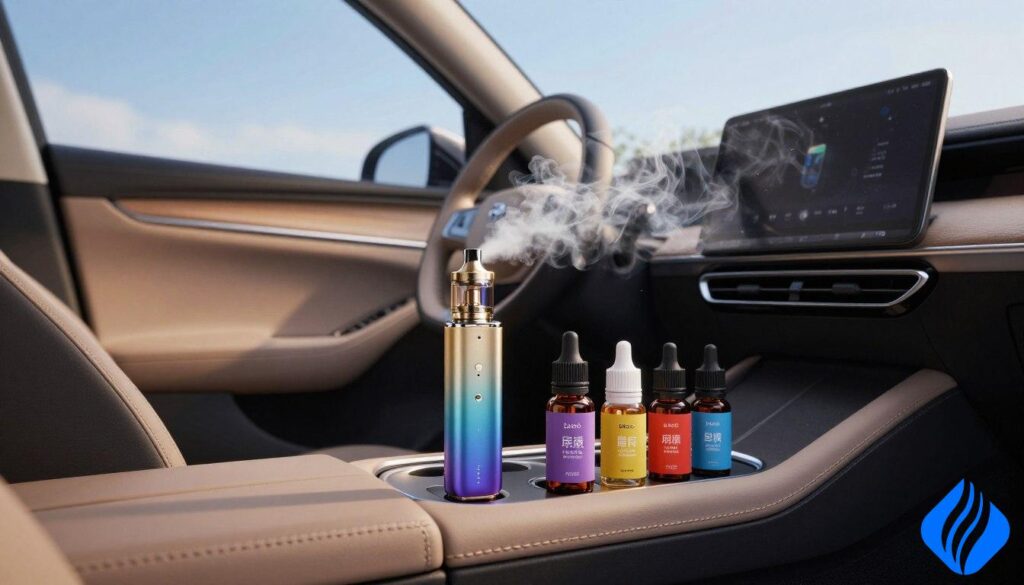
Why cars and small spaces trap odor longer
Cars have low cabin volume and limited fresh-air exchange. Fabric seats and carpets absorb residue fast. That makes a car a common worst-case space for lingering scent.
Why fabrics and porous materials keep odor around
Upholstery, curtains, and clothing retain flavor compounds. Heat or humidity can re-release scent hours later. Increased water intake often follows PG-related dryness, which can raise vaping frequency and boost accumulation on surfaces.
| Location | Typical persistence | Key drivers |
|---|---|---|
| Ventilated room | ~10 minutes | Air exchange, few soft surfaces |
| Small room / hallway | 30–120 minutes | Low airflow, repeated use |
| Car cabin | Hours to days | Fabric interiors, low exchange |
| Clothes / hair | Hours | Porous fibers, body heat |
Practical note: use cross-ventilation, limit high-output devices, and choose milder flavors in shared housing, rideshares, or workplaces to reduce impact on others.
Ventilation Tactics That Remove Vape Odor Fast
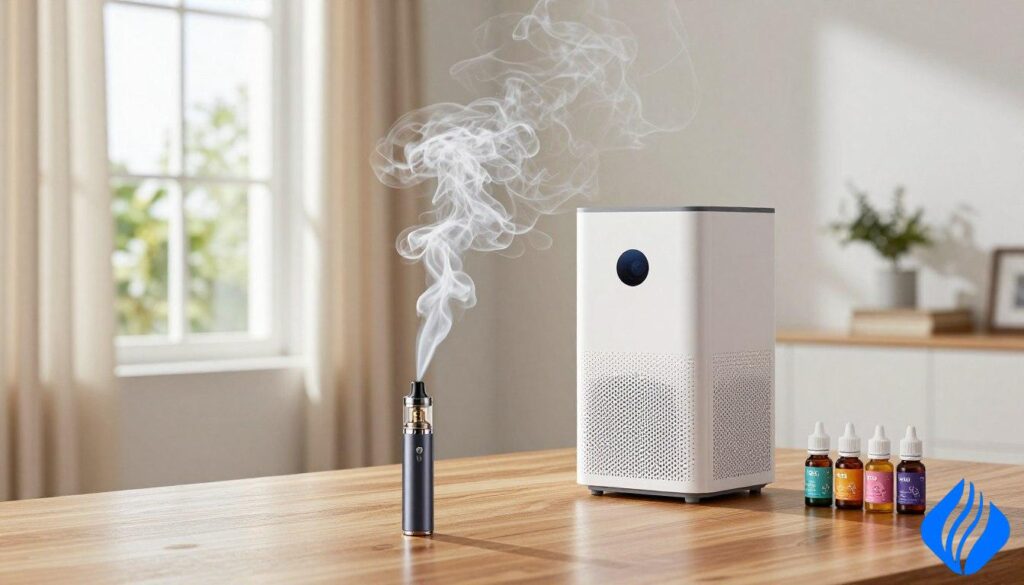
Rapid air exchange is the single most effective way to clear aerosol from an indoor space. Our priority is to replace indoor air with outdoor air rather than mask lingering aroma.
Open windows and create a cross-flow
Open a window on one side of the room and a window or door on the opposite side. This creates a straight path for air to move through the space.
Place a fan in the near window to push indoor air out. Position another fan at the far opening to draw fresh air in. This setup boosts airflow and clears airborne particles fast.
Use exhaust fans to pull air outside
Turn on bathroom or kitchen exhaust fans during and after a session. Keep the door slightly ajar so the fan pulls odor-laden air out instead of drawing it back into the room.
For apartments, vent toward an outdoor space and avoid sending air into shared hallways. That reduces complaints and exposure to others.
Designate a ventilated area
Set a single, well-ventilated area near a window. Stay close to the opening so aerosol exits immediately and deposits on fewer surfaces.
Note: Ventilation cuts airborne scent quickly, but it won’t remove residue already on walls or fabrics. Pair airflow tactics with light cleaning when indoor use is frequent.
“Replace indoor air with outdoor air — it is the fastest legitimate way to get rid persistent aroma.”
Air Purifiers and Filters for Vape Odor Control
We recommend a staged filtration approach for consistent indoor air management.
How HEPA and activated carbon differ
HEPA filters capture particles and aerosol droplets. They remove the particulate carrier that holds flavor compounds.
Activated carbon adsorbs gases and many VOCs. Carbon reduces lingering odor and chemical traces that HEPA alone cannot bind.
Placement, sizing, and maintenance
Match purifier CADR to room size. An undersized unit cannot cycle enough air and will underperform.
Place the cleaner in the primary vaping zone. Keep intake and exhaust unblocked and close doors for targeted cleaning.
Replace carbon when saturated. A full carbon stage stops reducing gases and can let smells return even while the device runs.
When persistent odor means a filter problem
Higher vapor output and frequent use load filters faster. That shortens carbon life and clogs HEPA pre-filters.
In our hands-on testing we saw steady odor reduction when units were sized correctly and positioned near the source. Improper placement or old filters made the room return to baseline scent in hours.
| Focus | What it removes | Action |
|---|---|---|
| HEPA | Particles, aerosol droplets | Replace per manufacturer schedule; clean pre-filter |
| Activated carbon | Odors, VOCs, gaseous compounds | Monitor life; replace when adsorption falls |
| Unit sizing & placement | Air exchange effectiveness in room | Choose CADR for room area; place in source zone |
Troubleshooting checklist: confirm CADR/coverage, verify a carbon stage, check filter age, and reduce indoor vaping while remediating the environment.
How to Get Rid of Vape Smell from Walls, Furniture, Carpets, and Curtains
Surface film is the hidden contributor. Even after airing a room, PG/VG residue can re-release aroma into the air. Cleaning removes that carrier so scent does not return.
Quick surface wipe-downs for walls and hard surfaces
Test finishes in an inconspicuous spot first. Use a mild cleaner and a microfiber cloth.
Work from top to bottom and focus on corners, vents, and the usual seating area. Replace cloths when they pick up residue to avoid spreading film.
Baking soda treatments for carpets and upholstery
Sprinkle baking soda, let it sit for several hours or overnight, then vacuum thoroughly. This lifts trapped compounds rather than masking them.
Steam cleaning for deeper odor
Use a fabric-safe steam clean on upholstery and rugs. Heat and moisture loosen embedded residue; follow fabric care labels to avoid damage.
Laundry add-ins and sun-drying
Add 1/2 cup white vinegar to the wash to neutralize lingering scent from clothes and linens. When possible, sun-dry items; UV and airflow help break down residual odor.
Cleaning is the next step after ventilation—wiping and washing remove the film that keeps releasing scent.
Practical notes: heavier use and sweeter vape juice increase residue on surfaces. Maintain your device to prevent leaks and localized hotspots. For more on indoor detectability and mitigation, see can you smell vapes indoors.
How to Reduce Vape Smell on Personal Items and In Shared Spaces
Practical steps make shared spaces less likely to carry a lingering vaping note. We focus on breath freshness, simple car resets, and long‑term area choices to cut transfer to other people.
Breath and mouth freshness
Drink water to counter PG‑related dryness and help clear the mouth after use. Keep an alcohol‑free mouthwash and sugar‑free gum handy before meetings or rides.
Pro tip: short hydration and a rinse reduce noticeable breath and lower second‑hand impressions for other people.
Car interior resets
Park, open doors, and create a quick cross‑flow to purge the cabin with fresh air. Wipe plastics and clean upholstery when residue builds.
Consider a compact purifier with activated carbon for persistent cases. For details on lower‑impact devices and specs check Disposable Vapes and Hot Sale; compare RandM and Bang pages for coil type and e‑liquid volume.
Preventing repeat odor
Designate one ventilated area near a window or go outdoors. Switch to milder, less dessert‑forward vape juice and lower nicotine salts (commonly 2% vs 5%) to reduce throat hit and visible output.
From our hands‑on testing, smoother throat hit and lower vapor production limit deposition. Flavor consistency after ~5000 puffs matters—muting can lead to stale notes later.
How to know if it’s empty: look for reduced vapor, muted flavor, or a blinking indicator. Rechargeable disposables may fail to produce aerosol after a full charge when empty.
How to recharge safely: use a reputable low‑output USB‑C adapter, avoid charging overnight, keep the device away from heat sources, stop if it gets unusually hot, and discard damaged cables.
Is it authentic? Verify the QR code on packaging by visiting Sokvape and following the site’s authenticity check. This confirms device origin and specs before you use or share it.
Conclusion
In short, indoor aerosol leaves a brief airborne trace but can cling to fabrics and finishes if use is frequent. We find the core drivers are PG/VG residue, flavor VOCs, and nicotine oxidation—these make a room register a stale note over time.
Our fastest remediation sequence is clear: increase air exchange, add filtration with HEPA plus activated carbon, then remove residue from textiles and surfaces. To prevent repeat impact, reduce frequency in enclosed spaces and select milder flavor types.
When choosing devices check these specs: mAh, ml, nic strength (2% or 5% nic salt), coil type (mesh vs dual mesh), and USB‑C charging. We weigh Puffs per Dollar and Flavor Consistency as practical predictors of odor load and satisfaction.
For next steps see Disposable Vapes, Hot Sale, RandM, and Bang. Nicotine is an addictive chemical. Products are for adults 21+. Use responsibly in shared spaces; verify authenticity by scanning the QR code before use.
 English
  German
  Dutch
Dutch  Danish
  Czech
Czech  Italian
  Slovenian
  French
  Hungarian
  Spanish
  Polish