

Does vape stain teeth is a common search for adult users curious about visual and health effects. We open with a clear finding: nicotine can yellow when it oxidizes, and device heat and coil design affect residue.
We explain what yellowing and subtle discoloration look like. We also link those changes to dry mouth and other oral health risks from e-liquids that contain propylene glycol, nicotine salts, and flavorings.
Our promise: we will offer practical daily habits, realistic whitening options, and tell when professional dental care is the right choice. We will also test device variables like mesh coils, battery output, and nicotine strength to show how they alter exposure.
Who this is for: adult vapers (21+) in the United States who want a clearer smile and better long-term health choices. We keep the tone technical and impartial, citing clinical observations and noting where long-term evidence remains limited.
Key Takeaways
- Nicotine oxidation can cause yellowing and subtle discoloration.
- Device factors like coil type and heat influence residue and exposure.
- Dry mouth from e-liquids raises risks for decay and gum irritation.
- Daily habits and targeted whitening can reduce visible changes.
- Professional dental care is fastest for significant staining or damage.
- We focus on technical, evidence-based advice for adult users.
Does vape stain teeth? What the science and dentists say today
Dental professionals now document light but noticeable yellowing tied to aerosol exposure. We observe chemical and mechanical pathways that explain why some users see color change faster than others.
Why nicotine can yellow enamel
Nicotine oxidizes when exposed to air. Oxidation creates yellowing compounds that can deposit on enamel over time, especially with frequent use and poor oral hygiene.
How aerosol differs from cigarette residue
Unlike traditional cigarettes, e-cigarette aerosol does not contain tar. That absence explains why discoloration from aerosol often looks lighter than staining from smoking. Still, pigments and sticky films in aerosol can build up and become visible.
Heat, aerosol chemistry, and residue behavior
Adjustable-temperature devices can alter aerosol composition. Higher coil temperatures may produce denser, yellow, sticky vapor that clings more readily to enamel surfaces.
“No tar” does not mean “no staining”—pellicle and plaque act as binding layers that trap pigments.
- Yes—aerosol exposure can change enamel color.
- Oxidized nicotine, frequency of use, and nicotine strength influence outcomes.
- Chasing warmer, denser vapor often raises enamel contact with residue.

For users who want practical next steps after whitening, see our guidance on post-whitening vaping.
What causes tooth discoloration and why vaping can make it worse
Not all yellowing starts inside the tooth; many changes begin as a thin film on enamel. We first separate surface deposits from internal discoloration so readers can choose the right fix.
Surface stains vs. internal stains
Surface staining sits on enamel and often comes from dark liquids, pigments, or aerosol residue. This is usually removable with cleaning or whitening products.
Internal staining comes from trauma, medication, decay, or genetics. These changes occur inside the tooth and respond poorly to over-the-counter whiteners.
Why enamel porosity matters
Enamel has microscopic pores and a textured surface. Those tiny spaces trap pigments and sticky films. Over time, even light deposits can become persistent.
Aging and thin enamel
As we age, enamel thins and reveals the yellow dentin beneath. The same level of surface color looks darker with time because less enamel masks the dentin tone.
Plaque, tartar, and locked-in pigments
Residue adheres more strongly to plaque than to clean enamel. If plaque mineralizes into tartar, pigments become harder to remove at home.
Quick decision framework:
| Problem | Likely origin | At-home options | When dental care is needed |
|---|---|---|---|
| Light yellow film | Surface deposits on enamel | Brushing, whitening toothpaste, strips | If unchanged after 2–4 weeks |
| Persistent discoloration | Plaque/tartar plus pigments | Improved hygiene, rinse after use | Professional cleaning advised |
| Deep, even darkening | Internal factors (trauma, meds) | Limited benefit from OTC whiteners | In-office whitening or restorative care |
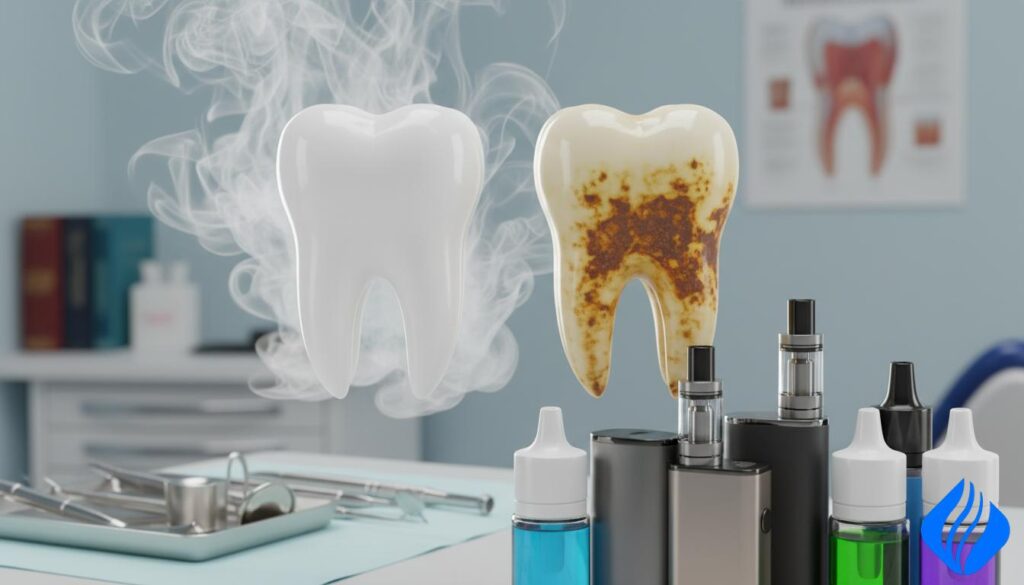
Daily habits matter: consistent brushing, flossing, and regular dental care reduce plaque that holds pigments. We recommend routine cleanings to stop small surface changes from becoming lasting discoloration.
Beyond stains: the oral health risks linked to vaping
Vaping creates an oral environment that can raise several dental health concerns beyond surface color changes. Propylene glycol in many e-liquids draws moisture from the mouth, producing persistent dry mouth and reducing saliva’s protective role.

Less saliva means less buffering of acids and slower clearance of bacteria. That shift increases the risk of tooth decay and dental caries. Recent studies link e-cigarettes with a higher risk of cavities and repeat restorations over time.
Nicotine narrows blood vessels. Reduced blood flow weakens gum tissue resilience and healing. Over time, this pathway can accelerate gum recession and progression toward gum disease.
Dryness also fuels social and clinical symptoms: persistent bad breath, tissue irritation, mouth sores, and raised infection risk. Worn enamel and increased sensitivity make discoloration more noticeable.
We advise telling your dentist you use e-cigarettes. That disclosure lets clinicians adjust recall intervals, fluoride strategies, and periodontal screening. Watch for persistent dryness, bleeding gums, sensitivity, or recurring cavities—those signs warrant earlier checkups.
How to prevent vape-stained teeth with daily habits that work
Simple daily routines cut residue time-on-enamel and lower visible discoloration risk. We focus on easy steps that target plaque, residue, and saliva support to keep enamel clean.
Brush and floss strategy
Brush twice daily with a fluoride toothpaste and floss once a day. Plaque is the holding layer that lets pigments attach. Removing it reduces long-term color changes.
Rinse and residue removal
Rinse your mouth with water after a session to flush aerosol residues. If brushing immediately is not practical, a water rinse lowers contact time on enamel.
Hydration and saliva support
Drink water regularly to counter dry mouth. Chew sugar-free gum with xylitol to stimulate saliva and buffer acids. That protects enamel and overall oral health.
Limit pigmented foods and pick whitening wisely
Avoid stacking coffee, tea, red wine, and dark sauces around use times. For mild surface marks, try whitening toothpaste or strips. For persistent change, consult a dentist for supervised whitening.
“Preventive care reduces the need for repeat whitening and preserves enamel.”
| Action | When | Purpose | Escalate to Dentist |
|---|---|---|---|
| Brush + floss | Morning & night | Remove plaque | If films persist after 2–4 weeks |
| Rinse with water | After sessions | Flush residue | If dry mouth or irritation continues |
| Hydration & gum | Throughout day | Boost saliva | If frequent cavities or sensitivity |
| Whitening product | As needed | Reduce mild surface marks | For deep or uneven discoloration |
Measurable goal: each day we aim to lower plaque burden, shorten residue time-on-enamel, and limit pigment exposure to help keep teeth brighter and protect oral health.
How to fix vaping stain teeth when discoloration is already visible
We begin with a quick triage to decide if the change is surface-level or deeper. A brief exam shows whether deposits lift with cleaning or need clinical whitening. This step guides choices and sets realistic goals.

At-home care for mild marks and what to expect
Start with plaque control. Brush twice daily, floss, and rinse after sessions to shorten residue contact. Use a whitening toothpaste for gradual improvement. Expect subtle change in 2–6 weeks, not instant white.
Professional cleanings: the cleaning-first rule
Regular dental cleanings remove plaque and tartar that can lock in pigments. Whitening over tartar gives uneven results. We recommend cleaning prior to any whitening step.
In-office vs. take-home whitening
In-office whitening gives faster, same-day shade change. Take-home trays deliver controlled, progressive results and usually beat OTC kits. Dentists tailor concentration to limit sensitivity.
Durability, sensitivity, and harm reduction
Continue using aerosols and results fade faster. Ongoing exposure increases the higher risk of repeat whitening and of tooth decay. Reducing use or quitting vaping improves longevity and oral health.
“If stains persist or you have sensitivity, book an exam for cleaning and a whitening plan.”
For more detail on how aerosol affects enamel, see our linked resource: does vaping stain your teeth. If change persists, contact your dentist to schedule an appointment today for tailored dental care.
Vape device variables that can affect teeth staining and exposure
Device design and power delivery shape how much aerosol reaches the mouth and contacts enamel. Hotter coils and higher output make denser vapor that can cling to the mouth and build surface residue.
Hands-on testing takeaways (after ~5000 puffs)
We tested common disposables and report: throat hit ranged from smooth to strong. Vapor production varied: light, medium, heavy plumes. Flavor held for 2–4k puffs then dulled or became harsh near 5k on some models.
Core technical checklist before you buy
- Battery capacity: mAh matters for consistent output.
- E-liquid volume: ml affects real puffs per device.
- Nicotine strength: 2% or 5% nic salt.
- Coil type: Mesh vs Dual Mesh — mesh gives even heat; dual mesh boosts density.
- Charging: USB‑C for safe recharging.
Puffs per Dollar & flavor consistency
We compared our main pick vs Disposable Vapes brands: Geek Bar, Lost Mary, and Raz. Dual mesh often raised vapor density, which can increase mouth contact and visible residue. Puffs per Dollar varies by rated count and real draw length.
| Device | Puffs per Dollar | Flavor Consistency (to ~5k) |
|---|---|---|
| Main pick | High | Good → slight fade |
| Geek Bar | Medium | Stable → muted |
| Lost Mary | Medium-High | Strong → harsh late |
| Raz | Value | Good → fast fade |
User FAQ
- How to know if it’s empty? Weaker vapor, flavor drop, reduced throat hit, or blinking lights are signs.
- How to recharge safely? Use the correct USB‑C cable, avoid overnight charging, and stop if the device is hot or damaged.
- Is it authentic? Check the QR code and verify on Email.
Warning: Nicotine is an addictive chemical and can harm youth, young adults, pregnant people, and non-users.
Conclusion
Nicotine oxidation and residue build-up explain most color shifts linked to aerosol use. These changes usually look lighter than those from traditional cigarettes, but they still alter enamel over time.
Protecting oral health means targeting plaque and supporting saliva. Short routines matter: rinse with water after sessions, brush and floss, limit high‑pigment drinks, and stay hydrated.
Watch for warning signs: persistent dry mouth, recurring decay, bleeding gums, sensitivity, or early gum disease. If any appear, see your dentist for evaluation and cleaning.
Whitening works, but discoloration returns faster with ongoing use. Reducing exposure or quitting vaping improves long‑term dental health and helps you keep brighter results.
Nicotine is addictive. For sudden or painful changes, seek professional dental care rather than relying only on cosmetic fixes.
 English
  German
  Dutch
Dutch  Danish
  Czech
Czech  Italian
  Slovenian
  French
  Hungarian
  Spanish
  Polish