

If you are an adult smoker considering a transition to tobacco alternatives, understanding exactly how do vapes work is essential for a safe and effective experience. This guide breaks down the science of e-cigarettes—from the battery-to-coil-to-wick process to the critical differences between aerosol and smoke. Our goal is to explain atomization and thermal regulation so you can identify high-quality product designs and reduce avoidable risks.
Our goal is clear: define common devices and products, explain atomization and thermal regulation, and show what to watch for in product design to reduce avoidable risks.
Power from a battery is managed by simple electronics. A coil heats a wick so liquid becomes an inhalable aerosol. That aerosol travels through airflow channels and reaches the mouth in less than a second of draw time.
Vaping is not risk-free: nicotine is addictive and aerosol is not harmless water vapor. We focus on harm reduction, battery protections, and wicking so readers can make safer choices about tobacco alternatives.
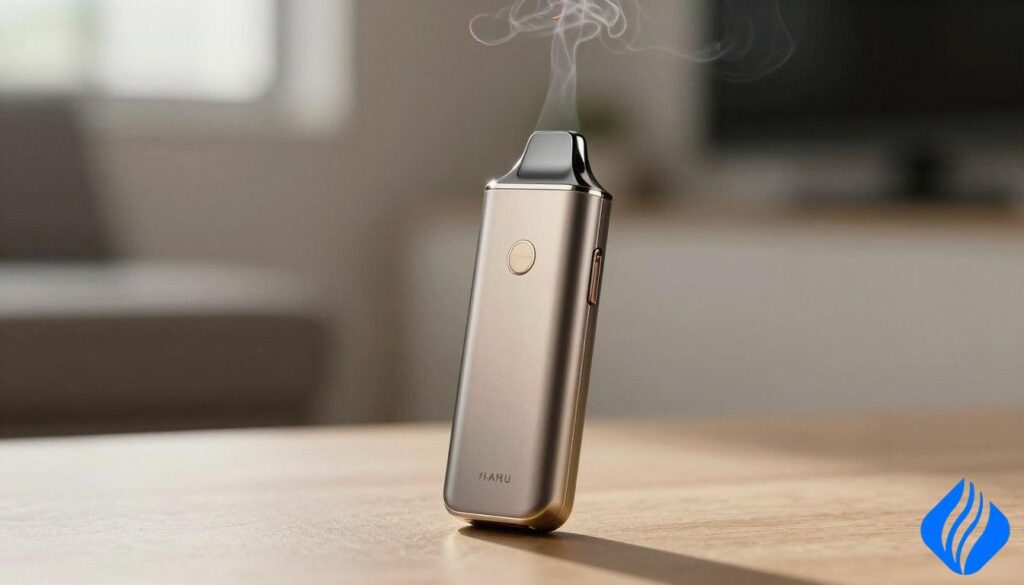
Key Takeaways
To help you master the basics, this section summarizes the core principles of how do vapes work and how to maintain them for a safer experience.
- We explain core parts: battery, electronics, coil, and wick.
- Learn the difference between aerosol and smoke for better health choices.
- Device types covered: disposables, pod systems, and mods.
- Focus on thermal regulation, wicking, and battery safety.
- Information centers on 2025 designs but teaches durable principles.
How Do vapes Work? A Quick Guide to E-Cigarette Mechanics
To summarize the core physics of how do vapes work: electrical energy is converted into heat to atomize e-liquid.
Electric energy from the battery heats a coil so that the e-liquid held in the wick becomes an inhalable aerosol.
When you draw on a device, current flows to a heating element (the metal coil). The coil warms the soaked wick and turns liquid into tiny droplets you inhale as vapor.
The Vaping Process: How Do vapes Work Step-by-Step?
In plain terms: power → heating → phase change. The battery feeds the coil, the coil heats, and the wick supplies liquid until aerosol forms. That aerosol carries dissolved nicotine and flavor into the mouth and lungs.
Vaping vs. Smoking: Why E-Cigarettes Use Heat Instead of Combustion
There is no combustion of tobacco. Unlike a cigarette, the device does not ignite plant material, so there’s no ash or smoke from burning tobacco. Still, high temperatures or dry coils can create unwanted chemicals.Understanding how do vapes work differently from traditional cigarettes—using heat rather than combustion—is vital for harm reduction.
- Simple sequence: battery to coil to wick to aerosol.
- Key systems to unpack: battery/chipset, coil/atomizer, wick, reservoir, airflow path.
- Why it matters: thermal control and proper use shape nicotine delivery and exposure risks.
| Component | Function | Why it matters |
|---|---|---|
| Battery | Supplies power to coil | Controls heat and consistency |
| Coil (heating element) | Converts electrical energy to heat | Determines vapor amount and temperature |
| Wick & reservoir | Holds and feeds e-liquid | Saturation prevents dry hits |
| Airflow & mouthpiece | Directs aerosol to user | Affects throat hit and draw |
What “vapor” really is: aerosol vs. smoke in e-cigarettes
When e-liquid meets a hot coil, tiny droplets form and hang in the air as an aerosol.
The physics is simple: propylene glycol and vegetable glycerin (glycol-style carriers) absorb thermal energy and atomize into microscopic droplets. These droplets create an aerosol — a suspension of particles — not smoke from burning material.
The CDC warns that e-cigarette aerosol is not harmless water vapor. It can contain nicotine, heavy metals (nickel, tin, lead), volatile organic compounds, and some flavoring chemicals such as diacetyl.
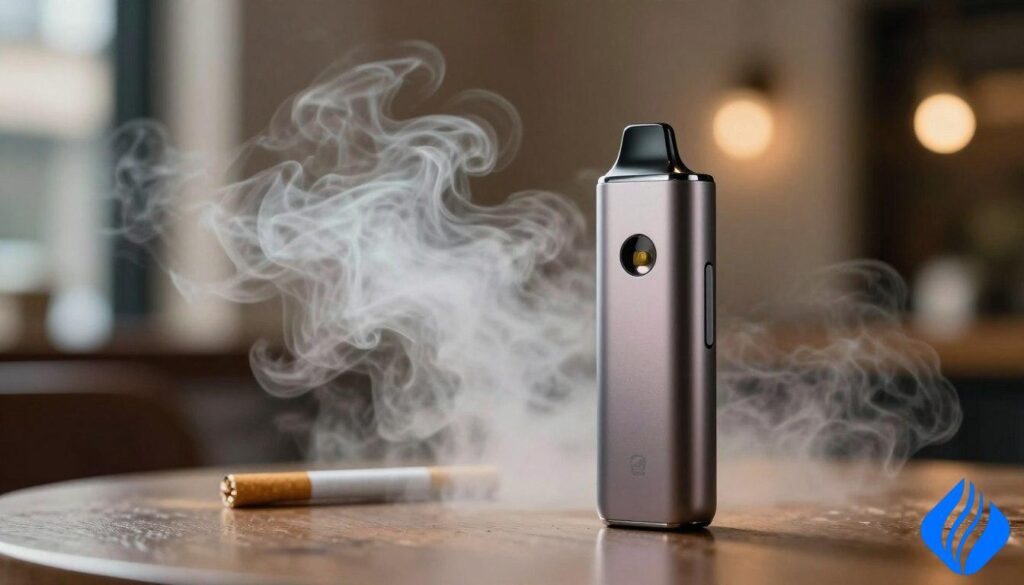
People nearby can inhale exhaled aerosol. Tiny particles travel deep into the lung and may carry chemicals and other substances listed above.
- Users call it vapor, but it is technically an aerosol of condensed droplets.
- Base ingredients (propylene glycol, glycerin) are chosen to form aerosol when heated.
- Aerosol chemistry and health effects depend on device temperature, liquid ingredients, and user behavior.
Practical takeaway: it’s not smoke, but it isn’t harmless either. In indoor or poorly ventilated spaces, people around you can inhale residues from these products.
Anatomy of the Device: How Do vapes Work Internally?
Each product contains coordinated components that control power, temperature, and airflow. We map the internal anatomy so beginners can match parts to common symptoms like weak hits, burnt taste, leaking, or a tight draw.
Battery and chipset
The battery stores energy and feeds the circuit. The chipset senses a draw or button press, regulates output, and adds protections (short-circuit cutoffs, overheat limits).
Heating element and wick
The heating element (coil/atomizer) converts electrical energy into heat to atomize liquid. The wick (often organic cotton) supplies e-liquid by capillary action; proper saturation prevents dry, burnt hits.
Reservoir, mouthpiece, and airflow
Reservoir types include refillable tanks, prefilled pods, or sealed disposable chambers. The mouthpiece and airflow path shape pressure and draw. Tight seals mean tighter draws; poor design raises leak risk.
| Component | Primary role | Symptom if faulty |
|---|---|---|
| Battery | Energy storage and delivery | Weak hits, inconsistent power |
| Chipset & sensors | Power regulation and safety | Device lockouts or overheating |
| Coil (heating element) | Turns liquid into aerosol | Burnt taste or low vapor |
| Wick & reservoir | Liquid delivery and storage | Leaking or dry hits |
For a deeper schematic of main parts, see our detailed component guide. Visit this component overview for extra diagrams and safety notes.
Battery & chipset in 2025: regulated power, protections, and smart features
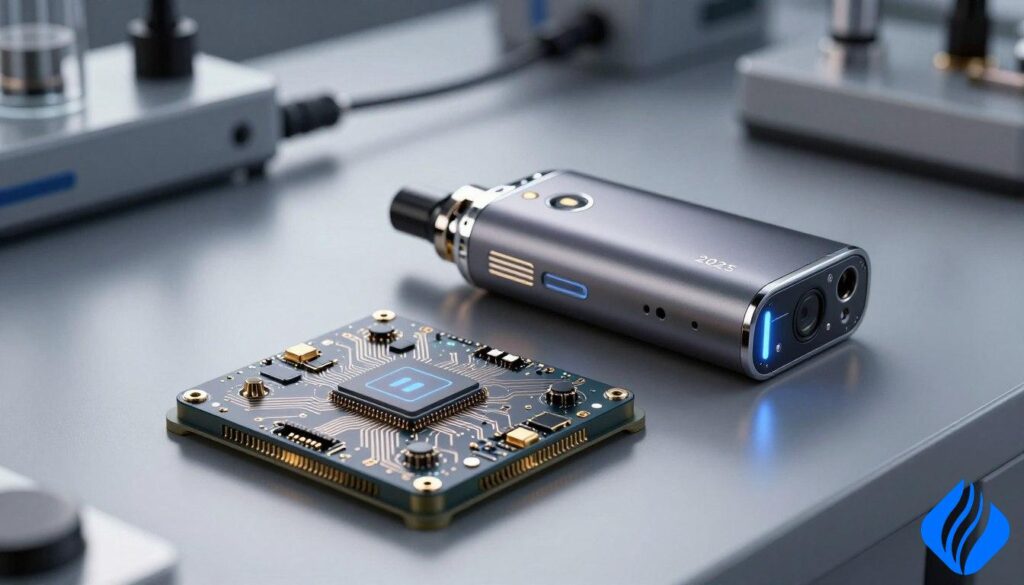
A tiny chipset sits between the cell and the coil, shaping every inhalation.
Regulated devices use that chipset to hold output steady. The result is more consistent heating and predictable effects from puff to puff.
Regulated vs. unregulated systems
In unregulated products, output can fall or spike as the battery charge changes. That variance raises the chance of harsh hits or overheating the heating element.
What modern chips manage
Smart chips in 2025 often control wattage limits, temperature modes, short-circuit detection, cutoff timers, and puff tracking. These features improve consistency but can add operational complexity.
Safety protections and battery best practices
Practical safeguards include overcharge, over-discharge, overcurrent, and thermal cutoffs. We recommend using the right charger, avoiding damaged cells, and keeping batteries away from metal objects in pockets.
“Stable power lowers the chance of accidental overheating and supports harm reduction.”
Health note: nicotine stresses heart and vessels, so stable delivery matters—especially for readers with cardiovascular concerns.
For guidance on reliable cells and compatible chargers, see our best 510 battery guide.
Atomizer Science: How Vape Coils Turn E-Liquid into Vapor
A coil inside the atomizer serves as the heating engine that changes liquid into vapor.This process is the mechanical heart of how do vapes work, where the coil resistance determines the temperature and vapor volume.
The atomizer is the assembly that holds the coil and wick; the heating element is its active core. When power reaches the coil, the wick-soaked liquid evaporates into an aerosol of tiny droplets.
Standard wire vs. mesh coils
Standard wire coils concentrate heat along the wrapped wire. Mesh spreads heat across a larger surface area. Mesh usually gives faster ramp-up, more even heating, and clearer flavor at similar power.
Common coil materials
Kanthal: reliable for simple wattage modes.
Stainless steel: usable in temperature-control and wattage modes.
Ceramic: marketed for smoothness but can be brittle; may hold flavor differently.
| Coil Type | Key Trait | Typical Effect |
|---|---|---|
| Standard wire | Concentrated contact | Warmer spots, slower ramp-up |
| Mesh | Increased surface area | Even heat, stronger flavor |
| Kanthal / SS / Ceramic | Material choices | Different temperature response and durability |
Resistance, wattage, and safety
Lower resistance allows higher power; that raises vapor volume, throat hit, and liquid use. Higher wattage and dry coils can spike temperature and increase unwanted chemicals in the aerosol.
Chasing hotter hits raises lung exposure to finer particles and heated substances; safer vaping focuses on control, not extreme heat.
For peer-reviewed context on aerosol chemistry and harmful substances, see this technical overview.
Wicking material and capillary action: how e-liquid reaches the coil
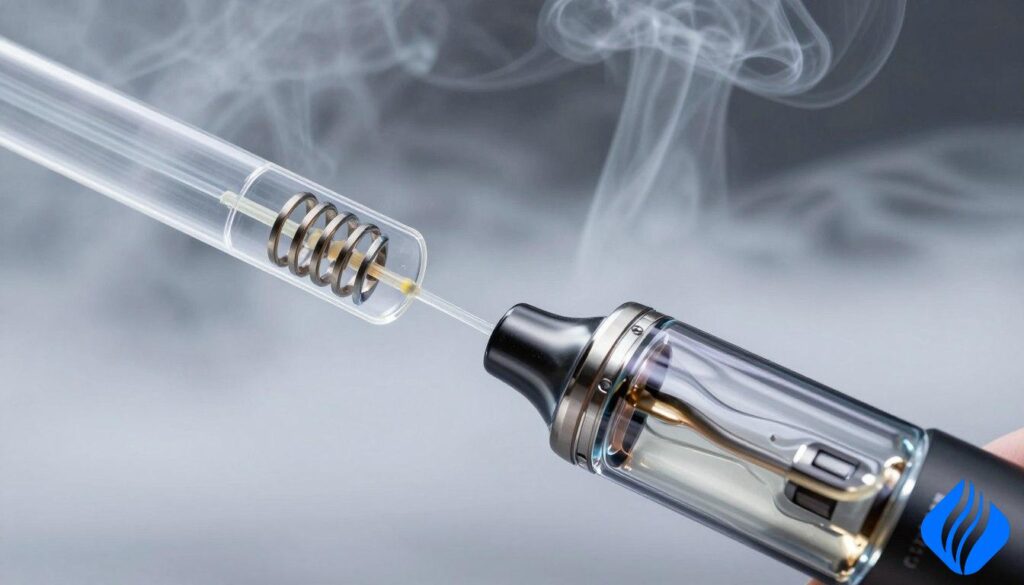
Wicking is the unseen supply chain that keeps each puff consistent. The coil can only atomize what the wick delivers, so wick performance shapes flavor, vapor, and safety.
Why organic cotton dominates
We recommend organic cotton because it soaks up liquid quickly and gives steady flavor when properly saturated. It tolerates routine heating and is widely available in many products.
Note: some alternatives (ceramic or silica) exist, but cotton remains the common choice for balance of absorption and taste.
Capillary action in plain English
Capillary action means liquid “climbs” through tiny fibers. Thicker juice moves slower; thin e-liquid travels faster.
This explains why chain vaping can outpace the wick and cause dry spots on the cotton.
Priming and saturation: practical steps to avoid dry hits
Basic priming routine:
- Add a few drops of e-liquid directly to exposed cotton before first use.
- Fill the reservoir or pod, then wait several minutes to allow full saturation.
- Take a few short, low-power draws to confirm steady delivery before normal vaping.
Proper priming reduces burnt taste, preserves coil life, and lowers the chance that a hot heating element scorches dry cotton.
Safety reminder: ingredients safe for food are not always safe to inhale. We advise using transparent, reputable vape juice and avoiding unknown mixtures to limit unknown effects on the lungs.
Pods, tanks, and disposable chambers: where vape juice is stored
Storage design sets user expectations. Closed pods (prefilled) favor convenience and consistent flavors. Open tanks let people choose e-liquid and control cost and nicotine strength.
Disposable vapes are sealed, single-use products. They reduce maintenance but increase waste and limit options for flavors or strengths.
Closed vs. open systems
Closed systems use prefilled cartridges for predictable performance. Open systems (tanks or refillable pods) require topping up but offer flexibility.
Leakage, airflow, and pressure
Leaks often stem from pressure changes (heat, altitude, pocket compression) or worn seals. Airflow design also shapes pressure: tight airflow increases draw resistance; loose airflow cools the coil and can reduce flavor intensity.
Beginner reality check: gurgling, spitback, or leaking usually point to reservoir seals or pressure balance, not only user error.
| Type | Maintenance | Pros | Cons |
|---|---|---|---|
| Prefilled pods | Low | Consistent flavors, easy | Limited choices, cost |
| Refillable tanks/pods | Moderate | Flexible e-liquid, lower long-term cost | More upkeep, leak risk if misused |
| Disposable chambers | None | Very convenient, no refills | Single-use waste, fixed flavors |
For a deeper component overview and safety notes, see our full technical guide.
How Do Disposable vapes Work? Sensors and Nicotine Salt Technology
Most disposable models fire when sensors sense a small change in airflow or pressure.
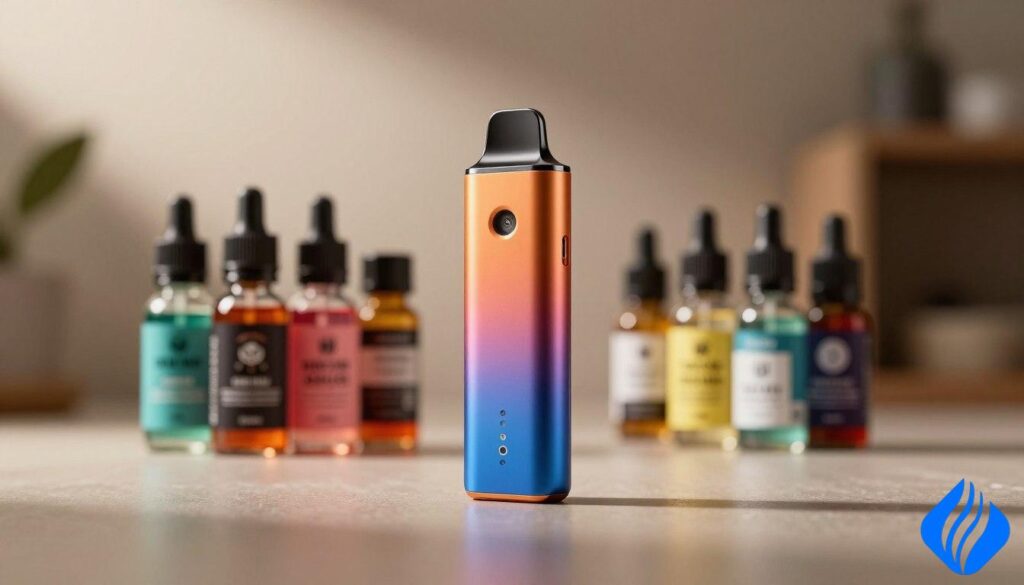
The draw-activated sensor measures a tiny pressure drop when a user inhales. That signal tells the onboard chip to power the heating element for a timed puff. The result is button-less operation and a consistent factory-tuned draw.
Nicotine salts and smoother delivery
Nicotine salts are formulated to raise nicotine levels while reducing throat harshness. That allows higher concentrations to feel smoother, which can speed dependence if users do not track intake.
Market trends and beginner implications
CDC data shows unit sales rose from 15.7M to 21.1M (Feb 2020–Jun 2024), with 58.1% of units being disposable e-cigarettes and 80.6% non‑tobacco flavors. These products dominate what people see in stores and online.
Practical guidance: prefer reputable sellers with clear labeling, set realistic nicotine goals, and note puff frequency over perceived strength. Remember that disposables still produce aerosol others can inhale; use ventilation and courtesy.
| Feature | Effect | Beginner tip |
|---|---|---|
| Draw sensor | Auto-activation, timed puffs | Expect no buttons; note puff counts |
| Nicotine salts | High nicotine with smoother throat feel | Choose lower levels if switching from cigarettes |
| Prefilled flavors | Wide variety, high availability | Check labels; avoid unknown sources |
Pod systems and mods: how refillable devices control vapor, nicotine levels, and MTL
While the shell changes, the logic of how do vapes work remains consistent even in high-end regulated mods.Many adult users prefer refillable devices because they offer direct control over vapor volume, nicotine strength, and throat feel.
MTL (mouth-to-lung) recreates a cigarette-like draw: inhale into the mouth, then into the lungs. MTL uses higher-resistance coils and lower airflow. That delivers a familiar throat hit and lower aerosol per puff.
Adjusting wattage and airflow
Wattage raises coil temperature and usually boosts aerosol and warmth. Airflow cools the coil and changes draw tightness; tighter airflow gives a cigarette-like resistance.
Nicotine choices: freebase vs salts
Freebase nicotine feels harsher at high levels, so users often prefer lower strengths. Nicotine salts are smoother, allowing higher concentrations but risking greater intake if not monitored.
Maintenance basics and harm reduction
Change coils regularly, keep contacts clean, and dry-test after refills to spot leaks. Store e-liquid away from heat, children, and pets.
| Feature | Effect | User tip |
|---|---|---|
| Higher wattage | More vapor, warmer hit | Monitor coil life; avoid dry firing |
| Tighter airflow | MTL draw, stronger throat hit | Good for smokers switching to vaping |
| Nicotine salts | Smoother at high strength | Choose lower levels to reduce intake |
| Regular cleaning | Consistent performance, fewer leaks | Clean threads and airflow monthly |
Health note: Nicotine affects heart rate and vessels. If you have cardiac concerns or palpitations, discuss nicotine use with a clinician before changing product or strength.
Final Thoughts: How Do vapes Work Safely?
Now that we have explored the intricate details of how do vapes work, it is clear that understanding the synergy between battery safety and coil maintenance is key to a better experience.At the core of every device, electrical energy becomes inhalable aerosol that people often call vapor. A battery feeds a chipset that controls power to the coil. The coil heats the wick and the airflow path delivers the aerosol to the mouth.
We emphasize this difference: vaping is not burning tobacco like cigarettes. That change alters what is produced, but it still exposes users and bystanders to nicotine and other chemicals. Use reputable product sources and avoid informal or unknown supplies (EVALI cases were linked to vitamin E acetate in some illicit THC products).
Beginner safety steps reduce preventable harm: prime wicks, respect recommended power ranges, replace worn pods or coils, and store batteries safely. Short-term effects can include coughing, throat irritation, or nausea; serious risks reported cover lung disease and battery injuries.
For adults who smoke, switching from burning tobacco to regulated vaping may reduce certain harms, but the healthiest goal is to quit smoking and tobacco products entirely. We encourage consulting clinicians and seeking support if you choose to quit or reduce nicotine use.
 English
  German
  Dutch
Dutch  Danish
  Czech
Czech  Italian
  Slovenian
  French
  Hungarian
  Spanish
  Polish