

Ever felt that frustration when your vape just won’t work? A clogged vape pen can really ruin your day.
Disposable vapes are known for being easy to use. They work by atomizing and regulating heat for smooth hits. But, too much moisture or tight spots can block the airflow. We’re here to show you how to fix this with simple, safe steps.
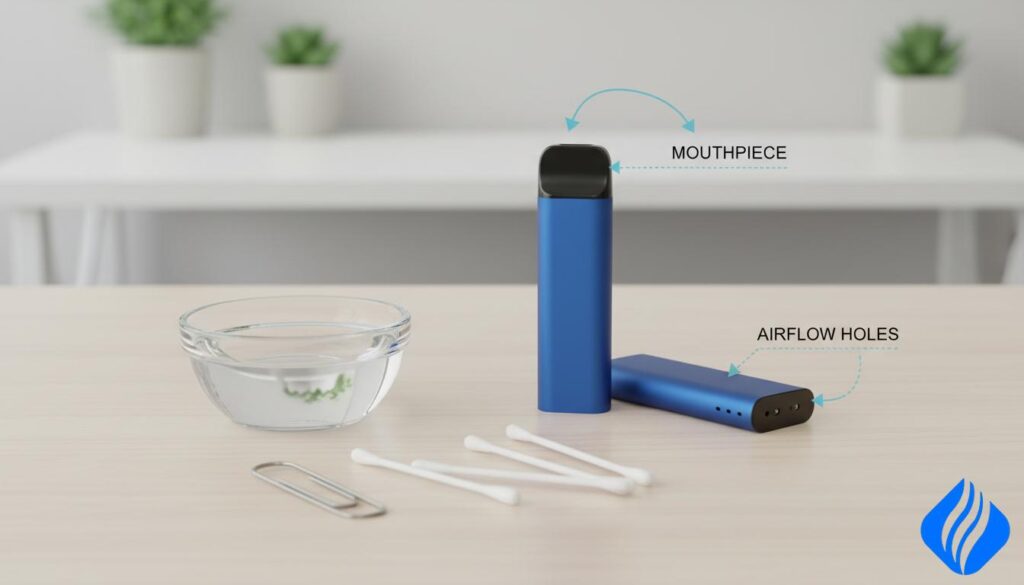
We’ve dealt with many clog issues. For more tips on fixing airflow, check out this resource. Remember, don’t soak your vape in water. And be careful with metal tools near the battery.
Key Takeaways
- Clogs usually form from excess condensation or surface tension.
- A clogged vape pen may require gentle clearing methods to restore airflow.
- Blow-Back and Safety Pin tactics offer quick solutions for mild blockages.
- Proper storage helps prevent repeated clogs and keeps the chimney clear.
- Always stay aware of safe handling, specially near the battery compartment.
- Use controlled hits and moderate temperatures for better performance.
Understanding the Science Behind Disposable Vape Clogs
When liquid builds up inside the device, it can slow things down. This buildup often causes airflow blockage. It makes drawing harder and dulls the flavor.
Condensation and Surface Tension
Condensation forms near the coil assembly due to temperature changes. Tiny droplets stick to the walls, making channels sticky. E-liquid’s surface tension makes it cling to the path, blocking air in devices like Vuse or JUUL.
Viscosity Changes in Cold Weather
In colder temperatures, e-liquid becomes thicker. This thick liquid can pool around the mouthpiece. It blocks vapor from escaping, causing partial airflow blockage.
Knowing about these changes helps us adjust our vaping technique. It keeps our draws clear and flavorful.
Telltale Signs Your Vape Is Clogged
When puffs feel tight and flavor drops, it’s a sign of trouble. Vapor thinning out quickly is another red flag. These signs often mean e-liquid condensation is building up inside.
Our atomization process gets disrupted. Airflow struggles to pass through. This makes vaping less enjoyable.
Unsettling noises can also signal a problem. A soft gurgle means the coil is flooded. This happens when the wick gets too wet.
It can leave a spitting sensation on your lips. Changes in draw resistance are another clue. A once-smooth inhale might now feel tense or blocked.
Stay alert for these symptoms to avoid a deeper clog. A quick flick or warm-up can help. It keeps your vaping experience clean and preserves your device’s lifespan.
Brand-Specific Airflow Principles
Top disposable vape brands have different air slot placements. Some have them near the mouthpiece, while others are at the base. This ensures a clear intake from start to finish, helping users avoid elf bar clogging. Understanding each device’s design helps us use it better.
For a smooth experience, we focus on simple fixes and regular checks. The air path should stay open for good atomization. Keep these devices away from extreme conditions and watch for reduced vapor. Quick action prevents buildup and clogs.
Geek Bar, Elf Bar, Lost Mary, and Raz Vapes
These popular brands aim for reliable hits. A geek bar airflow fix might differ from others like Lost Mary or Raz Vapes. Blow-back puffs and gentle warmth help when performance drops.
Similarities Despite Design Differences
Despite different mouthpiece shapes, there’s a common way to clear tight draws. Our official guide shows how to fix airflow blockages safely.
The Blow-Back Method
This method is handy for removing condensed vapor or small blockages. A gentle breath into the mouthpiece helps clear e-liquid buildup. This makes it easier to fix a vape that won’t hit.
We always have a tissue ready to catch any residue. This makes cleaning up easier.
It’s important to use the right amount of pressure. A soft, controlled blow is best. Too much pressure can flood the device and harm its performance.
Beginners should remember to use steady, light puffs. This is better than trying to force a big puff.
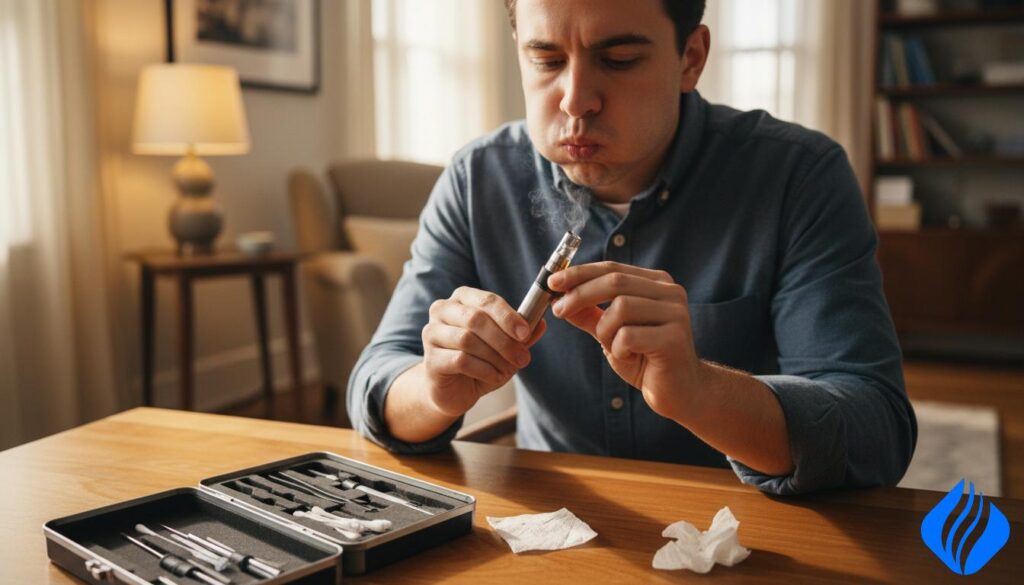
After using this method, check the taste and vapor output. A quick test draw will tell you if the blockage is gone. Our goal is to keep the airflow balanced and protect the device.
This method is simple but requires careful execution. It helps fix the problem without damaging the vape.
Using the Safety Pin Method
This method is used when dried residue blocks airflow channels. We aim to break up tough buildup safely. A gentle touch prevents damage to internal wiring or atomization areas.
This keeps our device running smoothly and supports harm reduction.
Cleaning the Mouthpiece Gently
We start by tilting the device to find hardened liquid. We twist a small pin at the clog point to loosen debris. This helps clean the mouthpiece without damaging soft edges.
We pause to wipe away gunk with a tissue. This keeps airflow open and reduces blockage.
Avoiding Sharp Metal Tools Near the Battery
We avoid using too much force with thin metal objects in the body. Poking around the battery area can damage electronic parts and cause short circuits. A careful approach with the safety pin method protects the power source.
This technique preserves optimal function and safety.
Flicking Technique for Eliminating E-Liquid Buildup
This method helps get rid of small water buildup in disposable vapes. By moving it gently, we push extra liquid away from the airway. When we flick the vape, we hold it over a tissue or sink to catch any spills.
We do gentle flicks, not hard ones. Hard shaking can damage the vape and shorten its life. Most people find fewer blockages if they flick the vape when they first notice gurgling or uneven airflow. This simple action uses a bit of force to push the e-liquid out.
This trick works best if done carefully. We suggest checking the mouthpiece before using it again. Holding it firmly and keeping a steady rhythm helps manage water without harming the vape.
| Action | Reason |
|---|---|
| Firm Grip | Prevents accidental drops |
| Moderate Flicks | Moves liquid without harming components |
| Periodic Check | Ensures airflow stays clear |
The Warm-Up Method for Cold Weather Vapes
When it gets colder, our e-liquid gets thicker. This can make flavors less intense and slow down how fast it turns into vapor. Warming up your vape juice is a simple fix for these problems.
Our goal is to avoid damaging your device while making it work better. We’ll show you how to add heat carefully, so nothing gets too hot inside.
Small changes in temperature can make a big difference. This is true for fixing issues with Lost Mary vapes. Finding and fixing small blockages helps keep the flavor right.
But be careful not to use too much heat. Too much can damage the plastic or the battery area.
Hand Heat Application
Just hold the vape in your hands for a bit. Your body heat will help loosen up the thick liquid. This usually fixes small clogs easily.
Hair Dryer on Low Settings
Using a cool or low-watt hair dryer is another good option. Move the air around the vape slowly to avoid overheating. This method is great for fixing Lost Mary and similar vapes.
| Method | Details |
|---|---|
| Hand Heat | Hold in palms for about one minute |
| Hair Dryer | Use on lowest setting for brief intervals |
Important Safety Guidelines
Handling disposable vapes safely is key. Water is a big risk. If it gets inside, it can damage the battery or cause short circuits.
Be careful not to press too hard near the battery. This can lead to dangerous situations and even venting.
We look out for signs like spitting or popping noises. These sounds mean e-liquid might be getting into the mouthpiece. To avoid this, always keep the vape upright.
A gentle tap can remove any droplets that might block airflow. We’re always cautious when fixing issues to prevent accidents.
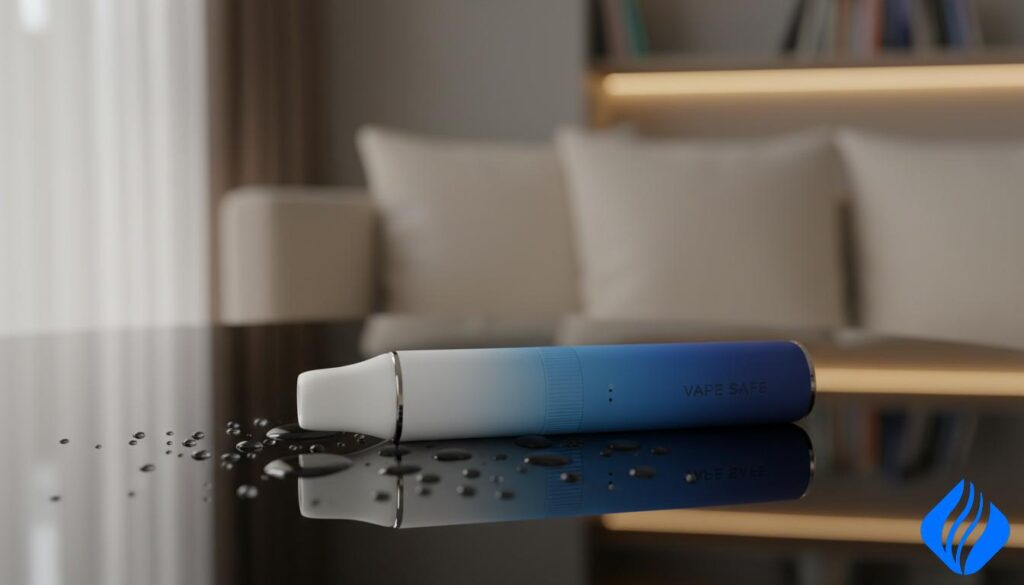
Checking connections and making sure there are no loose parts is important. We aim for steady atomization and avoid sudden leaks. With care and knowledge, we can fix simple problems safely.
Preventing Future Flow Obstructions
We want to keep each disposable device working well for as long as we can. We focus on handling them carefully and following simple routines to avoid clogs. Our goal is to keep things simple and protect the device’s inner parts.
Upright Storage Practices
Storing devices upright is key to avoiding clogs. It stops liquid from pooling and blocking airflow. This method keeps the wick just right and helps with atomization.
Keeping the vape on a stable surface is also important. It prevents leaks and follows our maintenance tips. This makes clogs less likely in the future.
Primer Puffs and Moderate Temperatures
Light primer puffs before a big inhale are helpful. They prevent fluid buildup and ensure quick vapor production. Using moderate temperatures is also important.
We avoid extreme heat or cold to keep liquid flowing right. This habit leads to smooth draws and longer device life.
When to Consider a Replacement Device
We aim to make every puff enjoyable. Clogs can ruin the fun and safety. If your wick or coil keeps failing, it might be time for a new device.
A burnt taste can mean your device is wearing out. This might mean it’s time to replace it, not just fix it.
Look at the taste, vapor quality, and how often you get clogs. A device nearing the end of its life can trap harmful residue. This can affect flavor and comfort.
For help with airflow issues, check out this blog on quick fixes. Always dispose of your used vape responsibly to protect health and the environment.
| Situation | Next Step |
|---|---|
| Clogs keep returning | Contact support, request replacement/refund |
| Frequent clog-prone brand | Buy a unit from a different maker |
| Disposable lifespan exceeded | Dispose and switch to a fresh device |
How to Unclog a Disposable Vape with a Step-by-Step Approach
Many vapers struggle with blockages. Our method is simple and effective. We make sure to protect the coil and battery while fixing clogs.
Combining Methods for Stubborn Blockages
We start by gently flicking to loosen residue. Then, we use the blow-back method to remove excess liquid. If needed, a small pin can carefully remove buildup around the mouthpiece.
For deeper clogs, we use a suction method. This method helps airflow without overloading the coil.
Fixing Air Sensor Issues and Spitback
Stray liquid can cause air sensor issues by blocking detection points. A gentle inhale can re-engage the sensor and reduce misfires. If spitback happens, a low heat source can improve atomization and stop liquid splatter.
Here’s a quick guide to each technique:
| Method | Description | Benefit |
|---|---|---|
| Flicking | Taps device to dislodge residue | Removes minor buildup |
| Blow-Back | Exhales gently into mouthpiece | Clears trapped liquid |
| Safety Pin | Loosens hardened debris | Targets stubborn clogs |
| Warm-Up | Applies mild heat to device | Improves fluidity |
| Suction Method | Inhales gently to engage coil | Restores sensor function |
Conclusion
We discovered that vape clogs often happen due to changes in condensation, surface tension, and viscosity. Each solution we tried—like blow-back, safety pin cleaning, flicking, and warming—helps by adding fresh airflow and reducing blockages.
It’s important to use these methods carefully. This way, we avoid damaging the battery and other sensitive parts. A gentle approach helps keep everything working well and ensures a steady draw.
Regular maintenance is key to enjoying every puff. It also helps extend the life of your device and prevents leaks. Our tests with brands like Geek Bar, Elf Bar, Lost Mary, and Raz Vapes showed that a clean airway is safer.
If your device won’t draw, getting a new one is a good idea. It keeps your vaping experience safe and enjoyable. We believe these tips will make your vaping smoother and more worry-free.
 English
  German
  Dutch
Dutch  Danish
  Czech
Czech  Italian
  Slovenian
  French
  Hungarian
  Spanish
  Polish