

Direct Answer: Yes—exposure to e‑cigarette aerosol can harm an infant’s developing lungs and brain due to nicotine-related vasoconstriction and airway irritation.
Why infants are different: Their lungs and nervous systems grow rapidly. They breathe faster and absorb more chemicals per pound than adults. That raises risk even at low exposures.
Most people call the plume “smoke,” but it is an aerosol of ultrafine droplets and gases. These particles reach tiny airways and leave residues on surfaces, creating inhalation and thirdhand exposure pathways.
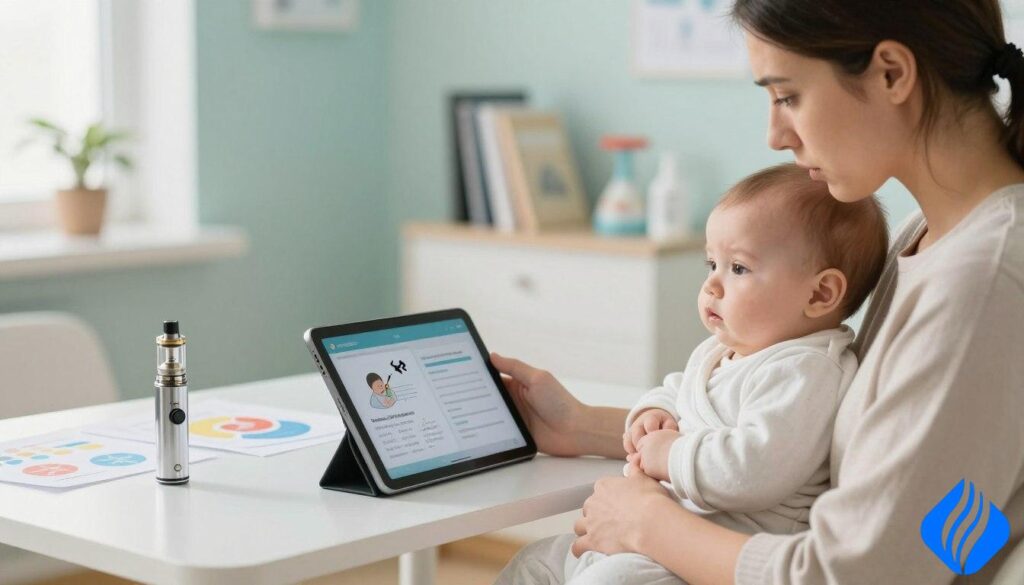
This section frames a practical, step‑by‑step safety guide for caregivers who use these products or live with someone who does. It clarifies terms, reviews evidence, and lists immediate steps to reduce harm.
SokVape’s senior safety consultant emphasizes caution: reduce indoor exposure, secure liquids and devices, and consult evidence‑based cessation support when appropriate. For more context and guidance, visit SokVape safety resources.
Key Takeaways
- Infants absorb more toxins per pound; avoid indoor aerosol exposure.
- Aerosol contains ultrafine droplets, gases, and sometimes nicotine despite labels.
- Risks include airway irritation, nicotine effects on development, and surface residue.
- Precaution is the pediatric standard while research continues.
- Practical steps: keep devices and liquids locked, never use indoors or in cars, seek help to quit.
Key Takeaways and Quick Reference Table for Baby Safety
Key Takeaways
- No indoor vaping is the safest default.
- Infant lungs and brains are more sensitive than adults’.
- Residue can linger on surfaces and fabrics; wash clothing and hands before holding an infant.
- “Nicotine-free” claims are not a guarantee.
- Liquid nicotine ingestion is a medical emergency—call Poison Control or 911.
Evidence vs unknowns: Secondhand cigarette secondhand smoke is clearly harmful. Secondhand aerosol appears lower in some toxins but is not proven harmless; prevention is recommended.
| Exposure type | Primary risk | Do this now | Then |
|---|---|---|---|
| Secondhand aerosol in same room | Airway irritation; nicotine exposure; ultrafine particles | Move infant to fresh air; stop indoor use | Ventilate, HEPA if available; avoid re-entry for 15–30 min |
| Use in another room/hallway | Particle drift; surface residue | Stop use immediately; relocate infant away | Wash hands; change caregiver clothing before holding |
| Use by an open window | Partial ventilation; still allows indoor residue | Stop indoor use; move outdoors | Keep windows closed after use for 10–20 min; clean nearby surfaces |
| Use in a car | High concentration in confined space; nicotine deposition | Exit vehicle; remove infant to safe air | Never re-enter with infant until car is aired and surfaces wiped |
| Thirdhand residue on clothes/hair/hands | Dermal and oral transfer; repeated low-dose exposure | Change clothing; wash hands and hair if needed | Launder fabrics and avoid holding infant until clean |
| Liquid nicotine spill/ingestion | Acute poisoning risk | Call Poison Control/911 immediately; do not induce vomiting | Bring product container for clinician review; seek urgent care |
| Device battery or small-part access | Choking, burns, chemical exposure | Secure devices and parts out of reach | Store locked; dispose per manufacturer guidance |
If you must use aerosol products: outdoors only; stay at least 25 feet from doors and windows; never use in vehicles; change clothes and wash hands before holding an infant.
Is vape smoke bad for babies? What the science says about secondhand exposure
Short answer: Secondhand exposure from e‑cigarette aerosol is not safe for infants. The plume can contain nicotine, ultrafine particles, and other irritants that increase risk when infants breathe that air.
Vape aerosol is not “water vapor”: what babies can inhale
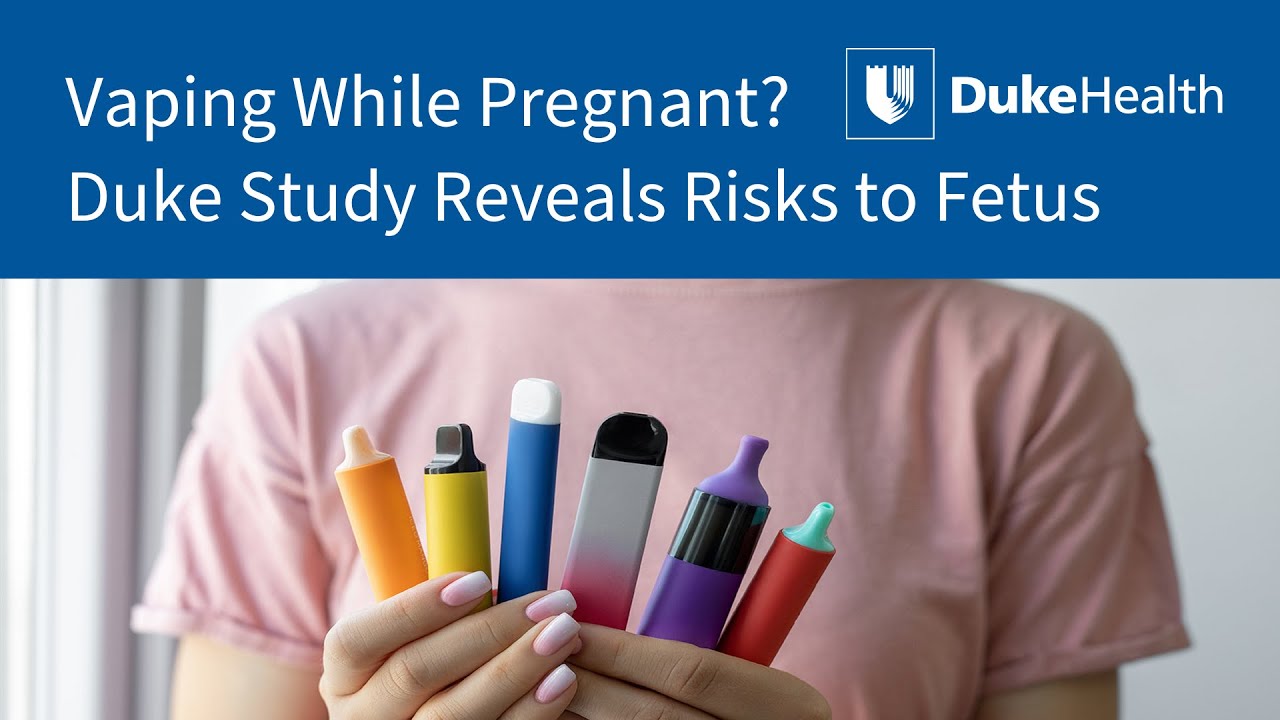
Aerosol means tiny liquid droplets plus gases. Those droplets include propylene glycol/vegetable glycerin, flavoring compounds, and often nicotine. Device heat can also form carbonyls and trace metals.
Why infants are more vulnerable than adults
Infants breathe faster and take in more air per pound than adults. Their airways are smaller and narrow more easily with irritation. Developing lungs and nervous systems have less capacity to repair injury.
Public health guidance
Pediatric and public health authorities advise keeping all e‑cigarettes and vaping emissions out of homes and vehicles. A simple rule—no indoor use—offers the most reliable protection.
How vaping compares with cigarette secondhand smoke in toxin profile
Cigarette secondhand smoke contains combustion products such as tar and carbon monoxide and many carcinogens. Emissions from e‑cigarettes typically lack most combustion byproducts but still deliver nicotine, ultrafine particles, and some toxic chemicals.
- Practical point: Lower relative risk does not justify indoor use. Clean indoor air with no active aerosol source is the safest choice.
How secondhand and thirdhand aerosol can affect a baby’s lungs and brain
Tiny aerosol particles and dissolved chemicals can reach deep into an infant’s small airways and bloodstream. This creates two main pathways of harm: inhaled particles (secondhand) and settled residue (thirdhand).
Why nicotine exposure matters
Nicotine binds developing neural receptors that guide wiring of attention, learning, and mood. Early exposure can plausibly disrupt those signals and raise later risks for attention and behavior problems in childhood.
Airway irritation and inflammation
Infant bronchioles are narrow. Small irritants trigger swelling, cough, wheeze, and feeding or sleep trouble.
Those with a family history of asthma face higher sensitivity, and repeated low‑level irritation can increase airway reactivity that may lead to future lung disease.
Thirdhand residue and everyday risks
Particles settle on furniture, toys, clothes, and blankets. Crawling infants mouth objects and touch surfaces, increasing dermal and ingestion exposure.
Why “open window” is not enough
Partial ventilation reduces but does not remove contamination. Air currents can drift particles back indoors and surfaces will still accumulate residue.
Risk control: elimination of indoor sources is far more reliable than fans or open windows to protect infants from exposure secondhand and thirdhand harm.
What’s in vape aerosol that may be risky around infants
Practical point: listed ingredients do not fully predict what forms during heating. Coils, power level, and formulation change chemical output and particle size.

Nicotine labeling issues
Most products contain nicotine, and labels claiming “nicotine-free” can be inaccurate due to cross‑contamination or mislabeling. Even small doses matter with infants because nicotine alters developing neural pathways.
PG/VG: what they do in the lungs
Propylene glycol (PG) and vegetable glycerin (VG) form the visible aerosol droplets. These solvents can irritate airways and increase coughing or wheeze in small lungs.
Flavoring chemicals and diacetyl
Some flavorings include diacetyl, linked to severe occupational lung disease at high exposures. Consumer exposure differs, but avoiding unnecessary emissions around infants is prudent.
Metals and carbonyls from heat
High heat can create carbonyls such as formaldehyde and release trace metals. Those byproducts are among the harmful chemicals parents should try to prevent in indoor air.
Regulatory note: The U.S. Food and Drug Administration reviews market authorization for many vaping products, but authorization does not eliminate all risk. For more context on aerosol harms, read this public health summary.
Hidden dangers beyond breathing it in: poisoning, spills, and device access
Liquid nicotine presents acute risks that go beyond inhalation and demand immediate attention. In the U.S., poison control centers logged 8,269 liquid nicotine exposures among children under 6 between 2012 and 2017. That data shows these incidents often lead to higher hospital admission rates than exposures to cigarettes.
Why it’s uniquely dangerous: concentrated liquid can be absorbed through the mouth, skin, or eyes. Small volumes may cause rapid symptoms in young children and require urgent care.
When to treat as a medical emergency
If a child swallows fluid, gets it in the eye, or has significant skin contact, call Poison Control at 1-800-222-1222 (US) immediately. Seek emergency care or call 911 for severe signs such as vomiting, excessive drooling, tremors, extreme sleepiness, or a very fast heartbeat.
Safer storage and disposal practices
- Lock pods, e-liquids, and devices in a high cabinet or lockbox; treat them like medicines.
- Never leave a device on a nightstand, couch, or charging within reach of toddlers.
- Seal used cartridges and disposables in a sturdy container or bag before discarding to prevent scavenging by children or pets.
| Hazard | Immediate action | Prevention |
|---|---|---|
| Ingestion of liquid | Call Poison Control; emergency care if severe | Lock liquids; keep out of reach |
| Eye or skin splash | Rinse area; call Poison Control; seek care if symptoms persist | Secure open pods; use spill trays when refilling |
| Used disposables with residue | Prevent access; discard sealed | Seal and discard in closed container; teach caregivers risks |
Bottom line: liquid exposures cause faster, often more severe outcomes than many other tobacco products. Prevention through secure storage and careful disposal is essential to protect young children.
How to protect babies from vape smoke exposure at home and in the car
A clear household rule—no indoor emissions—gives infants the best defense against tiny particles and residues. Establish this as a nonnegotiable policy for residents and visitors. Post it visibly and explain it calmly to guests so everyone understands the health rationale.
Set a no-use rule indoors and in vehicles
Gold standard: never allow active emissions inside the house or any vehicle. Confined spaces concentrate particles quickly and raise exposure risks for infants and people with asthma.
Step outside the right way
When leaving the building, stand well away from doors and windows and choose a downwind spot. Wait a few minutes before re-entering to reduce carrying fresh aerosol inside, then wash hands.
Clothes, hands, hair: stop thirdhand transfer
Remove an outer layer and wash hands before holding an infant. Keep a dedicated over-shirt that stays outside the nursery to limit residue on fabrics and hair.
Air cleaning reality check
HEPA purifiers can lower airborne particles but cannot remove all gases or settled residue. Use purifiers as a supplement, not permission to use indoors. For broader guidance on home secondhand smoke safety, see the home secondhand smoke guidance.
If you use emissions to quit smoking
Switching completely from cigarettes can reduce combustion harms to the adult, but the infant still needs a clean-air environment. Discuss plans to quit smoking with a clinician and access evidence-based supports such as counseling or quitlines. Consider safer alternatives and treat indoor exposure as unacceptable during cessation.
When to call your pediatrician
Watch for persistent cough, wheeze, rapid or labored breathing, poor feeding, unusual sleepiness, or repeated ear and respiratory infections. Seek urgent care if breathing difficulty develops.
| Symptom | Action | When to escalate |
|---|---|---|
| Persistent cough or wheeze | Call pediatrician | If not improving in 24–48 hours |
| Fast or labored breathing | Seek urgent evaluation | Immediate care or 911 if severe |
| Poor feeding or extreme sleepiness | Contact clinician now | Go to ER if acute decline |
Practical reminder: household rules reduce exposure and conflict. Communicate expectations to visitors and treat indoor emissions like any other indoor pollutant to support infant health and asthma prevention.
Product selection guidance is available for people managing cessation plans while protecting infants.
Choosing and using vaping products more safely if quitting isn’t immediate
When quitting isn’t immediate, adults can reduce avoidable product risks while keeping infants out of the exposure zone.
Quality control basics: avoiding counterfeit products
Counterfeit or unverified products may deliver inconsistent nicotine, contain contaminants, or use low‑quality coil materials that shed metals. That raises the chance of extra toxic chemicals forming when a device heats.
Practical checks include buying from reputable U.S. retailers, inspecting packaging security seals, and avoiding DIY mixes unless ingredients are verifiable. Stop use if the device tastes burnt or heats abnormally.
Why reputable brands can reduce avoidable risks
Brands with transparent manufacturing controls can lower variability in liquid composition and device performance. Examples such as Geek Bar and Raz are widely recognized for consistent production. That does not make these products safe around infants; it only reduces unpredictable hazards.
Device settings and overheating: minimizing high‑temperature byproducts
High voltage and overheating increase carbonyls like formaldehyde and other irritants. Avoid chain use, dry puffs, and modding devices beyond manufacturer limits.
- Follow device wattage recommendations.
- Replace coils per guidance to avoid metal shedding.
- Avoid high‑power draws that raise temperature rapidly.
Clear bottom line: while switching completely from cigarettes can reduce many combustion toxins tied to cancer, heart disease, and lung disease, infant safety requires zero indoor exposure. Use these product controls only as temporary risk reduction and never as permission to use indoors.
For practical quitting and product basics, see this beginner’s guide.
Conclusion
Protecting an infant’s air and surfaces at home gives the strongest safeguard against aerosol harms. Infants are uniquely vulnerable, and the most protective step is a clear no‑indoor/no‑vehicle rule combined with measures to stop thirdhand residue.
Harm reduction vs. infant protection: switching from tobacco cigarettes to e‑cigarettes may lower some adult risks, but that benefit does not justify exposing young children. Keep emissions outside, store liquids and devices locked, and wash hands and outer layers before holding a child.
Quick checklist: stand 25+ feet from doors and vents, change clothes, secure products, and call a pediatrician if respiratory signs or poisoning are suspected. For help to stop smoking, use clinician support, counseling, or quitlines and treat e‑cigarettes only as a supervised transition tool.
Many public health groups, including disease control prevention and the American Academy Pediatrics, recommend eliminating indoor exposure where children live and play. For additional reading, see the dangers of vaping around your.
Medical Disclaimer: This content is educational and not medical advice. It is not a substitute for a pediatrician’s evaluation. Call Poison Control or 911 for emergencies. Consult clinicians for cessation and exposure concerns.
 English
  German
  Dutch
Dutch  Danish
  Czech
Czech  Italian
  Slovenian
  French
  Hungarian
  Spanish
  Polish