

In recent years, over 60% of US high schools have put student safety first. They’ve installed advanced air quality sensors. These high-tech tools check for more than just smoke. They’re often hidden but look like regular smoke alarms or Wi-Fi spots.
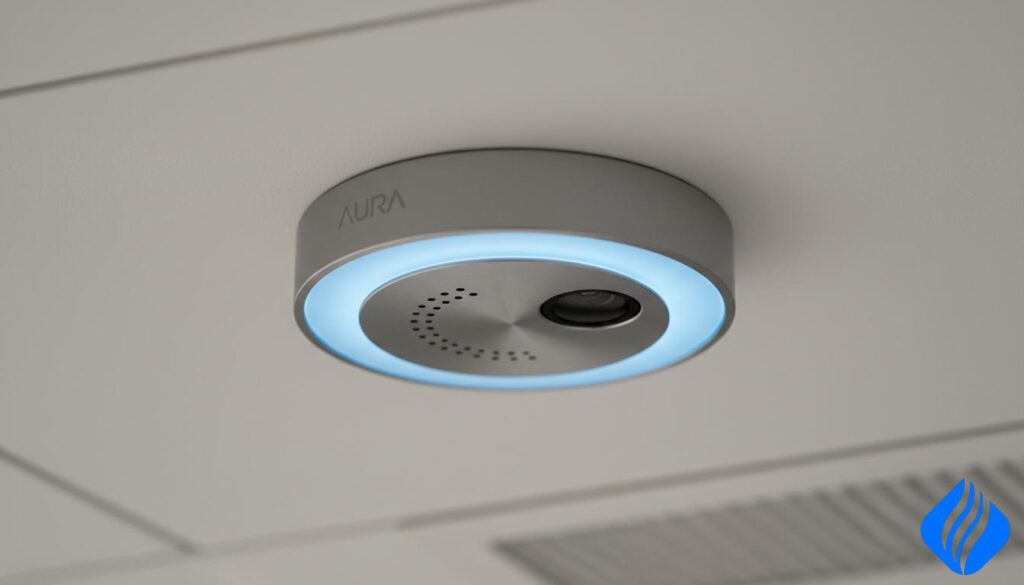
Vape detectors are designed to be discreet. They usually have a simple shape, like circles or squares, and are made of white plastic. They’re small and can be placed anywhere without drawing attention. They also have LED lights to show their status, making them look both modern and subtle.
Key Takeaways
- Over 60% of US high schools now install advanced air quality sensors.
- Vape detectors typically have a discreet design similar to smoke alarms or Wi-Fi access points.
- Common shapes include circular and square, usually made from white plastic.
- LED status lights are a frequent feature of these devices.
- Designed to blend seamlessly into various environments.
Introduction to Vape Detectors
Vaping is becoming more common, and it’s a big worry for health experts. This is because more young people are vaping. To keep places safe, we need good vape detectors. They help watch for vaping in places where it’s not allowed and make sure everyone follows health rules.
Why Vape Detectors Are Important
Vape detectors are key in keeping schools, workplaces, and public areas healthy. They use vaping detection technology to spot vape aerosol. This helps stick to no-vaping rules and keeps everyone healthier. They also check the air quality, making them even more useful.
The Rise of Vaping and the Need for Detection
In the last ten years, vaping has grown a lot, mainly among teens. This has made people worried about nicotine’s health effects and addiction risks. The CDC has seen a big increase in e-cigarette use among young students. So, there’s a big need for vaping detection technology to solve this problem.
Basic Appearance of Vape Detectors
Vape detectors are designed to look like they belong where they are. They come in different shapes, materials, and have indicators for easy use and performance.
Common Shapes: Circular and Square
The most common shapes are circular and square. These shapes fit well on ceilings and walls. Circular ones look like smoke detectors, while square ones are more modern.
Both shapes are made to be as unobtrusive as possible. This helps them blend in without standing out.
Materials and Colors
Vape detectors are made from high-quality plastics. These plastics are durable and sometimes fire-resistant. This makes the detectors last longer and work better.
The most common color is white, which matches most ceiling colors. This keeps the detectors out of sight. Some detectors also come in neutral tones or can be customized to fit different designs.
LED Status Lights
Many vape detectors have LED indicator lights. These lights show the device’s status quickly. They can indicate normal operation, low battery, or an active detection alert.
The LED lights are key in vape detector design. They let users know right away if the device is working or needs attention.

Popular Brands and Models
Some brands and models lead in vape detection technology. The *HALO Smart Sensor* (3C Model), *Zeptive*, and *Triton Sensors* are among the best. Each has unique features that set it apart.
HALO Smart Sensor (3C Model)
The *HALO Smart Sensor* (3C model) is known for its many functions. It detects vaping and also checks air quality, temperature, and humidity. This makes it a great tool for keeping places safe and healthy.
Its ability to do many things makes it a favorite for schools and businesses. They use it to improve the air inside.
Zeptive
*Zeptive* uses a smart sensor that can find many substances, like nicotine and THC vaping. It works wirelessly or with wires and fits with systems like Genetec and Axis. You can set it up to alert you in different ways.
For more information, check out the Zeptive website.
Triton Sensors
*Triton Sensors* use advanced tech to detect vaping. They have sensors that spot particles and chemicals from vaping right away. This brand is known for being reliable and accurate.
They work well with other safety systems. This makes them a great choice for keeping places safe and the air clean.

| Brand | Model | Key Features | Installation Options |
|---|---|---|---|
| HALO | 3C | Environmental monitoring, air quality, temperature, humidity | Wired |
| Zeptive | Wireless and Wired Models | Nicotine and THC detection, customizable alerts, IAQ monitoring | Wireless and Wired |
| Triton | Standard Model | Multi-channel particle sensors, real-time reporting, VMS integration | Wired |
Distinguishing Between Vape Detectors and Smoke Alarms
It’s important to know the difference between a smoke alarm and a vape detector. They look and work differently. This is key for setting them up right.
Differences in Detection Technology
Smoke alarms and vape detectors work in different ways. Smoke alarms look for smoke from fires. They use sensors to find smoke particles.
Vape detectors, on the other hand, find vapor from e-cigarettes. They have special sensors for vaping aerosols. This makes them better at spotting vaping.
Visual Differences
Smoke alarms and vape detectors look different too. Smoke alarms are bigger and simpler. They are usually round or square with a plastic cover and a test button.

Vape detectors are sleeker and more modern. They often have LED lights and show if they’re working. They’re made with advanced materials for their job.
| Feature | Smoke Alarm | Vape Detector |
|---|---|---|
| Detection Technology | Photoelectric or Ionization Sensors | Advanced Vapor Sensing Technology |
| Primary Function | Detect Smoke from Fires | Identify Vaping Aerosols |
| Appearance | Basic, Typically Circular or Square | Modern, Sleek Design |
| Indicators | Test Button | LED Status Lights |
Features of Modern Vape Detectors
Vaping technology keeps getting better, and so do the detectors. Today’s vape detectors have advanced features for better accuracy and efficiency. Let’s explore what makes them stand out.
LED Indicator Lights
Modern vape detectors often have LED indicator lights. These lights give quick visual signals about the detector’s status. They show if the device is ready, if it’s found vapors, or if there are network problems. These LEDs are key for checking the device’s work and keeping an eye on it.
Specialized Venting Holes
Many vape detectors have special venting holes for better aerosol detection. These holes are made to direct air and vapor into the detection area well. This helps catch even the smallest particles fast, making the device more effective.

Wi-Fi Access Point Integration
Another important feature is the Wi-Fi access point integration. This lets the device connect to local networks for real-time alerts and monitoring. With Wi-Fi, vape detectors can send alerts right away, helping take action quickly.
These features make modern vape detectors very effective. They help fight underage vaping and unauthorized use in places where it’s not allowed.
Common Installation Locations
Vape detectors are key in many places to keep areas smoke-free. They work best when placed in busy and risky spots. Here are some common places to install them.
Ceiling Mounted in Bathrooms
Bathrooms, like those in schools, are often where vaping happens. This is because they are private and enclosed. Ceiling mounted detectors are perfect for these areas. They offer a wide coverage without being too obvious.
According to Triton Sensors, one detector can watch over a typical bathroom. This makes them very effective.
Locker Rooms and Hallways
Locker rooms and hallways in schools are also good places for vape detectors. These areas are always busy, making them great for monitoring. Ceiling detectors work well here too, keeping an eye without being too much.
Offices and Public Spaces
In offices and public areas, vape detectors help follow no-smoking rules. They also make these places healthier. These detectors can connect to security systems, sending alerts and reports in real-time.
They use Ethernet cable power, so you don’t have to change batteries often. This is a big plus for places that are always busy.
How to Identify Vape Detectors
In places like schools and offices, spotting vape detectors can be tough because they are designed to be unobtrusive. It’s key to know how to find them to keep everyone safe and the air clean. These devices look like smoke detectors or carbon monoxide alarms, making them easy to miss.
Checklist for Parents and School Administrators
We’ve made a checklist for detection for parents and school leaders. It helps you spot these detectors:
- Discreet Design: Vape detectors are small and blend in. They might look like smoke detectors or carbon monoxide alarms.
- LED Indicators: Some have tiny LED lights or strips that show they’re working.
- Location Specifics: You’ll find them in places like bathrooms, locker rooms, and hallways.
- Modern Aesthetics: Some look like smart home gadgets, making them even harder to notice.
- Operational Components: In schools, they might work with cameras outside restrooms for extra proof.
Want to learn more about how vape detectors fit into different settings and work well? Check out more here.
Advancements in Vaping Detection Technology
Vaping technology is getting better, and so are the detectors. Modern vape detectors are now very precise and quick. They’ve improved a lot in three main areas: laser-based detection, chemical analysis of aerosols, and sound frequency detection.
Laser-based Particle Detection
Laser-based detection has changed how we spot vaping. These detectors use advanced lasers to measure air particles with great accuracy. They can quickly find vaping aerosols because they’re so good at spotting particle size and density.
Aerosol Sensing and Chemical Analysis
There’s also big progress in sensing aerosols and analyzing chemicals. Modern sensors can tell apart different chemicals from vaping. This chemical analysis lets detectors spot specific e-liquid parts, making it hard to hide vaping.
Sound Frequency Detection
Sound frequency detection is another big step in finding vaping. These detectors listen for the special sounds vaping makes. They can catch vaping even before you see any vapor, adding an extra layer of detection.
Conclusion
Vape detectors are key to keeping public places safe and healthy. They are important in schools, workplaces, and public areas. We’ve looked at their design, popular models, and the latest in detection tech.
Knowing how vape detectors work helps us use them right. Features like LED lights and Wi-Fi make them useful. It’s also important to know the difference between vape detectors and smoke alarms.
As vaping tech gets better, so does the monitoring. Now, we can detect particles, aerosols, and chemicals more accurately. Using these tools helps teach about vaping and reduces harm. This makes places safer for everyone.
 English
  German
  Dutch
Dutch  Danish
  Czech
Czech  Italian
  Slovenian
  French
  Hungarian
  Spanish
  Polish