

High-stakes question: Could recent vaping use signal a serious health warning within hours?
Direct Answer: Some people develop dull pressure, bandlike tightness, or a throbbing pain after vaping; the cause often ties to nicotine, dehydration, or sensitivity to ingredients and may involve vasoconstriction as a physiological risk.
As senior safety consultant at SokVape, this short guide aims to help readers recognize symptom patterns and choose safer next steps.
Reputable medical sources link vaping to headaches in some people. Symptoms range from mild pressure to severe, pulsating pain. Timing can be immediate or delayed by several hours.
Common accompanying signs include nausea and light sensitivity. These can be confused with screen strain or nicotine withdrawal, so tracking recent device changes and use is crucial.
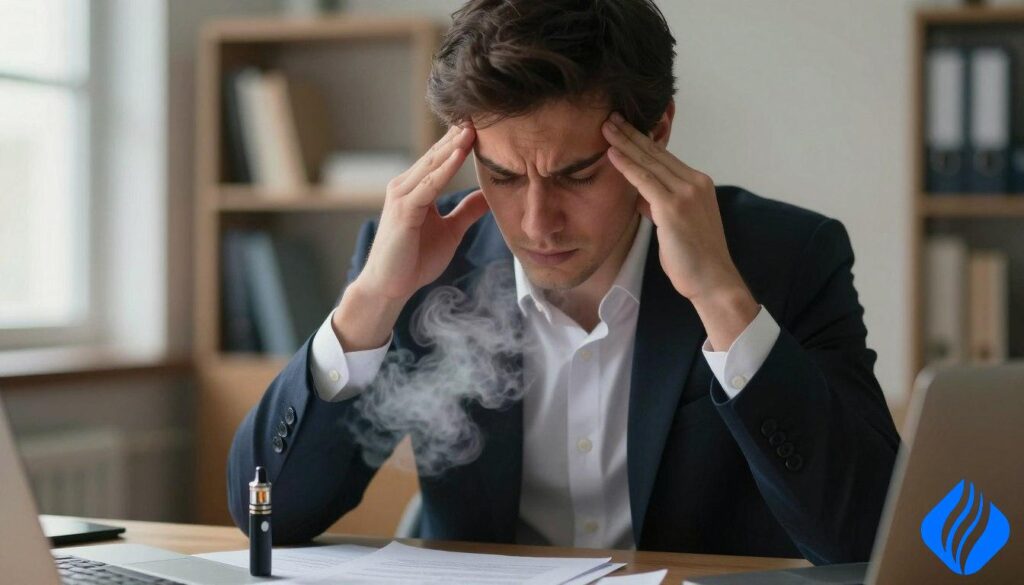
Key Takeaways
- Typical symptom profiles: dull ache, pressure band, or throbbing pain.
- Most cases tie to nicotine, dehydration, or ingredient sensitivity.
- Watch the first 24–72 hours after device or strength changes.
- Reduce exposure and hydrate; seek care for severe or worsening signs.
- This article will explain mechanisms, home relief, and red flags.
Key Takeaways
A short, safety-focused summary follows to help readers spot key causes and respond promptly to new head pain after vaping.
- Three main drivers: nicotine dose effects, dehydration pathways tied to propylene glycol/vegetable glycerin (PG/VG), and sensitivity or irritation from ingredients and flavorings.
- Mechanisms: nicotine can cause vasoconstriction and alter cerebral blood flow; PG/VG may produce dry mouth and fluid imbalance that worsens pain.
- Practical first steps: stop exposure, drink water, and reassess nicotine strength and frequency before assuming the symptom is unrelated.
Common symptom patterns include a dull ache, pressure‑band sensation, or throbbing pain. These symptoms can come with nausea, light sensitivity, or dry mouth.
Nicotine narrows blood vessels in some people. That vasoconstriction can change blood flow to the brain and may lead headaches or migraine‑like events in susceptible users.
Dehydration is more than thirst: PG and VG dry mucous membranes and can shift fluid balance. Drinking plain water often reduces the intensity of symptoms.
- Note on dosing: nicotine content and nicotine intake vary widely when switching devices or pods; the same number of puffs can deliver very different doses.
- OTC remedies: over‑the‑counter options may help but should not mask severe or new neurological signs; seek medical care for persistent or worsening pain.
- Guidance: this is a symptom‑safety guide, not a diagnosis. Treat new, unusual, or escalating symptoms as potentially unrelated until evaluated.
For further safety resources and product information, see SokVape safety resources.
Quick Reference Table: Likely Cause vs. What You Feel vs. What to Do Next
Use this table for fast triage after recent device, pod, or nicotine changes.
| Likely Cause | What You Feel | What to Do Next |
|---|---|---|
| Nicotine-related vasoconstriction / overstimulation | Throbbing pain, jittery or anxious sensation, lightheadedness; pain tracks with heavy use or higher‑nicotine products. | Stop exposure, sit quietly, hydrate. Reduce nicotine strength and wait 24–72 hours after changes to reassess. |
| PG/VG-related dehydration | Dry mouth, scratchy throat, thicker saliva and a dull ache that eases after fluids. | Drink water and electrolytes, avoid alcohol, pause use. Try a different PG/VG ratio or lower frequency. |
| Ingredient sensitivity / irritant trigger | Scent‑like triggers, nasal or sinus irritation, cough or throat burn; onset often after a new flavor or product. | Stop the new product, switch to an unflavored or known product, change one variable at a time to isolate the trigger. |
| Nicotine withdrawal (cutting back or quitting) | Diffuse pressure‑type pain within 24–72 hours after reducing intake, with cravings, irritability, and fatigue. | Expect symptoms for up to 72 hours; use gradual reduction, behavioral support, or FDA‑approved cessation products if quitting. |
| Safety note: Severe neurologic signs, the sudden “worst” pain, or symptoms lasting >72 hours should bypass self‑triage and prompt urgent evaluation. | ||
Research and studies on vapor exposure and chemicals are ongoing; unexplained or frequent pain should be treated as medically significant even when use appears correlated.
What does a vape headache feel like in real life?
Many users describe head pain after inhaling vapor as either a dull build‑up, a band‑like tightness, or a pulsing ache. These three patterns appear most often in clinic reports and user accounts.
Common pain patterns people report
Dull ache: Gradual onset that grows over minutes to hours. It often feels steady and diffuse.
Pressure band: A tight, constricting sensation around the forehead or temples.
Pulsing/throbbing: Sharp beats that can resemble migraine in susceptible people and may bring nausea.
Where pain shows up and intensity ranges
Pain usually appears in temples, forehead, behind the eyes, or the back of the head. One person may report different locations at different times.
Intensity ranges from mild to severe. Higher nicotine, chain use, or dehydration raises risk of stronger pain.
Traveling symptoms and timing
Common accompanying symptoms include dry mouth, throat irritation, cough, light or sound sensitivity, jitteriness, and sleep trouble.
Onset can be immediate or delayed. The most informative window is the first 24–72 hours after changing nicotine strength, device, or frequency.
| Location | Sensation | Likely driver |
|---|---|---|
| Temples / forehead | Dull or pressure | Dehydration or PG/VG effects |
| Behind eyes / pulsatile | Throbbing | Nicotine‑driven vasoconstriction |
| Back of head | Deep, steady ache | Overuse, tension, or device change |
For deeper reading on causes and timing, see this concise guide on possible links and safety steps: can vaping cause headaches.
Can vaping cause headaches? The physiology behind the pain
Several bodily responses—vascular, fluid, and sensory—can converge and produce head pain after nicotine exposure or reduction.
Nicotine and blood vessels
Nicotine is a stimulant that can narrow blood vessels and change cerebral blood flow. This vasoconstriction may trigger throbbing or pressure patterns in people prone to migraine or tension‑type pain.
Dehydration pathway
Propylene glycol and vegetable glycerin can dry mucous membranes. That drying may promote dehydration, a known trigger that amplifies head pain unless fluid intake increases.
Chemical sensitivity and dose variability
Certain flavorings or other chemicals in e-liquids can act like scent triggers and provoke symptoms in sensitive users. Switching products, pods, or salt formulas can also raise nicotine intake suddenly and raise risk during the first 24–72 hours.
Withdrawal and overlap with migraine
Reducing nicotine can cause withdrawal headaches with cravings and irritability as the nervous system adjusts. Clinically, symptoms may resemble migraine, tension, or rarely cluster‑like events; severe or focal neurologic signs require urgent evaluation.
Research and studies remain active; evidence supports multiple plausible mechanisms but does not assign uniform causation across all users.
| Mechanism | Key sign | Clinical note |
|---|---|---|
| Nicotine vasoconstriction | Throbbing, pulsatile pain | Linked to altered blood flow; reduce nicotine content or frequency |
| Propylene glycol / VG dehydration | Dry mouth, dull pressure | Hydrate and reassess PG/VG ratio |
| Chemical sensitivity (flavorings) | Nasal irritation, nausea, light sensitivity | Stop new flavors; choose verified products with transparent ingredients |
How to get rid of a vape headache safely at home
Begin by stopping exposure immediately to let symptoms settle and to reset the body’s baseline. Continued use can sustain the trigger and obscure cause. Pause any device or product and sit quietly.
Rehydrate strategically
Drink plain water first. If signs of dehydration are noticeable—dizziness, dry mouth—consider an oral electrolyte drink. Avoid alcohol; it will amplify dehydration and may worsen pain.
OTC pain relief and safety
Over‑the‑counter options such as acetaminophen or ibuprofen may help when used per label. Follow dosing limits and consult a clinician or pharmacist if you have liver, kidney, or bleeding‑risk conditions, or are pregnant.
Light, sound, and comfort
Reduce sensory load: dim lights, lower screen brightness, and cut noise. A cool compress on the forehead or neck can ease migraine‑like symptoms.
Why this works: Rehydration supports circulating volume; avoiding nicotine reduces vasoconstrictive effects; quiet reduces sensory amplification.
Monitor for 24–72 hours. If pain eases after stopping and hydrating, the pattern may support a vaping‑related trigger. If symptoms worsen, last more than 72 hours, or include vomiting, chest pain, fainting, or neurologic changes, seek urgent care.
For more guidance on linked risks, see vaping and headaches and product safety at SokVape shop.
How to prevent vaping headaches before they start
Start prevention by treating nicotine strength, hydration, and product quality as adjustable safety levers. Small, planned changes reduce risk and help identify triggers in the first 24–72 hours.
Right‑size nicotine strength
Lowering nicotine can cut vasoconstriction risk and overstimulation. Step down gradually and monitor for 24–72 hours after each change to track nicotine intake and side effects.
Avoid chain sessions and track frequency
Space puffs and limit sessions. Keep a short log for several days to spot early warning signs such as dry mouth, jitteriness, or lightheadedness before pain starts.
Match PG/VG to tolerance
People with throat dryness or propylene glycol sensitivity may need higher VG or different e-liquids. Increase plain water intake if PG/VG causes dehydration symptoms.
Eliminate flavors and additives methodically
Change only one variable at a time—nicotine content, flavor, or device. If symptoms worsen, stop the trial and return to the prior product.
Quality control and authenticity
Buy sealed, traceable products from verified sellers. Verified brands often publish batch codes and lab testing that reduce unknown chemical risks.
Spotting counterfeits and safer brands
Use QR codes or verification tools, inspect packaging and warnings, avoid unusually low prices, and buy from authorized retailers. Brands such as Geek Bar and Raz are noted for clearer supply‑chain controls and authentication options, which can lower risk compared to unknown sources.
| Action | Why it helps | Practical steps |
|---|---|---|
| Control nicotine | Reduces vasoconstriction and overstimulation | Step down slowly; monitor 24–72 hours |
| Limit frequency | Prevents dose spikes and early side effects | Space puffs; log sessions for 3 days |
| Adjust PG/VG | Matches tolerance; lowers dehydration | Try higher VG or low‑PG e‑liquid; hydrate |
| Verify products | Reduces exposure to unknown chemicals | Scan QR, check seals, buy from authorized sellers |
Tip: For a concise health overview and links to research on links between use and head pain, see can vaping cause headaches.
When a vaping headache is a red flag
New or escalating head pain that does not improve after stopping exposure and hydrating should prompt clinical review. Immediate attention is required when warning signs suggest more than routine side effects.
Symptoms that warrant urgent evaluation
- Sudden, severe “worst” pain or rapidly worsening headaches.
- New neurologic symptoms: weakness, numbness, facial droop, speech changes, or confusion.
- Fainting, severe vision loss, stiff neck with fever, or vomiting with escalating pain.
When to call 911 or go to the ER
If head pain lasts more than 72 hours, or if any focal neurologic signs appear, seek emergency care. Do not assume withdrawal explains focal deficits or severe pain.
Why frequent headaches need clinician workup
Repeated events merit assessment because dangerous conditions can coincide with recent use. A clinician will check neurologic exam, blood tests, and imaging as needed.
Track timing, nicotine level, product used, frequency, associated symptoms, and response to hydration or OTC measures to aid diagnosis.
| Red flag | Action | Why |
|---|---|---|
| Sudden severe pain | Call 911 | Risk of hemorrhage or stroke |
| Neurologic signs | ER evaluation | Needs imaging and urgent care |
| Lasts >72 hours | Urgent clinic visit | Persistent problem; rule out other causes |
| Frequent recurrences | Specialist referral | Identify trigger, consider migraines or secondary causes |
Conclusion
Conclusion
This short clinical recap links symptom patterns to likely drivers and clear next steps.
Typical descriptions include dull pressure, a tight band, or throbbing pain. These patterns often reflect nicotine‑driven changes in blood flow, dehydration from PG/VG, or sensitivity to ingredients and chemicals.
Practical sequence: stop exposure, hydrate, and reassess nicotine strength and frequency. Avoid changing multiple products at once and monitor the first 24–72 hours after any switch.
Treat repeated, new, severe, or persistent headaches as a health signal and seek clinician evaluation. Use traceable, verified sellers to reduce risks from mislabeled nicotine or unknown additives.
Medical Disclaimer: This content is for informational purposes only and does not constitute medical advice, diagnosis, or treatment. Headaches can have many causes, including serious conditions. If symptoms are severe, new, worsening, include neurologic changes, or last longer than 72 hours, seek urgent medical care or call 911. Always consult a qualified healthcare professional for personalized guidance, especially if you are pregnant, have chronic medical conditions, or take prescription medications.
 English
  German
  Dutch
Dutch  Danish
  Czech
Czech  Italian
  Slovenian
  French
  Hungarian
  Spanish
  Polish