

Scope (United States, 2026): We examine ingredient risks, hands-on device testing, and sourcing practices to guide adult consumers. This is informational only and not medical advice.
Notice: Products that include nicotine are for adults 21+. Keep this content for responsible, informed use.
We define precisely what vapes contain diacetyl in practice: the answer hinges on flavor chemistry, label gaps, and supplier transparency rather than a simple brand list. Many butter‑like notes hide under “natural” or “artificial flavorings.”
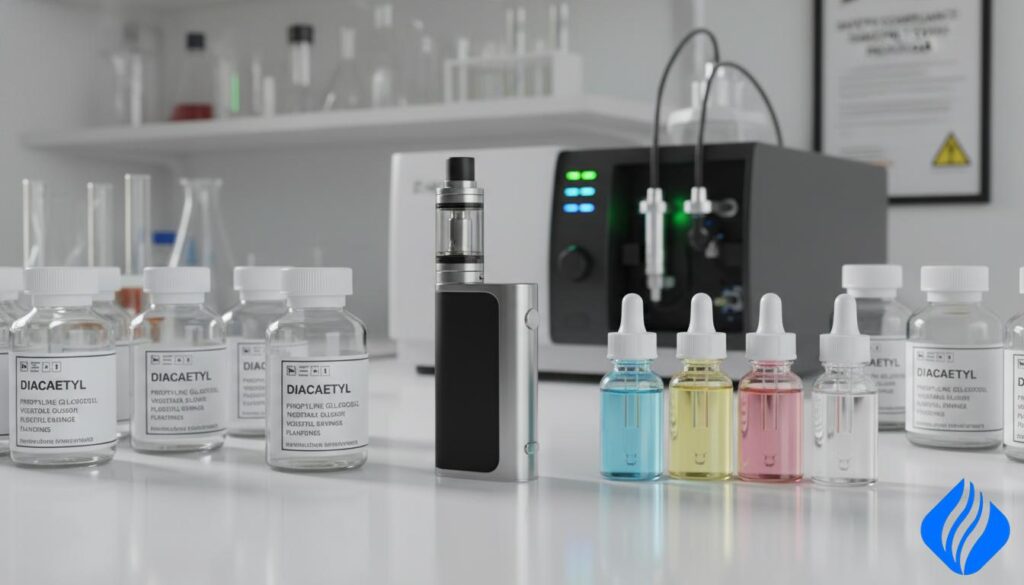
We will flag risk signals by flavor family and labeling language, check for lab documents, and run hands‑on checks: throat hit, vapor output, and flavor stability across puff counts. Then we compare performance and value using puffs per dollar and flavor consistency across mainstream options.
Our baseline: inhaled aerosols can irritate the lung. Ingredient uncertainty raises concerns. Verify Certificates of Analysis and prefer brands with transparent testing. For lab-verified guidance see our review at Sokvape testing & reporting.
Key Takeaways
- We focus on consumer safety and transparent sourcing for 2026 buyers.
- Custard/creamy notes often trigger interest in diacetyl and related chemicals.
- Look for CoAs and third‑party reports before purchasing flavored products.
- Hands‑on metrics (puffs per dollar, flavor stability) affect perceived smoothness.
- Nicotine products are for adults 21+; this is informational, not medical advice.
Diacetyl, “Popcorn Lung,” and Why Vapers Still Ask About It in 2026
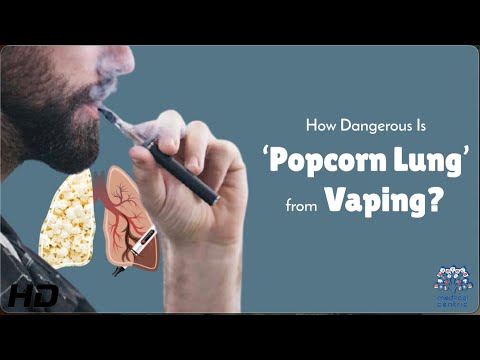
Even now, the term popcorn lung drives readers to seek clear, evidence‑based context on flavor chemistry.
Defining the flavor role
Diacetyl is a small chemical used to create buttery or creamy notes in many flavor blends. It appears naturally or as a manufactured additive. Ingesting it is not the same as inhaling it; inhalation changes dose and airway contact.
Origin and occupational cases
The popcorn nickname comes from cases among popcorn plant workers. High workplace exposure to flavoring oils was linked to bronchiolitis obliterans, a serious disease that scars the lung.
Evidence and early testing
A 2015 Harvard study found many sampled e-liquids contained the compound. That work showed prevalence in some products, not direct causation for users.
“Presence in a sample does not equal proven clinical risk for every user.”
- Key factors: levels, frequency, and device conditions.
- Context: cigarettes can also deliver meaningful quantities.
- Practical focus: check sourcing and lab reports, not headlines.
| Issue | Origin | Evidence | Action |
|---|---|---|---|
| Popcorn lung label | Popcorn plant worker exposure | Occupational cases, medical diagnosis | Prefer tested products |
| Early e-liquid findings | 2015 Harvard study samples | ~75% samples had measurable levels | Seek CoAs and transparent brands |
| Comparative risk | Smoke vs aerosol | Cigarettes show notable levels too | Compare exposure metrics |
what vapes contain diacetyl: flavors, ingredients, and product types most associated with risk
Creamy and baked profiles often rely on buttery aromatics that raise red flags. Custard, caramel, cheesecake, pastry, and donut‑style flavors are the highest‑watch groups for buttery notes.
Why these families matter: formulators often build dessert profiles using buttery building blocks such as acetoin and related compounds. Those chemicals deliver the “cream” and baked top‑notes that food systems use, but inhalation exposure differs from food use.
How ingredient lines are shown on packs
Packaging usually lists broad terms like “natural flavorings” or “artificial flavorings”. Those catch‑alls can hide specific chemicals and obscure actual levels.
“Labels rarely list individual flavor chemicals; transparency comes from CoAs or brand reports.”
Nicotine‑free ≠ chemical‑free
Removing nicotine removes one exposure vector. It does not guarantee absence of buttery agents. Nicotine‑free e‑juice and e‑liquids can still include flavoring ingredients that carry inhalation risk.
| Flavor family | Typical agents | Risk note |
|---|---|---|
| Custard/Cream | Buttery aromatics, acetoin | High watch for butter notes |
| Caramel/Candy | Baked top‑notes, flavor esters | Often uses buttery enhancers |
| Pastry/Cheesecake | Complex blends, dairy‑like esters | Seek CoAs from brands/companies |
Practical rule: treat descriptions saying buttery, custard, cream, or bakery as higher due diligence. Request lab reports or pick reputable brands. For lab‑verified guidance see our detailed review at Sokvape testing & reporting.
Hands-on testing insights: disposable vape performance and what ingredient concerns miss
To separate ingredient signals from hardware effects, we tested disposables across full use cycles. Our protocol logged throat hit, vapor output, airflow stability, and flavor clarity at start and after extended puffs.
Testing setup and core metrics
We ran repeated draws at fixed intervals and recorded vapor volume and perceived smoothness. Early readings showed smooth throat hit and clear top-notes.
Flavor evolution near 5,000 puffs
Around ~5,000 puffs sweetness faded first. Cooling agents lost crispness next. Cream notes flattened or grew slightly waxy as coils aged.
Nicotine strength and throat hit
2% nicotine salts read smoother over long sessions. 5% felt stronger and sharper, especially as coils showed wear.
Coil type and power delivery
Mesh coils gave even heating and cleaner top-notes early. Dual mesh pushed density and richness, which can mask unchanged e-liquid chemistry.
“Hardware wear, not just ingredients, often explains flavor drift.”
USB‑C recharging can extend usable life. Still, voltage drop over time thins vapor and mutes notes, and that can raise perceived lung irritation and other health risk signals. For lab-verified sourcing and testing details see our Sokvape testing & reporting.
Spec spotlight and value comparison: puffs per dollar and flavor consistency vs Geek Bar, Lost Mary, and Raz
A clear spec block lets readers compare battery life, juice volume, and puff claims without marketing noise.
Main product technical checklist
- Battery: 950 mAh
- Capacity: 16 ml e-juice
- Nicotine: 2% or 5% nic salt
- Coil: mesh
- Charging: USB‑C
How we calculate puffs per dollar
We convert advertised puff counts to realistic usable puffs. Start with device price. Divide by measured usable puffs. Adjust for recharge cycles and leftover e-liquid that no longer tastes fresh.
Example: a $20 device claiming 7,000 puffs that yields 5,000 usable draws and one recharge has 5,000 ÷ 20 = 250 usable puffs per dollar.
Head-to-head: main product vs Geek Bar, Lost Mary, Raz
We compare three metrics: measured usable puffs per dollar, flavor consistency over the session, and when sweetness, cooling, or cream notes fade.
| Product | Puffs per $ (measured) | Flavor consistency |
|---|---|---|
| Main product | ~250 | Stable until ~80% of usable life; cream notes hold well |
| Geek Bar | ~220 | Sweetness fades earlier; cooling drops first |
| Lost Mary | ~240 | Good early clarity; pastry notes become flat late |
| Raz | ~205 | High initial richness; more dead puffs near end |
“Better value means steady flavor delivery, not just higher advertised puff counts.”
We stress measurable comparisons. Marketing puff claims vary by testing method. Our approach converts those figures into consumer‑relevant metrics readers can audit.
As a further resource, see a compact reference on ingredient and product context in this short guide: product spec primer.
Shopping smart on Sokvape: safer sourcing, internal links, and authenticity checks
Smart shopping starts with clear categories and verifiable product pages that cut through marketing claims. We direct readers to Sokvape’s main store for trust and document access: Sokvape.
Where to browse and compare
Browse mainstream options under Disposable Vapes. Established categories reduce surprise ingredients and lower buyer risk.
Best-deal paths and value
Use Hot Sale for price deals. Lower cost improves puffs-per-dollar only if flavor and output stay steady. A cheap product that fades raises effective cost and potential irritation concerns.
Brand discovery for flavor style
Compare profiles on brand pages like RandM and Bang. Vapers avoiding buttery notes should favor cooling-forward options over dessert-forward blends, since some flavor listings hide components under generic wording.
FAQ: How to know if it’s empty?
Signals: sudden flavor fade, reduced vapor despite full charge, tighter draw, or muted throat hit. These signs often mean depleted e-juice or coil wear, not battery failure.
FAQ: How to recharge safely?
Use a reputable 5V wall adapter and the device USB‑C cable. Avoid high‑output fast chargers. Charge on a non‑flammable surface and stop once full. If the device gets hot, unplug and inspect the port.
FAQ: Is it authentic?
Scan any QR code and confirm the redirect. Use the QR flow pointing to https://www.google.com/url?sa=E&source=gmail&q=sokvape.com and verify it resolves to sokvape.com. That check helps avoid lookalike sites and counterfeit products.
“The popcorn lung story traces to factory worker exposure in flavor factories, not typical consumer use; still, verification lowers the chance of unexpected ingredients.”
Compliance note: some markets list a diacetyl banned rule. In the U.S., enforcement and imports vary. Favor sellers with CoAs and clear ingredient information to reduce inhalation risk and protect health.
Conclusion
We end with clear, practical steps to spot higher‑risk dessert flavors and judge products by test data, not marketing.
Bottom line: treat buttery, custard, caramel‑cream, and pastry notes as higher scrutiny. Ask for CoAs and third‑party reports before you buy. If labels are vague, favor fruit or menthol profiles.
Performance changes—muted sweetness, weaker cooling, harsher finish—often reflect coil or battery wear, not proof a product contains diacetyl. Use measured puffs per dollar and flavor consistency when comparing devices.
Popcorn lung is a real occupational injury tied to heavy exposure. No verified consumer cases from vaping exist, yet inhalation risks remain. If a draw feels burnt, unusually buttery, or causes throat or chest irritation, stop and reassess the source.
Nicotine warning: This product category may contain nicotine. Nicotine is an addictive chemical. For adults 21+ only. For lab‑verified sourcing and testing, see our lab‑verified guide.
 English
  German
  Dutch
Dutch  Danish
  Czech
Czech  Italian
  Slovenian
  French
  Hungarian
  Spanish
  Polish