

Dual mesh coils and Smart Screens have pushed device performance, but they also change how much nicotine reaches the bloodstream.
We explain why disclosure of specs — battery mAh, e-liquid ml, 2%/5% nic salts, mesh vs dual mesh, USB‑C charge — matters to your care team.
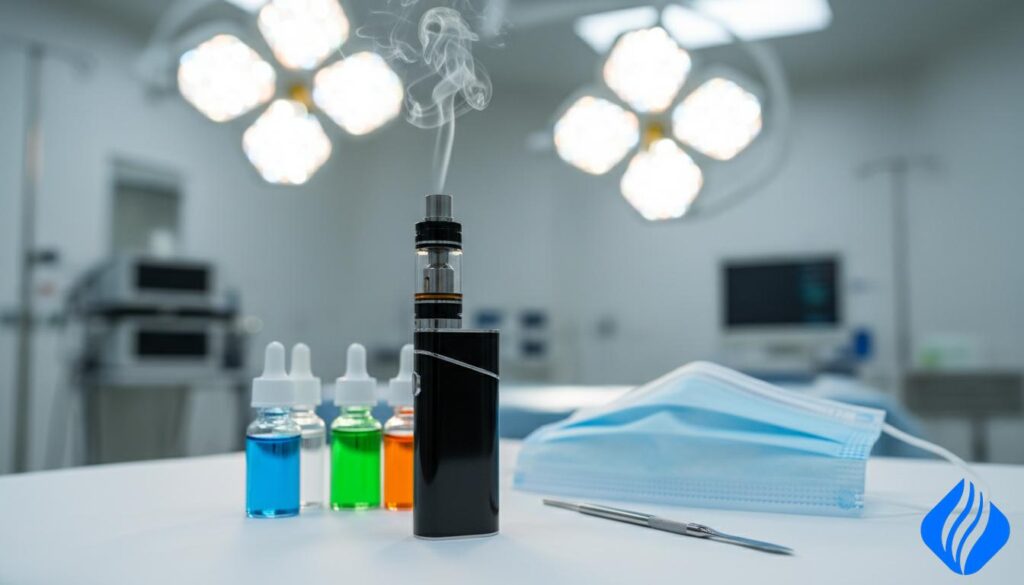
Nicotine — not just smoke — links to poorer healing and higher complication rates around surgery.
Ongoing nicotine exposure up to anesthesia creates avoidable uncertainty for clinicians. This affects circulation, oxygen delivery, clotting, and anesthesia responses. That raises the immediate risk to patients and to overall post-op health.
We will include hands-on testing, Puffs per Dollar and Flavor Consistency comparisons (Geek Bar, Lost Mary, Raz), and links to sokvape.com categories for spec lookups. Our aim is clear: give device-level context so adult vapers can disclose accurately and plan safer timelines.
Key Takeaways
- Nicotine affects healing and anesthesia; disclose all nicotine sources to surgical teams.
- Device specs change nicotine delivery; note battery mAh and nic salt strength.
- We test disposables for Puffs per Dollar and flavor consistency for practical context.
- sokvape.com is useful for quick spec lookups and supply reliability.
- Consult clinicians for timing and a quit plan; a medical disclaimer follows later.
What vaping means for surgery and anesthesia today
Device design and liquid makeup alter exposure and make perioperative planning less predictable.
Vape aerosol is typically a mix of PG/VG + flavorings + nicotine. Some liquids also include alcohol or THC oils. Labeling may be off, and unknown additives can change respiratory reactivity and drug response.
Anesthetists need full disclosure of all substances in the body—nicotine, cannabis, supplements, and prescription meds. That information helps tailor sedative dosing, airway plans, and post-op nausea control.
- Common device specs: battery 350–1500 mAh, e-liquid 2–20 ml, nic salts often 2% or 5%, USB‑C charging.
- Coil impact: mesh vs dual mesh raises vapor output and smoothness, which can increase nicotine intake without obvious cues.
- Hands-on testing: stronger vapor and smoother throat hit tend to lengthen sessions; many disposables show flavor drift after ~5000 puffs, prompting more hits.
We contrast this with smoking: combustion adds carbon monoxide and toxins, but modern products can still deliver clinically meaningful nicotine that alters circulation and healing.
Practical next step: identify your device type and confirm specs on product listings such as Disposable Vapes or Hot Sale. For clinical context, review independent analysis at a peer-reviewed summary.
| Spec | Typical Range | Clinical Relevance |
|---|---|---|
| Battery (mAh) | 350–1500 | Higher mAh sustains hotter draws and longer sessions, increasing exposure. |
| E-liquid (ml) | 2–20 | Larger volume supports heavier use and greater cumulative nicotine load. |
| Nic salt (%) | 2% or 5% | Label variance can mislead anesthetic planning; perceived strength varies with device. |
| Coil type | Mesh / Dual mesh | Mesh increases vapor; dual mesh often yields smoother hits and more intake. |
Why can’t you vape before surgery
Nicotine narrows small arteries and veins, directly reducing blood flow to tissues that need oxygen after an operation. This vasoconstriction lowers perfusion and raises the chance of poor scar formation or tissue loss.
Nicotine-driven vasoconstriction and reduced circulation
Reduced blood flow impairs delivery of oxygen and nutrients. Collagen formation slows and wound healing becomes less reliable. In some cases, tissue death requires extra procedures to correct results.
Lower oxygen delivery and cardiopulmonary strain
Airway irritation and stimulant effects increase heart and lung workload during anesthesia. If oxygen transport is already compromised, perioperative stability becomes harder to maintain and complications rise.
Medication interactions and clot risk
Nicotine alters responses to anesthetics and pain medicines, making dosing less predictable. It also promotes a hypercoagulable state, raising the chance that a clot will form and travel to the lungs.
Infection, delayed healing, and vulnerable procedures
Impaired circulation and weakened local immunity increase infection risk and delay scar maturation. Procedures with major tissue repositioning—such as breast lift, reduction, or abdominoplasty—depend on fine vessel networks and show higher complication rates when nicotine exposure continues.
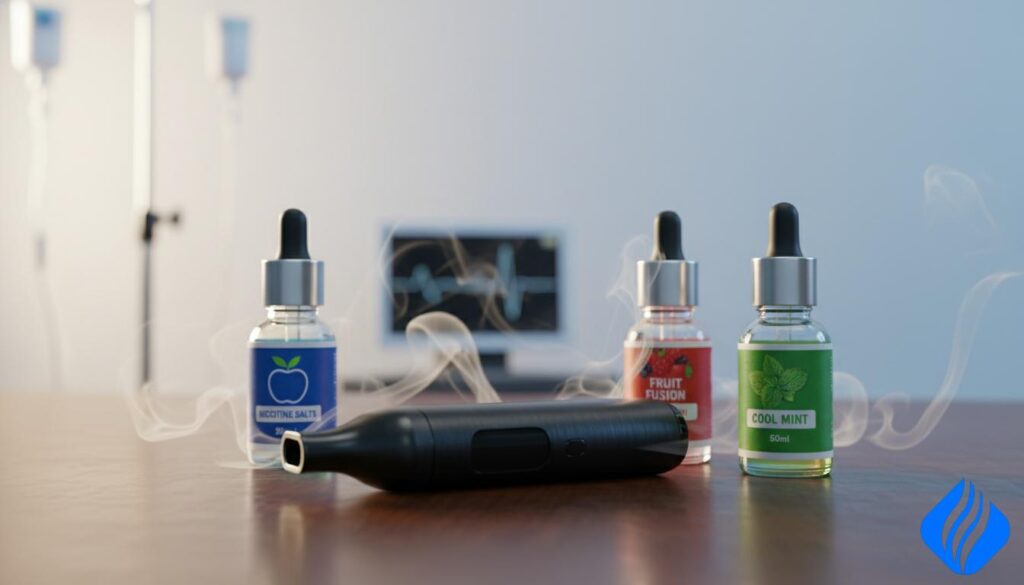
Device context: Modern disposables with mesh or dual mesh coils and 5% nic salt can raise nicotine intake per session. Products that score high on Puffs per Dollar or retain Flavor Consistency (reported for Geek Bar, Lost Mary, and Raz) may extend total exposure and make timing a quit plan harder. We recommend clinicians and patients treat device specs as part of perioperative planning.
How long before surgery should you stop vaping nicotine?
A clear nicotine-free interval gives clinicians a predictable baseline for anesthesia and wound care. Timing varies by specialty and by clinic policy. Many surgeons require strict abstinence to protect tissue viability and final results.
Common surgeon guidance
Plastic surgeons often ask patients to stop nicotine a minimum of 6 weeks prior to a planned operation and to remain nicotine-free for 6 weeks after. Some practices verify abstinence with testing.
What improves quickly
Even 12–24 hours without smoke or aerosol can begin to restore oxygen handling and reduce airway irritation. Early gains help perioperative breathing and hemodynamic stability.
When postponing is safer
If the patient cannot meet the required window, postponing the procedure often reduces the risk of poor outcomes and complications. Surgeons set these windows to protect blood flow, circulation, and recovery.
“Stopping nicotine early gives the care team a consistent physiological baseline for safer perioperative planning.”
How to quit vaping before a procedure without increasing risk
We recommend a clinician‑led plan that reaches zero nicotine by the deadline set for the procedure. Start by notifying the surgical team and scheduling a clear stop date. This allows medication dosing and wound plans to be tailored.
Nicotine gum and patches deliver nicotine to the body. Many surgeons treat these products like other nicotine sources because nicotine itself causes vasoconstriction and may raise complication risk. Discuss any planned NRT with your clinician rather than substituting on your own.
Practical cessation supports to discuss with your care team
- Contact the surgeon’s office to confirm the required nicotine‑free interval.
- Set a taper that ends at zero nicotine by the specified date.
- Ask about prescription aids and behavioral coaching as clinician‑approved options.
- Plan trigger management and short‑term monitoring to avoid unmanaged withdrawal.
What to tell your surgeon and anesthetist
Provide a concise list of current use and recent exposures so the team can adjust care.
- Device type and frequency of use.
- Nicotine strength (2% or 5% nic salt) and last-use timing.
- Any cannabis/THC, supplements, herbs, or medications that affect bleeding or anesthesia.
- Steps already taken toward cessation and any NRT in use (gum, patches).
“Honest disclosure allows clinicians to optimize anesthesia and protect healing.”
| Item | Why it matters | Patient action |
|---|---|---|
| Nicotine source | Impacts vasoconstriction and healing | List device, gum, patches, strength, last use |
| Medications & supplements | Can change bleeding or anesthesia response | Bring full med/supplement list to pre-op |
| Clinician‑approved aids | Reduce withdrawal while protecting results | Request monitored prescription or coaching |
Bring this checklist to pre-op and coordinate any cessation products with the team. For more practical guidance on timing and disclosure, review our linked resource at vaping before surgery.
Safety and legal considerations for patients who vape
A documented nicotine history and device profile give the care team needed certainty for anesthesia and wound strategy.
Nicotine warning: Nicotine is an addictive chemical. Exposure impairs circulation and can harm healing. This raises the chance of wound problems, infection, and poor results—especially in plastic surgery where tissue perfusion matters.
Follow written pre‑op instructions and disclose all substance use. In the United States, legal and safety expectations require honest reporting. Do not treat retail or online product notes as a substitute for clinician guidance.
- Key device specs to report: battery capacity (typical ~500–1000+ mAh), e‑liquid volume (~10–20+ ml), nicotine strength (2% or 5% nic salt), coil type (mesh vs dual mesh), and charging port (USB‑C).
Hands‑on testing shows mesh and dual mesh builds deliver dense vapor and a smooth throat hit. After roughly 5000 puffs, flavor often flattens, which can prompt more draws and higher cumulative exposure.
| Evaluation | Puffs per Dollar | Flavor Consistency |
|---|---|---|
| Main product | Varies by model—check label | Often good until coil age increases |
| Geek Bar / Lost Mary / Raz | High reported puffs per dollar; compare price vs labeled puffs | Some models retain flavor longer; others show drift after heavy use |
| Clinical note | Higher puffs correlate with greater cumulative exposure | Stable flavor can prolong sessions and delay cessation |
FAQ
- Empty signs: reduced vapor, muted or dry taste, blinking LEDs, or minimal aerosol despite firing.
- Recharge safely: use the correct cable (often USB‑C), charge on a firm surface, avoid overnight charging, stop if hot, and do not use damaged devices.
- Authenticity: use manufacturer QR/scratch verification and confirm the landing page is legitimate (references may resolve to sokvape.com).
Seek urgent care for chest pain, severe shortness of breath, coughing blood, one‑sided leg swelling, fever with worsening incision redness or drainage, or sudden wound separation.
Medical disclaimer: This content is educational and not individualized medical advice. Follow your surgeon and anesthetist instructions. Disclose all products and recent exposures during pre‑op.
Conclusion
Nicotine exposure close to an operation is a modifiable risk that reduces tissue perfusion and complicates anesthetic care. We summarize the practical steps to protect outcomes.
Stop as early as possible. Remain nicotine‑free through the critical recovery window and follow the surgeon’s timeline, even if it is stricter than general guidance.
Disclose everything. Report nicotine strength, device type, cannabis use, supplements, and all medications so the anesthetist can plan dosing and monitoring accurately.
Following these steps improves healing, lowers complication risk, and produces more predictable results—especially in elective plastic surgery. Nicotine is addictive and can harm surgical outcomes. This guide is educational and does not replace individualized medical advice. Consult your care team for a clinician‑led plan.
 English
  German
  Dutch
Dutch  Danish
  Czech
Czech  Italian
  Slovenian
  French
  Hungarian
  Spanish
  Polish