

Direct answer: Stop chain vaping and inspect the mouthpiece first. Warm the device gently, then retest airflow — most clogs are from thick oil meeting condensation and restricted airflow.
Nothing ruins a session faster than restricted draws and spitback. As SOKVAPE consultants, we see the same clog patterns across carts, cartridges, and draw-activation devices. We’ll triage the issue, diagnose airflow versus coil problems, walk through safe fixes, and show prevention steps.
Clogs usually form when thick oil, condensation, temperature swings, or residue block the airway. Symptoms include weak vapor, a burnt or harsh taste, and oil pooling in the mouthpiece. We write in a calm, solution-focused tone so you can fix the device without risking the lithium-ion battery or damaging sealed disposables.
What to expect: our priority is restoring airflow, reducing spitback, avoiding burnt hits, and protecting oil quality so your disposable performs consistently. We’ll share SOKVAPE pro-tips throughout for safer, repeatable fixes, not tricks that ruin hardware. For more quick fixes and deeper troubleshooting, see this guide on unclogging disposables: disposable vape quick fixes.
Key Takeaways
- Stop use, check the mouthpiece, warm gently, then retest airflow.
- Common causes: thick oil, condensation, temperature change, and residue buildup.
- Signs include restricted airflow, weak vapor, burnt taste, and oil in the mouthpiece.
- We follow a safe order: triage → diagnose airflow vs coil → fix → prevent → replace.
- SOKVAPE pro-tips focus on safety and repeatable results for carts and cartridges.
Direct Answer: What to Do When a Disposable Vape Gets Clogged
A fast triage in under 90 seconds can save the device and your time. Stop using the device and check the mouthpiece first. Look for oil pooling, residue, or a blocked airway before any aggressive action.
Fast triage (60–90 seconds)
- Inspect the mouthpiece for visible oil or debris.
- Try one gentle dry pull (no power on button pens).
- Listen for gurgling or feel for restricted airflow.
- Note vapor strength: weak vapor may indicate airflow or battery issues.
What each sign usually means
Restricted draw often points to an airway blockage. Gurgling or oil in the mouthpiece suggests a minor flood. Weak vapor can be poor airflow or low battery output.
Stop doing this
- Do not force sharp tools deep into the airway.
- Do not overheat the disposable device with open flame or heavy heat.
- Do not chain vape while it is partially blocked.
“If you taste oil, pause and clear the mouthpiece first—continuing for one more hit usually makes clogs worse.”
Draw-activation note: repeated dry pulls can heat the coil unexpectedly and cause a harsh hit if the chamber is unevenly saturated. Pause and clear the airway first.
SOKVAPE pro-tip: If you need to fix clogged vape issues, clear the mouthpiece and give the device a short controlled warm before testing again.
Next: We will separate airflow issues from coil and heating problems so the fix matches the cause.
Signs Your Clogged Vape Is an Airflow Issue vs. a Coil Issue
Not all poor performance has the same cause. We use three quick checks — draw feel, sound, and taste — to decide whether the blocked path or the heating component needs attention.

Restricted draw and low vapor production
Airflow issue: a tight draw and low vapor output are classic signs. The taste stays normal when vapor appears. Gentle clearing of the mouthpiece often helps.
Burnt or harsh taste from uneven heating
Coil or heating element issue: a burnt, hot, or irritating flavor points to uneven heating or poor oil delivery to the heating element. Cleaning the mouthpiece rarely fixes this.
Spitback, leaks, and flooded mouthpiece
Flooding symptoms: gurgling, spitback, oil droplets near the mouthpiece, and small leaks. Thin oil, over-pulling, or rapid back-to-back hits often cause this pattern.
- Airflow pattern: tight draw, low vapor, normal flavor, improves after clearing.
- Coil pattern: harsh taste, hot vapor, no improvement after cleaning mouthpiece.
- SOKVAPE rule: if airflow returns but taste remains burnt, stop and treat it as a coil failure to avoid permanent flavor taint.
Next: we look at the root causes — oil viscosity, temperature, storage angle, battery output, and hardware design — that push devices toward one failure mode or the other. For deeper pen-level causes see our note on pen clogging causes.
Why Does My Vape Get Clogged?
When oil flows poorly or re-solidifies at narrow ports, the airway soon chokes and performance drops. We break down the main causes so you can fix and prevent recurring clogs.
Oil viscosity and formulation
Think of thick oil like honey. Slow-moving oil stalls at intake holes. Condensed distillate can harden near the mouthpiece.
Particulates and uneven extracts also raise clog risk in a cartridge or cart.
Temperature swings and storage
Cold temperatures thicken oil and restrict flow. Heat thins oil and can cause leaks that later solidify into clogs.
Store vape upright at room temperature in a cool, dry place to limit migration and leaks.
Residue, battery, and hardware factors
Tiny residue builds up at the mouthpiece, airway, and contacts. Low battery output causes incomplete heating and sticky buildup.
Older cotton wicks clog more than porous ceramic cores. Modern mesh coils spread heat evenly and reduce clogs.
| Coil Type | Clog Risk | Notes |
|---|---|---|
| Cotton-wick | High | Slow wicking; prone to residue and dry spots |
| Ceramic core | Medium | Porous structure holds oil better; less blockage |
| Mesh coil | Low | Even heating; reduces pooling and clogs |
Quick tip: choose the right oil viscosity and avoid high-VG blends in tight carts to reduce future clogs.
Safety Warning: Lithium-Ion Battery Safety Before You Troubleshoot
Safety comes first: lithium-ion battery safety must be confirmed before any hands-on troubleshooting. Stop if the device is swollen, cracked, unusually hot, or emits a chemical smell. In that case, power down and follow local disposal rules.
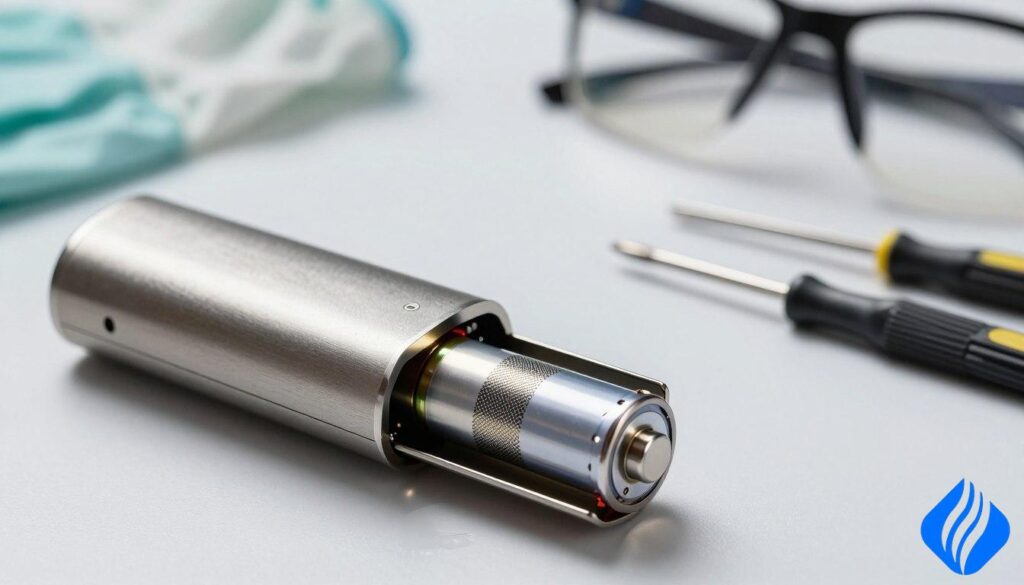
Never pierce or open a sealed disposable. A puncture can expose flammable materials and turn a minor issue into a thermal event. Physical damage to the outer shell or wrap changes risk, even if the vape still seems to work.
Overheating risks and damaged wraps
Do not attempt internal repairs if the wrap is torn or the casing is dented. Damaged batteries can vent or ignite with rough handling. We do not recommend disassembly or probing near internal components.
Safe warming methods
- Warm gently in your palms with clean, dry hands for a few seconds.
- Bring to room temperatures slowly if stored cold; do not force rapid heating.
- Apply controlled low heat from a distance for a very short time—keep the device moving and monitored.
Unsafe heat sources
- Open flame, ovens, or microwaves—never use.
- High-heat hair dryers held close or direct sunlight in a hot car.
- Any prolonged exposure that raises internal temperatures rapidly.
Tool safety: if you use a tool at all, touch only accessible mouthpiece surfaces. Do not probe deep near the battery or wiring. A metal tool can short components and cause a dangerous event.
| Action | Safe? | Why |
|---|---|---|
| Hand-warming | Yes | Low, even heat; minimal risk to battery |
| Microwave or oven | No | Rapid heat raises internal pressure; fire risk |
| Puncturing casing | No | Exposes flammable materials and battery cells |
| Using small tool on mouthpiece only | Conditional | OK if shallow and non-conductive; avoid metal probes |
Core rule: lithium-ion battery safety comes first. If you are unsure, stop and consult a professional or follow manufacturer guidance. For more maintenance and safe handling tips, see our guide on maintaining the RandM Tornado 9000.
Step-by-Step: How to Unclog a Disposable Vape Without Damaging Components
Start with the mouthpiece—most blockages show up at the entry point and are easy to fix. We follow a least-invasive order so you protect the coil and battery.
- Inspect and wipe the mouthpiece. Remove visible residue and pocket lint. Most clogged vape reports begin at this accessible path.
- Clean with a cotton swab and alcohol. Lightly dampen a cotton swab with isopropyl alcohol. Wipe only the outer and inner rim of the mouthpiece. Keep contact short and let it dry fully before using.
- Use gentle airflow techniques. Do 2–3 dry pulls (for button pens, do not press the button). Then try a controlled, gentle blow into the mouthpiece to move a small flood without forcing oil deeper.
- Warm the oil safely. Hold the unit in warm hands or apply mild external heat for a few seconds at a time. The aim is to thin oil just enough to restore flow, not to heat the heating element.
- Stabilize and retest. Take short draws and pause between puffs. Avoid chain vaping so oil and airflow can normalize and components settle.
Stop condition: if a harsh or burnt taste remains after airflow returns, discontinue use. That symptom often signals coil saturation or uneven heating rather than a simple clog.
Pro-tip from SOKVAPE: If you hear gurgling, do one controlled blow to clear the airway, wait 10–15 seconds, then take a short, gentle draw. This reduces the chance of pulling fresh oil into the heating zone and triggering a burnt hit.
| Step | Action | Time / Notes |
|---|---|---|
| 1 | Inspect & wipe mouthpiece | 10–20 seconds; remove lint and residue |
| 2 | Cotton swab + alcohol | 5–10 seconds contact; allow to dry fully |
| 3 | Dry pulls & controlled blow | 2–3 pulls; gentle pressure only |
| 4 | Safe warming | 5–10 seconds per attempt; monitor temperature |
| 5 | Stabilize & retest | Short draws; wait between puffs |
Quick Fixes Comparison: Symptoms vs. Solutions for a Clogged Vape Cartridge or Cart
Symptoms give a roadmap: match the sign to the least-invasive action first. Use gentle cleaning, brief warming, or a short preheat on compatible pen models before any intrusive tool work.
| Symptom | Safest First Action | Don’t do this |
|---|---|---|
| Tight draw | Wipe mouthpiece, 2–3 dry pulls, gentle blow | Probe deep with a sharp tool |
| Weak vapor | Try a different battery or adjust pen temp slightly | Hold long puffs that stress the coil |
| Gurgling / spitback | Clear airway with a short blow; wait 10–15 seconds | Force airflow with hard blows |
| Oil in mouthpiece | Clean rim and warm cartridge for a few seconds | Dig into airway with metal tool |
| Burnt taste | Stop use; treat as coil failure | Keep increasing temperature |
Preheat and draw-activation guidance
Preheat: use only on compatible pens. Start low, run for a few seconds, then test with a short draw. Wait between cycles to avoid overheating. Adjust temperature in small increments.
Draw-activation tips
Slow inhales can warm oil and restore flow. Avoid repeated aggressive pulls. If one cartridge clogs across multiple batteries, the cartridge is likely at fault. If many carts fail on one pen, suspect the battery or connection.
How to Prevent Clogs Long-Term: Storage, Draw Technique, and Routine Cleaning
Small habits and simple storage changes stop most airway blockages before they start. We focus on three pillars: storage angle, draw technique, and light routine cleaning. Follow these steps for fewer interruptions and longer cartridge life.
Storage checklist
- Store upright. Keep each cart standing to reduce migration and pooling.
- Keep at room temperature. Stable temperatures prevent thickening or over-thinning of oil.
- Avoid cars and direct sun. Don’t leave a unit in glove compartments or on dashboards—use an upright cool, dry place instead.
Usage checklist
- Take smaller hits. Short draws reduce sudden floods and spitback.
- Pause ~30 seconds between puffs. Let oil reflow and heating components stabilize.
- Avoid high heat settings. Excessive heating thins oil and can push liquid into the airway.
Maintenance checklist
- Wipe mouthpiece and contacts. Use a cotton swab lightly dampened with isopropyl alcohol; dry fully before use.
- Inspect seals and threads. Clean deposits before they build into clogs.
- Swap cartridges when performance drops. Repeated troubleshooting often signals a failing cart.
Oil selection and coil care. Match oil viscosity to your hardware. A thinner formulation suited to cartridge airflow reduces condensation at the mouthpiece. For nicotine setups, watch the PG/VG ratio—higher PG thins oil, higher VG thickens it.
Coil Priming basics: For refillable setups, saturate the wick slowly before first use. Proper priming prevents early flooding, uneven heating, and the first-week clog loop.
If clogs recur, we at SOKVAPE can help pick better-matched carts and formulations—ceramic cores or mesh designs often cut maintenance down.
When It’s Not a Clog: Faulty Hardware, Compatibility Problems, and When to Replace
Persistent performance problems often signal hardware faults rather than a simple airway obstruction. We start by checking for visible defects and repeat flooding before attempting more fixes.
Inspect for defects
Look for cracks, warped mouthpieces, loose seals, and oil in seams. If oil migrates into places it should not, replace the cartridge.
Isolation test to find the root cause
- Try the same cartridge on a different battery.
- Try a different cart on the same pen.
- Note results: if one battery fails multiple cartridges, suspect the battery or connections; if one cartridge fails across batteries, replace that cartridge.
Compatibility and component limits
Match voltage ranges. Mismatched output can leave the heating element underpowered and cause residue that mimics clogs.
Choosing quality hardware
Prioritize ceramic cores and Mesh Coils. They offer better oil flow and consistent airflow than older cotton designs. Higher quality machining and tolerances cut recurring problems.
When repeated flooding or damaged seals show up, replacement is safer than repeated fixes.
Legal Disclaimer: Traveling and Shipping With Vapes in the United States
We provide general information, not legal advice. Rules change often. Confirm federal, state, and local requirements for 2026 compliance before you travel or ship any device.
Note: airlines and carriers set different policies. Follow TSA/FAA rules and carrier terms to avoid confiscation or fines.
TSA/FAA compliance basics for carry-on vs. checked bags
| Carry-on | Checked bag |
|---|---|
| Keep devices and cartridges in carry-on. | Most airlines restrict lithium batteries in checked luggage. |
| Protect battery terminals and prevent accidental activation. | Loose batteries or active devices may be denied. |
| Store cartridges upright and capped to reduce leaks. | Avoid checked storage for spare batteries. |
Packing checklist
- Separate each cart or cartridge in a small case.
- Use a battery case for spare batteries and insulate terminals.
- Keep cartridges upright and capped to limit oil migration.
- Avoid extreme temperatures during transit.
PACT Act and location rules
PACT Act awareness: online orders and shipping may face age-verification, carrier limits, or outright bans. Check carrier rules before purchase.
Pro-tip: we recommend a dedicated travel case to keep cartridges capped and upright. This simple tool reduces leaks and protects contacts.
“Always verify state and carrier rules before shipping or boarding—compliance keeps devices and people safe.”
Conclusion
Conclusion
We recommend this safest path: clear the mouthpiece, restore airflow gently, warm oil carefully, and retest with short draws instead of chain hits. These steps fix clogged issues fast and protect cartridge quality over time.
Diagnose before you force it. Separate an airway blockage from a true coil or hardware failure to avoid burnt hits and wasted cartridges. If flooding and a harsh taste persist after proper troubleshooting, replace the cart or cartridge responsibly.
Prevention wins: store vape upright at room temperature, keep contacts clean, and choose matched oil viscosity and higher-quality cores to reduce repeat clogs. If you keep fighting the same pattern, SOKVAPE can help match oil and hardware for better results.
FAQ — People Also Ask
Q1: Why does my vape get clogged even when it’s new? New units can clog from thick oil, residue, or shipping temperature changes. A short warm-up and mouthpiece wipe usually clears it.
Q2: How do I unclog a disposable vape without burning the coil? Wipe the mouthpiece, do gentle dry pulls, and apply brief, safe external warmth. Avoid long or repeated draws that heat the coil prematurely.
Q3: Why am I getting oil in my mouthpiece? Oil migration or over-pulling causes pooling. Clean the rim, warm briefly, then take short draws to prevent spitback.
Q4: Should I use a preheat mode or higher temperature to clear a clog? Use low preheat on compatible pens only. Start short and low; higher temps can thin oil too much and cause leaks.
Q5: When should I replace a clogged vape cartridge instead of fixing it? Replace when flooding and harsh taste persist after safe troubleshooting, or when the cartridge repeatedly fails across batteries. A failing cartridge or incompatible setup often needs replacement.
 English
  German
  Dutch
Dutch  Danish
  Czech
Czech  Italian
  Slovenian
  French
  Hungarian
  Spanish
  Polish