

Direct Answer: A device that flashes its LED while producing no vapor usually signals a protection or power-delivery fault. Common causes include low battery under load, poor contact or coil detection, airflow sensor faults, overheating, or simple incompatibility; in most cases quick checks fix the issue before any part needs replacement.
Nothing ruins a session faster than an unpredictable device behavior. We know that frustration. As SOKVAPE consultants, we guide you through calm, safety-first troubleshooting to get you back to steady vaping.
This page focuses on diagnosing the combined symptom set: LED blink plus zero vapor, and the related problem where the unit keeps firing after release. Different brands use different blink codes, so we troubleshoot by symptoms — feel of airflow, heat, leak signs, and whether the unit fires continuously.
Safety first: If you detect a burning smell, a very hot battery, or physical swelling, stop use and seek professional help or safe disposal. Later sections define core parts — battery, PCB, contacts, coil, pod/tank, and airflow — so you can follow steps without jargon.
Key Takeaways
- Blinking LEDs plus no vapor usually mean protection or power-delivery problems.
- We troubleshoot by symptoms rather than guessing brand-specific codes.
- Core components to check: battery, PCB, contacts, coil/atomizer, pod/tank, airflow.
- Stop troubleshooting and seek help if you smell burning, see swelling, or feel extreme heat.
- We provide a cheat-sheet for LED behaviors and safe fixes, plus 2026 US travel notes.
- If you need a correct coil or pod match, we can point you to t. for the right options.
Quick diagnosis for blinking blue lights and no hit
A short, practical triage can resolve most LED-alert and no-vapor situations within minutes. The number of blinks and the color of the light are set by the device’s PCB programming. That means there is no single universal code; each board maps protections like low-voltage cutoff, short/overcurrent, overtemp, puff-timer, or atomizer detection to its own pattern.
What the LED signals
The PCB uses LED codes to flag protections. A steady or flashing light might show low battery, a short, overheating, puff limit hit, or a missing atomizer. Blue is often chosen for status, not for a single fault.
The fastest first checks
- Pause and let the device cool for a few minutes.
- Charge for 15–20 minutes as a quick-charge test to rule out low power.
- Swap in a different pod or cartridge if you have one available.
- Confirm airflow is open and unobstructed.
- Inspect contact points for condensation or leaks and wipe them dry.
Keep in mind the concept of battery under load: the LED can light while voltage collapses when firing. That causes the device to flash with zero vapor. Also, draw-activation sensors blocked by condensation may blink without ever engaging the coil.
Quick decision tree: if charging fixes it → power issue; if cleaning helps → contact/condensation; if a new pod works → coil/atomizer; if the unit gets hot → overheating protection. If the battery heats, smells strange, or the case swells, stop immediately and follow the Safety Warning. For a deeper maintenance path, see our maintenance guide.
why is my vape blinking blue and not hitting
We’ll walk through the common internal faults that make a device flash yet fail to produce vapor. Each short note explains what happens inside the unit and what to try next.
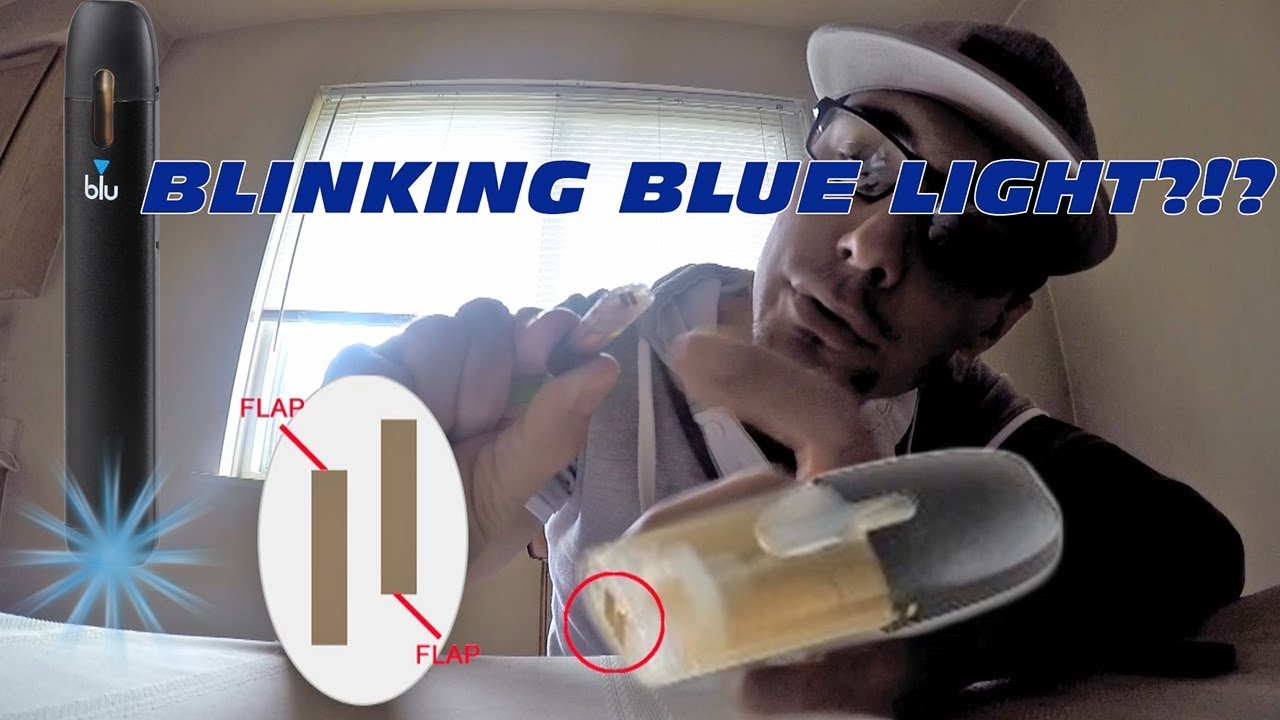
Low or sagging battery under load
What’s happening: The indicator can still light while voltage collapses when you fire. The coil never reaches atomization temperature because the cell can’t deliver required power.
Try this: Brief charge, then test with a known-good cartridge or pod.
Auto cut-off from puff limit or chain puffs
What’s happening: PCB timers stop output after repeated puffs to prevent overheating. The unit will flash until it cools and resets.
Try this: Let the device rest 2–5 minutes before another puff.
Connection or “no atomizer” failures
What’s happening: Dirty 510 threads, compressed spring pins, or a mis-seated coil breaks the circuit. Mesh Coils still need proper priming and contact.
Try this: Clean contacts with a cotton swab and isopropyl, reseat the pod, or swap cartridges.
Overheating, airflow or incompatible load
What’s happening: High temps from sun or a hot car trigger protection. Flooded chimneys or blocked vents stop draw-activation sensors. A large tank may demand more wattage than the battery can safely supply.
Try this: Move to a cool place, clear vents, and use matched pods or cartridges. For disposables, blinking often means the battery is spent or e-liquid is gone; longer puffs reduce total puffs.
Step-by-step fixes to stop the blinking and restore vapor
We’ll guide you through a compact, safe workflow that moves from the easiest checks to deeper fixes. Follow each numbered path in order to reduce risk and avoid unnecessary disassembly.
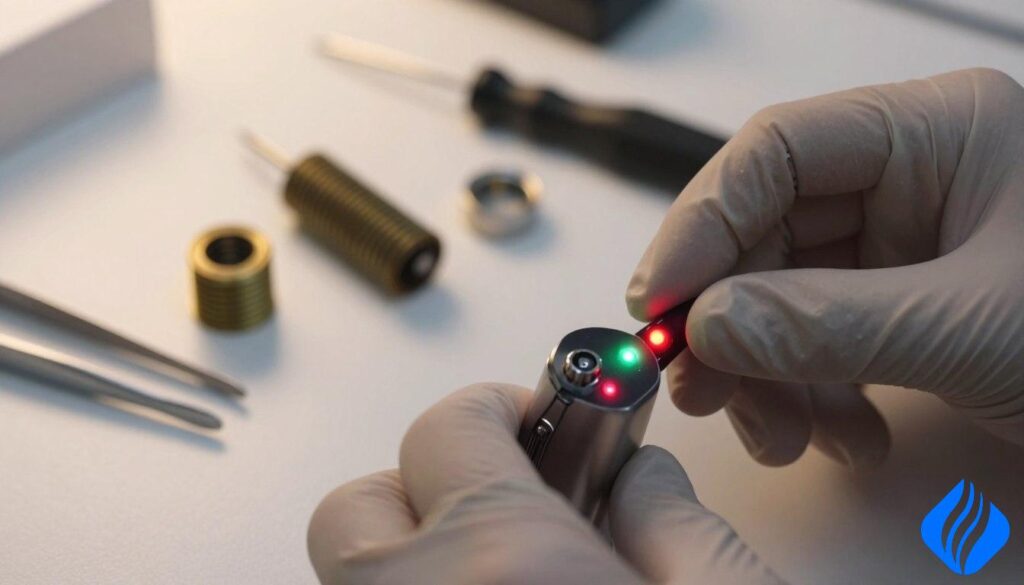
- Charge & reset
- Turn the device off, use the correct cable and an undamaged charger.
- Charge for 15–20 minutes as a quick test; then try one puff. If that helps, finish a full charge before regular use.
- Why: short plug-ins stress the lithium-ion battery and hide low-voltage faults.
- Clean & reseat contacts
- Remove the pod or cartridge. Inspect threads and spring pins for pooled e-liquid.
- Wipe with a cotton swab and isopropyl alcohol; let parts dry fully.
- Reseat finger-tight (do not over-tighten). This improves power transfer and fixes many contact problems.
- Clear airflow and flooding
- Open airflow, remove the pod if possible, and wipe condensation from the mouthpiece and chimney.
- Pro-tip: blow gently into the mouthpiece or an empty pod to push liquid out of the chimney.
- Check vents for lint or misaligned gaskets, especially with a disposable vape.
- Inspect, replace, and prime coils
- If the pod uses replaceable coils, remove and inspect for blackened cotton or a burnt smell; replace if needed.
- Coil priming: pre-wet the wick, install, and let sit for 5–10 minutes before firing. Mesh coils need extra wetting to avoid scorching.
- Match resistance to power
- Check coil ohms and set wattage within the printed range. Too little power won’t atomize; too much burns and can trigger protection.
- Adjust draw-activation technique
- Use slow, steady pulls and pause between puffs so the wick can resaturate. Sharp suction can flood the chimney and confuse sensors.
- Tune e-liquid selection
- Match PG/VG ratio to the pod or tank. Higher PG helps reduce flooding in tight coils; higher VG lowers leaking but may strain small coils.
- When to stop troubleshooting
- Replace the pod, cartridge, or device if blinking persists after clean, charge, and coil swap, or if you see visible damage or overheating.
- For disposables that show airflow DOA, a misaligned gasket can end service life—replace rather than force reuse. We can help match a correct replacement solution.
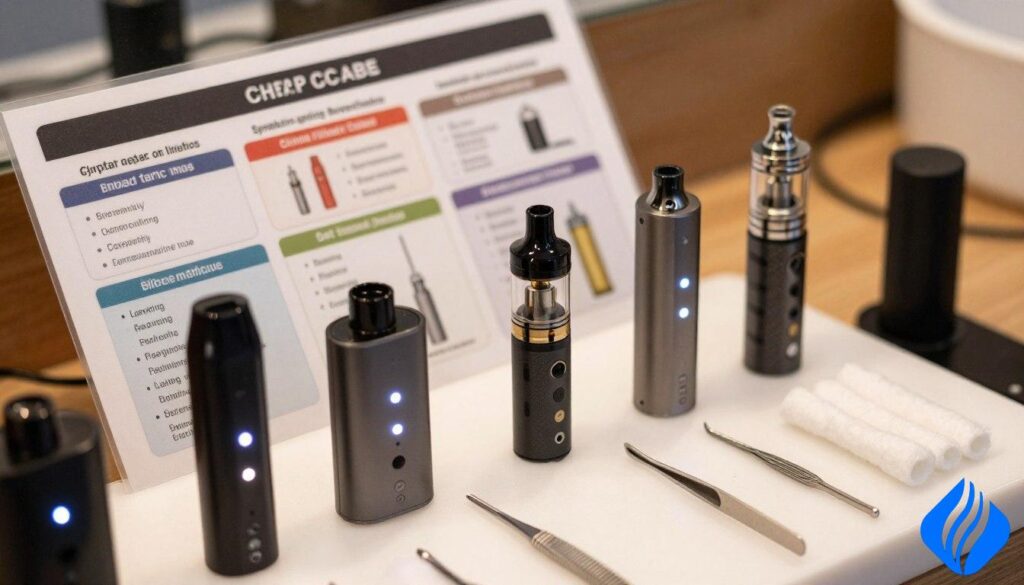
Symptoms vs solutions cheat sheet for common vape blinking issues
This cheat sheet is the fastest way to match an LED pattern and a symptom to a likely cause and a safe fix. We keep steps simple so you can act quickly during active troubleshooting.
| LED behavior + symptom | Likely cause | Safest fix |
|---|---|---|
| Rapid blink on draw, no vapor | Low battery under load or poor contact | Charge 20 min; clean contacts; reseat pod |
| Blinks after extended pull | Puff-timer cutoff | Shorten pulls; wait 2–5 minutes to reset |
| Blink while warm to touch | Overheating protection active | Stop use; cool device; replace if repeats |
| Blinks with a new cartridge | Compatibility or overcurrent | Use a listed cartridge; swap for compatible one |
| Blink + gurgle or spit | Flooded chimney / airflow sensor blocked | Clear chimney; dry pod; draw gently |
“Start with the least invasive steps: charge, clean, and cool. If trouble repeats, stop and replace.”
Note: Manufacturers program LEDs differently. The same color can mean different things on different PCBs. If the light pattern repeats after the safest steps, follow the Safety Warning and consider replacement.
Safety Warning: Lithium-ion battery safety during troubleshooting and charging
Safety comes first: lithium-ion cells demand careful handling during any troubleshooting step. Stop now if anything feels hot, hisses, swells, emits a chemical smell, or shows melted plastic. These signs mean a serious battery issue and require immediate discontinuation of use.
Signs that require immediate stop
- Too hot to hold or repeated heating while blinking abnormally.
- Hissing, swelling, venting smell, scorched odor, or melted housing.
- Visible short from crushed insulators, exposed wraps, or e-liquid bridging contacts.
Prevent shorts, overheating, and damage
- Power off, remove pod or cartridge, and place device on a nonflammable surface.
- Do not overtighten components; crushed pins cause shorts.
- Avoid carrying loose cells in pockets with metal objects.
- If you suspect damage, seek professional evaluation—do not continue use.
Safe charging and disposable guidance
Use the correct cable and monitor charging. Do not charge on soft surfaces or leave unattended for long time. Stop charging if heat rises.
Important: most disposable vape models lack proper charge management. Attempting to recharge disposable vapes creates high risk. For safe options, see our guide on how to recharge a disposable device: recharge a disposable vape.
Pro tip: store devices in a cool, dry place and tighten parts just finger-tight to avoid deformation and shorts.
Legal Disclaimer for U.S. users: travel, shipping, and compliance in 2026
We are not providing legal advice. Rules change by federal, state, local, airline, and destination policies. Check current TSA/FAA and carrier guidance before travel.
TSA/FAA compliance essentials
| Item | Carry-on | Checked bag |
|---|---|---|
| Vape device | Preferred; power off and protect | Often prohibited or discouraged |
| Spare batteries | Allowed in carry-on in a protective case | Usually not allowed |
| Pods/cartridges | Carry in sealed bag to prevent leaks | Risk of leakage from pressure/temp |
| E-liquid | Follow liquid limits; pack upright | May be allowed but leakage risk |
| Best practice | Keep batteries with you; shield terminals | Avoid; use carry-on when possible |
PACT Act and shipping notes
The PACT Act enforces age verification and limits on shipment of nicotine products. Carriers may refuse packages. Some vendors require adult signature and strict ID checks. For disposable vape models, many sellers restrict direct-to-consumer delivery.
Local rule variability
Laws vary by place. Some states ban flavors or restrict device use in venues. Check destination rules before travel.
- Power off devices and lock buttons.
- Protect spare batteries in a case.
- Store pods upright in sealed bags.
- Carry devices in carry-on when possible.
- Verify rules at the time you’re traveling.
Pro tip: use a dedicated battery case and keep pods sealed to reduce leakage risk and pressure effects during flight.
Conclusion
Here’s a short recap that points you to the quickest fixes and the safest choices. Charge first to rule out low-voltage. Clean and reseat contacts, clear airflow and condensation, replace or prime the coil, and confirm cartridge or pod compatibility. Treat LEDs as board-specific clues; work by system: power → connection → airflow → coil → protection.
Safety rule: if the device heats, the battery swells, or you smell burning, stop use immediately and don’t force it. For disposable vape users, remember puff length (we measure puffs at ~1–2 seconds) cuts total life. A blinking disposable vape usually signals end-of-life rather than a simple fault.
We can help match compatible pods or coils at t. for replacements and safe choices. For fast troubleshooting help, reach out to our team.
FAQ
Why is my vape blinking blue but not hitting even after charging? Check contacts, coil detection, and cartridge match. A poor connection or incompatible cartridge often causes the LED while the coil won’t heat.
How do I fix a ‘no atomizer’ / blinking light problem? Reseat or replace the coil, clean spring pins, and confirm resistance and wattage fall inside the coil’s rated range.
Why does my draw-activation vape blink but not fire? Condensation can block the airflow sensor or flood the chimney. Dry the pod, clear vents, and use gentle pulls.
Can I recharge a disposable vape that’s blinking? Generally no. Recharging most disposables is unsafe. Blinking often means the battery or e-liquid are depleted and replacement is the safe option.
How can I prevent blinking and weak hits in the future? Clean contacts regularly, prime coils before use, pace your puffs, store e-liquid and devices cool and dry, and match coil resistance to power.
 English
  German
  Dutch
Dutch  Danish
  Czech
Czech  Italian
  Slovenian
  French
  Hungarian
  Spanish
  Polish