Dual mesh coils and smart screens have changed performance for many users. Still, when the light turns on but there’s no vapor, the cause is usually simple. In this quick, hands-on guide we explain the fastest fixes and what to check first.
We rely on practical testing, including throat hit, vapor output, and flavor over long use — including observations after 5000 puffs. Follow our safe, ordered troubleshooting: airflow → blink/error codes → oil level → clean contacts → replace coil only if needed.
Define the practical problem: light on but no vapor, a blocked draw, or a weak hit. We separate root causes into two groups: airflow and juice delivery (clogs, thick oil, flooding) and electrical faults (battery, charge, contact alignment).
We will not suggest unsafe hacks or forcing parts. For related seal and refill tips, see our note on leaks and maintenance at vape leak solutions.
Many fixes take minutes; some require replacement.
We test devices long-term to report real puff and flavor behavior.
Quick checks before you panic: power, airflow, and juice level
A fast, ordered check of power, airflow, and juice level cuts diagnosis time significantly. We recommend these triage steps for both disposables and cartridge systems.
Confirm the device is actually on and not locked
Press the button or inhale and watch the light. If the unit shows a glow but no response, rapid clicks on the button (commonly five) can unlock many devices.
Check for airflow resistance at the mouthpiece and air holes
Take an unpowered draw to test airflow. Feel for free air movement at the mouthpiece. Inspect intake holes for lint or residue. Blocked holes or covered inlets cause strong draw resistance.
Make sure the cartridge or disposable isn’t empty (hidden reservoirs)
Verify the cartridge or cart is seated. Check visible juice level and look for wick saturation. Some designs hide reservoirs; remove the pod to inspect. Also, give the wick a short time to re-saturate between puffs.
“Start simple: power, airflow, and liquid level reveal most faults in minutes.”
Symptom
Quick check
Likely cause
Strong draw resistance
Unpowered draw, inspect holes
Clogged airflow or mouthpiece
No vapor but airflow OK
Check button/light and cart seating
Power delivery or empty cartridge
Apparent full but dry hit
Remove pod, check wick and hidden reservoir
Hidden empty cartridge or poor wicking
Why is my vape not hitting? The most common causes and fixes
Begin by confirming the battery and LED patterns. Repeated blinking usually signals a battery dead state or protection mode. Start with a full, uninterrupted charge cycle from a known-good source.
Charging port faults and worn cables are common. Inspect and gently clean the port. USB‑C jacks can loosen over time and trap debris.
Poor connection on 510 systems prevents current flow. Remove the cartridge, wipe the bottom contacts and threads with a cotton swab and isopropyl alcohol, then dry before reassembly.
Clogs and thick oil reduce airflow. Try a few controlled, sharp pulls. If that fails, clear the airway carefully with a toothpick or needle and rinse the mouthpiece; let it dry fully.
Cold, viscous oil may not wick. Use preheat mode if available, or warm the cart in your hands or a sealed bag with warm water. Flooded coils from hard draws require pause between puffs and upright storage.
When cleaning and airflow checks fail, a burnt coil or damaged cartridge is likely. Replace the cart or coil. If the device still has issues after these steps, the fault is probably internal.
“Clean contacts, confirm charge, then test airflow—those three steps resolve most faults.”
Hands-on testing insights: what “not hitting” looks like in real use
Real-world testing shows clear patterns in draw, throat feel, and cloud output that guide diagnosis. We record simple checks and sensory clues to map a symptom to a likely fault.
Throat hit clues
Restricted airflow often feels harsh and sharp. The throat can sting but produce little pleasure. By contrast, low power makes nic salts seem oddly smooth and muted rather than strong.
Vapor production signals
When the device lights but there is zero vapor, we see electrical faults, empty carts, or poor contact points. Weak clouds usually point to low battery output, thick oil, or early coil wear.
Flavor and residue patterns after long use
After about 5000 puffs flavor flattens. Bright notes fade to sweetness and then dryness. That shift flags end-of-life or wick limits.
We also note common residue: mouthpiece buildup, sticky film at the cart base, and dirty contacts that cause intermittent firing. Match these clusters (draw tightness, throat feel, flavor drop, visible residue) to the fixes in Section 3 for a targeted repair path.
Disposable performance and spec checklist (what to look for before buying)
Before you buy, check a device’s core specs so performance matches your needs. We focus on measurable data that predict run time and consistency. This prevents the common issue of a unit that lights but feels weak late-life.
Core technical specs that affect consistent hits
Battery capacity (mAh) — Aim for listed mAh that matches the advertised puff count. Low mAh with large liquid volume often leads to weak output near end of life.
E‑liquid volume (ml) — More ml means longer runtime, but it must pair with sufficient battery capacity.
Nicotine strength — 2% (20 mg) nic salt feels smoother for frequent puffs. 5% (50 mg) delivers a stronger throat sensation and can seem harsh with tight airflow.
Coil type — Mesh improves surface area for even heating. Dual mesh often holds flavor and consistency deeper into use.
Charging port — Prefer USB‑C for steadier, more durable recharging that reduces underpowered hits.
What to verify on the box or listing
Confirm these items before purchase:
Listed mAh and ml
Nicotine % (2% or 5% nic salt)
Coil wording (mesh / dual mesh)
Charging port type (USB‑C if present)
Next steps for replacements and trusted lines
If a unit fails, we recommend checking compatible replacements and stock rotation pages. Browse Disposable Vapes or view current deals at Hot Sale. For brand shortcuts, search the RandM and Bang pages on Sokvape to reduce counterfeit risk.
“Disposables with undersized batteries relative to liquid volume tend to feel weak before they run dry.”
For hands-on fixes that follow this checklist, see our troubleshooting guide at how to fix a disposable.
Best alternatives if your device keeps failing: puffs per dollar and flavor consistency
Choosing a reliable replacement starts with clear metrics: true puff value and how flavor holds up late in life.
We define the main product as the disposable you own or consider on Sokvape. Our method is model-agnostic. We compare puffs per dollar and flavor consistency, then sanity-check specs like mAh and ml.
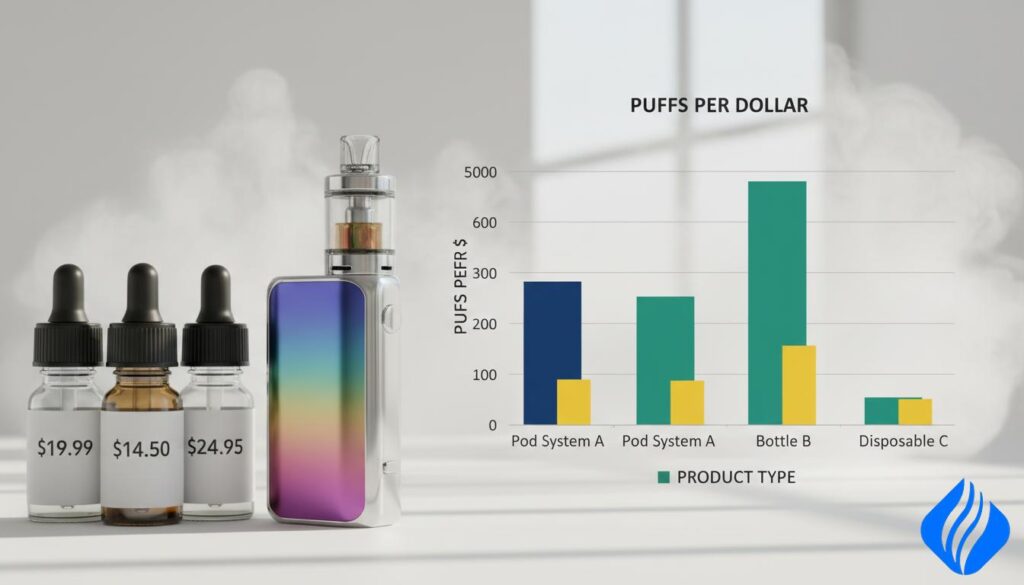
Understanding your device’s efficiency: Our testing shows that consistent hits and “puffs per dollar” vary greatly between pod systems and disposables. If your device isn’t hitting, it could be a hardware limit or a simple maintenance issue.
Main product vs Geek Bar
Evaluate battery (mAh) vs liquid (ml), coil type, and advertised puffs. We check late-life flavor for fade tied to coil saturation and battery drop.
Main product vs Lost Mary
Focus on draw feel and throat hit at 2% vs 5% nic salt. Note clogging tendency and whether coil design keeps hits consistent over time.
Main product vs Raz
Prioritize vapor stability and recharge reliability. Devices with USB‑C charge more consistently and reduce end‑life weak output.
“Prioritize charging reliability, robust airflow, and proven coil design over maximum puff counts.”
Spec
Main product
Competitor
Notes
Battery
___ mAh
Geek Bar / Lost Mary / Raz
Higher mAh helps sustain output late in life
E-liquid
___ ml
___ ml
Pair ml with mAh for real runtime
Nicotine
2% / 5%
2% / 5%
Choose based on throat hit preference
Coil
Mesh / Dual mesh
Mesh / Dual mesh
Mesh often preserves flavor longer
Charging
USB‑C Yes/No
Yes/No
USB‑C reduces charging failures
Use a repeatable formula: advertised puffs ÷ price = puffs per dollar. Adjust downward if mAh is small relative to ml.
Make sure listings show charging port type and coil design. If they omit these, expect inconsistent builds and higher failure rates.
Conclusion
Wrap up with a clear action plan so readers can fix common faults fast.
Follow these decisive steps: check airflow, verify power and charge, clean contacts, address viscosity or flooding, then replace the cart or coil if needed. Tight draw points to blockage. Normal draw with no vapor points to power, contact, or empty. A burnt taste signals coil failure.
User FAQ
How to know if it’s empty? Look for a sustained drop in vapor, dry or flat flavor, and inspect the reservoir under bright light—some disposables hide juice chambers.
How to recharge safely? Use the correct cable, avoid damaged cords, keep ports clean and dry, don’t charge unattended or on flammable surfaces, and stop if the device overheats.
Is it authentic? Buy from reputable sellers, check packaging and the manufacturer’s authenticity process, and scan the QR code. Verify via: https://www.google.com/url?sa=E&source=gmail&q=sokvape.com.
Need a replacement now? See Disposable Vapes, Hot Sale, plus brand pages RandM and Bang on Sokvape for vetted options.
Nicotine warning: Nicotine is an addictive chemical. For adults 21+ only. Keep away from children and pets. Seek medical help for adverse effects.
FAQ
Q: Confirm the device is actually on and not locked
A: Check the power button pattern and LED behavior. Many pens and pod devices use five clicks to lock/unlock. If the LED is off, connect to a known-good USB-C cable and charger. Observe LED blink codes: steady glow usually means charging, rapid blink can signal a fault or low battery. If the device still shows no activity after 30 minutes on a charger, the battery may be dead or the charging port damaged.
Q: Check for airflow resistance at the mouthpiece and air holes
A: Inspect mouthpiece and side or bottom air holes for visible blockage. Remove the mouthpiece and blow through the airway to confirm free flow. Small particles, condensation, or residue can restrict airflow. For disposable and pod systems, warm water rinse and full drying can clear minor clogs. Avoid sharp metal tools on plastic seals; use a toothpick or soft cloth to clear pathways gently.
Q: Make sure the cartridge or disposable isn’t empty (hidden reservoirs)
A: Some cartridges hide juice below the visible window. Remove and weigh the cartridge if possible, or test a spare unit. Draws that become airy with no flavor and no vapor usually indicate low or empty e-liquid. Replace or refill per manufacturer guidance, and check seals to prevent dry puffs or burnt taste.
Q: Battery dead or underpowered: LED blink patterns, charge time, and power issues
A: Low battery leads to weak or no vapor. Look for quick LED flashes on activation; that often signals low voltage. Fully charge with the device off and monitor time to full. If the cell won’t hold charge or drops voltage quickly under load, battery degradation is likely—replace the device or battery per the product manual.
A: Inspect the port for lint, corrosion, or e-liquid residue. Clean gently with a dry cotton swab and isopropyl if needed. Use the original or a high-quality USB-C cable and a 5V/1–2A adapter unless the device specifies fast charge. Bent pins or intermittent connection point to port failure; stop using the device and seek repair or replacement.
Q: Poor connection: 510-thread contact points, overtightening, and misaligned center pin
A: For tanks and cartridges that use 510 or similar threading, check threads and center pin for debris, bent pins, or lacquer from juice. Clean with a Q-tip and isopropyl. Do not overtighten—this can push the center pin down and break the contact. Proper hand-tight should be firm but not forcing.
A: Short, sharp pulls can dislodge clogs but may also flood the coil. Use a soft tool (toothpick) to clear the mouthpiece airway, or warm water flush then air-dry completely. For disposables, a few seconds of gentle warm air or preheat mode (if available) can liquefy thick residue. Avoid metal needles that can puncture seals.
Q: Oil too thick or cold: warming methods and when to use preheat mode
A: High-viscosity oils or low ambient temperature reduce wicking and vapor. Hold the device in your hand, warm the cartridge under a lamp for a minute, or use the device’s preheat setting to bring the oil to optimal flow. Do not overheat; excessive heat can degrade flavor and damage seals.
Q: Flooded coil from hard draws: spotting leaks and preventing repeat clogs
A: Hard draws can push e-liquid into the coil chamber, causing gurgling, leaking, and muted vapor. Upright storage, lighter initial pulls, and checking O-rings reduce flooding. If flooded, remove the pod/tank, gently blow through the mouthpiece away from your face, and blot excess with paper towel. Replace coil if performance doesn’t recover.
Q: Burnt or faulty coil: burnt taste, weak vapor, and when replacement is the only fix
A: A sour or acrid taste and reduced vapor indicate coil burnout or cotton degradation. Coils have finite life—replace per device recommendations or sooner with frequent heavy use. After replacement, prime the coil (saturate cotton) and allow a few minutes before use to avoid dry hits.
Q: Throat hit clues: smooth vs. strong nic salt hit when voltage/airflow is off
A: A weak throat hit with intact flavor usually signals low power or restricted airflow. A harsh throat hit without vapor may indicate burnt coil contact. Nicotine salts deliver stronger throat hit at lower power; adjust airflow and power to match nicotine strength and coil design (MTL vs. DTL).
Q: Vapor production signals: weak clouds vs. zero vapor and what each points to
A: Weak clouds often point to low battery, worn coil, or low-wattage settings. Zero vapor typically means no power, open circuit (broken connection), or empty cartridge. Systematically check battery charge, connection points, and e-liquid level to isolate the fault.
Q: Flavor consistency after heavy use: how flavor changes after 5000 puffs
A: After extensive puff counts, coils foul and wick fiber breaks down. Expect muted flavor, increased throat harshness, and intermittent vapor. Replace coils or disposable units that show these signs. Tracking puffs per device helps plan timely replacements for consistent taste.
Q: Residue patterns we saw: mouthpiece buildup, leaking carts, and dirty contact points
A: Residue accumulates where vapor condenses: mouthpiece, airflow channels, and contacts. Regular cleaning prevents conductivity loss and clogging. Use isopropyl on contact points sparingly and dry thoroughly before reassembly to avoid short circuits.
Q: Core technical specs that impact hits: battery capacity (mAh) and e-liquid volume (ml)
A: Higher mAh gives longer runtime and more stable output under load. Larger e-liquid volume delays dry hits and reduces frequency of replacements. Balance mAh and tank size with intended usage: beginners often prefer higher capacity disposables for consistent performance.
Q: Nicotine strength expectations: 2% vs. 5% nic salt and how it affects throat hit
A: Higher nicotine salts (5%) produce a stronger throat hit at lower power than 2% blends. If throat hit feels off, match nicotine strength with coil type and airflow—MTL devices suit higher nic salts, while DTL setups pair better with lower concentrations.
Q: Coil design differences: Mesh coil vs. Dual mesh for flavor stability
A: Mesh coils offer larger surface area and even heating, improving flavor and lifespan. Dual mesh increases vapor and consistency but may demand more power. Choose coil architecture based on desired flavor intensity and battery capability.
Q: Charging standards: why USB-C matters for safer, steadier recharging
A: USB-C supports higher current and more reliable connections than micro-USB. Devices with USB-C typically charge faster and endure repeated cycles better. Ensure cables and adapters meet safety ratings to prevent overcurrent events.
Q: Internal links for replacements and upgrades on Sokvape
A: For authorized replacement cartridges, coils, and USB-C cables, consult official Sokvape product pages and compatibility guides. Use manufacturer-specified parts to preserve battery life, maintain warranties, and ensure safe operation.
Q: Brand shortcuts for proven disposables: RandM and Bang pages on Sokvape
A: RandM and Bang disposables are known for consistent output and predictable puff counts. Review spec sheets for mAh, e-liquid volume, and stated puffs to compare expected performance against your usage patterns.
Q: Main product vs Geek Bar: puffs per dollar comparison and how flavor holds up
A: Compare stated puff counts, e-liquid ml, and nicotine strength. Geek Bar typically emphasizes flavor profiles across multiple releases; cost per puff depends on actual longevity under your draw style. Factor in battery reliability and real-world puff counts when deciding.
Q: Main product vs Lost Mary: draw feel, throat hit consistency, and coil performance
A: Lost Mary units often feature tighter MTL draws and stable nic-salt hits. Evaluate throat hit and airflow against your preferences; a device with adjustable airflow or preheat options offers more control over draw feel and consistency.
Q: Main product vs Raz: vapor output stability and recharge reliability (USB-C)
A: Raz models that include USB-C and larger cells tend to recharge faster and maintain stable voltage under load. For higher vapor stability, prioritize devices with quality cells and thermal management to prevent sag during extended sessions.



 English
  German
  Dutch
Dutch  Danish
  Czech
Czech  Italian
  Slovenian
  French
  Hungarian
  Spanish
  Polish