

We answer the top question plainly: are vapes illegal in louisiana is a phrase people type when familiar products vanish from shelves.
Through 2026, the law allows adult use at 21+, but product sales are tightly controlled by Act 414 and the ATC’s V.A.P.E. Directory. What matters is simple: no directory listing equals no legal sale.
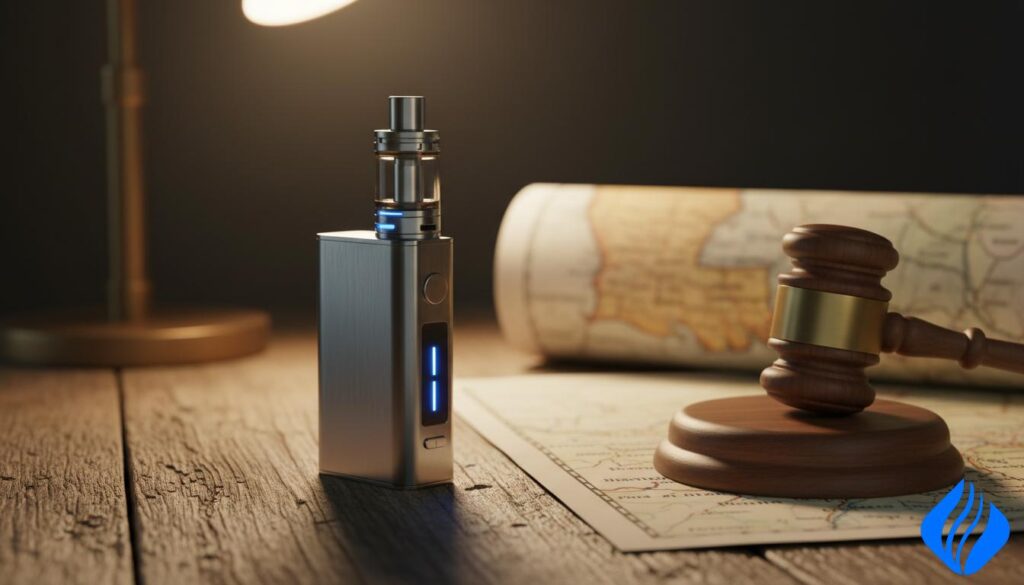
We explain what you can buy, what counts as contraband, and how enforcement works. We also note how federal T21 sets the nationwide minimum age even when state rules differ.
This guide is for adults 21+ who need clear steps to stay compliant. For certified product details, consult the ATC directory here.
Key Takeaways
- Adult use is limited to 21+; federal T21 remains the minimum age.
- Act 414 requires product certification and directory listing for legal sales.
- No listing on the V.A.P.E. Directory means the product cannot be sold.
- Retailers and consumers should check the ATC directory before purchase.
- This content is informational, not legal advice; consult counsel for complex issues.
Are vapes illegal in louisiana right now?
Quick snapshot: Adults 21+ can legally use vape products, but sales hinge on state approval.
Quick legality snapshot for adults
Yes and no: possession and adult use remain lawful for those 21 and older. Sales are lawful only for products listed on the ATC V.A.P.E. Directory. Federal T21 still sets the age baseline.
Why popular disposable devices may be missing
Many disposable brands vanished because they lack directory listing under Act 414. Retailers remove stock to avoid fines and seizures.
What “contraband” means under enforcement
Contraband is unlisted inventory the ATC treats as unlawful. That inventory can be seized, and sellers can face penalties.
“If it’s not listed, it cannot legally be sold—period.”
Practical steps for adult users: verify SKU listings, buy from compliant sellers, and expect fewer flavors and brands on shelves.
| Issue | What to check | Consumer action |
|---|---|---|
| Product availability | ATC V.A.P.E. Directory listing | Confirm SKU before purchase |
| Enforcement risk | Contraband classification | Avoid unlisted devices |
| Age rule | Federal T21 / State 21+ | Carry valid ID |
Louisiana’s V.A.P.E. Directory rules under Act 414
Act 414 created a clear approval system for retail sales. The V.A.P.E. Directory is Louisiana’s official list that determines which vapor products may be offered to adults. The Office of Alcohol Tobacco Control maintains and enforces the directory as the state’s compliance backbone.
What the directory does and who manages it
The directory lists per-SKU items that meet state submission requirements. The alcohol tobacco control office updates and posts approvals each month, and the list drives inspections and seizures.
The core rule: no listing, no legal sale
If a product is not listed, retailers must remove it. That rule covers distribution, resale, and import for retail. Even well-known brands sold elsewhere must appear here to stay on shelves.
Monthly updates and retailer duties
The directory refreshes on the 1st of each month. Retailers must clear unlisted items by the 5th to avoid penalties. That cadence makes regular checks essential for compliance.
Brands that show up — and those that don’t
At one point roughly 397 items were listed, including names such as JUUL, Vuse, NJOY, Blu, Logic, and Bidi Sticks. Several popular disposables, like Elf Bar and Puff Bar, did not appear on the list.
“The directory-first model reflects a broader national shift toward state-level product registries.”
- What listing generally requires: recognized FDA pathways, manufacturer certification, fees, and annual renewals.
How vape products qualify for legal sale in Louisiana
We explain the simple path: federal authorization plus state certification equals a listed product you can legally buy.
FDA pathways that the state accepts
Louisiana accepts three FDA-linked routes for a vapor product to qualify:
- Marketing Granted Order (MGO) — full FDA authorization to market.
- PMTA-pending — items on the market by Aug 8, 2016 with PMTAs filed by Sept 9, 2020 and still under review.
- Stay or injunction — a court-ordered pause after an FDA denial while an appeal proceeds.
Manufacturer certification, fees, and renewals
Manufacturers must submit a formal certification to the ATC and pay per-SKU fees to gain or keep directory placement.
Cost: $100 per SKU initial fee and $100 per SKU annual renewal.
What to check on packaging and listings before you buy
“Per SKU” matters: different nicotine strengths, pod sizes, or color-coded variants can be separate listed items. A brand name alone does not mean every version is approved.
“Confirm the exact product name or SKU against the directory before purchase.”
Practical checklist:
- Match the full product name/SKU to the ATC directory.
- Watch for lookalike packaging that mimics listed products.
- Avoid gray-market devices and unlisted offers, even if they look identical.
Who can buy vape products in Louisiana: age rules and ID checks
Federal tobacco law sets the nationwide minimum: you must be 21 years old to purchase vapor products. We stress that the federal T21 rule controls the baseline and that state enforcement applies this standard at the point of sale.
Federal T21 vs state enforcement
Clear rule: no sale to anyone under 21. Retail staff must check a valid government photo ID and refuse the sale if ID is missing or appears invalid.
Retail signage and point-of-sale duties
Businesses must post this warning in 30-point type: “LOUISIANA LAW PROHIBITS THE SALE OF TOBACCO PRODUCTS, ALTERNATIVE NICOTINE PRODUCTS, OR VAPOR PRODUCTS, VAPOR PARAPHERNALIA AND DEVICES TO PERSONS UNDER AGE 21”.
Online checks and adult signature at delivery
Online sellers must use real-time electronic age verification and require an adult signature on delivery from someone 21+ to limit youth access.
“Carding everyone reduces mistakes and helps keep products out of youth hands.”
For retailer guidance and a concise state summary, consult the state summary.
Where vaping is restricted: schools, vehicles, and local ordinances
You can expect strict restrictions at schools, inside cars with children, and under many city ordinances.
School property bans
State law bars vaping on any school property. That covers school buildings, grounds, playgrounds, school vehicles, and school-sponsored events.
Do not assume outdoor areas are exempt. School property rules apply broadly to protect students and staff.
Vaping in a car when a child is present
It is unlawful to vape in a motor vehicle when a child under 13 is age present. The statute treats this like other child-protection smoking laws.
Penalties include a $150 fine or community service for a first offense. Windows open or closed does not change the rule.
City-by-city restrictions (examples)
Local smoke-free ordinances can be stricter. New Orleans and Baton Rouge both limit vaping and vapor products in many indoor public places.
Common covered settings include restaurants, bars, workplaces, and government buildings. Check posted signs and municipal codes when you travel.
| Location | Rule | Penalty |
|---|---|---|
| School property | No vaping on buildings, grounds, vehicles, events | Enforcement by school or local authorities |
| Motor vehicle with child | No vaping if a child under 13 is age present | $150 fine or community service |
| City ordinances | Indoor public-place restrictions (e.g., New Orleans, Baton Rouge) | Fines vary by municipality |
“When local rules are stricter, follow the local standard and watch posted signs.”
Practical tip: we recommend checking local rules before you use a device. That keeps you compliant and helps protect young people.
Retail, wholesale, and permit requirements for Louisiana vape sales
Retail and wholesale licensing shapes who may legally sell vapor products and how inventory flows through the state.
ATC permits for sellers and operators
Key permits and annual fees:
| Permit | Who needs it | Fee (annual) |
|---|---|---|
| Retail Dealer Permit | Each store outlet | $25 |
| Wholesale Dealer Permit | Each wholesale location | $75 |
| Vending Machine Operator Permit | Operator of machines | $75 |
| Vending Machine Permit | Per machine (age-restricted sites) | $5 |
Wholesale sourcing and practical compliance
Recent law requires retailers to buy only from licensed state wholesalers. That change tightens supply-chain oversight and reduces risk of unlisted products entering stores.
Why permits matter: permitted retail outlets and licensed wholesalers are more likely to follow directory checks, enforce age verification, and avoid gray-market devices.
“Permits and lawful sourcing protect consumers by keeping counterfeit or unsafe products out of the market.”
For store owners and consumers, confirm a seller’s permit and ask how they source inventory. That simple check helps ensure lawful sales and safer devices for adults.
Taxes and costs: Louisiana vapor product excise tax explained
A per-milliliter tax directly ties product size to the checkout price for shoppers.
Current rate and what it covers
Rate: $0.15 per milliliter on nicotine-containing consumable liquids.
This excise tax rose from $0.05/milliliter in 2023 and applies to liquid used in vapor devices only when nicotine is present.
How the tax affects price and availability
The per milliliter charge shows up as higher shelf prices for large-capacity pods and refill bottles.
When you add certification fees and directory compliance, small brands often lose margin and disappear from stores.
- Shoppers see fewer promotions and higher retail prices for popular multi-pod kits.
- Retailers must factor the tax into SKU selection and reorder timing.
- Taxes fund the state general fund and enforcement budgets, not retailer discounts.
“Higher excise costs don’t change legality, but they change what is practical to sell.”
Enforcement, penalties, and what happens when products aren’t listed
We see enforcement now as a routine part of marketplace oversight. ATC-led compliance checks and multi-agency inspections sweep stores and warehouses. When agents find unlisted product SKUs, they may seize inventory and start administrative actions.
How compliance checks play out on the ground
Inspectors conduct spot checks, review directory matches, and document offers for sale. Coordinated crackdowns can remove inventory fast, often within days.
Penalties by role and removal deadlines
Retailers and wholesalers risk per-SKU fines, inventory seizure, and permit jeopardy. Sellers must clear unlisted items from shelves by the 5th after the directory updates on the 1st.
Manufacturers face steep exposure, including fines up to $1,000 per day per unlisted product offered for sale.
Timeline context and practical steps for consumers
After a brief injunction pause, enforcement restarted on March 18 and litigation continues. That explains the sudden on/off feel of compliance over time.
To avoid surprises, check the ATC directory before purchase and buy only from permitted businesses. For recent reporting on enforcement resuming, see this news summary.
“If it’s not listed, it cannot legally be sold—period.”
How Louisiana compares to other states in 2026 (what travelers and online buyers should know)
What you can legally carry varies sharply from one state to the next in 2026. We summarize key state rules so travelers and online shoppers avoid surprises at borders or during delivery.
North Carolina — HB 900 directory and age mismatch
HB 900 uses a per‑SKU directory (FDA‑authorized or PMTA‑pending) that governs lawful sales since July 2025. Popular disposables like Raz or Elf Bar may be affected.
Note: North Carolina language may reference 18, but federal T21 sets the age at 21 nationwide for sales and shipments.
Kentucky — SB 100 retail licensing
As of Jan 1, 2026, all retailers must hold a state license under SB 100. Failure to comply can trigger heavy fines and permit suspensions for sales of unauthorized products.
Utah — flavored limits and an active registry
UT SB 61/HB 0432 limits flavors to tobacco and menthol, while maintaining an active state registry of approved items. Specialty-store carveouts are narrow and closely regulated.
Virginia, California, Alabama — targeted bans and lists
- Virginia: non‑FDA‑authorized disposable bans took effect Dec 31, 2025, tightening retail offers for travelers.
- California: the Unflavored Tobacco List (effective Jan 1, 2026) makes tobacco‑flavored products the compliant baseline.
- Alabama: HB 445 (Jan 1, 2026) creates hemp vape licensing, criminal exposure on repeated violations, and bans smokable hemp.
“Louisiana’s directory model is among the strictest; more states now use registries or targeted bans.”
Practical takeaway: state rules now control SKU‑level sales and age verification. Always check the destination state’s directory or registry before purchase or travel. For online sales, confirm the seller uses compliant age checks and honors federal T21 signature requirements.
| State | Primary 2026 change | Effect on travelers/online sales | Note |
|---|---|---|---|
| North Carolina | HB 900 directory (FDA/PMTA) | Some disposables barred; check SKU list before travel | NC may cite age 18, federal T21 still controls |
| Kentucky | SB 100: retailer license required | Unauthorized sales risk heavy fines; online sellers must verify permits | License effective Jan 1, 2026 |
| Utah | SB 61/HB 0432: flavor cap + registry | Flavored products limited; registry dictates lawful items | Tobacco/menthol only except narrow exemptions |
| Virginia / California / Alabama | Disposable bans; Unflavored list; hemp licensing | Travelers must avoid non‑authorized disposables; hemp products regulated tightly | Key dates: VA 12/31/2025, CA 1/1/2026, AL 1/1/2026 |
Conclusion
The core takeaway: sale permission hinges on directory listing, not blanket prohibition.
Adults 21+ may possess and use devices, yet many specific products cannot lawfully be sold without placement on the official vape directory.
Smart buying: always match the exact SKU to the directory, buy from permitted sellers, and confirm state certification and supply-chain compliance.
Act 414 ties market access to FDA-related eligibility and state renewal. That explains why many disposable items disappeared from shelves.
Enforcement is active—seizures and fines happen—so “available somewhere” does not equal lawful sale here.
2026 note: more states are adopting directory models and flavor limits. Stay informed, verify listings, and follow Federal T21 to protect your compliance and wallet.
 English
  German
  Dutch
Dutch  Danish
  Czech
Czech  Italian
  Slovenian
  French
  Hungarian
  Spanish
  Polish