

Direct answer: Waiting 24–72 hours is safest—nicotine-driven vasoconstriction and dry mouth raise the risk of a weakened seal and delayed healing.
This question is a timing-and-risk decision, not simple permission. Feeling fine does not mean the tooth and restorative materials are stable. The first 24–72 hours are the critical window when blood flow, saliva balance, and the new restoration’s bond are most vulnerable.
Both vaping and smoking deliver nicotine that causes vasoconstriction and reduce saliva. Smoke adds combustion toxins; vapor still irritates and dehydrates tissues. Material type matters: composite, amalgam, glass ionomer, and temporaries set on different timelines.
Readers will get practical harm-reduction steps, what to do if cravings occur, and why the placing dentist remains the highest authority for individualized instructions. For more detail on timing and risks, see this short guide at should-you-smoke-or-vape-after-a-filling.

Key Takeaways
- Delay vaping or smoking for at least 24–72 hours to protect the new restoration.
- Nicotine causes vasoconstriction and dry mouth, both slow healing and weaken bonds.
- Material matters—composite, amalgam, glass ionomer, and temporary restorations have different timelines.
- Use nicotine patches or lozenges for cravings during the critical window as harm reduction.
- Contact the placing dentist for tailored guidance if the procedure was deep or gums were injured.
Key Takeaways for Vaping After a Dental Filling
Key Takeaways: Begin with this simple rule: avoid inhaled nicotine for the first 24–72 hours to protect the new restoration. This is the safest default unless the placing dentist gives different advice.
The critical 24–72 hour window
During these hours the restoration and nearby soft tissue stabilize. Blood flow and saliva are essential to the early healing process. Disrupting either increases the chance of a weakened bond.
Main drivers of risk
- Vasoconstriction: reduced microcirculation slows immune response.
- Dry mouth: less saliva raises acidity and bacterial load, raising infection risk.
- Thermal/chemical stress: early exposure can irritate and deform the restoration interface.
If cravings hit
Use non-inhaled nicotine options—patches or lozenges—while avoiding strong suction and heat. Monitor for swelling, persistent pain, a high bite, or any loose feeling and call the dentist if these occur.
Safety-first advice: the best avoid approach is temporary abstinence to protect healing and maximize long-term oral health.
Quick Reference Table: Wait Time After Filling vs. Vaping, Smoking, and Common Risks
Use this table to compare recommended wait times and early risks tied to different restorative materials. The safest choice is the longer wait when uncertainty exists; short-term abstinence reduces the chance of costly complications.

How to use this chart
Confirm the exact material with the placing clinician. If unsure whether the work is a dental filling or a temporary, follow the longer guidance below.
| Filling Material | Minimum Wait Before Vaping | Minimum Wait Before Smoking | Why It Matters | Common Early Risks |
|---|---|---|---|---|
| Composite (white) | ≥24 hours | ≥24 hours | Bonding benefits from early saliva balance and blood flow. | Weakened seal; sensitivity flare; dry mouth infection risk |
| Amalgam (metal) | 24–48 hours | 24–48 hours | Allow initial hardening and tissue recovery. | Bite irritation; early loosening; sensitivity |
| Glass ionomer | ≥48 hours | ≥48 hours | Material requires moisture control and longer maturation. | Weakened restoration; higher sensitivity; discoloration |
| Temporary restorations | ≥24 hours (treat as fragile) | ≥24 hours (treat as fragile) | Lower strength; strong suction or heat may dislodge. | Dislodgement; seal failure; rapid wear |
| Large/deep restorations or gum trauma | 48–72+ hours | 48–72+ hours | Greater inflammation and bond sensitivity require a long wait. | Infection; weakened seal; prolonged pain |
Note: vaping still exposes tissues to heat and chemicals that dehydrate mucosa; smoking adds combustion byproducts and staining, often increasing severity of early complications. When in doubt, choose the longest waiting interval.
For further practical guidance on smoking and restorations, see this short clinical resource: smoking after dental work.
can i vape after a filling if my mouth feels fine?
Even when the mouth feels normal, microscopic inflammation and bond maturation continue beneath the surface. Feeling no pain does not mean tissues and the restoration interface are fully stable.
What’s actually “healing” after a filling
The healing process includes minor tissue irritation at the gumline, saliva rebalancing, and confirmation of correct bite forces. These steps protect the seal and limit micro-movement that can weaken the bond.
Why nicotine matters
Nicotine causes vasoconstriction, which lowers blood flow to gums and nearby tooth-support structures. Reduced blood slows oxygen and nutrient delivery and can dampen immune response, delaying the healing process.
Why vapor can still be a problem
Warm aerosol and certain chemicals may irritate the treated area. Propylene glycol and glycerin contribute to a drier mouth, raising bacterial risk and sensitivity.
- Practical self-check: tenderness when biting, temperature sensitivity, or gum soreness means extend the vape-free window and contact the dentist if it persists.
What happens if you vape too soon after a new filling?
Introducing heat, suction, or chemical residues during the first days undermines restorative stability. The 24–72 hour window is the highest-risk period for early complications.
Higher chance of infection from a drier mouth and slower immune response
Reduced saliva lowers natural antibacterial action and buffering. This shift raises the risk of infection, especially when the gumline was irritated during treatment.
Nicotine-related vasoconstriction reduces blood flow and slows local immune activity. Minor bacterial challenges are more likely to escalate into inflammation or infection.
Dislodged or weakened restoration: how early exposure can undermine bonding and seal integrity
Heat, dehydration, and chemical exposure may break the bond at margin interfaces. That leads to microleakage and early failure of the new filling.
A compromised restoration may feel high, rough, or loose. Any sudden sensitivity with chewing should prompt dental evaluation.
More pain and sensitivity
Irritation of the gum and inflamed dentin increases sensitivity to cold, heat, and sweets. Warm aerosol and reduced moisture amplify that discomfort.
Staining and cosmetic mismatch
Fresh restorations and nearby enamel absorb color faster from smoke or certain vapor residues. That creates a visible mismatch between teeth.
Dry socket clarification
Dry socket is an extraction-specific complication where strong suction can dislodge the protective clot. While a filling does not create a socket, powerful draws and dehydration still stress healing tissues and increase discomfort.
Practical note: Maintain gentle oral hygiene and rinse with water if saliva is reduced. For guidance on timing, review this short resource on how long to wait.
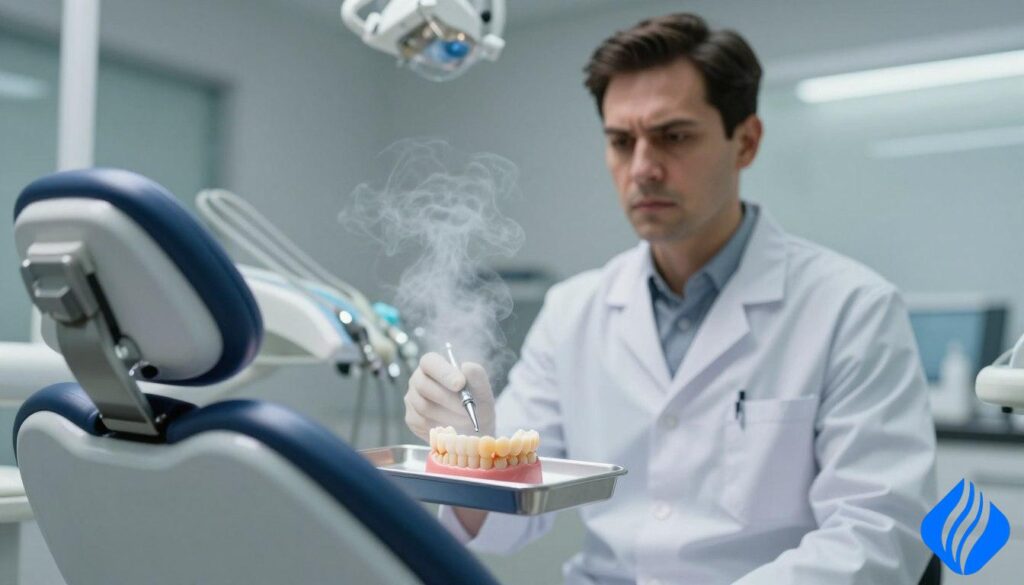
How long should you wait to vape after a filling? A step-by-step, material-based guide
The first 24–72 hours set the stage for successful bonding and minimal complications. Follow this stepwise timeline to protect healing and reduce risk.
Immediate post-procedure window (first hours)Avoid inhalation while numb and while the bite is untested. Accidental cheek or tongue injury and unrecognized high contacts increase pain and risk.
Composite: at least 24 hoursComposite is light-cured and sets fast, but a conservative minimum of 24 hours protects the bond from heat, dry mouth, and chemical stress during early healing.
Amalgam: 24–48 hoursAmalgam continues to harden; limiting thermal stress and strong suction for 24–48 hours helps stability and comfort.
Glass ionomer & temporary restorations: ≥48 hoursThese materials are moisture-sensitive early and mechanically weaker. Treat them as fragile to avoid edge breakdown or dislodgement.
When to wait longer (move toward 72+ hours)Extend waiting time for large restorations, gum trauma or bleeding, ongoing sensitivity, high-nicotine use, or chronic dry mouth. If pain or swelling appears, call the dentist and delay resumption.
Craving management and care tips
Use non-inhaled nicotine alternatives such as patches, lozenges, or dentist-approved gum to reduce heat and suction exposure.
Stay hydrated, eat soft foods on the first day, and perform gentle oral hygiene to limit infection risk and support blood flow to gums.
Ingredient and device safety
PG/VG-based aerosols may increase dry mouth for some users. Prefer lab-tested, transparent e-liquids and avoid overheating devices that can form carbonyls. Flavoring agents with diacetyl have historical inhalation concerns; choose verified products.
Resuming use: harm-reduction checklist
- Use lower nicotine strength when possible.
- Avoid high-heat settings and chain draws; take gentle, short inhales.
- Rinse with water after use; stop if sensitivity returns.
- Prefer authentic, regulated products; brands like Geek Bar and Raz are examples where verification is easier than with unknown disposables.
Travel and venue notes: Under 2026 TSA guidance, devices with lithium batteries must travel in carry-on and follow airline rules; venues such as Disney restrict use to designated areas. Plan alternatives to prevent cravings during the healing process.
Conclusion
Conclusion
Minimizing heat, suction, and chemical exposure in the first few days preserves restoration strength and comfort. Protect the new filling by avoiding inhaled nicotine for at least 24 hours and preferably 48–72 hours, with adjustments by material and symptom severity.
Why this matters: nicotine-driven vasoconstriction plus dry mouth and local irritation is the mix most linked to slower healing and higher complication risk.
If the bite feels off, sensitivity persists, or the restoration feels loose, contact the dentist promptly to protect longevity and oral health.
Harm-reduction advice: abstain during the critical window; if resuming, lower heat and suction, use verified products, and stay hydrated.
Medical disclaimer: This information is educational and not a substitute for individualized medical or dental care. Follow instructions from the treating clinician.
 English
  German
  Dutch
Dutch  Danish
  Czech
Czech  Italian
  Slovenian
  French
  Hungarian
  Spanish
  Polish