

Can U Vape When Pregnant is the exact question many adults ask. Clinicians warn that vaping is not a safe alternative to smoking during pregnancy. Fetal exposure to nicotine can have lasting effects on the developing baby.
We write as a technical and clinical resource. We will cover device details — mAh, ml, 2%/5% nicotine salts, mesh versus dual mesh coils, and USB‑C charging — alongside hands-on testing notes.
Our stance is clear and evidence-led. We frame harm reduction without softening the message: quitting support and clinician involvement are the priority for anyone using nicotine now.
Nicotine warning: This article discusses nicotine products. Nicotine is an addictive chemical. Nicotine exposure during pregnancy can harm fetal development. If you are pregnant, talk to your clinician before using any nicotine-containing product.
We will also compare common brands like Geek Bar, Lost Mary, and Raz for exposure context. Links to SOKVAPE categories will be provided for adult-only reference, not as medical advice.
Key Takeaways
- Avoid nicotine use in pregnancy; fetal harm is a real risk.
- We explain both medical risks and device factors that change exposure.
- Immediate action: contact a clinician and seek quit support.
- Technical notes will include battery, coil type, and nicotine strength.
- Product comparisons are for adult-only context and exposure understanding.
Can u vape when pregnant? What current medical guidance says in the United States
We present current United States medical recommendations and FDA context for inhaled nicotine use in pregnancy.
Clinical guidance: Experts advise avoiding vaping during pregnancy. Exposure may include nicotine and other chemicals that pose fetal risk. The fetus is uniquely sensitive to dose and timing of exposure.
Regulatory context: The FDA has issued warning letters to firms that promoted products as “safer than cigarettes” without evidence. That scrutiny matters for women deciding based on marketing claims.
What the data shows
A March 2019 study found 7% of women reported vaping in the pregnancy window. Of those who vaped in the last trimester, 38% used products that contain nicotine. This is a measurable clinical concern.
| Topic | Guidance | Data point |
|---|---|---|
| Clinical recommendation | Avoid inhaled nicotine during pregnancy | Consensus across U.S. obstetric bodies |
| Regulatory action | FDA challenges unsafe marketing claims | Warning letters issued |
| Reported use | Not uncommon among reproductive-age women | 7% in pregnancy window; 38% last-trimester use with nicotine |
Interpreting “more research needed”
Uncertainty does not imply safety. Research gaps exist across devices, formulations, and long-term outcomes. Clinicians recommend evidence-based cessation support rather than self-experimentation.
If clinicians want background on aerosol chemicals such as diacetyl, see our resource on diacetyl presence.
How vaping and nicotine exposure can affect a developing baby
Nicotine exposure in pregnancy alters organ formation. It reaches the fetus and disrupts signaling that guides lung, brain, heart, and immune system growth. These changes may persist after birth and affect long-term health.
Oxygen, blood flow, and fetal support
Inhaled products change maternal blood gases and vascular tone. That lowers oxygen delivery to the fetus. Being smoke‑free and vape‑free improves oxygenation and supports normal growth.
Outcomes clinicians warn about
Evidence from tobacco exposure shows higher risk of preterm birth and low birth weight. Providers apply these signals to vaping because many exposures include active nicotine and aerosol chemicals. Low birth weight predicts short- and long-term health problems.
Secondhand exposure matters
Household aerosol can expose a pregnant person and a newborn. Reducing indoor exposure—no vaping in cars or the home—lowers risk and is a practical step families can take now.
| Mechanism | Immediate effect | Associated outcome |
|---|---|---|
| Nicotine on fetal signaling | Altered organ growth | Abnormal lung/brain development |
| Reduced maternal oxygen delivery | Lower fetal oxygen | Low birth weight |
| Household aerosol exposure | Passive fetal/newborn contact | Respiratory risk for baby |
What’s in vape aerosol besides nicotine: chemicals and why they matter during pregnancy
Heating e‑liquid and device contact change composition. Aerosol is not harmless water vapor. The process forms and releases volatile chemicals and particulate matter that may pose a risk to fetal development.
Heavy metals and contamination pathways
Metals such as lead, nickel, and chromium may enter aerosol from device hardware or contaminated liquids. Maternal exposure is concerning because fetal organ systems develop rapidly and have limited detox capacity.
Diacetyl and lung health
Diacetyl is a flavoring linked to severe bronchiolar injury in occupational studies. Even low‑level respiratory irritants matter during pregnancy, when maternal breathing changes increase sensitivity.
Benzene and related volatile compounds
Benzene and other toxicants have been detected in some aerosols. These compounds are associated with systemic harm and reinforce that a smoke‑free, vape‑free environment is safest.
Why “nicotine‑free” is not risk‑free
Products that do not contain nicotine still produce heated aerosol. Labeling and manufacturing quality vary. That makes true exposure unpredictable and hard for consumers to control.
For clinical context on aerosol constituents and study methods, see this review at the National Library of Medicine: aerosol chemical analysis.
Vaping vs. smoking during pregnancy: comparing risks and common myths
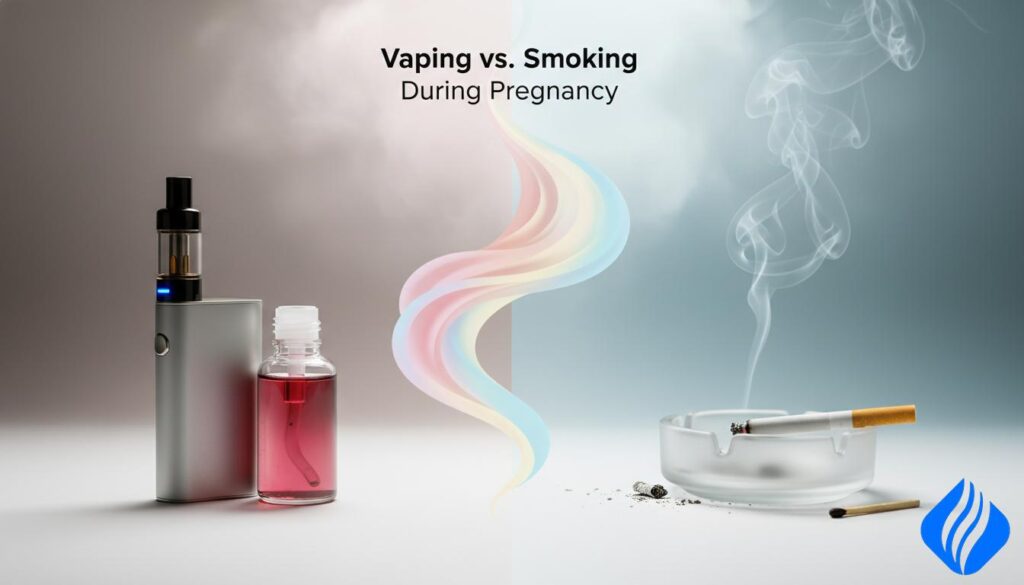
A direct comparison of exposure shows why “fewer chemicals” is not the same as “safe” for fetal health. Regulators have challenged claims such as “99% safer,” and clinicians treat marketing with caution.
Myth check: marketing claims versus regulator and clinician positions
Advertising that suggests products are healthier than cigarettes does not equate to medical clearance for pregnancy. The FDA has disputed unsubstantiated safety claims. Clinicians recommend avoiding ongoing inhaled nicotine exposure during pregnancy.
Nicotine intake can match cigarettes
Evidence shows nicotine delivery from ENDS often equals cigarette exposure depending on device, liquid strength, and puff behavior. Switching devices may not reduce fetal nicotine dose.
Smoking-related risks that inform guidance
- Placenta problems and reduced oxygen delivery.
- Higher rates of preterm birth, miscarriage, and stillbirth.
- Certain birth defects (for example, cleft lip) and SIDS.
- Low birth weight, which predicts short- and long-term health problems for babies.
Quit timing and clinical next steps
Quitting before pregnancy or during the first trimester can normalize low birth weight risk. Stopping later still reduces harm. Talk with your doctor early for an individualized plan and evidence-based support.
For a clinical myth review, see our evidence review. Section 6 outlines practical quitting steps and device factors that alter nicotine and aerosol delivery.
If you vape or smoke and you’re pregnant: safer next steps, quitting support, and product realities
Stopping nicotine exposure starts with a short conversation with your doctor or midwife and a realistic quit plan. We recommend this first because individual medical care matters for timing and safety.
Practical quitting steps
Remove devices and visible reminders. Change routines linked to cravings, such as after meals or while driving. Plan a quick alternative—deep breaths, a walk, or a drink of water.
Evidence-based supports
Counseling, support groups, and phone programs raise success rates. Call 1-800-QUIT-NOW for U.S. resources and tailored help quit options. Relapse is common; treat each attempt as a learning step.
Product reality check (adult-only context)
Exposure varies by device specs. Typical USB‑C rechargeable disposables run 650–850 mAh batteries with 12–16 ml e-liquid and 2% or 5% nicotine salts. Many models use a mesh coil; some use dual mesh. Higher power and dual mesh often produce “stronger vapor,” raising nicotine and particle delivery.
| Model type | Puffs per Dollar | Flavor Consistency |
|---|---|---|
| Generic 650–850 mAh | Mid | Stable to ~3000 puffs |
| Geek Bar (benchmark) | Lower | Good early; drops faster |
| Raz / Lost Mary style | Higher (Raz) | More consistent (Lost Mary) |
Safety, testing notes, and FAQ
Hands-on reviewers note throat hit (smooth vs strong), vapor volume, and flavor shifts near ~5000 puffs.
- How to know if it’s empty? Reduced vapor, flavor fade, burnt taste, or blinking lights.
- Recharge safely: Use quality USB‑C cable, avoid unattended charging, stop if hot or swollen.
- Is it authentic? Check the QR code via the manufacturer verification flow on sokvape.com and look for secure packaging.
“Nicotine is addictive. If you are pregnant, the safest recommendation is to avoid nicotine exposure and work with a provider on cessation support.”
Browse (adult-only) for context: Disposable Vapes, Hot Sale, brand pages: RandM, Bang.
Conclusion
Our final guidance is rooted in clinical evidence and practical care.
Bottom line: In pregnancy, vaping is not considered safe, especially if nicotine exposure is possible and aerosol chemistry varies.
Why this matters: Nicotine can alter fetal development. Remaining smoke‑free and device‑free supports oxygen delivery and better health for the baby. Heated aerosols may add other chemical exposures beyond nicotine.
Switching from smoking to inhaled products is not the same as quitting. Cessation is the goal. Contact your prenatal care provider, seek counseling or support groups, and call 1-800-QUIT-NOW for structured help.
Household step: avoid secondhand aerosol around pregnant people and newborns as a simple risk‑reduction measure.
We prioritize transparent, evidence‑based guidance. Use product knowledge only for adult exposure context—not as justification for use during pregnancy—and reach out to a clinician for tailored care and quit support.
 English
  German
  Dutch
Dutch  Danish
  Czech
Czech  Italian
  Slovenian
  French
  Hungarian
  Spanish
  Polish