

Most adults do inhale vape as a way to get nicotine without burning tobacco. How one inhales varies by device and e-liquid, and comfort plus safety matter first.
As the experts at SokVape who have tested hundreds of devices, we know that new users often face harsh hits or confusing buttons. That frustration is common. We offer a quick, professional plan to reduce coughing and harshness.
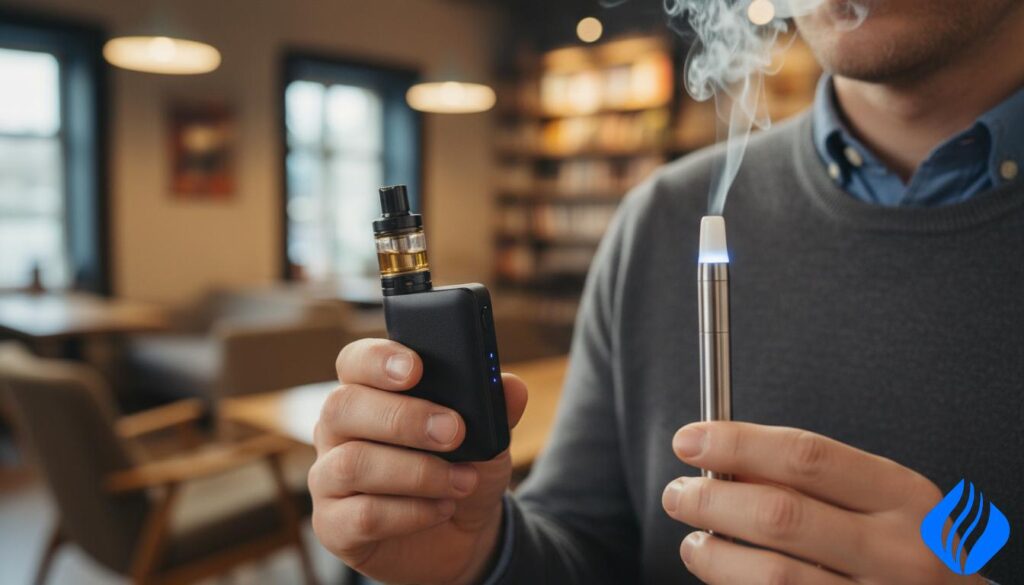
Vaping heats e-liquid into an aerosol. It feels cooler than cigarette smoke because no combustion occurs. Some studies note far fewer harmful ingredients, but nicotine remains addictive and not risk-free.
Our guide is informational and safety-focused, not a medical endorsement. We stress battery care, nicotine awareness, and choosing the right inhale style to improve comfort.
Key Takeaways
- Most adults inhale vape, but method depends on device and e-liquid.
- Vapor feels different from cigarette smoke; start gently to avoid coughing.
- Nicotine is addictive; handle batteries and liquids safely.
- We cover MTL, DTL, RDTL, airflow, and PG/VG basics in the guide.
- People with lung conditions should consult a clinician before use.
Direct answer: do you inhale vape?
Yes — most adult users inhale vape by drawing aerosol into the mouth and often into the lungs. The inhale style varies by device. Some kits favor a tight draw while others suit big, open puffs.
What “inhaling” means versus cigarette smoke
Inhalation of aerosol comes from heating e-liquid with a coil. There is no combustion, so the aerosol feels cooler than cigarette smoke.
The main difference is sensation. Aerosol can be smoother and less hot. Nicotine strength and draw length change throat feel and satisfaction.
Quick guidance for the first time
For a beginner or someone switching from a cigarette, try MTL (mouth-to-lung) first. Take shorter draws to reduce coughing.
- If the kit is a small pod or starter model, use MTL.
- If the device is a high-power mod with airy airflow, a DTL approach fits better.
- Match the technique to the device to avoid overfilling the lungs or overheating the coil.
Comfort matters: if the current approach feels smooth and no coughing occurs, there’s no need to force a change.
Safety First: vape inhalation and battery basics
Proper charging and simple battery checks cut risk and improve performance. We focus on plain steps that protect users and devices. These steps also make the first sessions smoother.
Safety First — non-negotiables:
- Don’t overcharge.
- Don’t charge unattended.
- Keep batteries away from heat and water.
- Stop using damaged batteries or cables.
Battery and charger guidance
Use only original USB‑C cables or manufacturer‑approved chargers. Poor cables raise the risk of overheating and unstable charging.
For best first‑time performance, fully charge before the first use. Align contacts so the device charges cleanly. Many units show a red light while charging and switch off or change color when full.
What battery behavior means for inhalation
Inconsistent power causes harsh hits, a burnt taste, or weak vapor that leads to over‑puffing. Keep the battery in good condition to avoid these problems.
| Indicator | Meaning | Action |
|---|---|---|
| Solid red | Charging normally | Wait until light goes off or changes color |
| Rapid blinking | Temporary fault or misalignment | Disconnect 10 sec, reconnect; stop if persists |
| No light when plugged | Contact or cable issue | Check contacts, try original cable, replace if needed |
Nicotine and storage
Nicotine is an addictive chemical. Higher strengths raise throat hit and coughing risk. Keep all e‑liquid and devices out of reach of children and pets. Store liquids in a cool, dark place.
For adult (21+) use only.
How vaping works in your device and in your lungs
A simple three-part system powers each session: a battery, a pod or tank, and a heated coil. We explain how these parts interact and why the sensation differs from cigarette smoke.
The three core parts
Battery: supplies power and sets heat level.
Pod or tank: holds e-liquid and feeds it to the coil.
Coil: warms the liquid so it forms vapour (aerosol).
Why vapour feels different
The aerosol is cooler than smoke because no combustion occurs. Particles are finer and the temperature at the mouth and lung is lower than for cigarette smoke.
Cooler does not mean harmless. Aerosol still carries nicotine and other compounds. Higher nicotine strengths raise throat bite and can feel harsher; lower mg often feels smoother.
Coil heat and airflow change vapour density. More power plus open airflow makes thicker clouds and a fuller lung draw. Lower power with tighter airflow suits a mouth-to-lung style and lighter throat feel.
Safety note: choose the right nicotine strength and maintain coil and battery condition to reduce harshness and device faults.
Getting your vape ready for first use
Preparing a new kit properly makes the first session smoother and safer. We offer a short, clear setup routine designed for beginners and starter kits. Follow each step before the first puff to avoid leaks, misfires, and harsh hits.

How to charge correctly for best performance the first time
- Plug the device into a safe USB power source. Use the original cable.
- Confirm the indicator light is solid red during charging.
- When the light goes off or changes color, unplug. Avoid overnight charging.
- If the light blinks rapidly, disconnect for 10 seconds, then reconnect. Stop and seek support if blinking persists.
How to attach a pod or tank and confirm proper contact
- Remove any shipping stickers or plugs from the pod or tank.
- Seat the pod firmly until it clicks or the magnets align.
- Check contacts are clean and dry. Wipe condensation before inserting.
- If the device misfires, remove and reseat the pod, then retry.
Good setup is the foundation for a better first puff: fewer coughs, fewer burnt hits, and steadier draw.
| Issue | Indicator | Action |
|---|---|---|
| Slow/weak vapour | Low battery or poor contact | Fully charge, realign contacts, retry |
| Rapid blinking light | Temporary fault or misalignment | Disconnect 10 sec, reconnect; seek service if persistent |
| Leak or spit-back | Loose pod or overfilled tank | Reseat pod, wipe seals, avoid overfilling |
Vaping inhale styles compared: MTL vs DTL vs RDTL
Different inhalation techniques shape sensation and device choice. We define the three common methods and show which setup suits each style.
Quick definitions
MTL (mouth-to-lung) mimics a cigarette. It uses a tight draw, minimal vapour, and stronger throat feel.
DTL is a direct lung draw. It gives big clouds and light throat sensation at low nicotine.
RDTL sits between MTL and DTL. It offers more vapour than MTL but keeps some restriction.
Comparison
| Technique | Draw tightness | Vapour density | Throat hit | Best fit |
|---|---|---|---|---|
| MTL | Tight | Low | Strong | Pod vapes, vape kits |
| RDTL | Moderate | Medium | Medium | Pod systems, vape pens |
| DTL | Open | High | Light | Box mods, sub‑ohm tanks |
Airflow and comfort
Airflow control is the comfort dial. Tighter airflow reduces vapour and raises throat sensation. More open airflow boosts vapour and can overwhelm higher nicotine.
Pair technique to hardware: choose MTL or RDTL for beginner vape kits and pod vapes. Reserve DTL for box mods and sub‑ohm setups.
How to inhale a vape using MTL (Mouth-to-Lung) technique
MTL technique copies the short, measured draws familiar to cigarette users and fits most starter kits. We show clear, step-by-step actions for a smooth session. Follow each line slowly at first.
Step-by-step MTL instructions
- Draw gently — place the mouthpiece to the mouth and take a short, soft pull.
- Pause — hold the vapour in the mouth for one to two seconds to taste the flavour.
- Inhale — breathe the vapour into the lungs with a single, calm breath.
- Exhale — release slowly through the nose or mouth to keep the session smooth.
- Pace — take shorter puffs if the throat feels strong or if coughing starts.
Why MTL feels most like a cigarette
MTL uses a tighter draw and a brief mouth pause. That mirrors the rhythm of a cigarette and most forms of smoking.
The warmer, denser flavour at low power gives a clearer throat hit. Compact kits with higher-resistance coils suit this style.
Best e-liquid match for MTL
We recommend 50/50 blends for balanced flavour and throat feel. Higher nicotine options, including nic salts where compatible, work well with MTL.
Tip: avoid long, hard pulls. Smooth draws reduce flooding, spitback, and irritation.
How to use DTL (Direct-to-Lung) for fuller draws
DTL is a breathing method that sends vapour directly into the lungs with an open draw. It suits higher-power kits and aims for thicker clouds while lowering throat intensity.
Step-by-step DTL instructions
- Prepare — confirm the coil and tank are correctly seated and primed.
- Draw — take one smooth, deep breath straight into the lungs; avoid a mouth pause.
- Don’t hold — exhale without holding vapour, as holding can trigger coughing.
- Rest — allow a full breath between pulls to protect the wick and avoid chain draws.
When this works best
DTL pairs with sub-ohm setups, lower-resistance coils, and open airflow found on many mods. Higher wattage plus VG-rich liquid creates bigger clouds; that result stems from hardware and power, not safety.
Nicotine limits and comfort
Higher nicotine can feel harsh with DTL volume. Start low and adjust slowly. Prioritize smoothness over strength to reduce coughing and ensure comfortable sessions.
Safety note: pace draws and maintain coils and batteries for a steadier, safer experience.
How to inhale using RDTL (Restricted Direct-to-Lung)
RDTL sits between mouth-to-lung and full direct-to-lung draws as a controlled, airier approach. It sends vapor straight to the lungs but keeps airflow partially restricted for more control.
Step-by-step RDTL instructions
- Set airflow — open the slot a bit more than an MTL setting, but not wide like DTL.
- Primer breath — take a short, soft pull to check coil and liquid flow.
- Steady inhale — draw directly into the lungs with a calm, even breath; avoid a mouth pause.
- No holding — exhale smoothly; do not hold vapour in the lungs.
- Pace — allow full breaths between pulls to keep the wick wet and the device stable.
Who benefits from RDTL
RDTL fits vapers who want an airier draw than MTL, but find full DTL too much. It pairs well with certain pod vapes and mid-power pod-mod devices.
“RDTL gives more control and flavor without overwhelming cloud volume.”
| Feature | RDTL | Why it helps |
|---|---|---|
| Airflow | Moderate | Balance of flavor and vapour |
| Draw feel | Airier than MTL | Less harsh than DTL for many users |
| Best device | Pod-mods, some pod vapes | Designed for restricted airflow control |
Comfort cues: if coughing starts, shorten puff length, close airflow slightly, or lower nicotine strength. We recommend adjusting the setup until inhalation feels smooth and repeatable for a relaxed experience.
Choosing nicotine and e-liquid for a smoother inhale
Choosing the right nicotine and e-liquid blend has a big effect on comfort during a session. We focus on practical, safety-first choices that reduce throat irritation and cut early coughing.
Nicotine salt vs freebase: smoother hit or sharper throat sensation
Nicotine salts absorb to the liquid differently. They often feel smoother at higher strengths and give a quicker nicotine delivery with less throat bite.
Freebase nicotine is sharper at similar strengths. That clearer throat hit suits lower strengths and users who prefer a cigarette-like feel.
PG/VG explained: throat hit, vapour production, and compatibility
PG raises throat hit and carries flavor well. VG creates thicker vapour and a softer mouth feel.
High-VG mixes suit sub‑ohm mods and open airflow. High-PG blends match many pod systems and MTL vape kits. Pick a ratio that fits the coil and airflow to avoid leaks, weak clouds, or dry hits.
How nicotine strength changes harshness and comfort
Lower strengths (3–6 mg) are typically smoother for lung draws. Higher strengths (12–18 mg) can cause coughing and harshness unless salts are used.
- To vape without coughing: shorten puffs, lower strength, or switch to salts if staying at a higher mg.
- Balance matters: too low a nicotine level can lead to over‑puffing and discomfort.
- Always treat nicotine as addictive and measure intake deliberately.
“Match liquid type to the device. The right pairing makes inhalation smoother and safer.”
How to turn on, fire, and adjust common vape devices
Simple button patterns and airflow tweaks make a big difference in comfort and safety. We explain common firing methods and share clear steps for several popular models.
Button-activated vs puff-activated devices
Button-activated units require a press to fire. That lets users pre-press before drawing for a steadier session.
Puff-activated systems fire when a draw is detected. They suit hands-free use but need good pod seating and clean contacts to avoid misfires.
Raz devices — basic operation
Press 5 times rapidly to power on or off. When on, press and hold the fire button to activate. Check indicator lights for status and charging.
Safety tip: if the light blinks rapidly, stop and reseat the pod or check the contact alignment.
Off Stamp devices — basic operation
Many Off Stamp units follow the same pattern: Press 5 times to power on/off. If the model is puff-activated, take a gentle, steady draw to trigger firing.
For button models, press and hold to fire. Keep pods seated and contacts clean to ensure reliable operation.
Foger devices — basic operation
Foger models commonly use Press 5 times to toggle power. If the device appears locked, repeat the sequence to unlock. Press and hold to fire on button units.
If firing fails, check charging alignment and ports before seeking service.
Using airflow control to tune tightness, flavor, and clouds
Close the airflow for a tighter draw and warmer flavor. This reduces cloud size and raises throat feel.
Open the airflow for bigger clouds and a cooler draw. Mods and box mods respond strongly to this change.
Practical note: change airflow, then take a short test draw. Adjust the way you draw to match the new setting.
“Clean contacts and correct pod seating are the fastest fixes for misfires and weak output.”
| Control | Effect | Quick action |
|---|---|---|
| Button clicks | Power on/off, lock | Press 5 times to toggle |
| Puff activation | Hands-free firing | Ensure pod seating and clean contacts |
| Airflow | Tightness & clouds | Adjust ring; test short draws |
Why is this happening? Troubleshooting inhale problems
Most early problems trace to technique, nicotine choice, or a poorly primed coil. We present quick checks and clear fixes for three common faults: coughing, a burnt taste, and a non‑firing device.
Coughing during first use
- Shorten puff length. Take gentler, shorter pulls and pause between draws.
- Lower nicotine or switch to salts for a smoother throat feel.
- Change technique — move from DTL to RDTL or MTL while adapting to higher output kits.
- Space time between sessions to avoid overwhelming the airway.
Burnt taste or “dry hit”
- Prime the coil: saturate wick, wait 5–10 minutes, then take a few unpowered draws.
- Avoid long pulls and chain puffs that dry the wick.
- Keep e‑liquid above the minimum and replace the coil when flavor weakens or burnt notes persist.
Device not firing
- Charge fully and check the cable.
- Reseat the pod and clean contacts.
- Reset: remove pod, wait 10 seconds, reattach; try the 5‑click power toggle if applicable.
- If the light blinks rapidly, disconnect 10 seconds and reconnect; persistent blinking may signal a fault.
If the unit gets hot, shows battery swelling, or emits burning smells, stop using it immediately and seek manufacturer support or replacement.
How to make vaping feel better over time
Small, steady changes in timing and setup often turn an awkward session into a smooth one. We focus on simple, repeatable tweaks that improve comfort and reduce coughing.
Puff timing: shorter draws for higher nicotine and big vapour devices
For higher nicotine or high-output kits, take shorter draws. Short pulls lower throat impact and cut the risk of dry hits.
Long pulls raise coil heat and can cause a burnt taste. Pause between pulls to keep the wick saturated and allow cool-down time.
Finding your “sweet spot” for temperature and harshness
Change one variable at a time: airflow, power (wattage), nicotine strength, or puff length. Track the change for a few sessions before adjusting again.
- Close airflow for warmer flavour and tighter draw.
- Open airflow for cooler vapour but avoid chaining draws that overfill lungs.
- Lower power to reduce harshness; raise gradually if flavour drops.
Practical tips: hydrate, slow the pace, and replace coils when flavour fades. These habits help most people improve their daily experience.
Aim for a stable, repeatable routine. Comfort and control beat chasing extremes.
Conclusion
,In short, most adults do inhale vape, and technique matters as much as equipment. We advise matching MTL, RDTL, or DTL to the right kit and nicotine strength for comfort.
Start a starter path with MTL, moderate nicotine, tighter airflow, and shorter puffs. Prime coils and test short draws to avoid burnt taste.
Safety first: charge with original cables, avoid overcharging, and stop using any device that overheats or behaves oddly. Keep liquids secure and labelled.
Key comfort levers are airflow, nicotine type and strength, PG/VG ratio, and puff length. For adult (21+) use only. If quitting smoking, seek qualified support.
Refer to troubleshooting for coughing, burnt hits, or firing faults to correct issues quickly and protect pods and coils.
 English
  German
  Dutch
Dutch  Danish
  Czech
Czech  Italian
  Slovenian
  French
  Hungarian
  Spanish
  Polish