

Can hotels detect vape is a practical question for every traveler and property manager. We open with a clear fact: e‑cigarette sales rose nearly 50% from 2020–2022, and over 13 million U.S. adults vape regularly. Those trends drive more properties to adopt targeted air monitoring and enforcement.
We define what detection means in a hotel room: an alarm event from a smoke detector, a dedicated vape sensor log, staff observation, or residue and odor evidence. We explain why the practical answer is often yes, depending on room layout, ventilation, and installed detectors.
In this U.S.-focused guide we preview the topics ahead. We will cover detection technology vs. smoke alarms, hotel policies and enforcement, costs and penalties for guests, and a hands-on disposable comparison. We will also address safety, authenticity checks, and a nicotine warning later in the article.
Key Takeaways
- Industry data shows vaping is rising; properties respond with air monitoring.
- Detection can mean alarms, silent logs, staff reports, or residue.
- Smoke detectors differ from purpose-built vape detectors in sensitivity.
- Enforcement varies by property; violations often carry steep fees.
- We will cover technical methods, real-world enforcement, and safety tips.
Why Hotels Care About Vaping in Hotel Rooms
Hotels face clear reasons to limit vaping indoors: health risks, maintenance costs, and guest complaints. We focus on objective drivers that explain why many U.S. properties strengthen rules and enforcement.
Health and air-quality concerns
Vaping produces aerosols that change indoor air quality. Those aerosols contain chemicals linked to respiratory harm. Staff and neighboring guests can be exposed even when vapor looks light.
Property damage and cleaning impact
Oily residue settles on curtains, carpets, and fixtures. Over time residues migrate into HVAC systems and ducts, increasing deep-clean and repair costs.
Policy compliance and reputational risk
Treating vape use like smoking simplifies policy enforcement. Repeated complaints and lingering odors harm reviews, family bookings, and brand standards.
| Concern | Operational impact | Typical outcome |
|---|---|---|
| Airborne chemicals | Staff exposure; guest complaints | Policy updates; monitoring |
| Residue buildup | Extra laundering; HVAC service | Cleaning fees; room downtime |
| Reputation | Poor reviews; booking loss | Stricter enforcement; fines |
Can hotels detect vape with standard smoke detectors?
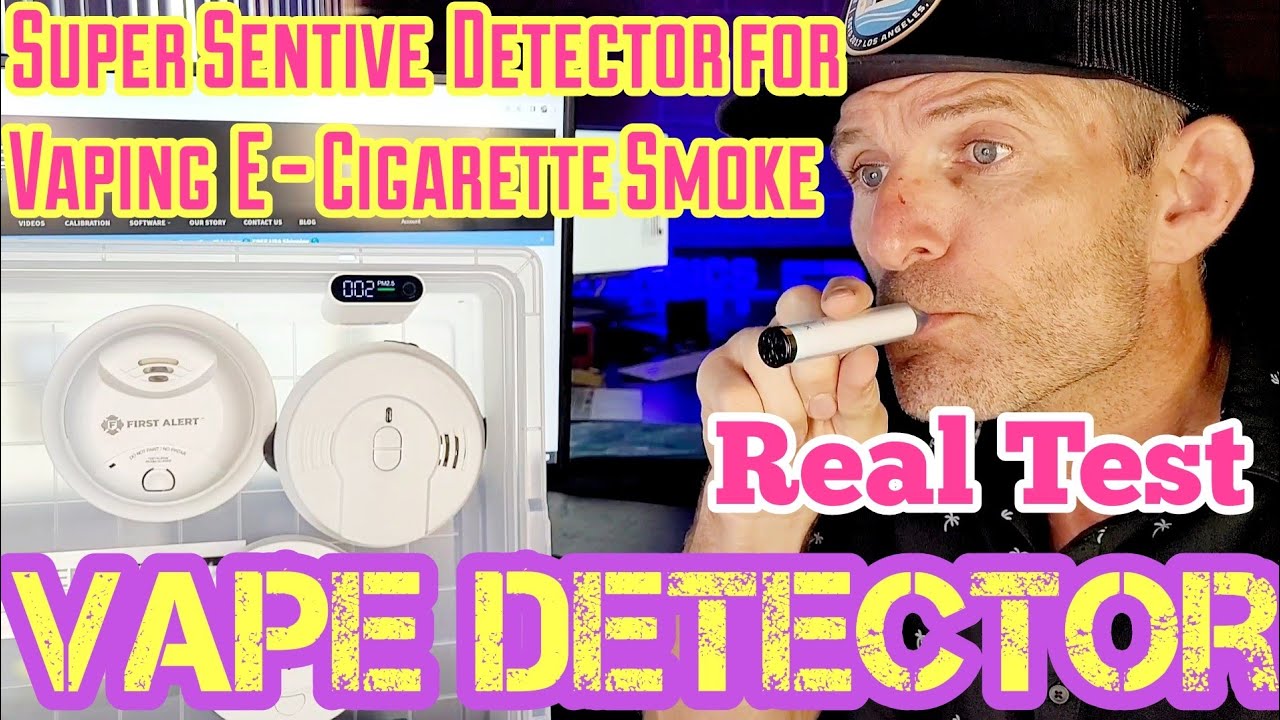
Standard fire alarms and modern vaping sensors are built for different threats and rarely behave the same way. We explain what each system is tuned to notice and why low-density aerosol may slip past a ceiling alarm.
Smoke alarms vs. purpose-built sensors
Smoke detectors focus on combustion signatures linked to fire risk. They trigger when particulate mass and optical or ionization signals cross life-safety thresholds.
Policy sensors use finer optics and shorter thresholds so property security and staff can log non-life-safety events without an evacuation.
Why vaping particles behave differently
Vaping aerosol often has up to ten times lower particulate yield than typical smoke. Particles are smaller and disperse faster in a room.
That means a standard alarm may not trip, yet a dedicated detector or combined air system tuned to ~0.3 microns will register the event.
- Practical point: discreet vaping might not set a life-safety alarm.
- Reality: modern deployments blend sensors, timestamps, and staff workflows for reliable detection and enforcement.
How Hotel Vape Detectors Work in the United States Today
Modern room sensors combine particle counts and chemical signatures to spot vaping events without triggering a fire alarm. We outline the core sensing methods and how alerts reach management and security teams.
Particle detection
Optical and laser scattering measures suspended particles. Typical hotel devices register down to about 0.3 microns across a ~12′ × 12′ coverage area. That gives early warning of concentrated aerosol clouds.
Chemical sensing
Chemical channels look for trace nicotine and propylene glycol signatures. Those cues help separate vapor from ordinary humidity or steam.
Optical/laser approaches
Laser scattering quantifies particle size and density. This method is more sensitive than legacy smoke-only sensors for noncombustion aerosols.
Multi-sensor systems
Combination setups pair particle, chemical, and gas inputs. The result is fewer false positives from steam, perfume, or cleaners while preserving reliable detection.
Smart alerts
Systems send Wi‑Fi or SMS notifications with time stamps and room-level location. Alerts route to front-desk staff or security so management can follow policy and log events.
Where Detectors Are Installed and What Triggers Alerts
Placement matters: sensors are deliberately placed where aerosol or smoke is most likely to cross a sensor’s path.
We map high-risk zones across a typical hotel floor. Installations target guest rooms, bathrooms, hallways, stairwells, and shared areas where policy breaches most often occur.
Airflow and HVAC effects
Bathroom fans and under‑door gaps move vapor and aerosols into return air paths. That flow can carry particulate to a detector outside the immediate room.
HVAC returns and corridor drafts create predictable transport. A vaping event in one room may register in a neighboring room or hallway when air aligns with sensors.
False triggers and modern tuning
Common non‑vape triggers include steam, strong fragrance, and some cleaning chemicals. Older smoke alarms were more prone to such false positives.
Modern systems use multi‑sensor correlation and chemical channels to reduce false alerts. Alerts vary from silent logs to staff notifications or security escalation.
| Location | Why it’s monitored | Typical alert type |
|---|---|---|
| Guest room | Primary source of policy violations; residue risk | Logged event; staff notification |
| Bathroom | Fan-driven exhaust can move aerosol to sensors | Immediate alert if sustained; log if brief |
| Hallway / stairwell | Air corridor; concentrates drifting aerosols | Staff escalation; time‑stamped record |
Practical note: Even absent an alarm, residue accumulates and leads to cleaning charges and HVAC maintenance. For more on deployed solutions, see hotel vape detectors.
Do Vape Detectors Really Work? Accuracy, Sensitivity, and “Discreet Vaping” Myths
Detection success comes down to how sensitive a device is and how it’s tuned for hotel room airflow. Sensitivity is set by particle thresholds, measured particle size, and chemical signature confidence. Those settings define when monitoring systems flag an event.
Why opening a window or using a fan often fails
Opening a window changes airflow but does not guarantee dilution below a sensor’s threshold. In a small hotel room, aerosols can linger or move into return ducts.
Bathroom fans may draw vapor into HVAC pathways. That can produce a detectable pattern away from the room itself.
Silent logs versus real-time alerts
Some detectors only create time-stamped logs for post‑stay review. Others send instant notifications so staff and security can respond.
Modern systems tune particle and chemical channels to reduce false positives from steam or cleaners. That makes detection accurate without triggering a public alarm.
- Small devices reduce visible vapor but still emit aerosols and chemicals that sensors register.
- Practical note: sensitivity matters more than visibility when assessing risk in rooms.
Hotel Policies, Staff Training, and Real-World Enforcement
Front‑desk and operations teams often treat indoor vaping like smoking to keep rules simple and consistent. That approach reduces disputes and protects room quality.
Why policy parity exists
Major chains merge vaping into smoking policies to avoid loopholes. A single rule makes guest expectations clear. Management uses uniform enforcement to limit complaints and damage.
How staff identify violations without tech
Hotel staff rely on sensory cues: lingering odors, visible clouds near doorways, or a faint film on mirrors and fixtures. Housekeeping notes residue during cleaning and flags rooms for follow‑up.
Enforcement workflow and guest guidance
Enforcement is a documented process. A report, a logged event, and management review create a fair record for fines or remediation. Security or operations may respond if needed.
For courteous travel, ask at check‑in about permitted outdoor areas and balcony rules. For more practical tips, see how to hide vape smoke in a hotel.
Fees, Fines, and Liability: What Vaping in a Hotel Room Can Cost
An isolated indoor smoking-style event can trigger immediate fees and operational steps. We outline common cost buckets and the escalation path properties use to protect rooms and other guests.
Typical cleaning and remediation
Deep cleaning for linens, carpets, and curtains typically ranges from $150–$500. HVAC or duct remediation often sits in that same band when residue reaches return systems.
Instant fines and administrative charges
Many properties assess an instant policy fine for a confirmed violation. Typical amounts are about $100–$250, though management-level discretion creates variation.
Escalation and removal
Repeated violations or timestamped logs can lead to eviction without refund. Security and operations use system records and staff notes to support enforcement.
Tampering risks
Do not disable or cover detectors. Tampering can raise legal exposure and much larger liability if it impairs life-safety systems tied to smoke or fire response.
Worst-case outcomes
Triggering alarms or sprinklers is rare but costly. Damage and restoration from such events can exceed $1,000 in a single incident.
| Cost category | Typical range (USD) | Notes |
|---|---|---|
| Deep cleaning (linens, carpet, curtains) | $150–$500 | Charged per room; varies by room size and staining |
| HVAC remediation | $150–$500 | Includes duct cleaning and filter replacement |
| Policy-violation fine | $100–$250 | Immediate administrative fee; documented in guest folio |
| Alarm/sprinkler damage | $1,000+ | Includes water damage, room downtime, and restoration |
Bottom line: the short-term convenience of indoor smoking-style use rarely justifies the financial and legal risk. For travelers, asking staff about designated outdoor areas avoids most costs and conflict.
Hands-On Testing: How Popular Disposables Compare for Detection Risk
Our bench and room tests focused on plume size, flavor fade, and output consistency over extended use.
Detection risk here means visible vapor output and airborne aerosol potential. Higher plume and stronger scent raise the chance that sensors or staff will notice in a hotel room. No device eliminates that risk—sensors respond to particles and chemical traces, not brand claims.
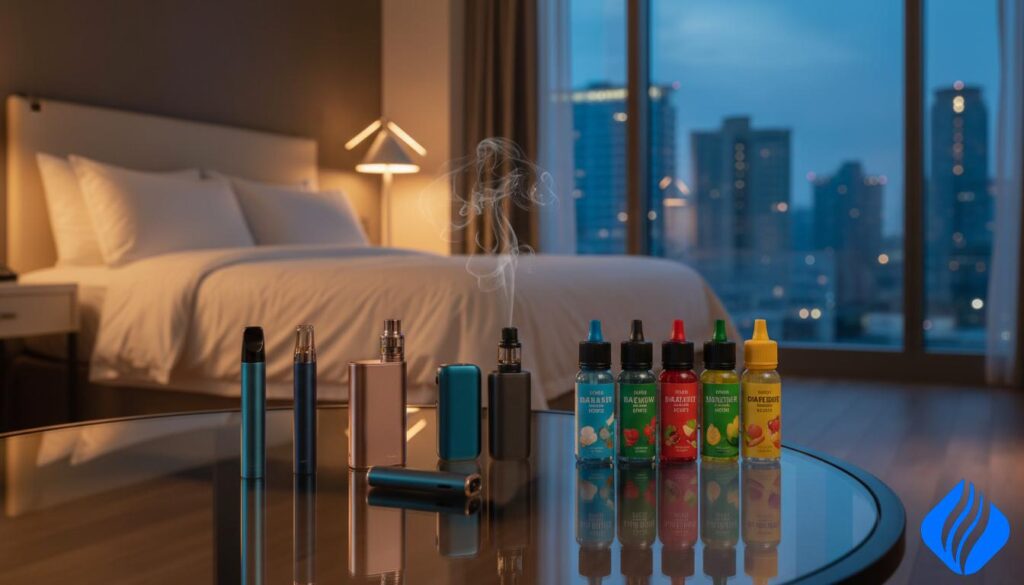
Main specs (RandM sample)
RandM test model (specs vary by SKU):
- Battery: 650–850 mAh
- E-liquid: 10–20 ml
- Nicotine: 2% or 5% nic salt
- Coil: mesh or dual-mesh options
- Charging: USB‑C on recharge models
Competitor snapshots and real-world notes
| Brand / Model | Battery (mAh) | E-liquid (ml) | Coil type | Real-world output |
|---|---|---|---|---|
| RandM (tested) | 650–850 | 10–20 | Mesh / Dual mesh | Moderate to high plume; stable flavor on mesh |
| Geek Bar | 500–650 | 2–6 | Single mesh | Compact plume; punchy throat hit early; flavor fades faster |
| Lost Mary | 650–800 | 2–10 | Mesh | Wider plume on higher-ml units; consistent draw |
| Raz (optional) | 500–700 | 2–8 | Mesh / hybrid | Moderate plume; smooth MTL feel |
Puffs per Dollar and flavor consistency
We estimated value with labeled puff ratings vs typical U.S. price bands. Puff counts are marketing figures; user draw changes results.
Flavor after 5000 puffs: mesh and dual-mesh units held flavor longer. Single-coil compact units showed sweetness flattening and reduced cooling by ~3,000–5,000 puffs in our trials.
Throat hit and vapor production
Draw style ranged from MTL-like to fuller draws. Devices with higher e-liquid capacity and dual mesh produced larger visible vapor and a stronger throat hit. That output correlates with higher particle presence and thus greater detection potential.
Compliance reminder: device choice is not a workaround for property rules. Follow designated outdoor areas and posted policies to avoid charges and enforcement.
Buying and Using Vapes Responsibly: Authenticity, Safe Charging, and “Empty” Signs
Responsible use starts with knowing when a device is empty and how to charge it safely. We focus on practical checks and safety steps for travel and home use.
How to know it’s empty
Look for these signs:
- Flavor drop‑off or muted taste.
- Harsher, dry hits or burnt notes.
- Airflow feels looser or weaker when drawing.
- Blinking LEDs or indicator patterns that imply low fluid or battery (model dependent).
Safe recharging and handling
Follow these rules: use the correct USB‑C cable on supported devices. Charge on a hard, non-flammable surface. Avoid heat and direct sunlight.
Never leave a charging device unattended overnight. Keep units away from children and secure them in luggage or a locked case when traveling.
Authenticity and where to shop
Verify packaging and scan the QR verification on https://www.google.com/url?sa=E&source=gmail&q=sokvape.com/ when supported by the brand.
For responsible purchasing see our category links: Disposable Vapes, Hot Sale, and brand pages for RandM and Bang.
Travel note: in a hotel, keep chargers away from bedding, follow property policy for permitted areas, and respect other guests and security systems.
This product contains nicotine. Nicotine is an addictive chemical.
Conclusion
Detection is increasingly common. Many hotel properties deploy multi‑sensor systems and staff workflows that spot aerosol events. Purpose‑built detectors register particles near ~0.3 microns and use chemical cues to reduce false alerts.
Practical point: standard smoke detectors are not the same as a policy sensor. Relying on “discreet” use is risky because security, housekeeping, or neighboring guests may report incidents.
Consequences range from cleaning charges and fines to eviction in repeat cases. Tampering with life‑safety devices raises severe liability, especially if it affects a fire response.
Ask about designated outdoor areas, follow posted policies, and review our responsible‑use FAQ and Sokvape links for safety and authenticity checks. This guidance is for adults 21+. Nicotine is addictive.
FAQ
Q: Can hotels detect vape in guest rooms?
Q: Why do hotels care about vaping in rooms?
Q: Will a standard smoke detector go off if someone vapes?
Q: What technologies do hotels use specifically to detect vaping?
Q: Where are these vape detectors typically installed?
Q: Can opening a window or using a fan prevent detection?
Q: What happens after a vape detector alerts staff?
Q: How do staff identify vaping without specialized tech?
Q: What are typical penalties and cleaning costs for vaping in a room?
Q: Can hotels detect vape in guest rooms?
Q: Why do hotels care about vaping in rooms?
Q: Will a standard smoke detector go off if someone vapes?
Q: What technologies do hotels use specifically to detect vaping?
Q: Where are these vape detectors typically installed?
Q: Can opening a window or using a fan prevent detection?
Q: What happens after a vape detector alerts staff?
Q: How do staff identify vaping without specialized tech?
Q: What are typical penalties and cleaning costs for vaping in a room?
FAQ
Q: Can hotels detect vape in guest rooms?
A: Yes. Modern hotel detection systems and trained staff can identify vaping through particle and chemical sensors, odor, and surface residues. Standard smoke alarms are tuned for combustion smoke and may miss some aerosol plumes, but many properties now use dedicated sensors that pick up aerosol particles and nicotine/propylene glycol signatures.
Q: Why do hotels care about vaping in rooms?
A: Hotels prioritize indoor air quality and guest safety. Vape aerosols contain particles and chemicals that can affect sensitive guests. Residue can stain fabrics, damage fixtures, and contaminate HVAC systems. Policies also protect reputation and reduce complaints, so many hotels enforce non‑smoking rules that include vaping.
Q: Will a standard smoke detector go off if someone vapes?
A: Often no. Traditional ionization or photoelectric smoke alarms detect combustion byproducts. Vaping produces aerosols with different particulate size and composition, so those alarms frequently don’t trigger. However, heavy, concentrated vaping or devices that create hot plumes can still set off some smoke detectors.
Q: What technologies do hotels use specifically to detect vaping?
A: Hotels employ several approaches: optical and laser scattering particle detectors that sense particles around 0.3 microns, chemical sensors tuned for nicotine and propylene glycol/vegetable glycerin signatures, and multi‑sensor combination units that merge particulate, chemical, and humidity data. Many systems add smart alerts via Wi‑Fi or SMS with time stamps and room identification.
Q: Where are these vape detectors typically installed?
A: Properties place sensors in high‑risk areas: guest rooms, bathrooms, corridors, stairwells, and common spaces. They also monitor return vents and HVAC intakes because airflow can carry aerosols from rooms to central systems. Placement aims to balance coverage and false alarm mitigation.
Q: Can opening a window or using a fan prevent detection?
A: Not reliably. Airflow can disperse aerosols but often carries particles toward sensors or into shared ducts. Bathroom fans may reduce visible vapor but don’t eliminate chemical signatures or surface deposition. Modern detectors and logging systems can still flag activity despite ventilation efforts.
Q: What happens after a vape detector alerts staff?
A: Responses vary by property. Some systems log the event silently for management review. Others push real‑time alerts to security or front desk staff for a room check. Hotels may document the violation, assess cleaning fees, issue fines, or ask the guest to leave without refund depending on policy and severity.
Q: How do staff identify vaping without specialized tech?
A: Trained staff recognize telltale signs: lingering sweet or chemical odors, visible vapor residue on mirrors or windows, film on fabrics, and discarded disposable devices or cartridges. Those cues often prompt deeper inspection or an HVAC check.
Q: What are typical penalties and cleaning costs for vaping in a room?
A: Many hotels treat vaping like smoking. Cleaning and HVAC remediation commonly range from about 0 to 0 for standard rooms. Instant fines or eviction are possible under policy. Severe incidents (sprinkler activation, tampering with detectors) can generate bills over
FAQ
Q: Can hotels detect vape in guest rooms?
A: Yes. Modern hotel detection systems and trained staff can identify vaping through particle and chemical sensors, odor, and surface residues. Standard smoke alarms are tuned for combustion smoke and may miss some aerosol plumes, but many properties now use dedicated sensors that pick up aerosol particles and nicotine/propylene glycol signatures.
Q: Why do hotels care about vaping in rooms?
A: Hotels prioritize indoor air quality and guest safety. Vape aerosols contain particles and chemicals that can affect sensitive guests. Residue can stain fabrics, damage fixtures, and contaminate HVAC systems. Policies also protect reputation and reduce complaints, so many hotels enforce non‑smoking rules that include vaping.
Q: Will a standard smoke detector go off if someone vapes?
A: Often no. Traditional ionization or photoelectric smoke alarms detect combustion byproducts. Vaping produces aerosols with different particulate size and composition, so those alarms frequently don’t trigger. However, heavy, concentrated vaping or devices that create hot plumes can still set off some smoke detectors.
Q: What technologies do hotels use specifically to detect vaping?
A: Hotels employ several approaches: optical and laser scattering particle detectors that sense particles around 0.3 microns, chemical sensors tuned for nicotine and propylene glycol/vegetable glycerin signatures, and multi‑sensor combination units that merge particulate, chemical, and humidity data. Many systems add smart alerts via Wi‑Fi or SMS with time stamps and room identification.
Q: Where are these vape detectors typically installed?
A: Properties place sensors in high‑risk areas: guest rooms, bathrooms, corridors, stairwells, and common spaces. They also monitor return vents and HVAC intakes because airflow can carry aerosols from rooms to central systems. Placement aims to balance coverage and false alarm mitigation.
Q: Can opening a window or using a fan prevent detection?
A: Not reliably. Airflow can disperse aerosols but often carries particles toward sensors or into shared ducts. Bathroom fans may reduce visible vapor but don’t eliminate chemical signatures or surface deposition. Modern detectors and logging systems can still flag activity despite ventilation efforts.
Q: What happens after a vape detector alerts staff?
A: Responses vary by property. Some systems log the event silently for management review. Others push real‑time alerts to security or front desk staff for a room check. Hotels may document the violation, assess cleaning fees, issue fines, or ask the guest to leave without refund depending on policy and severity.
Q: How do staff identify vaping without specialized tech?
A: Trained staff recognize telltale signs: lingering sweet or chemical odors, visible vapor residue on mirrors or windows, film on fabrics, and discarded disposable devices or cartridges. Those cues often prompt deeper inspection or an HVAC check.
Q: What are typical penalties and cleaning costs for vaping in a room?
A: Many hotels treat vaping like smoking. Cleaning and HVAC remediation commonly range from about $150 to $500 for standard rooms. Instant fines or eviction are possible under policy. Severe incidents (sprinkler activation, tampering with detectors) can generate bills over $1,000 and potential liability for damage.
Q: Are guests penalized for tampering with detectors?
A: Yes. Tampering carries serious consequences. Disabling or blocking sensors violates safety codes and hotel rules. Beyond fines and eviction, tampering can expose guests to criminal or civil liability if it results in property damage or safety incidents.
Q: Do disposable vapes like RandM, Geek Bar, or Lost Mary increase detection risk?
A: Detection risk depends on aerosol output and formulation. High‑output disposables that use mesh coils and higher nicotine salts produce denser plumes and more particles, making them easier to detect. Devices with larger e‑liquid volumes and robust coil designs typically leave stronger chemical and particulate signatures.
Q: How does device specification affect visibility and residue?
A: Key factors: coil type (mesh produces consistent vapor), e‑liquid ratio (PG/VG balance alters throat hit and visible vapor), nicotine strength, and battery power. Mesh coils and high VG blends create thicker aerosols and more surface deposition, increasing the chance of detection and residue on fabrics and vents.
Q: How can guests use vapes responsibly while traveling?
A: Follow property rules and ask about designated outdoor smoking areas at check‑in. Use devices with lower output, avoid indoor use, charge safely (prefer USB‑C best practices), and stop using a device when flavor drops or airflow changes—signs it’s near empty. Adhering to policies protects other guests and prevents penalties.
Q: How do hotels balance false positives with accurate detection?
A: Modern systems combine multiple sensors—particle, chemical, humidity—and intelligent thresholds to reduce false alerts from steam, cooking, or perfumes. Regular calibration, placement strategy, and staff training further refine accuracy and ensure responses match real violations.
Q: Is nicotine residue permanent on soft goods and HVAC components?
A: Nicotine and aerosol residues adhere to fabrics and duct surfaces. Left unchecked, they cause staining, odor, and HVAC contamination. Professional cleaning and duct remediation may be required to fully remove deposits and restore air quality.
,000 and potential liability for damage.
Q: Are guests penalized for tampering with detectors?
A: Yes. Tampering carries serious consequences. Disabling or blocking sensors violates safety codes and hotel rules. Beyond fines and eviction, tampering can expose guests to criminal or civil liability if it results in property damage or safety incidents.
Q: Do disposable vapes like RandM, Geek Bar, or Lost Mary increase detection risk?
A: Detection risk depends on aerosol output and formulation. High‑output disposables that use mesh coils and higher nicotine salts produce denser plumes and more particles, making them easier to detect. Devices with larger e‑liquid volumes and robust coil designs typically leave stronger chemical and particulate signatures.
Q: How does device specification affect visibility and residue?
A: Key factors: coil type (mesh produces consistent vapor), e‑liquid ratio (PG/VG balance alters throat hit and visible vapor), nicotine strength, and battery power. Mesh coils and high VG blends create thicker aerosols and more surface deposition, increasing the chance of detection and residue on fabrics and vents.
Q: How can guests use vapes responsibly while traveling?
A: Follow property rules and ask about designated outdoor smoking areas at check‑in. Use devices with lower output, avoid indoor use, charge safely (prefer USB‑C best practices), and stop using a device when flavor drops or airflow changes—signs it’s near empty. Adhering to policies protects other guests and prevents penalties.
Q: How do hotels balance false positives with accurate detection?
A: Modern systems combine multiple sensors—particle, chemical, humidity—and intelligent thresholds to reduce false alerts from steam, cooking, or perfumes. Regular calibration, placement strategy, and staff training further refine accuracy and ensure responses match real violations.
Q: Is nicotine residue permanent on soft goods and HVAC components?
A: Nicotine and aerosol residues adhere to fabrics and duct surfaces. Left unchecked, they cause staining, odor, and HVAC contamination. Professional cleaning and duct remediation may be required to fully remove deposits and restore air quality.
 English
  German
  Dutch
Dutch  Danish
  Czech
Czech  Italian
  Slovenian
  French
  Hungarian
  Spanish
  Polish