

We start with a safety note: nicotine exposure is harmful and addictive. The brief presence of odor or aerosol depends on device and liquid specs.
Detection varies with nicotine salt strength (2% or 5%), coil type (mesh vs dual mesh), power and airflow, and whether the device is rechargeable via USB‑C.
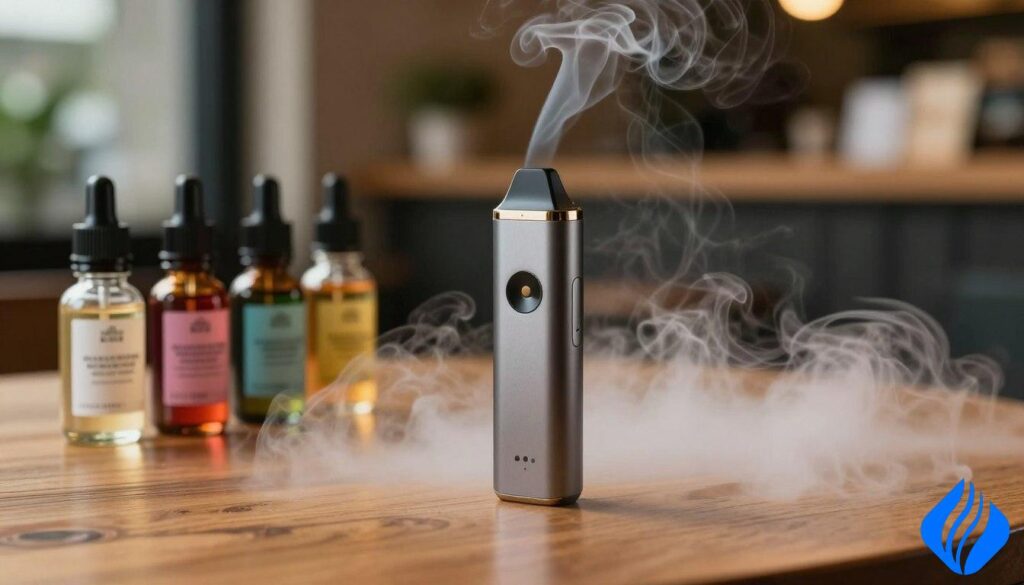
Our hands-on testing will include throat hit, vapor production, and flavor stability after ~5000 puffs. We will compare primary models with Geek Bar, Lost Mary, and Raz using Puffs per Dollar and Flavor Consistency.
Public-health summaries (ACS, AHA) inform our view: secondhand aerosol may carry nicotine, ultrafine particles, VOCs, and metals. We frame findings for harm reduction and practical device handling.
Key Takeaways
- Detection depends on device, liquid strength, and coil type.
- Odor tends to fade faster than cigarette smoke in open spaces.
- Hands-on metrics include throat hit, vapor output, and 5,000-puff flavor stability.
- Comparisons use Puffs per Dollar and Flavor Consistency across top brands.
- Nicotine exposure carries documented health risks; handle devices responsibly.
What vape aerosol really is and why it can leave a scent
We treat aerosol as an engineered mist of e‑liquid droplets. This aerosol reflects liquid formulas and device output rather than burned material.

Vapor versus smoke
Vapor is aerosolized propylene glycol (PG) and vegetable glycerin (VG) mixed with flavor compounds. Smoke is combustion of tobacco or other matter. That difference explains why odors from vaping behave differently than cigarette smoke.
What secondhand aerosol may contain
Public-health reviews (ACS, AHA) list constituents found in secondhand aerosol: nicotine, ultrafine particles, volatile organic compounds (VOCs) like benzene, diacetyl, and trace metals such as nickel and lead. These make a sweet scent not necessarily harmless.
Why some products smell stronger
Technical specs shape odor. Mesh coils vaporize e‑liquid evenly. Dual mesh raises cloud density and intensifies fragrance. Higher nicotine (5% nic salt) alters use patterns and may increase lingering odor versus 2% formulas. Larger e‑liquid volume and USB‑C rechargeability enable sustained output, which raises overall aerosol in the air.
| Factor | Typical Effect | How it affects odor |
|---|---|---|
| Coil Type | Mesh / Dual mesh | Dual mesh → larger clouds, stronger scent |
| Nicotine Strength | 2% vs 5% | 5% → shorter sessions but stronger throat hit; repeated use raises room odor |
| E‑liquid Volume | mL capacity | More volume → longer runtime → more emissions over time |
| Rechargeability | USB‑C vs non‑rechargeable | USB‑C allows higher sustained output and denser aerosol |
Can you smell vape smoke on someone after they vape?
Immediate post-use breath typically carries the clearest aroma, especially with higher-output devices. In our hands-on testing, models with strong vapor production left a clear scent trail for several minutes. A smooth throat hit often correlated with lighter mouth odor; a stronger hit left a sharper signature.
Breath: how long aroma lasts and what alters it
Breath is most noticeable right after exhale. Flavor intensity, hydration, and whether the user chain-vaped over longer time change persistence. Mouthwash or gum reduces detectable scent rapidly.
Clothes and hair: why aroma sticks or fades
Fabrics and hair trap volatile fragrance chemicals. Outdoors, the scent usually fades fast. Indoors or in a closed car, residues may linger and smell like fruity or minty notes for longer.
Hands and personal items: common transfer points
Handling the device leaves traces on fingers, phone cases, and pocket linings. These items often retain a distinct scent that helps distinguish vapor from perfume.
Why sweet scents can mislead
“Fruity or candy-like aromas may be misidentified as perfume, unlike cigarette smoke’s burnt character.”
Relying on scent alone is unreliable. Compare breath, clothing, and hands: breath is strongest immediately; clothing and items show transfer patterns. Scent evidence should be weighed with visible clouds and context.
- Spot-check: sniff breath first, then jacket or hair, then hands/items.
- Note: air fresheners and scented products cause false positives.
How to tell if someone vaped nearby at home, in a room, or in a car
Small, fast-dispersing plumes and faint residues provide the clearest clues after indoor use. Look for short-lived mist patterns that form then thin rapidly. High-output devices leave denser clouds that are easier to spot near vents or fans.
Visible signs
Clouds often show as quick mist trails. In a living room or bedroom, soft furniture makes plumes linger slightly longer. In a car, dense puffs collect near the ceiling and windows and sweep toward vents.
Smell clues
Faint fruity, minty, or candy-like notes usually indicate common e‑liquid profiles. Acrid or burnt odors suggest overheated coils or cannabis concentrates and tend to persist.
Surface clues
Thirdhand aerosol leaves a tacky film on glass and buildup in fabric fibers. Check windshields, dashboards, seat fabric, curtains, and pillowcases for residue or sweet wrappers in trash.
Air quality clues and practical hints
Research shows exhaled particles travel over 3.6 meters and raise indoor PM2.5 levels. Even if scent fades, ultrafine particles may remain.
- Room checklist: bathroom (steam masks odor), bedroom (fabrics absorb), living room (upholstery traps residue).
- Practical identifiers: disposable pens or pods, spare mouthpieces, and USB‑C chargers in a car console.
- For device types, see Disposable Vapes and Hot Sale; common brands include RandM and Bang.
“Detection helps inform harm-reduction choices and shared-air safety.”
How long does vape stay in the air and on surfaces?
Visible mist is only part of the story; ultrafine particles persist and affect indoor air quality.
Research shows suspended particles remain after plumes vanish. The American Thoracic Society notes harmful chemicals may linger. A 2021 study reports exhaled particles travel beyond 3.6 meters and mix through a space. A vape‑shop survey found nicotine and aldehydes rose 3–4× during business hours.
Secondhand versus thirdhand residue
Secondhand exposure refers to what others inhale immediately. Thirdhand residue settles. It sticks to clothing, walls, and counters and may re-enter the body via touch or re-suspension.
What changes persistence
Ventilation, room volume, HVAC filters, and frequency of sessions alter hang time. Small, sealed spaces and closed car cabins raise baseline levels. Repeated sessions throughout the day keep concentrations elevated.
“Higher-output devices and warmer operation increase aerosol mass, which raises deposition and persistence.”
Practical mitigation and cleaning
- Open windows and use exhaust fans to increase air exchanges.
- Use HEPA filtration where possible; launder fabrics and wipe hard surfaces.
- Limit repeated sessions in shared spaces; store high-output products away from living areas.
| Factor | Typical effect | Mitigation |
|---|---|---|
| Ventilation | Reduces suspended particles | Open windows, run exhaust fans, use HEPA |
| Room volume | Larger volume dilutes emissions | Avoid use in small, sealed spaces |
| Device output | Higher output → more aerosol and deposition | Choose lower‑output products; limit continuous sessions |
| Surface type | Soft fabrics hold residue longer | Launder textiles; wipe hard surfaces |
For deeper health context and exposure summaries, see this note about secondhand exposure.
Health and safety context for detecting vaping around others
Even faint aerosol traces may contain compounds that affect indoor air and health. Detection matters beyond nuisance odor. Aerosol often carries nicotine, ultrafine particles, VOCs, and trace metals that influence shared-air exposure.
Who is most at risk?
Higher-risk groups
Children have developing lungs and brains and are especially vulnerable to residue and thirdhand transfer. Pregnant people face risks from nicotine exposure that can affect fetal development. People with asthma, COPD, or other lung disease have increased sensitivity to airway irritants.
Potential symptoms cited by public-health organizations
Public-health sources link exposure to shortness of breath, bronchitis-like symptoms, and airway irritation. VOCs have been associated with headaches, nausea, and throat or eye irritation. For those with heart or lung conditions, exposures may worsen baseline disease.
Practical harm-reduction steps
Treat indoor vaping like indoor smoking in terms of courtesy and risk management. Avoid use in enclosed spaces, especially around children and people with respiratory conditions. Prefer outdoor, well-ventilated areas and keep sessions away from shared living spaces.
- Do not use devices inside cars with passengers present.
- Store devices and e-liquids securely and out of reach of children.
- Increase ventilation and use HEPA filtration where feasible.
“Nicotine is an addictive chemical. Exposure to nicotine and vape aerosol may be harmful, especially for youth, pregnant people, and individuals with heart or lung conditions.”
For related allergic reactions and symptoms, see our note about allergic responses to vaping products.
Conclusion
This final review highlights practical findings, a compact product comparison, and simple next steps for indoor air. Particles may persist after visible mist clears. Thirdhand residue is real; avoid indoor sessions around vulnerable people.
Product comparison (compact)
RandM rechargeable disposable (USB‑C)
– Battery: mAh; E‑liquid: ml; Nicotine: 2% / 5%; Coil: mesh / dual mesh; Port: USB‑C.
– Puffs per Dollar: good (rechargeable lowers cost). Flavor Consistency: stable through midlife; some dulling near ~5000 puffs.
Geek Bar
– Typical specs: mAh/ml/%/coil/USB‑C vary by model.
– Notes: higher vapor density; strong initial flavor but some models show quicker drop in consistency. Good for visible clouds.
Lost Mary / Raz
– Typical specs: mAh/ml/%/coil/USB‑C.
– Notes: firmer throat hit on 5% salts; flavor can decline after heavy sessions. Puffs per Dollar depends on disposable size.
Hands-on testing notes
We logged throat hit, visible vapor, and flavor after ~5000 puffs. Some devices delivered a smoother throat hit and steady flavor. Higher-output models made denser clouds and stronger room residue.
Detection hierarchy
Strongest clues: immediate breath/nearby air, then hands and personal items, then enclosed-space residue (room or car). For related testing issues see our drug-test note.
What to do next — quick checklist
Ventilate the space. Wipe hard surfaces and launder fabrics. Set clear indoor rules in shared areas.
FAQ
How to know if it’s empty? Weak vapor, muted flavor, reduced throat hit, or blinking lights indicate depletion. A burnt taste signals coil drying.
How to recharge safely? Use the correct USB‑C cable, avoid overnight charging, don’t charge unattended, and stop use if the device heats or shows damage.
Is it authentic? Check the package QR code and verify via the manufacturer URL (use the printed code and site), and inspect print quality and seals.
Final note: We present this as a concise review and set of tips for safer shared-air practice. For shopping references see Disposable Vapes and Hot Sale on our site, and consult brand pages for RandM and Bang when identifying products.
 English
  German
  Dutch
Dutch  Danish
  Czech
Czech  Italian
  Slovenian
  French
  Hungarian
  Spanish
  Polish