

Did you know vaping after a tooth extraction can cause ‘dry socket’? This painful condition can slow down your healing by weeks. The urge to vape is real, but knowing the ’72-hour rule’ can make all the difference.
It’s important to understand the vaping risks after a tooth extraction. During the oral surgery recovery, it’s key to think about how vaping affects healing. This guide will share insights from dental experts. We’ll look at how vaping impacts your recovery and how to heal safely.

Key Takeaways
- The ’72-hour rule’ is essential for post-extraction recovery.
- Vaping can lead to dry socket, delaying the healing process.
- Understanding negative pressure’s impact on blood clot stability is critical.
- Nicotine constriction of blood vessels hinders healing.
- Consult your dentist for personalized post-extraction care advice.
Introduction to Vaping After Tooth Extraction
After a tooth is pulled, healing is key. Many wonder, can you vape after tooth extraction? Today, vaping offers many options, from disposable vapes to customizable mods. These use different e-liquids, including salt nicotine.
Vaping can mess with the healing process. A blood clot forms to protect the socket. But vaping, with its disposable vapes, can disrupt this.
Inhaling from a vape can dislodge the blood clot. This leads to dry socket, a painful condition. Nicotine also reduces blood flow, slowing healing.
E-liquids and their vapor can irritate and slow healing. It’s important to know how vaping affects oral health after a tooth is pulled.
| Type of Vape Device | Potential Impact on Healing |
|---|---|
| Disposable Vapes | Suction can dislodge the clot, leading to dry socket |
| Devices Using Salt Nicotine | Nicotine constricts blood vessels, slowing healing |
| Traditional E-liquids | Potential irritants may slow tissue recovery |
Knowing the risks of vaping after a tooth extraction helps avoid problems. It ensures a faster, painless recovery. Choosing the right vape and e-liquids is important for healing.
The Importance of Blood Clot Formation
Our body starts healing after a tooth extraction with blood clot formation. This process is key to recovery. It acts as a shield for the bone and nerves where the tooth was pulled out.
This clot stops harmful particles and germs from getting in. It greatly lowers the chance of infection at the extraction site.
The blood clot also helps new tissue grow. It’s essential for gum and bone repair after an extraction. If it’s lost too soon, a dry socket can happen. This slows down healing and causes a lot of pain.
So, keeping the blood clot in place is very important. It’s the first step in healing. Taking care of it, like not rinsing too hard or using straws, is vital.
What Is Dry Socket?
Dry socket, also known as alveolar osteitis, is a painful dental issue that happens after a tooth is pulled. It occurs when the blood clot in the socket is lost before healing is done. Knowing what causes it, its symptoms, and how to prevent it is key for good care after a tooth is removed.
Causes of Dry Socket
The main reason for dry socket is when the blood clot gets dislodged. This exposes the bone and nerves, causing pain and slowing healing. Actions like vaping or using straws can dislodge the clot. Also, rinsing too hard or not caring for the area properly can raise the risk of dry socket.
Symptoms of Dry Socket
Knowing the signs of dry socket helps in getting help early. People usually feel sharp pain a few days after the tooth is pulled. This pain can spread to the ear, eye, or neck. Other signs include bad taste, bad breath, and seeing bone in the empty socket. If you notice these, see a dentist right away.
Preventing Dry Socket When Vaping
For those who vape, preventing dry socket is very important. To lower the risk, avoid vaping for at least 72 hours after a tooth is pulled. This lets the blood clot form properly. Using devices with high airflow and covering the extraction site can also help. Choosing lower nicotine levels can make vaping less intense, helping prevent dry socket.
Negative Pressure and Its Impact on Healing
When we talk about caring for our teeth after an extraction, negative pressure is key. It’s the difference in pressure in our mouth, like when we vape or use straws. This pressure can harm the healing process after a tooth is pulled.
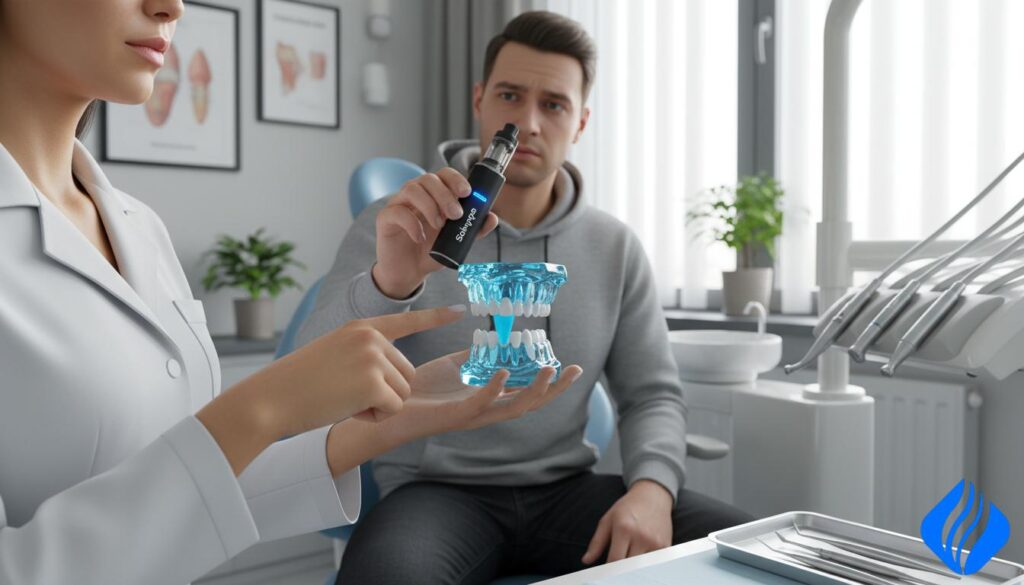
When we vape, the suction can pull away the blood clot at the extraction site. This clot is vital for healing. If it’s moved, healing can slow down and pain can increase.
Knowing how negative pressure affects healing helps us make better choices. After pulling a tooth, it’s smart to avoid sucking on anything in the mouth. This keeps the blood clot in place and helps healing.
- Avoid using straws
- Refrain from spitting forcefully
- Limit vaping activities
These steps are important for healing right after a tooth extraction. By reducing negative pressure, we can avoid problems and help the healing go smoothly.
Nicotine’s Effects on Blood Flow and Healing
Understanding nicotine’s impact on recovery after a tooth extraction is key. It helps us make better health choices. A big concern is how nicotine affects blood flow, mainly around the gums.
How Nicotine Constricts Blood Vessels
Nicotine is a strong vasoconstrictor. It makes blood vessels narrower, cutting down on blood flow to important areas, like where a tooth was pulled. Less blood flow means fewer nutrients and oxygen, slowing healing down.
When blood vessels get smaller, it makes it harder for oxygen-rich blood to reach the healing tissues. This can really slow down the healing process.
Impact on Healing Time
Nicotine does more than just narrow blood vessels; it also slows down healing. It lowers oxygen in the blood, which affects tissue recovery. So, nicotine and healing are opposites.
Delayed healing can lead to problems like dry socket. This makes recovery longer and more painful.
Thinking about these risks is important if you’re thinking about vaping after a tooth extraction. Knowing how nicotine affects healing can help us make better choices for our oral health.
Risks of Vaping After Wisdom Tooth Removal
After getting wisdom teeth removed, it’s important to follow certain practices to help heal. Vaping after this surgery is a big concern. Knowing the risks can help ensure a smooth recovery.
Vaping can create negative pressure, which might dislodge the blood clot at the extraction site. This clot is key for protecting the bone and nerves. If it gets dislodged, you might get dry socket, which is very painful.
Nicotine in vaping also affects healing. It narrows blood vessels, reducing blood flow needed for healing. With less blood flow, the extraction site gets fewer nutrients and oxygen. This can slow down healing and increase infection risk.
Here are some common problems vaping can cause after wisdom tooth removal:
- Increased pain and swelling at the extraction site
- Extended healing time due to reduced blood circulation
- Higher likelihood of developing dry socket
- Heightened risk of infection due to compromised tissue health
To better understand these risks, check out this table:
| Complication | Impact on Recovery |
|---|---|
| Dry Socket | Severe pain and delayed healing |
| Reduced Blood Flow | Slower recovery due to limited nutrient and oxygen supply |
| Infection | Increased swelling, pain, and risk of further complications |
Knowing these risks can help you make better choices during recovery. Choosing not to vape during this time can greatly improve your healing.
How Long After Tooth Extraction Can I Vape?
When you think about vaping again after tooth extraction, timing is key. Following the right steps after your procedure helps your mouth heal right. This also keeps you safe from problems like dry socket.
Adherence to the 72-Hour Rule
The 72-hour rule is a safe bet. It’s important to wait a bit for your blood to clot after tooth extraction. Clots form quickly and protect your healing area.
For the first 72 hours, it’s best to avoid vaping. Vaping’s suction can mess with your clot, slowing healing and raising infection risks.
Consulting Your Dental Professional
Everyone heals differently, so getting dental professional advice is a must. Your dentist will tell you when it’s okay to vape again, based on your healing. They might say you need to wait longer if needed.
Always listen to your dentist’s advice. It helps you heal smoothly and safely.
Understanding Suction and Negative Pressure
When you vape after getting a tooth pulled, it’s important to know how it works. Suction and negative pressure are key. They can mess with blood clots, which are vital for healing.
Inhaling while vaping creates negative pressure in your mouth. This can knock loose the blood clot at the tooth site. This can lead to a dry socket, making your recovery longer and more painful.

Vaping involves a lot of mechanics, like atomization and thermal control. Each puff can affect the healing tissues. Our bodies need a stable environment to heal, and vaping can disrupt this.
Being careful with vaping after a tooth extraction is key for a quick recovery. Knowing about suction and negative pressure helps you vape wisely after an extraction.
Safety Tips for Those Who Must Vape
If you need to vape after a tooth extraction, following some safety tips can help. These tips aim to reduce harm and improve dental care during healing.
Using High-Airflow Devices
Using high-airflow devices is a smart choice. They lower the mouth pressure, which reduces the chance of dislodging the healing blood clot.
Opting for Low Nicotine Strengths
Going for e-liquids with low nicotine is also good. This choice helps because it doesn’t constrict blood vessels as much. It promotes better blood flow and healing.
Covering the Extraction Site
Covering the extraction site while vaping is another good idea. Use gauze or something similar to keep debris out and protect from vaping aerosols.
Avoiding Chain Vaping
Lastly, try not to vape too much. Chain vaping, or vaping a lot in a row, can slow healing. It’s best to vape less often.
Warning Signs and Symptoms After Tooth Extraction
It’s important to know the warning signs and symptoms after a tooth extraction. Severe pain could mean an infection or other problems. If the pain gets worse instead of better, it’s a sign to watch out for.
Swelling that gets worse after 48 hours is a warning sign. Some swelling is okay, but it shouldn’t get worse or spread. Also, any pus or discharge from the site means you need to see a dentist right away.
Red or inflamed gums are normal at first. But if they get very red, puffy, or warm, it might be an infection. Bad breath or a sour taste could also mean bacteria or an infected socket.
Keep an eye on bleeding that doesn’t stop after a day. Some bleeding is okay for a few hours after. But if it keeps going or comes back, you should get help. A fever over 100.4°F, with chills or feeling tired, is also a sign to see a dentist.
Swollen glands, trouble chewing, talking, or swallowing long after the surgery could mean infection. Also, numbness or tingling in your face or jaw might be from nerve issues or infection.
An empty socket is different from an infection. Dry socket causes sharp pain 2-3 days later, with bad taste or smell. But it doesn’t usually have a lot of swelling or pus. Infections, on the other hand, have symptoms like pus, fever, or swelling.
Watch for these signs and talk to your dentist if you notice any. Getting help early can stop serious problems and help you heal better.
Professional Advice for Post-Extraction Care
After a tooth extraction, it’s key to follow professional advice for healing and to avoid problems. You need to see your dentist and take good care of the extraction site.
Consult Your Dentist
Getting a dentist consultation is a must. Your dentist will give you advice that fits your needs. They’ll check on the healing and tell you what else to do.
Caring for the Extraction Site
It’s important to take good care of the extraction site. This helps avoid infections or dry socket. Here’s what to do:
- Don’t rinse or spit hard for the first 24 hours. This lets a blood clot form.
- Use an ice pack to reduce swelling and pain.
- Start rinsing with saltwater after 24 hours.
- Follow your dentist’s instructions carefully.
By doing these things, you help your healing and lower the chance of problems. Always listen to your dentist’s advice and ask if you’re unsure about your care.
Conclusion
We’ve explored how vaping affects tooth extraction recovery. It’s key to know the risks to keep your oral health safe. A stable blood clot, avoiding dry socket, and the risks of negative pressure are important.
Nicotine can slow healing by affecting blood flow. This shows why you should be careful. Following the 72-hour rule and talking to your dentist are key steps for a good recovery. Vaping too soon, like after wisdom tooth removal, is a big risk.
If you must vape, use high-airflow devices and low nicotine. Protecting the extraction site helps too. Knowing the signs and listening to your dentist are vital for a safe recovery.
In short, focusing on your oral health and making smart choices can help you recover well after a tooth extraction.
 English
  German
  Dutch
Dutch  Danish
  Czech
Czech  Italian
  Slovenian
  French
  Hungarian
  Spanish
  Polish