

Can you vape on Amtrak is the core query we answer clearly: no—Amtrak treats electronic smoking as smoking. We open with the fact that federal action in 2019 expanded smoke-free zones nationwide.
We explain scope: the ban covers trains, connecting services, and stations. Violations may lead to federal fines and removal at the next stop. We keep the tone practical and compliance-first.
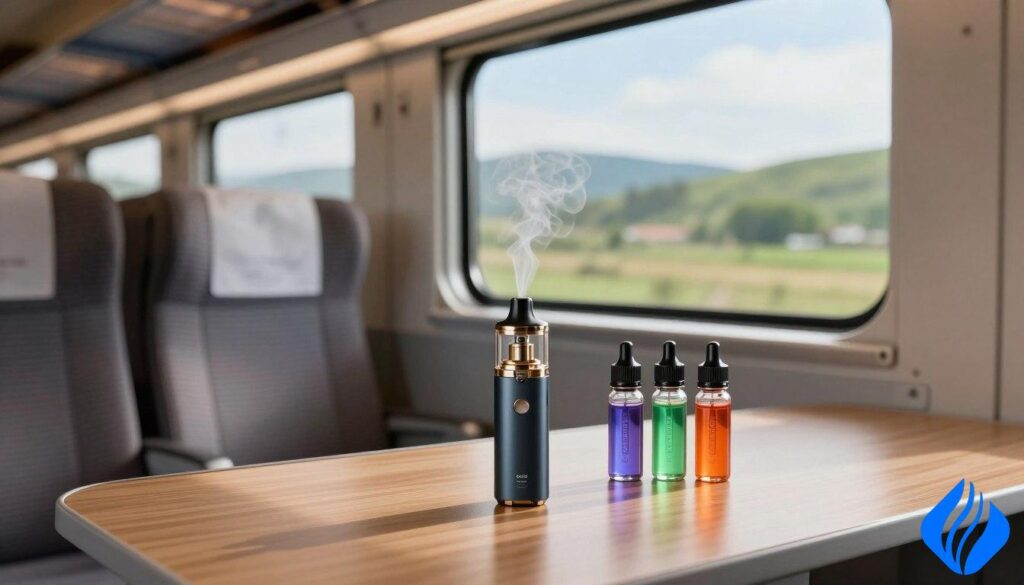
We preview what follows. Readers will find federal jurisdiction details for marijuana and THC products, planning tips for cravings during travel, and allowed alternatives. Post-trip guidance covers device specs, battery charging safety, empty indicators, and authenticity checks such as QR codes on sokvape.com.
We prioritize safety and legal compliance. This page is a FAQ-style resource for adult passengers (21+) who seek clear rules, low-risk travel planning, and technical device insights without encouraging rule-breaking.
Key Takeaways
- Amtrak bans smoking and electronic smoking across trains, services, and stations.
- Federal enforcement began in 2019 and includes marijuana/THC products.
- Violations risk fines and removal; plan stops for cravings.
- Post-trip sections cover battery safety, specs, and authenticity checks.
- We emphasize compliance, harm reduction, and adult-only guidance.
Can you vape on amtrak?
Passengers should know the rule in one line: electronic smoking is banned across Amtrak services.
Quick rule for passengers on trains, connecting services, and stations
No vaping allowed. That applies to all cars, sleeper compartments, restrooms, and Amtrak stations. Staff enforce the rule. Visible vapor, smell, or device use will be treated the same as smoking.

Why vaping is treated the same as smoking under the ban
Amtrak groups smoking and electronic smoking together to protect comfort and health. Enforcement is simpler when crew apply one standard to all smoke vape activity. This avoids confusion about which substance is in a device.
- One-line rule: passengers cannot use vapor-producing devices aboard trains or at stations, including connecting service segments like Thruway links.
- Operational note: crew will act quickly to stop use, which can lead to federal fines or removal at the next stop.
- Best practice: wait for staff-approved stops and follow instructions to keep the trip smooth and conflict-free.
Amtrak’s no-smoking and no-vaping policy in the United States
Since 2019 the no‑smoking framework was expanded to cover electronic smoking devices under federal jurisdiction. This change removed ambiguity and made enforcement consistent across trains and stations.
Where the ban applies: onboard cars, sleeper cabins, restrooms, and station areas
The ban applies everywhere aboard trains: coach cars, sleeper roomettes, restrooms, vestibules, and in station areas. There are no onboard smoking areas. Shared ventilation and tight corridors make private use ineffective.

What changed in recent years: vaping added to the smoking ban
Vaping was explicitly folded into the existing rule in 2019. That update treated aerosolized products the same as combustion products for passenger safety and operational clarity.
Consequences for violating the rule: federal fines and removal at the next stop
Violations carry practical penalties: federal fines and removal at the next stop. Enforcement can derail a journey and may strand a passenger.
Why “discreet” vaping still gets noticed: smell, visible vapor, and staff vigilance
Visible vapor, lingering odor, device LEDs, and crew walk‑throughs make discreet use detectable. Staff respond quickly to complaints and will act under federal law.
- Compliance checklist: keep devices packed away; do not use restrooms or cabins for device use; follow staff directions.
- Operational detail: shared ventilation spreads odor; proximity seating increases detection.
Smoke breaks and designated smoking areas at Amtrak stations
Some scheduled station stops allow short outdoor breaks for smoking, but they are limited and conditional.
We define a smoke stop as a longer station call where crew may announce a brief opportunity to step off the train for a short break.
What a “smoke stop” means on long-distance routes
Smoke stops appear mainly on long-distance trains and long-distance routes. They are not guaranteed on every stop during a trip.
Passengers must wait for the conductor’s announcement before leaving the car. Return promptly when crew issues the “all aboard” call.

Platform realities and local rules
Local laws and station policies may still restrict smoking allowed on platforms. Designated smoking signs at stations do not override state or municipal rules.
Stay clear of doors and vents to avoid complaints from other passengers. Platform etiquette reduces conflict and helps the trip stay on schedule.
How delays affect scheduled breaks
Delays compress time at stations. That may shorten or cancel a smoke stop without notice.
Missing the train after an extended break is a real risk. Treat smoke stops as optional, not guaranteed, and plan nicotine needs accordingly.
“Smoke stops are conditional; crew announcements and local law determine if step-off time is allowed.”
- Definition: longer station call where brief step-off may be permitted.
- Where: most common on long-distance routes and long-distance trains.
- Timing: breaks are short—all aboard is final.
- Rules: local station policies can prevent smoking allowed at platforms.
| Aspect | What passengers should know | Action |
|---|---|---|
| Occurrence | Mostly on long-distance trains; not every station is a smoke stop | Check with conductor; plan ahead |
| Local law | Station rules and municipal laws may prohibit smoking allowed on platforms | Observe posted signs; follow staff directions |
| Timing risk | Delays can shorten or cancel breaks; all aboard calls are final | Treat breaks as optional; carry lawful alternatives for cravings |
Planning tip: align nicotine relief strategies with the trip schedule and with the longer station stops detailed in the planning section.
Marijuana, THC vapes, and CBD on Amtrak under federal jurisdiction
Federal rules make clear that possession of cannabis products is not permitted aboard federally regulated passenger rail.
State law does not override federal authority. Even where marijuana legal status exists at the state level, federal law controls conduct during amtrak trips. That means state permissions do not apply aboard trains, in stations, or on connecting services.
No medical-card exceptions
Medical marijuana cards offer no exemption. Amtrak policy follows federal law and related regulations. Passengers must not rely on a medical card to transport or use marijuana products while traveling.
What is prohibited
- Flower: any cannabis plant material.
- Edibles: food or drink infused with marijuana.
- Concentrates: wax, shatter, hash, and similar extracts.
- THC vape pens: disposable or refillable THC devices.
- High-THC CBD: CBD products that contain significant THC levels.
Enforcement may include federal inspection, Amtrak police, and DEA involvement. Outcomes range from confiscation to fines, removal, and possible law enforcement escalation. For low risk, do not pack gray-area CBD items. Plan trips with lawful alternatives for symptom management and prioritize legal safety first.
Nicotine cravings during train travel without vaping
Managing urges aboard a train requires clear, legal choices and a simple plan. We outline permitted, discreet options and practical steps to make the journey more comfortable.
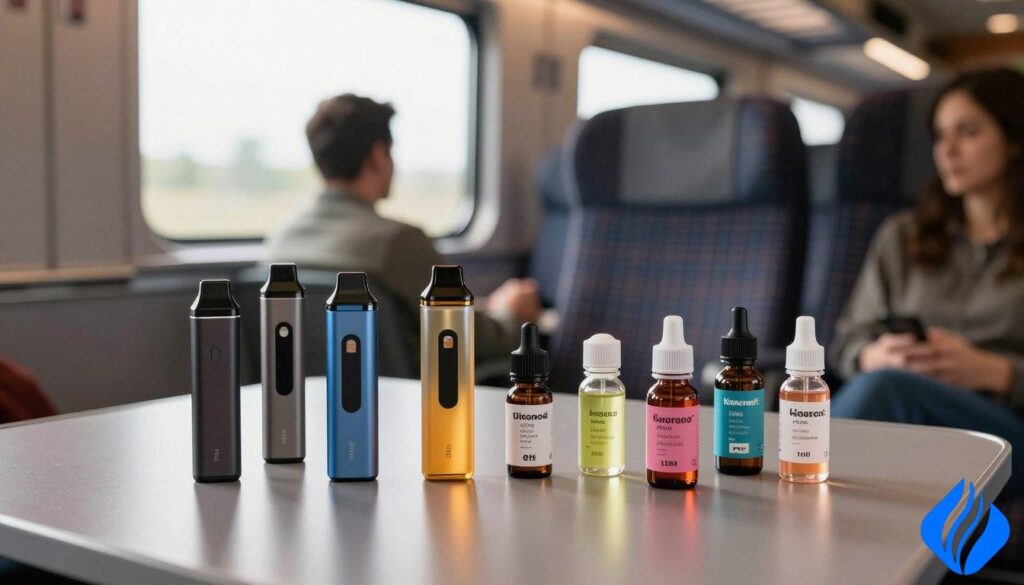
Discreet alternatives permitted onboard
Allowed options: nicotine gum, nicotine lozenges, and nicotine patches. These are effective and quiet.
Keep use discreet. Pack wrappers or a small disposal bag to respect other passengers.
Planning around schedules
Identify longer station stops on your trip. Listen for crew announcements and do not assume every stop allows a break.
If unsure, call amtrak or ask staff before you board. Crew will confirm whether a short step-off is permitted.
Comfort tips for long rides
Use paced breathing, drink water, and have light snacks to reduce cravings. Move when safe; short walks through the car help.
Manage triggers such as café smells or idle time with a distraction—reading, podcasts, or simple stretches.
Packing strategy: keep permitted options in carry-on for quick access during delays. This helps make journey time manageable without breaking rules.
Nicotine is an addictive chemical. Use products responsibly and keep them away from minors.
Travel-friendly vape guidance for after your Amtrak journey
Post-trip buying decisions should rest on clear technical details and hands-on performance notes. We present compact guidance for comparing disposables after travel, focusing on safety, runtime, and flavor life.
Core specs checklist
- Battery (mAh): 500–1500 mAh typical; higher mAh = longer runtime.
- E-liquid (ml): 2–20 ml affects longevity; puffs vary by draw length.
- Nicotine: 2% vs 5% nic salt—2% for lighter intake, 5% for stronger throat hit.
- Coil: mesh vs dual mesh—dual mesh often gives steadier flavor.
- Charging: USB-C preferred for safe, faster charging.
Hands-on testing & comparisons
After 5,000 puffs we noted throat hit, vapor, and flavor fade. Geek Bar and Lost Mary held vapor better than the main disposable baseline. Raz served as a tie-breaker for midlife flavor.
| Model | Battery (mAh) | E-liquid (ml) | Puffs/Price | Flavor Consistency |
|---|---|---|---|---|
| Main disposable | 800 | 6 | ~8000/$$ | Good early, fades by 5k |
| Geek Bar | 1000 | 8 | ~10000/$$$ | Stable through 5k |
| Lost Mary | 1200 | 10 | ~12000/$$$$ | Very consistent |
Practical FAQs
- How to know it’s empty: weak vapor, muted flavor, blinking lights, or no draw activation.
- Recharge safely: use USB-C, avoid overnight charging, stop if device heats or shows damage.
- Authenticity: scan the QR on the box and follow the official check at the sokvape website: Disposable Vapes review.
Reminder: regardless of specs, use of devices aboard trains or in stations is prohibited. Plan purchases and use for after the trip and shop responsibly via Disposable Vapes, Hot Sale, RandM, and Bang.
Conclusion
Conclusion
This final note restates the non‑negotiable rule: electronic smoking and traditional smoking are prohibited aboard trains and in stations. Violations lead to federal fines and possible removal at the next stop.
Passengers must follow staff directions. Attempting to be discreet raises complaints, risk of fines, and removal at the next stop.
Marijuana is banned under federal jurisdiction during a train trip. Medical cards do not change that legal detail.
Plan with lawful alternatives: nicotine gum, patches, and scheduling around longer stops. After travel, consult our post‑trip buying checklist for specs, puffs per dollar, flavor consistency, safe USB‑C charging, and QR authenticity checks at sokvape.com.
Nicotine is an addictive chemical.
 English
  German
  Dutch
Dutch  Danish
  Czech
Czech  Italian
  Slovenian
  French
  Hungarian
  Spanish
  Polish