

can you vape through your nose is a question we hear often as new tech like dual mesh coils and smart screens reshape inhalation habits.
We outline what is physically possible and what medical advice supports. ENT UK notes that propylene glycol can dry mucosa and that exhaling via the nostrils has been linked to dryness and occasional nosebleeds. Long‑term nasal harm remains unproven.
Our guide previews hands‑on testing and device specs: battery mAh, ml capacity, nic salt strengths (2%/5%), mesh versus dual mesh, and USB‑C charging. We compare puffs per dollar and flavor stability across RandM Tornado‑style disposables, Geek Bar, and Lost Mary.
We frame primary risks up front: burning, dryness, irritation, and bleeding. We keep a harm‑reduction tone and promise practical safety checks, QR authenticity steps, and a clear FAQ so readers make choices based on solid information.
Key Takeaways
- We separate physical possibility from medical advisability using current, limited evidence.
- Most people mean exhaling via nostrils, not true nasal inhalation—this matters for tissue exposure.
- Main risks: burning, dryness, irritation, and possible nosebleeds; long‑term effects are unclear.
- Device specs and nicotine strength influence how harsh sensations feel.
- Hands‑on testing and spec comparisons will follow, plus a safety checklist and FAQ.
What “vaping through your nose” actually means
“Most people mean exhaling into the nostrils, not true nasal inhalation.”
We define the phrase precisely. In common use, it refers to routing an exhale into the nose (an exhale nose action), rather than drawing aerosol in via the nasal passage.
Physiology is simple. Aerosol usually enters via the mouth, passes the throat, then exits by the mouth or the nose depending on how the user controls their breath.
Inhale vs. exhale: why most people mean exhaling
Closed lips and tongue-to-palate positioning can direct vapor upward on exhale. That routes aerosol into nasal passages briefly. This is a control technique, not a recommended habit.
“Keep it in the mouth for MTL control; optional nasal exhale risks drying the nostrils.”
Mouth-to-lung vs. direct-to-lung and nasal effects
MTL mimics a cigarette-style draw: small puffs, controlled throat hit. It usually limits nasal exposure.
DTL produces bigger, warmer clouds that reach the lungs and can increase nasal irritation on exhale.
- Technique affects irritation: larger volume and higher power raise dryness risk.
- Prior smoking habits shape tolerance and expectations.
We will return to device specs and settings; airflow, nicotine, and power change perceived harshness more than many beginners expect.
Can you vape through your nose safely?
Available evidence does not establish nasal exhale as safe. Research is limited. Experts advise caution.
What ENT experts and early evidence say about nasal exposure risks
“Vaping risks are not fully defined and chemicals can harm the nose; long‑term damage is not proven.”
“Exhaling via the mouth reduces upper airway irritation compared with nasal routing.”
Short-term irritation vs. unknown long-term effects
Short‑term effects are documented. Burning, dryness and mild irritation occur. These symptoms relate to propylene glycol and flavorants.
Long‑term outcomes remain uncertain. Frequency and cumulative time of exposure likely matter.
When nasal exhale is a bad idea for health
Avoid nasal routing if you have:
- Active allergies or chronic rhinitis
- Frequent nosebleeds or recent nasal surgery
- Sinus infections or persistent pain

| Factor | Short‑term effect | Long‑term certainty |
|---|---|---|
| PG/VG exposure | Dryness, mild burning | Unknown |
| High nicotine | Stronger throat hit | Unclear cumulative harm |
| Frequent nasal routing | Increased irritation | Not established |
Why exhaling vape through your nose can burn, dry out, or cause nosebleeds
Nasal routing of aerosol often stings because the lining there is thinner and more sensitive than oral tissue.
Propylene glycol (PG) and the drying effect
PG attracts water. It pulls moisture from mucous membranes when aerosol settles on the nasal lining.
The inside of the nostrils is thin and highly vascular. That makes it prone to cracking and bleeding when dehydrated.
Common symptoms people report
- Dryness and raw feeling inside the nose.
- A burning or stinging sensation that may spread into the throat.
- Altered smell or a persistent foul odor, as reported by William Keeler.
- Random nosebleeds or crusting after repeated exposure.
What to do and when to see a clinician
First steps are conservative. We advise exhaling via the mouth and reducing use. Rest from vaping for several days if symptoms appear.
Use small amounts of petrolatum inside the nostrils to soothe cracked skin. Keep indoor air humidified to limit drying.
“After he stopped nasal exhale, William Keeler reported marked improvement in burning and smell.”
If pain, recurrent bleeding, persistent crusting, or loss of smell continues past a week, see a GP or ENT. Ongoing irritation is a genuine health concern, not a normal phase.
| Cause | Typical short-term effect | When to escalate |
|---|---|---|
| High PG exposure | Dryness, burning | Bleeding or worsening after 7 days |
| Frequent nasal exhale | Crusting, smell change | Persistent smell loss or crusting |
| Dry indoor air | Increased irritation | No improvement with humidification |
Note: Smoke from traditional smoking irritates by combustion products; that difference does not eliminate nasal risks from repeated aerosol exposure.
How to vape and exhale through your nose without wrecking your nostrils
This section gives a concise, practical approach to gentler nasal exhale so tissue stress is limited. Follow a safety-first method and stop if irritation appears.
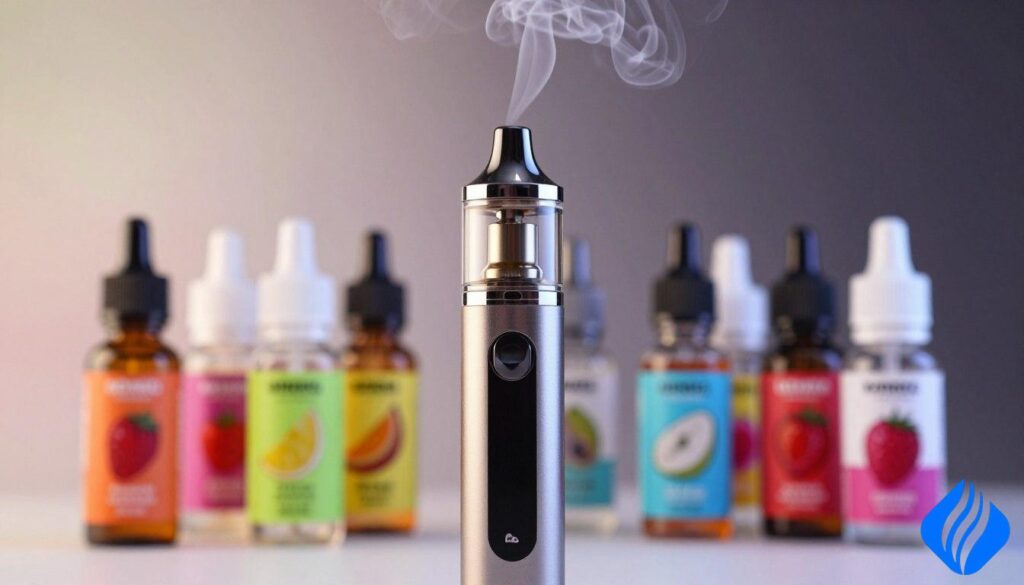
Step-by-step gentler exhale
- Small draw into the mouth. Hold briefly. Keep the vapor in the mouth rather than pulling to the lungs.
- Close lips, tongue lightly up. Use this positioning cue from common smoke control techniques to direct airflow upward.
- Exhale slowly and softly. Aim for a low-velocity release so aerosol drifts into the nose without force.
Reduce harshness: settings and behavior
Choose smaller puffs and lower power. Open airflow slightly to cool vapor. These changes reduce warmth and concentration that hit the nose.
Hydration and comfort tips
Drink water and avoid very dry rooms. Apply a small amount of petrolatum inside nostrils if cracking happens. Stop if the throat or nasal lining feels raw.
Practice framework and safety note
Test once or twice, then reassess symptoms the next morning. If irritation returns, switch to mouth exhale and revisit nicotine strength and power rather than training the tissue.
| Step | Action | Why it helps | Suggested setting |
|---|---|---|---|
| Draw | Short, mouth hold | Limits aerosol volume | MTL style, low power |
| Position | Lips closed, tongue up | Directs flow upward gently | Medium airflow |
| Exhale | Slow, low force | Reduces drying at nostrils | Smaller puffs |
| Recovery | Hydrate, moisturize | Soothes mucosa | Humidified air |
Note: For broader context on exhale patterns, see this vapers and hookah smokers study.
Hands-on testing insights: what it feels like after real use
Hands-on testing notes follow our observed sessions with multiple devices. We present practical, device-agnostic reports so readers can map sensations to settings and habits.
Throat hit: smooth vs. strong and what drives it
We found two main drivers of a smooth versus strong hit: nicotine level and airflow restriction.
At 2% nic salts the hit felt milder. At 5% nicotine the throat registered more snap even with similar puff length.
Tighter airflow amplified perceived harshness. That is because restricted flow raises pressure and concentrates aerosol at the back of the mouth.
Note: A mouth-acceptable hit can still sting when routed upward on exhale.
Vapor production and nasal irritation risk
Higher power and open airflow produced bigger clouds. More aerosol volume increases contact with upper passages.
Our experience showed larger clouds raise the chance of nasal irritation simply by delivering more particulate and PG to sensitive tissue.
Chain draws over short time amplified dryness. Pacing matters; rest between puffs reduced next-session sting.
Flavor evolution after 5000 puffs
After roughly 5000 puffs we observed three common trends: sweetness drop-off, cooling fade, and general muting.
Coils—mesh or dual mesh—aged differently. Dual mesh preserved clarity longer, while simple mesh dulled sooner.
Muted taste prompted longer draws for compensation. That behavior increased aerosol exposure and raised irritation risk.
| Metric | Observed change | Practical effect |
|---|---|---|
| Throat hit | Stronger at 5% nicotine and tight airflow | Harsher feel; may sting on nasal exhale |
| Vapor volume | Larger with high power/open airflow | Higher nasal contact; more dryness |
| Flavor after 5000 puffs | Sweetness and cooling muted | Longer draws; higher exposure |
“Real-use notes guide settings choices, but individual tolerance varies.”
Device and e-liquid specs that matter most for nasal exhale comfort
Device choices and liquid specs shape how harsh an upward exhale feels. Hardware and formulation control heat, droplet size, and drying potential. That affects comfort at the nostrils more than fancy tricks.
Nicotine strength: 2% vs. 5%
Nicotine level is the biggest single driver of nasal harshness. At 5% nic salt the sensation often reads sharper in the nose than at 2%, even with identical puff style.
Higher nicotine raises irritation risk and dependence potential. Choose lower strength to reduce acute sting and manage long‑term risks.
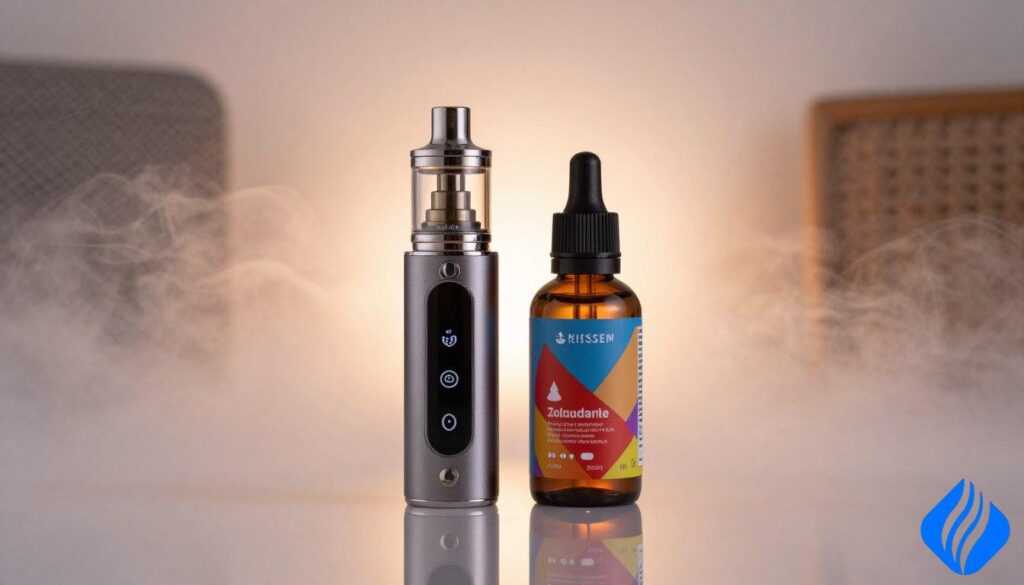
Coils: mesh vs. dual mesh
Mesh coil designs spread heat evenly and give cleaner warm draws. Dual mesh ups surface area and output, improving flavor consistency but increasing aerosol volume.
Denser vapor can feel smooth on the throat yet still dry nasal tissue. Balance coil choice with smaller puffs and pacing.
Battery (mAh) and USB‑C
Stable voltage matters. Higher mAh supports longer, consistent output. USB‑C charging yields steadier power and fewer late‑cycle spikes that make puffs harsher.
E-liquid volume (ml) and realistic lifespan
Larger ml capacity often means higher puff claims, but coil aging and flavor fade cut real life short. A big tank helps only if coil performance holds up.
| Spec | What to look for | Why it matters |
|---|---|---|
| Nicotine | 2% option | Lower nasal harshness |
| Coil | Mesh or dual mesh listed | Flavor vs. aerosol volume tradeoff |
| Battery/Port | High mAh + USB‑C | Stable output, fewer hot puffs |
| E-liquid | Transparent ml and puff estimate | Realistic lifespan planning |
Quick checklist: confirm a 2% nic option, note coil type, prefer USB‑C, and temper expectations on puff counts. No spec removes irritation entirely; technique and pacing remain essential.
Product spotlight with core technical data: RandM Tornado-style disposables
We profile the Tornado‑style disposable as a high‑capacity, rechargeable format aimed at longer, steadier sessions rather than short single‑use units.
Typical spec profile to verify on the listing
- Battery capacity: commonly ~600–1000 mAh — higher mAh helps maintain steady output late in the charge.
- E‑liquid volume: commonly ~12–20 ml — larger tanks extend realistic puff ranges.
- Nicotine strength: 2% or 5% nic salt options depending on region and flavor.
- Coil type: mesh or dual mesh — dual mesh often yields stronger vapor and slower flavor fade.
- Charging: USB‑C recharging for faster, more consistent charging cycles.
Flavor consistency and real‑world experience
Mesh and dual mesh aim to keep heat stable and preserve flavor longer. Expect sweetness and cooling to taper after heavy use. A well‑spec’d Tornado‑style device will slow that decline but will not prevent it entirely.
Stable voltage and coil design reduce harsh spikes. Still, high vapor output can irritate nasal passages if large draws and tight practice are common.
How to shop and where to compare
Look for explicit ml and mAh details on product pages. Avoid listings that omit coil type or nicotine options.
| Spec | Typical range | Practical note |
|---|---|---|
| Battery (mAh) | 600–1000 | Higher mAh = steadier vapor late in charge |
| E‑liquid (ml) | 12–20 | Larger volume supports longer realistic puff counts |
| Nicotine | 2% / 5% nic salt | Lower strength often reduces acute harshness |
| Coil | Mesh / Dual mesh | Dual mesh = stronger output, slower mute |
| Charging | USB‑C | Faster, more stable charging |
Quick tips: Confirm coil type and nicotine strength before purchase. For browsing, see the Disposable Vapes and Hot Sale categories, and compare RandM and Bang hubs for alternate Tornado‑style options.
Disposable Vapes · Hot Sale · RandM · Bang
Puffs per dollar and flavor consistency: comparison vs Geek Bar, Lost Mary, and Raz
We tested common disposables to show honest puffs‑per‑dollar math and how flavor changes after heavy use. Below is a clear method and concise brand comparisons based on hands‑on runs and 5,000‑puff observations.
How to calculate “puffs per dollar” honestly
Formula: device price ÷ realistic puff range. Use observed fade points, not headline claims.
Estimate realistic range by tracking flavor drop, weaker vapor, and recharge frequency over time.
RandM-style vs Geek Bar
RandM held sweetness longer; Geek Bar’s cooling faded earlier. At the same nicotine level, RandM required fewer compensatory draws late in life.
RandM-style vs Lost Mary
Lost Mary blurred layered blends into a generic sweet after extended use. RandM preserved blend clarity better under similar puff loads.
RandM-style vs Raz
Raz showed earlier muting and occasional harsh, burnt notes as coils aged. That effect may raise nasal irritation risk if users take larger draws to chase taste.
Hands-on takeaways after 5,000 puffs
Across brands: sweetness drops first, cooling fades next, then overall muting. Devices with stable coil/battery output slow decline.
Advice: pick the unit that keeps flavor at your preferred nicotine and limits the need for longer draws—this delivers better value and comfort.
Practical ownership and safety: empty detection, safe recharging, authenticity checks
Simple checks and good charging habits keep devices predictable and reduce sudden harsh puffs. We offer concise tips and clear advice so ownership stays safe and output remains steady.
How to know if it’s empty
Stop use at the first sign of a sharp flavor drop or noticeably weaker vapor. Those are the most reliable signals.
Blinking LEDs vary by model. A hot, scratchy taste or sudden dry-hit is a clear stop sign. Pause and recharge or retire the unit.
How to recharge safely with USB‑C
Use a reputable USB power source and charge on a non‑flammable surface. Check the device periodically for unusual heat.
Avoid fast chargers aimed at phones; steady charging is preferable to reduce output spikes that may produce harsher puffs and strain the lungs.
Is it authentic?
Verify a device via its QR code when available. Follow the device verification guide on sokvape by visiting this device verification guide for step‑by‑step instructions and support.
Nicotine warning & escalation guidance
Nicotine is an addictive chemical. Products containing nicotine are intended for adults of legal age only (21+ in the U.S.). Store away from children and pets.
If nasal burning, bleeding, or persistent irritation continues despite switching to mouth exhale and short draws, seek medical care. Ongoing symptoms are a health concern, not a normal phase.
| Issue | What to watch for | Action |
|---|---|---|
| Empty | Flavor drop, weak vapor | Stop use, recharge or replace |
| Overheating | Device hot to touch | Unplug, allow to cool, do not resume if hot |
| Authentication | No QR or mismatch | Check seller, use sokvape guidance |
Conclusion
To finish, we restate the main trade-offs between comfort and exposure.
Yes, aerosol may be routed out of the nose, but that choice commonly raises dryness and burning compared with mouth exhale. The chain is simple: aerosol humectants + warm vapor + repeated exposure → dehydration of nasal tissue, which often shows symptoms first.
If nasal exhale is insisted upon, follow controlled steps: take small puffs, use lower power, exhale slowly and gently, and limit session pace. Treat any stinging or bleeding as a stop signal, not something to push with more practice.
Our hands-on testing after ~5,000 puffs shows flavor fade can prompt longer draws. Longer draws raise aerosol volume and worsen nasal irritation. Choosing devices with stable output and clear specs (see Disposable Vapes, Hot Sale, RandM, Bang) helps reduce that chain reaction.
For adults switching from cigarettes or smoking, harm reduction means lowering overall exposure and planning an exit from nicotine over time. If nasal symptoms persist or worsen, stop nasal routing and seek medical advice—protecting airway health is the priority.
 English
  German
  Dutch
Dutch  Danish
  Czech
Czech  Italian
  Slovenian
  French
  Hungarian
  Spanish
  Polish