

Direct answer: Leaks usually stem from pressure shifts, overfilling, worn seals, or flooding into the airflow, while burnt hits come when a coil’s wick overheats and loses saturation. We explain quick fixes and when coil replacement is required.
We are SOKVAPE consultants. We know the frustration of harsh draws and gurgling tanks. Pressure, priming, and wattage are common culprits. A dry wick scorches if power exceeds its range or if priming was skipped. Low e-liquid and chain puffs speed the problem.
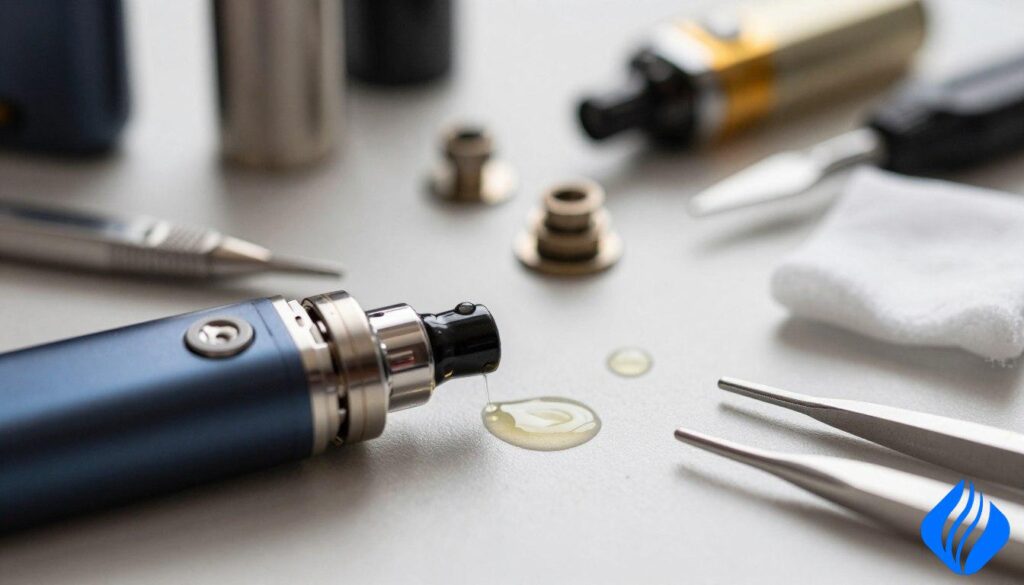
In this guide, we give a fast diagnosis path: symptom, likely cause, stop-doing-this-now fixes, and when to replace coils or pods. We use terms like Coil Priming, Draw-activation, and PG/VG ratio while keeping steps simple and safe. We’ll also flag battery safety and US legal notes later.
Key Takeaways
- Leaks come from pressure, overfill, worn seals, or tank flooding into airflow.
- Burnt taste often means the wick was dry or overheated; replacement may be needed.
- Prime new coils, avoid chain puffs, and respect coil wattage ranges.
- We provide quick symptom-to-fix steps for pods, tanks, and disposables.
- Safety first: follow battery rules and current US shipping laws.
Fast diagnosis: what a burnt taste and a leaking vape are telling you
Start with a fast check that separates dry hits from flooding in your device. We keep this short so you pick the right fix path and avoid worsening the problem.
What “burnt hits” usually mean: overheated wick and scorched cotton
In hardware terms, a burnt taste comes from the coil heating dry cotton instead of liquid. The result is a harsh, acrid draw that dulls flavor quickly.
Note: A scorched wick often holds the odor. If re-saturation fails, replace the coil.
Why leaks and burnt taste often happen together (flooding vs. dry hits)
Flooding sends liquid into the airflow. That causes gurgles and weak vapor. Users often raise power or take longer puffs to compensate.
Those harder draws can outpace wicking. The wick then runs dry and scorches. You may see both leaking and a burnt edge in one session.
Quick check before you troubleshoot: e-liquid level, airflow, and coil age
Confirm the e-liquid level sits above the wicking ports. Set airflow to the manufacturer’s recommendation. Check coil age: worn coils wick poorly after one to two weeks of heavy use.
| Symptom | Likely cause | Quick action |
|---|---|---|
| Harsh, acrid draw | Dry wick or scorched cotton | Reduce power, re-saturate, replace coil if smell persists |
| Gurgling or spitback | Flooded coil or overfill | Clear excess liquid, adjust level, check seals |
| Weak vapor and dark liquid | Wicking blocked or coil past prime | Swap coil, note last juice change |
| Both leak and bad taste | Flooding then aggressive pulls | Lower draw strength, restore correct level, inspect wick |
Before disassembly, document what changed last time: new juice, pod swap, or travel. That often reveals the root cause and saves time.
Common causes of burnt taste, dry hits, and harsh puffs
Most burnt hits trace back to basic mismatches between coil, liquid, and user habits. We break the top reasons into clear causes with a short fix for each.

Not letting e-liquid soak: Coil Priming basics for new installs
Cause: Unprimed cotton and dry wick.
Fix: Drip several drops on exposed cotton, fill, wait 5–10 minutes, then take unpowered primer puffs. Start at low wattage and increase slowly.
Running low on e-liquid
Cause: Tank looks full but the wick isn’t contacting liquid.
Fix: Top up before level drops, keep device upright, and swap the coil if flavor fades.
Chain vaping and rapid puffs
Cause: Back-to-back puffs outpace capillary feed.
Fix: Pause between draws. Let the wick re-saturate; this stops dry hits quickly.
Too much power
Cause: Exceeding the coil’s wattage range vaporizes liquid faster than it can return.
Fix: Respect the recommended wattage. Lower power reduces harsh hits and extends coil life.
Wrong PG/VG ratio
Cause: Thick, high-VG juice clogs small pod wicks.
Fix: Match vape juice to hardware: 50/50 or nic salts for pods; high-VG for sub-ohm rigs.
Sweeteners and residue buildup
Cause: Sugars caramelize on the cotton and slow wicking.
Fix: Use cleaner liquids, rotate coils every 1–2 weeks, and consider mesh coils for better quality flavor.
For persistent issues or coil failure, consult our guide on coil replacement and diagnostics: why my vape tastes burnt.
Why your vape leaks: the most common leak paths and user errors
Leaks follow simple paths: liquid escapes at fill ports, through the chimney or via failed O-rings and pod gaskets. Overfilling and pressure changes force juice into the airflow and create flooding.
Overfilling and pressure changes
Warm pockets, altitude shifts, or aggressive closing can push liquid up the chimney. That sends juice into airflow channels and causes gurgling or spitback.
Worn seals and loose parts
Check for cross-threading, compressed O-rings, and hairline cracks in pods. Loose bases or poor fitment leak when the device is tilted or squeezed.
Condensation vs. true leaking
Light moisture under a pod is normal. Pooling, repeated gurgles, or liquid in the mouthpiece signals a real leak.
Flooded coil symptoms and quick pro-tip
- Gurgling, spitback, weak vapor, and wet hits.
- Pro-tip: hold a paper towel under the airflow, give a short, firm blow through the mouthpiece to clear excess liquid. Wipe seals and let the device sit upright for 5–10 minutes.
Safety note: if liquid reaches electrical contacts, stop using the device, dry completely, and inspect seals before firing.
how to make a burnt vape taste better
Pause and breathe: stop firing immediately and let the coil cool. Avoid taking “one more puff” that finishes scorching the cotton.
Stop the damage
Power down and set the device upright. Wait a few minutes so residual heat fades. This prevents further harm to the wick.
Re-saturate the wick
Fill the tank above the wicking ports. Wait 5–10 minutes for capillary action to work. For draw-activated devices, take several unpowered primer pulls to draw liquid into the coil.
Lower wattage, then work up
Reduce power within the coil’s recommended range. Try short pulls and raise wattage slowly until flavor is normal. This avoids new dry hits.
Clear flooding: Pro-tip
- Hold a paper towel under the mouthpiece.
- Give a short, firm blow through the device to expel excess liquid.
Caution: don’t force long blasts that push juice into contacts. If liquid reached the base, dry fully before reuse.
When replacement is the fix
If the acrid smell or burnt hit persists after these steps, the cotton is likely scorched. Replace the coil, then correct fill level and seals to prevent repeat failure.
Step-by-step troubleshooting: symptoms vs. fixes (pods, tanks, and disposables)
Use these rapid checks to match the symptom with the right remedy for your device.
Quick-fix sequence for a unit tasting burnt
- Stop firing and let it cool for one to two minutes.
- Check e-liquid level and top up if low; wait 5–10 minutes for the wick to re-saturate.
- Lower power or wattage and take short primer puffs. If flavor remains acrid, replace the coil.
Quick-fix sequence for leaking or gurgling
- Clear the airflow path: blow short, firm bursts into the mouthpiece over a towel.
- Reseat seals and tighten bases; inspect O-rings and parts for cracks.
- Adjust fill level and keep the device upright; if juice reached contacts, stop use and dry fully.
| Symptom | Likely cause | Reliable fix |
|---|---|---|
| Burnt or acrid flavor | Dry wick or scorched coil | Cool down, re-saturate, drop wattage, replace coil |
| Gurgling / spitback | Flooded coil or overfill | Clear excess liquid, wipe seals, let sit upright |
| Leaking from airflow | Worn O-rings or loose base | Replace seals, tighten parts, avoid overfilling |
| Weak vapor | Blocked wicking or old coil | Swap coil, check juice viscosity |
Disposable reality check and hacks
Disposable vapes can regain flavor after resting upright and gentler puffs. Clean the mouthpiece and pause between draws.
Reality: if a burnt disposable does not improve after these steps, the coil is likely damaged and the unit must be retired. If juice reaches electronics, stop use until fully cleaned and dried for safety.
Prevent burnt hits and leaks with better setup habits
Good habits at setup and use cut leaks and scorched hits before they start. We focus on repeatable steps that protect coils and keep e-liquid where it belongs.
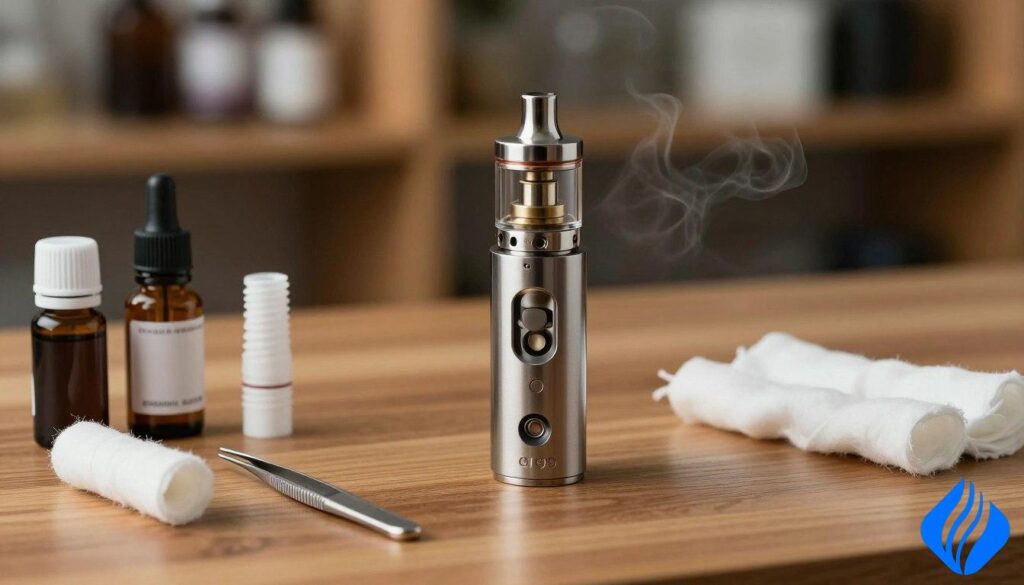
Proper Coil Priming
Drop a few drops directly onto the wicking ports, assemble the unit, then fill and wait 5–10 minutes. Take a couple of gentle primer puffs without power if your device supports them. This stabilizes flavor and extends coil life.
Puff technique and pacing
Take gentler draws and pause between puffs. Short breaks let the wick re-saturate and reduce spitback. Avoid chain vaping, which outpaces capillary feed and causes dry hits.
Match liquid to hardware
Choose the right viscosity: 50/50 or nic salts for small pods, higher-VG for sub-ohm setups. Proper vape juice choice prevents clogging and uneven wicking.
Mesh coils and after charging
Mesh coils give larger surface area and steadier heating, improving wicking and reducing hot spots. After a full battery charge, start with a few gentle pulls. Devices can feel stronger post-charge; this avoids harsh hits and sudden power spikes.
| Habit | Why it helps | Quick action |
|---|---|---|
| Priming | Protects cotton and prevents dry starts | 3–5 drops, fill, wait 5–10 min |
| Pacing puffs | Allows wick recovery and stops flooding | Pause 10–20 seconds between draws |
| Right liquid | Matches coil feed rate and port size | Use 50/50 for pods, high-VG for sub-ohm |
| Gentle post-charge pulls | Prevents surge-like harsh hits | Start low watt, short puffs |
Note: For persistent problems or advanced diagnostics, see our practical guide and tips to fix burnt hits.
Safety Warning and Legal Disclaimer for US readers
Before you keep using any device, check batteries and electronics for visible harm. If you see torn wraps, dents, overheating, unusual odor, or liquid near the power section, stop and replace parts rather than testing them.
Battery safety checklist and charging best practices
Lithium-ion checklist: stop use for torn wraps, dents, heat, odor, or liquid intrusion. Replace damaged cells and seals.
Charging tips: use trusted chargers and cables, don’t charge unattended, avoid soft surfaces, and let the battery cool if warm.
Pro-tip: after a full charge, take gentler puffs and avoid pushing max power. Some devices deliver stronger output post-charge.
Travel, shipping, and TSA/FAA notes
Carry devices and spare batteries in carry-on luggage where required. Protect spare cells with a dedicated battery case to prevent short circuits. Rules change often—check current carrier policies before packing or mailing nicotine products.
Legal disclaimer and PACT Act awareness
Vaping laws vary by state and locality. Follow 2026 local rules for possession, age limits, and restricted areas. Be aware the PACT Act affects online sales and shipping of nicotine items and may change availability and delivery options.
| Issue | Risk | Recommended action |
|---|---|---|
| Torn battery wrap | Short circuit, fire risk | Stop use, replace cell |
| Liquid in electronics | Corrosion, malfunction | Dry fully, inspect seals, don’t fire |
| Unattended charging | Overheat, thermal event | Charge on hard surface, supervise |
| Traveling with spares | Carrier rule violations | Carry-on, use battery case, verify rules |
For device maintenance and practical prep, see our guide on maintaining the RandM Tornado 9000. Check official TSA/FAA pages and local news for the latest compliance updates.
Conclusion
Here’s a short, practical summary so you can act quickly and avoid repeat problems.
Leaks usually tie back to flooding, pressure shifts, or worn seals. A harsh taste often means the wick lacked liquid or was overheated. Stop, re-saturate, lower power, and wait before resuming normal pulls.
If the acrid flavor stays after those steps, the cotton is likely scorched and the fix is replacing the coil or retiring the pod or disposable. Prevention wins: priming coils, matching PG/VG, and pacing draws cuts failures and saves money.
Need parts or pairing advice? Check t. for compatible coils, pods, and juices.
FAQ
Q: Why does my device taste burnt even with a full tank?
A: Residue, clogged wicking, too-high wattage, or thick liquid can stop capillary feed.
Q: Can you fix a burnt coil or must it be replaced?
A: Brief dryness can be fixed; persistent acrid smell means replace it.
Q: Why is my unit leaking from the airflow?
A: Overfill, pressure change, worn O-rings, or a flooded coil are common causes.
Q: Why does it taste bad after charging?
A: Post-charge output can feel stronger; take gentler pulls and check wattage.
Q: What can I do if a disposable tastes burnt?
A: Let it rest upright, try short gentle draws and clean the mouthpiece; if unchanged, stop using it.
 English
  German
  Dutch
Dutch  Danish
  Czech
Czech  Italian
  Slovenian
  French
  Hungarian
  Spanish
  Polish