

Short answer: We do not recommend putting plain water into a vape device because it can produce scalding hot droplets or steam and may damage hardware, with no real benefit for hydration or wellness.
We understand the concern that plain H2O seems safer than typical e-liquids. The inhalation outcome depends on aerosol physics, coil temperature, and device design—not the ingredient’s reputation.
Definitions: “Vaping water” refers to filling a device with plain water. A “water-based e-liquid” is a formulated blend that still uses common bases and additives.
Expect minimal clouds, muted taste, and a higher chance of uncomfortable heat compared with standard e-liquid use. From a harm-reduction view, most hardware is not built for this idea, and safer alternatives exist for flavor, nicotine reduction, or tobacco cessation.
We will summarize current medical reviews, highlight unknowns about long-term health outcomes, and outline practical, safety-first choices for adult readers in the United States.
Key Takeaways
- Do not use plain water in vape devices: it risks hot droplets and device damage.
- Plain H2O gives little flavor, small clouds, and more heat than standard blends.
- Water-based e-liquid differs from simply filling a tank with water.
- Harm-reduction and safer alternatives exist for nicotine or smoking goals.
- Medical reviews note device design and temperature drive inhalation risks.
Can you vape water safely in a regular vape device?
Short answer for 2026: Putting plain water into a standard device risks spitback, scalding, and coil damage and is not recommended as a safety strategy. We emphasize harm reduction: reducing nicotine strength and adjusting device settings is safer than substituting unformulated liquids.
What actually comes out: steam vs. vapor
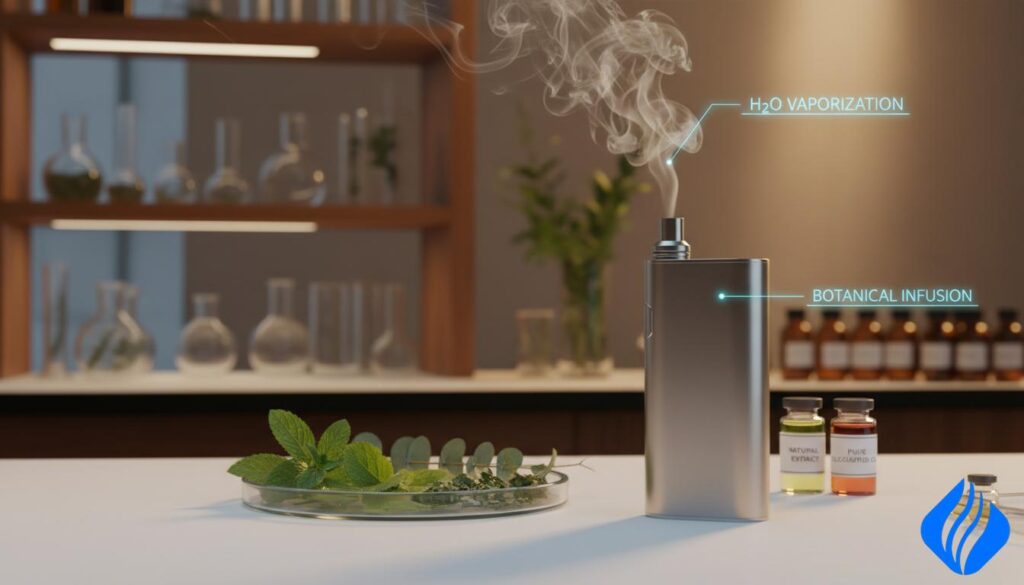
Most e‑liquid “vapor” is an aerosol of tiny PG/VG droplets carrying flavor and nicotine. Heated plain water becomes steam that condenses quickly, so clouds are weak and taste is muted.
The inhale often feels hot and wet, and the exhale can be thin or nearly invisible compared with high‑VG clouds.
Boiling points and device temperatures
Water boils at 212°F (100°C). Many coils run well above that, so droplets that form on a hot coil can spit into the mouth and throat and cause burns.
How standard e‑liquids work
Propylene glycol and vegetable glycerin provide the right viscosity for wicking and steady aerosol formation. They carry nicotine and flavoring predictably; plain H2O lacks those carrier properties and upsets device performance.
What reviews and research say
Medical reviews note short/medium‑term risk is lower than tobacco smoking for some outcomes, but long‑term effects remain unclear. EVALI tied to vitamin E acetate in illicit THC cartridges is a reminder that unknown additives pose high risk.
Practical note: Use tested, purpose‑made e‑liquids or certified water‑based blends (e.g., AQ30 style) and prioritize device settings and reduced nicotine for harm reduction.
What happens if you try vaping water anyway?
Filling a tank with plain liquid often leads to harsh steam, gurgling, and poor performance rather than usable vapor.
First, the most common immediate outcome is spitback and hot droplets. A hot coil meeting thin liquid produces popping and sharp, wet hits that may burn lips or the upper throat.
Second, visible output is disappointing. Steam condenses quickly in the mouthpiece, so clouds are thin and flavor is muted compared with standard e‑liquids designed for aerosol.
- Gurgling, flooding, and inconsistent heating as liquid soaks the wick.
- Sudden pops when boiling droplets contact the coil.
- Leaking through seals and faster corrosion of metal parts.
Device failure modes include ruined coils, shortened lifespan for seals, and possible battery contact with moisture. Repeated exposure raises the overall risk of hardware damage.
- Stop using the unit immediately.
- Disassemble, dry parts, and replace the coil.
- Check the battery compartment for moisture before powering on.
Health note: If coughing, chest tightness, dizziness, or persistent throat irritation follows this experiment, seek medical advice—especially for people with asthma. Remember that vaping water will not deliver nicotine, so cravings may prompt repeat inhales and increase burn risk.
Why most vapes and vape tanks aren’t designed for water
Tank seals, coil wicking, and battery contacts all rely on predictable liquid viscosity. A thinner liquid alters wick flow and heat transfer, which breaks intended device behavior.

Leak and corrosion risk
Thinner fluids pass through seals more easily than PG/VG blends. That increases leaks, accelerates metal corrosion, and shortens coil life.
Moisture that reaches the battery compartment creates a serious risk. Corroded contacts lead to shorts, unpredictable heating, and device failure. Medical News Today (2023) highlights low viscosity as a key cause of leaks in standard systems.
Hardware Synergy
Hardware Synergy matters: premium ceramic coils and precise voltage control support steadier heating for intended e-liquid formulations. These choices reduce degradation and improve vapor stability for compatible liquids.
Important boundary: better hardware is not permission to fill a tank with plain clear liquid. The aerosol physics and leak dynamics still make that practice unsafe.
| Component | Effect of thin liquid | Best practice |
|---|---|---|
| Coil | Shorter life, pop/steam | Use specified e‑liquid |
| Seal/Gasket | Bypass leaks | Match viscosity to tank |
| Battery contacts | Corrosion, shorts | Keep dry; dry fully after cleaning |
Next, we outline safer alternatives based on your goal: less irritation, flavor, or legal concentrates.
Better alternatives to vaping water (and what to use instead)
For hydration or gentler draws, altering e‑liquid composition is safer than inhaling plain clear liquid. We focus on practical, evidence‑based choices that reduce irritation and hardware risk.
Water-based e-liquid explained
AQ30-style blends include roughly 30% water but still rely on propylene glycol and vegetable glycerin plus flavorings. That lowers viscosity and often requires a lower temperature setting.
Important: these blends are not pure steam and they keep many of the same aerosol risks as standard e‑liquids.
Hydration claims vs reality
Lower PG/VG content may reduce a dry mouth sensation for some people, but it does not make inhalation a hydration strategy for the body.
Drink fluids to hydrate; modify e‑liquid if throat comfort is the goal.
Flavor and formulation
Many flavorings dissolve better in PG/VG than in thin mixtures. Shifting to higher PG or using flavor concentrates formulated for lower viscosity preserves taste without overheating.
Nicotine harm reduction
Step down nicotine concentration, avoid chain draws, and use consistent temperature control to reduce harshness and byproduct formation. Disposable vapes often limit control, so choose quality products.
THC/CBD: ECS, onset, and dosing
Cannabinoids act on the Endocannabinoid System (CB1/CB2). Inhalation gives higher bioavailability and faster onset than oral routes, but dose control remains critical.
Metabolic half‑life of cannabinoids and metabolites can extend impairment beyond the felt peak; err on the side of conservative dosing and avoid driving after use.
Decarboxylation and terpenes: cannabinoids become more active after decarboxylation (THCA → THC). Terpenes are heat‑sensitive; precise temperature control reduces degradation and burnt oil byproducts.
For concentrates, we recommend high‑quality 510‑thread batteries and specialized oil cartridges designed for oils, not standard e‑liquid tanks.
| Route | Onset | Duration (typical) |
|---|---|---|
| Inhalation (vaping oils) | Within minutes | 1–4 hours |
| Edibles (oral) | 30–120 minutes | 4–12+ hours |
| Sublingual (tinctures) | 15–45 minutes | 2–6 hours |
Bottom line: If the goal is less irritation, better flavor, or safer cannabis use, choose purpose‑made e‑liquids or verified concentrates and prioritize device compatibility and lower temperature operation.
Conclusion
Conclusion
In short, filling a device with plain water offers little benefit and introduces clear harms to the mouth and tank. Medical News Today (2023) notes this idea brings more risks than rewards and that long‑term effects of vaping remain under study.
Practical recap: favor purpose‑made e-liquid choices, lower power settings, and reputable hardware. Avoid unknown cartridges, stop use if leaking, and replace coils regularly.
Concentrates need purpose‑built cartridges and high‑quality 510‑thread batteries; see our liquid compatibility guide for details.
Safety & Legal Disclaimer: this is educational material, not medical advice. If chest pain, shortness of breath, or severe symptoms follow use, seek care. Nicotine is addictive and harms developing brains. If a pet is exposed or ingests nicotine products, seek immediate veterinary care. For botanicals such as Kratom or Blue Lotus, legal status varies by state/country and quality and inhalation safety are uncertain.
 English
  German
  Dutch
Dutch  Danish
  Czech
Czech  Italian
  Slovenian
  French
  Hungarian
  Spanish
  Polish