

Fact: New Dual Mesh Coil devices and smart screens change delivery, but primary concern remains indoor air quality and bystander exposure.
We frame the core question as an indoor air and household exposure issue. E-cigarettes can emit an aerosol that carries nicotine and other chemicals. No noticeable smell does not equal no risk.
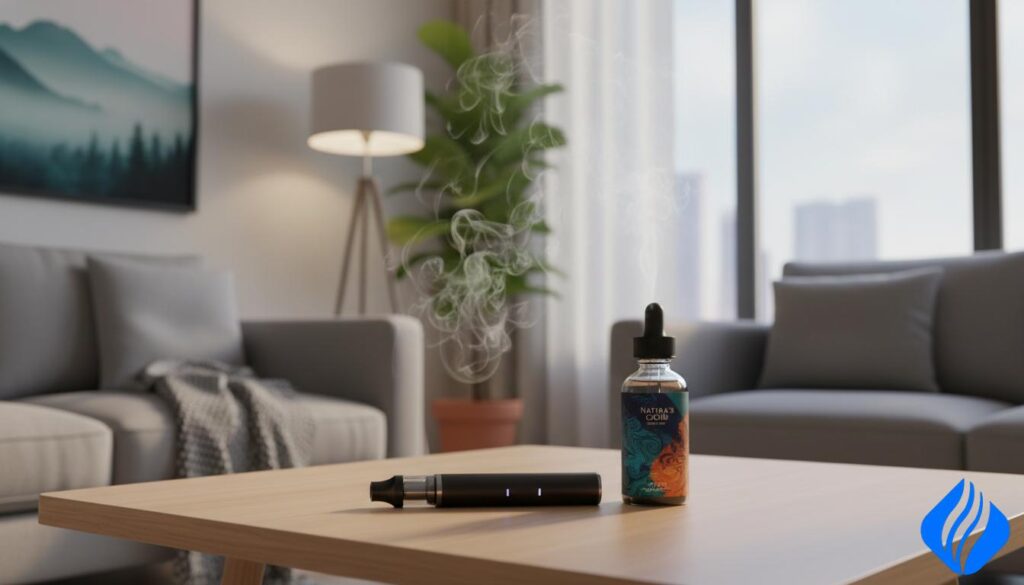
This guide targets adults 21+ and gives clear harm-reduction steps for homes with kids, pregnant people, or pets. We note that aerosol is not harmless and that secondhand exposure can deliver nicotine and toxic compounds to other people.
WARNING: This product contains nicotine. Nicotine is an addictive chemical.
Later sections explain what is in aerosol, how long particles linger, and how we assess devices by specs like mAh, coil type, puffs per dollar, and flavor consistency. For reliable products and supply chain details, see a trusted source at sokvape.
Key Takeaways
- E-cigarette aerosol is not harmless; indoor use affects air quality.
- Secondhand exposure can deliver nicotine and other chemicals to bystanders.
- Special caution advised around children, pregnant people, and pets.
- We evaluate devices by battery, coil type, nic strength, and puffs per dollar.
- Harm reduction options include ventilation, designated outdoor use, and low-nicotine choices.
What “Vaping in the House” Means for Indoor Air in the U.S. Today
Using electronic cigarettes inside alters indoor air and can spread aerosol beyond a single room. We define this operationally: indoor use that lets visible or invisible aerosol build in shared space and travel through HVAC and open doorways.
Secondhand exposure describes what people breathe during and shortly after use. Thirdhand exposure refers to residue on surfaces—fabrics, furniture, carpets, curtains, clothing—that later transfers by touch, dust, or small hand-to-mouth contact.
The Surgeon General and disease control prevention messaging note aerosol is not just water vapor. Aerosol can carry chemicals and reactive compounds. Visibility drops faster than concentration, so air may still contain particles.
How this compares with smoke
Cigarettes deliver smoke via combustion; electronic devices deliver aerosol via heating. Both create indoor contamination pathways that justify similar household controls.
- Risk factors: room size, ventilation, frequency, device output.
- Practical takeaway: treat indoor vaping like indoor smoking when protecting bystanders.
is it bad to vape in the house for Your Household’s Health?
Indoor aerosol release increases bystander contact with nicotine and tiny particles. We answer directly: indoor use can be harmful because it raises avoidable exposure for other people, which raises clear health risks.
What bystanders may inhale
Common constituents: nicotine, ultrafine particles, VOCs (benzene), diacetyl, and heavy metals such as nickel and lead. Concentrations vary by device and liquid, but the American Cancer Society lists these substances as present in secondhand aerosol.
Respiratory and cardiovascular concerns
The American Heart Association notes that ultrafine particles may enter lungs and bloodstream. That pathway links aerosol exposure with possible respiratory and cardiovascular effects. Recent research in homes found higher rates of shortness of breath and other respiratory symptoms after household exposure.
Symptoms and when to step outside
- Throat, nose, or eye irritation
- Cough or headache
- Shortness of breath or bronchitis‑like symptoms
These signs can indicate sensitivity or elevated indoor load. We advise stepping outside when symptoms appear and minimizing repeat exposure.
| Constituent | Source | Possible impact |
|---|---|---|
| Nicotine | E‑liquid | Addiction; developing brain effects in youth |
| Ultrafine particles | Aerosol plume | Lung irritation; enter bloodstream |
| VOCs & diacetyl | Flavoring, heating | Respiratory injury; long‑term cancer concerns in other contexts |
| Metals | Device hardware | Toxic organ effects with repeated exposure |
Bottom line: Major health organizations recommend caution. Long‑term impacts may take years to fully map, which supports a precautionary approach indoors.
What’s in Vape Aerosol and Why It Matters Indoors
Indoor aerosol often carries more than flavor; it brings ultrafine particles and heated organic compounds.
Ultrafine particles can reach deep lung air sacs (alveoli). From there, particles may also cross into circulation. That pathway explains why small particles matter for sensitive bystanders.
Carbonyls and aldehydes
Carbonyls are reactive organic compounds formed when liquids heat. Common examples include formaldehyde, acetaldehyde, and acrolein. These compounds irritate airways and raise indoor exposure concerns.
Flavoring chemicals and lung risk
Some flavorings contain diacetyl. Long occupational studies link diacetyl with bronchiolitis obliterans, a severe lung condition. That context explains why flavor chemistry matters for home use.
Metals and device variability
Trace metals — nickel, lead, tin — have been reported in aerosol. Emission levels change by coil material, temperature control, and manufacturing quality. Device variability alters sources and exposure.
PG/VG carriers
Propylene glycol and vegetable glycerin act as carriers. They may also produce airway irritation, especially when air exchange is poor. Better ventilation reduces indoor load.
| Component | Source | Why it matters indoors |
|---|---|---|
| Ultrafine particles | Aerosol plume | Reach alveoli; may affect lungs and circulation |
| Carbonyls | Heating e-liquid | Formaldehyde, acetaldehyde: airway irritation |
| Flavor chemicals | Added ingredients | Diacetyl links to bronchiolitis obliterans risk |
| Metals | Device hardware | Nickel, lead, tin vary by build quality |
How Long Does Vape Aerosol Stay in the Air and on Surfaces?
Even when visible plumes fade, measurable contaminants can persist and move through shared rooms. The American Thoracic Society notes harmful chemicals may remain airborne long after use stops. Practical meaning: air quality can stay degraded for minutes or hours, depending on ventilation and room size.

Particle persistence and travel distance
A 2021 study found exhaled fine particles can raise concentrations more than 3.6 meters from the source. Open-plan layouts let aerosols cross living areas quickly. Small rooms with poor flow trap contaminants faster.
Why levels build up over time
Repeated sessions raise background loads. Each session adds ultrafine particles and volatile compounds. Over time, cumulative load increases exposure for anyone sharing space, even when plumes seem thin.
Thirdhand residue on clothes and surfaces
Nicotine and other residues deposit on fabrics, carpets, toys, and upholstery. Dust re-suspension and hand contact create an ongoing pathway back into the indoor environment. Regular cleaning, targeted ventilation, and reducing indoor use cut both secondhand and thirdhand exposure.
- Distance: keep activity far from shared seating and sleeping areas.
- Room size & frequency: larger rooms and fewer sessions lower steady-state levels.
- Cleaning: wash textiles and wipe high-touch surfaces to remove nicotine residues.
How to Reduce Harm If You Vape Indoors (Practical Precautions)
Indoor sessions require a clear plan: location, airflow, rules, and hygiene that protect others.
Choose a least‑risky spot
Select a single, well‑ventilated room away from bedrooms, kitchens, and shared living areas. Keep distance from seating and sleeping zones. This reduces bystander exposure and limits residue across a home environment.
Ventilation that helps
Open windows for cross flow and run exhaust fans so air moves outdoors. Aim for airflow direction that carries contaminants outside rather than toward hallways or vents.
House rules and hygiene
Treat use like smoking. Ban sessions in cars and small rooms. Wash hands, change clothes before holding children, and wipe high‑touch surfaces to cut thirdhand residue.
When stepping outside is safer
Choose outdoor use when young children are present, guests visit, anyone has asthma, or ventilation is poor. Device output varies; some products may also make plumes more visible, but sight alone should not guide decisions.
| Action | Why | Quick tip |
|---|---|---|
| Single room use | Limits spread | Pick a balcony or porch when possible |
| Cross ventilation | Removes aerosol | Open two opposite windows |
| Strict rules | Protects other people | Apply same rules as for cigarettes |
| Hygiene | Reduces residue transfer | Wash hands; launder outerwear weekly |
Protecting Kids, Toddlers, Pets, and Pregnant People from Exposure
We recommend one clear rule: keep indoor spaces free of aerosol and residues when children, pregnancy, or pets share an environment. This is the safest, most direct way to cut secondhand and thirdhand exposure risks.
Why young children receive a higher effective dose
Young children spend time on floors and touch many surfaces. They ingest more dust relative to body weight. That pattern raises their effective dose of any residue that settles.
How residues collect where babies crawl and play
Thirdhand residues drip and deposit on fabrics, carpets, and toys. Hands pick up particles and then go near mouths. This creates three routes: breathing, skin contact, and ingestion.
Storage safety and battery caution
Nicotine can poison if e-liquid is swallowed. Lock up pods, bottles, and single-use devices. Never leave products on tables or counters within reach.
- Do store devices and e-liquid in a locked cabinet.
- Do keep spare batteries cool, in cases, and away from metal objects.
- Don’t use damaged batteries or cracked pods; replace immediately.
“Small amounts can cause serious harm; treat ingestion as a medical emergency.”
For respiratory concerns and related guidance see secondhand smoke and asthma. If poisoning is suspected, call Poison Control and seek urgent care.
Product Choice Matters Indoors: Device Specs, Puffs per Dollar, and Flavor Consistency
Device specs shape aerosol output, nicotine delivery, and room impact. We compare core technical data so readers can pick lower‑impact options for shared spaces.
Main disposable pick: quick spec checklist
- Battery capacity: 400–850 mAh
- E-liquid: 2–10 ml
- Nicotine: 2% or 5% nicotine salt
- Coil: Mesh coil vs Dual mesh
- Charging: USB-C
Competitor comparison and value
We calculate puffs per dollar as advertised puff count ÷ price. Real draws vary by user and cutoff behavior, so this metric guides comparison rather than defines value.
| Model | mAh / ml | Nic % / Coil | Puffs per Dollar / Flavor Consistency |
|---|---|---|---|
| Geek Bar | 800 mAh / 6 ml | 5% nic salt / Mesh | High puffs per dollar; steady first 500 puffs, mild midlife dip |
| Lost Mary | 650 mAh / 8 ml | 2% or 5% / Dual mesh | Moderate economy; strong initial flavor, quicker muting near end |
| Raz | 400 mAh / 4 ml | 5% nic salt / Mesh | Lower puffs per dollar; consistent mesh performance across life |
Nicotine strength matters indoors. A 5% nicotine salt can deliver more nicotine per puff. That raises residue and exposure concerns for bystanders.
For shopping context, explore disposable vapes and current deals at hot sale. Brand pathways include RandM and Bang.
Hands-on Testing Insights: Throat Hit, Vapor, and Flavor After Heavy Use
We ran controlled, hands-on testing across four disposables using a fixed puff cadence and identical room conditions. Notes were taken at defined checkpoints to reduce bias.
Throat hit: smooth versus strong
Method: 2‑second draws every 30 seconds, MTL style. We compared 2% and 5% nicotine salts.
At 2%, throat feel was generally smooth and less harsh per draw. At 5%, hits were stronger and gave faster perceived satisfaction.
Vapor production in a closed room
High-output models build visible haze fastest. Limited fresh air exchange traps plume and raises measurable particles.
Geek Bar produced dense early plumes. Lost Mary pushed strong volume then tapered. Raz stayed moderate; the main device sat between Raz and Geek Bar.
Closed-room buildup: more vapor means higher indoor exposure and faster need for ventilation.
Flavor evolution after 5000 puffs
Across products, sweetness faded by ~2,000–3,000 puffs. Cooling agents shifted in perceived strength after heavy use.
By 5,000 puffs most flavors showed noticeable muting. Geek Bar preserved initial brightness longer. Lost Mary lost top notes earlier. Raz kept midrange balance but lost sweet finish.
Consistency checkpoints: mesh versus dual mesh
Mesh coils often held steady flavor under moderate power. Dual mesh gave stronger early intensity but muting occurred sooner when sweeteners and heat load rose.
Summary comparison:
- Main device: balanced throat, steady midlife flavor.
- Geek Bar: high initial vapor, long flavor plateau.
- Lost Mary: intense start, earlier fade.
- Raz: consistent mild output, slower harshness buildup.
“We observed that device design and nicotine strength directly shape sensory effects and indoor air outcomes.”
For context on indoor exposure and particle persistence, see our linked review on residue and air quality at household exposure research. Real-world outcomes vary by draw length and session frequency over time.
Conclusion
Bottom line: indoor sessions change room air and create avoidable household exposure. For clear public health guidance, avoid indoor use when children, pregnant people, or pets share space.
Harm‑reduction: pick one ventilated spot, run cross-flow, launder fabrics, and limit session frequency. Treat indoor vaping like smoking or cigarettes for household rules.
Products matter: lower-output devices and steady coil designs cut plume and residue. Avoid high-output units when others are present.
User FAQ: Signs an item is empty include weak vapor, blinking lights, harsh taste, or flavor fade. Recharge safely with the correct USB‑C cable, avoid overnight charging, stop if hot, and never use damaged batteries. Verify authenticity by scanning package QR codes and checking via sokvape links or reputable retailers.
WARNING: This product contains nicotine. Nicotine is an addictive chemical. For quit support, contact a clinician or quitline.
 English
  German
  Dutch
Dutch  Danish
  Czech
Czech  Italian
  Slovenian
  French
  Hungarian
  Spanish
  Polish