

Yes, you can find purpose-built vape sensors in some medical facilities, and this guide is updated for 2026. Mexico can impose fines up to $12,500 for illicit use in certain venues, and lithium batteries must stay in carry-on luggage when you travel.
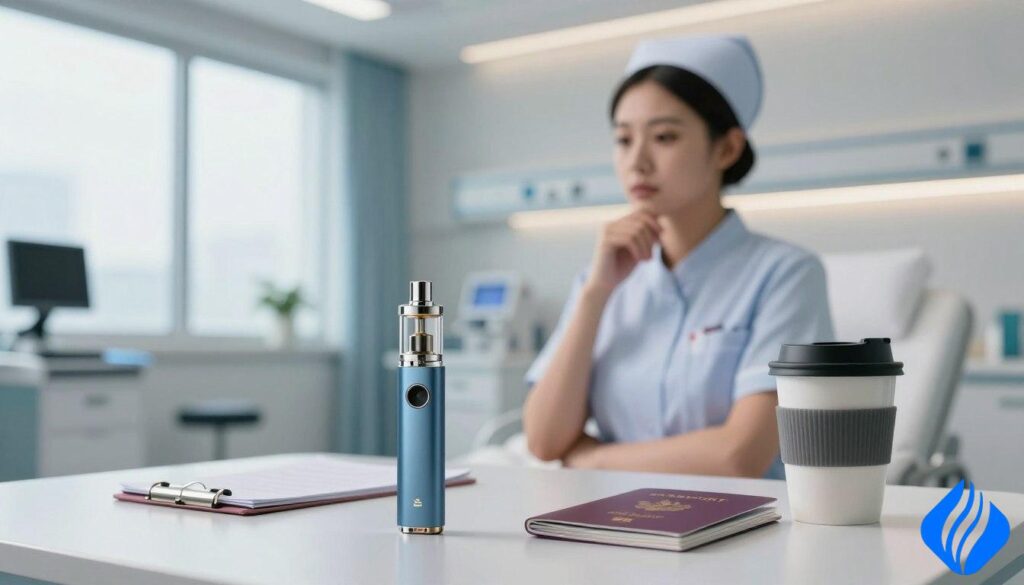
Vape detection systems monitor air for particulates and chemicals linked to vaping and smoke. When levels cross a set threshold, alerts can notify staff or trigger alarms. Hospitals use this detection to protect patients and keep indoor air quality high.
We’ll answer whether hospitals treat vaping like smoking and explain the difference between standard smoke alarms and purpose-built detectors. We’ll also outline real consequences: staff or security response, documentation, and possible removal from restricted areas.
We speak from a safety-first view. Our goal is to help travelers and healthcare visitors avoid alarms, fines, and device confiscation while respecting patient care and public safety.
Key Takeaways
- Many hospitals use specialized vape detection to protect patients and air quality.
- Vape sensors differ from standard smoke alarms; one won’t substitute for the other.
- Travel rules for 2026 force lithium batteries into carry-on luggage.
- Consequences can include staff intervention, security action, and formal records.
- We’ll cover packing tips, travel rules, and venue-specific rules later in the guide.
Do Hospitals Have Vape Detectors and What That Means for Vapers As of 2026
By 2026, clinical facilities treat vaping like smoking when patient safety or air quality is at risk. We understand it feels stricter than expected, but health systems prioritize vulnerable people and oxygen safety.

Why facilities treat vaping like smoking
Hospitals enforce bans because aerosols can irritate patients and disrupt care. Sensors support compliance and create time-stamped records for incident reporting.
Where monitoring is most common
Look to entrances, hallways, restrooms, stairwells, and other high-risk areas with repeat incidents. Discreet units protect privacy while still alerting staff and security teams.
Typical post-detection response
An alert usually goes to staff. Security teams may respond, document the incident, and ask visitors to stop or leave. Repeat events can lead to restrictions near patient zones.
- Mini-checklist: Don’t vape indoors; don’t assume restrooms are safe; don’t try to hide aerosol near vents.
- If you’re supporting a patient, step outside or wait until you can comply.
For more on safety and technology trends, see this hospital safety roundup.
How Hospital Vape Detection Technology Works: Sensors, Air Quality, and Real-Time Alerts
Modern monitoring units sample room air continuously and flag sudden spikes in particles or chemicals. Sensors compare current readings to normal air quality and trigger an alert when a preset threshold is crossed.
Particulate detection and why vapor is tricky
Particulate matter sensors measure tiny particles down to ~0.3 microns. Vape smoke can produce fewer or smaller particles than cigarette smoke, so it can vanish faster and evade low-sensitivity equipment.
Common sensor types
Commercial systems pair several sensors: laser-scatter particulate units, optical and chemical sensors, and gas detectors using resistance or infrared methods.
What systems actually look for
Many devices track particles and chemical markers tied to propylene glycol and nicotine, plus volatile organic compounds. Algorithms weight those signals to reduce false alarms.
Real-time alerts and integrations
When detection rises, the system sends real-time alerts to a dashboard, can push SMS or email, and often links to security cameras for visual confirmation. That handoff speeds response and documentation.
Traveler takeaway: if you smell vapor or see haze in a small enclosed space, sensitive monitoring will likely register it. Environmental factors — airflow, humidity, and nearby cleaning fumes — change how fast a signal appears.
High-Risk Areas in Hospitals Where Vaping Is Most Often Detected
Visitors often assume some corners of a clinic are safe; reality says otherwise—sensors target those blind spots.
Restrooms, stairwells, and waiting zones
Why these areas get monitoring: they are enclosed, busy, and often lack visible cameras. That makes them prime high-risk areas for vaping and smoke.
Facilities place units to protect privacy while keeping air quality high. A single sensor can cover roughly 12’×12′ in ideal conditions.
Patient rooms and behavioral units
Patient safety drives stricter rules in private rooms and behavioral health wings. Staff respond fast because incidents can trigger medical risks.
Oxygen-adjacent zones
Zero-tolerance: vaping near oxygen sources is a serious fire hazard. We recommend stepping well outside any marked oxygen area.
“Placement matters: small rooms with predictable airflow reveal aerosols faster than open lobbies.”
- Look for small wall units or discreet sensors near restrooms.
- If you see signage or unusual wall boxes, treat the area as monitored.
False Positives and Detection Limits: Steam, Aerosols, and Air Quality Confusion
Every monitoring system faces confusion from everyday sprays and steam, not just actual smoking. That reality explains why alarms sometimes trigger in bathrooms and other humid spaces.
Common triggers that mimic vaping
False positives occur when normal emissions look like smoke to a sensor. Typical triggers include steam, cleaning product fumes, aerosol deodorants, and settled dust.
Why sensitivity and thresholds matter
Facilities tune detection settings to balance safety and workflow. High sensitivity catches more incidents but raises nuisance alarms. Low sensitivity reduces false alerts but risks missing real events.
How facilities reduce nuisance alarms
- Calibration: sensors are adjusted to local air patterns and particulate matter baselines.
- Multi-sensor systems: combine particle and chemical inputs to lower false positives.
- Environmental awareness: humidity, ventilation, and cleaning schedules are factored into thresholds.
Practical note: even when a trigger is steam, staff and security teams treat alerts seriously because patient safety and air quality come first. If an alarm happens near you, cooperate, move to an approved area, and let staff verify the incident.
Policy and Safety Reasons Hospitals Use Vape Detectors
Air monitoring in clinical settings exists to prevent health setbacks and to back up clear incident records. We know enforcement can feel strict. The goal is patient protection, not punishment.
Indoor air quality and patient risk
Poor air quality worsens outcomes for respiratory and immunocompromised patients. Small aerosols can trigger coughing, asthma attacks, or complications for those on oxygen.
Keeping air clean protects recovery and comfort.
Compliance pressure and incident reporting
Smoke-free rules require documentation. Monitoring systems create time-stamped records useful for audits and internal reviews.
Objective detection cuts arguing and speeds a calm, professional response by staff and security teams.
Reducing incidents, complaints, and damage
Consistent monitoring lowers repeat smoking incidents and reduces lingering odors that cause complaints.
It also helps prevent costly room downtime and property damage tied to smoking materials in care areas.
“Sensors are about safety, documentation, and respectful enforcement—especially where patients are most vulnerable.”
- What we recommend: respect signage, step outside when requested, and cooperate with staff.
- These measures protect patient health and keep facilities operating smoothly.
As of 2026: TSA and FAA Rules for Flying With Vapes in the United States
One simple rule governs flights: keep spare cells with you, not below deck. Lithium batteries MUST be in carry-on luggage. This applies to mods, spare cells, and many disposables that contain non-removable cells.
Carry-on vs checked baggage
Put active devices and spare batteries in your carry-on. Store pods and e-liquids in sealed bags inside carry-on luggage to avoid leaks and confiscation.
Checked bags may hold empty tanks and sealed disposables, but avoid packing loose batteries below deck.
Airline policies vs TSA rules
TSA sets baseline screening rules; airlines can add stricter limits. Always check carrier rules before you board.
Airport and in-flight restrictions
Vaping onboard is banned. Using a device in airport restrooms can trigger alarms and a security response. Real-time monitoring often logs incidents and leads to fines or removal.
Traveler’s checklist
- Pack batteries in carry-on.
- Seal pods and e-liquids in a clear bag.
- Check your airline’s policy before travel.
- Avoid using devices in restrooms or enclosed airport spaces.
- If approached by staff or security, comply and move to an approved area.
“Packing smart and following airline rules keeps you flying and avoids costly enforcement.”
Packing Vapes Safely: Leak Prevention, Pod Storage, and Battery Best Practices
Smart packing stops leaks, cuts odor, and keeps batteries from becoming a security headache. We focus on clear, travel-ready steps that protect your gear and your trip.
Prevent leaks from pressure changes
Seal pods upright and use small, sealed bottles for extra e-liquid. Pressure shifts in planes or sealed bags force liquid out of weak seals.
Tip: wrap cartridges in absorbent cloth inside a zip bag to isolate any slow leaks.
Store pods and disposables to cut mess and odor
Choose hard cases or individual zip pouches. Keep used disposables in a separate, vented pouch until you can discard them properly.
Battery basics to avoid overheating or confiscation
Avoid loose cells. Protect terminals with caps, and place batteries in a padded case. Don’t pack damaged or swollen cells.
- Security flags: exposed terminals, odd bulging, or inconsistent packing.
- Carry-on context: we recommend keeping all spare batteries with you to reduce risk and delays.
Hotels, Hospitals, and Public Buildings: How to Spot Vape Detectors and Avoid Violations
Public properties often hide monitoring gear in plain housings or labeled ‘air quality’ units. A quick scan helps you choose safe spaces and avoid penalties.
What to look for vs standard smoke alarms
Standard smoke alarms are round and near ceilings. Specialized sensors are smaller, square, or mounted near vents and in corners.
Detection systems may also state “air quality” on nearby signage. That clue often means the property uses particulate or chemical sensing rather than fire-focused units.
Placement clues and likely monitored spaces
Check ceilings in bathrooms, stairwells, and narrow hallways. Installations near vents or repeat-complaint zones point to active monitoring.
Properties place devices where cameras can’t go. That keeps privacy while allowing staff to get silent alerts for incidents.
Why bathrooms get special attention
Bathrooms are private and often lack cameras. Facilities rely on sensors there to catch aerosol signatures without video.
Simple do’s and don’ts to stay compliant
- Do follow signage and move outdoors if asked.
- Do report malfunctions to staff instead of testing alarms.
- Don’t assume steam hides emissions.
- Don’t try to tamper with wall units or devices.
“Treat neutral ‘air quality’ units as active monitoring; cooperation avoids fines, cleaning fees, or a security response.”
Disney and Theme Parks: Venue-Specific Rules Vapers Must Follow As of 2026
At busy attractions, layered monitoring and staff checks keep air clean and crowds safe.
Major parks like Disney set clear smoking and vaping areas. Guests caught using devices outside marked spots face a security response. The aim is family comfort and safety in dense spaces.
What to expect at screening
Security screens may ask you to show devices. Pack spare batteries in carry-on and stow e-liquids to speed the line. Staff checks focus on whether items are powered or pose a hazard.
Where use is most restricted
Avoid attraction queues, indoor shows, transit shuttles, restrooms, and any crowded walkway. Those places see the most incidents and the fastest detection by monitoring teams.
“Parks enforce rules to protect families—compliance keeps your visit smooth.”
Park Do’s and Don’ts
| Action | Recommended | Why it matters |
|---|---|---|
| Use only designated areas | Yes | Limits exposure and avoids fines |
| Stow devices when entering queues | Yes | Prevents alarms and delays |
| Try discreet use in restrooms | No | Private spaces are monitored and family-focused |
Quick planning tip: find designated areas in the park map or app before you arrive. That small step avoids awkward moments during busy park hours.
Cruises As of 2026: Ship Policies, Cabin Rules, and Smoke-Free Zones
Enclosed staterooms and shared HVAC systems make indoor aerosol use a clear safety concern as of 2026. We emphasize compliance first. Ships track air and alert staff when sensors register particles or odor. That leads to a fast security response and logged incidents.
Why cabin use risks fines and confiscation
Staterooms trap odor and spread it through vents. That raises complaints, forces deep cleaning, and causes downtime. Many lines levy fines, charge cleaning fees, and may confiscate devices or ban guests for repeat violations.
Where use may be allowed
Most ships only permit smoking in marked outdoor zones. Some casinos or rooftop decks vary by line. Interior public areas and cabins remain off-limits on nearly every vessel.
Cruise traveler’s checklist
- Pack smart: store spare batteries in carry-on and protect devices during embarkation.
- Follow signage: use only designated outdoor spaces.
- Embarkation day: declare devices if required and ask staff about line rules.
- Port days: obey local laws—onshore rules can be stricter than ship policy.
“Compliance keeps the voyage smooth and avoids fines, extra cleaning charges, or removal from the ship.”
| Issue | Typical outcome | Why it matters |
|---|---|---|
| Stateroom use | Fine + cleaning fee | Odor spreads; rooms out of service |
| Repeat violations | Device confiscation or disembarkation | Safety and guest comfort |
| Designated outdoor use | Allowed (line-dependent) | Keeps air quality and safety high |
Mexico Travel Warning for Vapers: Legal Risk, Fines, and Confiscation in Restricted Areas
Penalties for using a device in restricted Mexican spaces can range from a warning to fines and confiscation. Travelers should treat this as a real legal risk, not just a nuisance rule. Enforcement varies by city, venue, and staff discretion.
Why enforcement feels unpredictable and common stop points
Monitoring and security teams act fast at transit hubs, tourist zones, and busy plazas. Airport restrooms, bus terminals, and popular beaches see many incidents.
Local response often depends on on-site policy and how crowded a space is. That makes outcomes uneven for visitors.
Mexico do’s and don’ts to reduce risk
- Do assume restricted spaces are actively monitored; step outside to use a device.
- Don’t rely on “discreet” use in restrooms or near entrances—detection is common.
- Do store devices in carry-on or locked luggage during transit and check-in.
- Don’t argue with staff; cooperate to limit fines or confiscation.
“Compliance-first behavior reduces the odds of penalties and device loss.”
Travel tip: local norms differ from U.S. practice. Respect signage and ask hotel or tour staff about approved spaces to protect your trip and safety.
Choosing a Travel-Friendly Vape: Why Reliable Disposables Are Often the Best Option
When we travel, reliability beats features. Compact, single-piece units reduce friction and risk.
What “travel-ready” means: fewer parts to lose, fewer leak points, and less battery handling at security or airports. These factors lower the chance of spills and device failures in crowded environments.
Why many travelers prefer disposables: they are portable, low-maintenance, and offer consistent nicotine delivery without charging or spare cells. That simplicity aids compliance with venue rules and improves overall safety.
We recommend buying from known suppliers for consistent quality and predictable performance. Sokvape.com is one reputable source that focuses on tested products and clear specs.
Key features we must consider for travel
- Leak resistance and sealed pods
- Consistent draw and nicotine profile
- Minimal maintenance and no exposed batteries
| Type | Portability | Maintenance | Travel risk |
|---|---|---|---|
| High-quality disposable | High | None | Low |
| Refillable pod device | Medium | Medium | Medium |
| Mod with spare cells | Low | High | High |
“Simpler gear reduces the everyday friction that leads to bad choices in tight spaces.”
Conclusion
We’ll close with a compact checklist to help you travel without surprises. Many hospitals use vape detection systems to protect patient health and indoor air quality. Sensors, thresholds, and real-time alerts explain why alarms prompt fast staff and security responses.
Quick recap: keep lithium batteries in carry-on for flights; pack to prevent leaks; treat restrooms and small areas as high-risk; follow venue rules at hotels, parks, cruises, and in Mexico.
Save this: plan designated smoking/vaping areas, pack safely, and cooperate with healthcare teams and staff after an incident. When you prepare, you protect your trip and other people’s health.
 English
  German
  Dutch
Dutch  Danish
  Czech
Czech  Italian
  Slovenian
  French
  Hungarian
  Spanish
  Polish