

Do vapes make you gain weight is a common search for adults weighing health and habit trade-offs. We set expectations: this is an evidence-led, 21+ guide that separates direct calorie impact from behavioral effects.
We summarize current research: aerosol calories are negligible, and nicotine can suppress appetite while slightly raising metabolism. Quitting often shifts taste and snacking, which some people link to weight change rather than inhaled calories.
Our review covers calories, appetite and metabolism, user behavior, hands-on testing (throat hit, vapor output, flavor after 5000 puffs), and technical specs—battery (mAh), e-liquid (ml), nic salt levels, and coil type. We compare performance versus Geek Bar, Lost Mary, and Raz with a focus on puffs-per-dollar and flavor stability.
For a deeper note on measured caloric uptake and why inhaled e-liquid rarely affects the body’s energy balance, see calories in a vape.
Key Takeaways
- Direct calories: inhaled aerosol contributes effectively zero usable calories.
- Indirect effects: nicotine can reduce appetite; quitting may increase snack intake.
- Behavior matters: hand-to-mouth habits and taste changes drive many perceived shifts.
- Device delivery: coil type, battery life, and nicotine strength influence use patterns.
- Evidence stance: vaping is not a weight-management tool; long-term data remain limited.
- Testing focus: we evaluate real-world metrics like 5000-puff flavor retention and puffs per dollar.
What vaping is and what you’re actually taking into your body
Vaping delivers an aerosolized mist from heated e-liquid instead of burning tobacco. That difference changes which byproducts form and where substances contact the body.

How devices create aerosol and how that differs from smoking
Battery power, a heated coil, and airflow turn liquid into inhalable aerosol. Combustion in cigarettes produces smoke and many combustion byproducts that vaping generally does not.
Nicotine replacement therapies (gum, patch, lozenges) deliver nicotine without inhalation. That matters for exposure patterns and risk profiles.
What’s in vape juice and how it behaves
E-liquids typically contain propylene glycol (PG), vegetable glycerin (VG), flavorings, and nicotine. PG gives throat sensation; VG creates clouds; flavorings add sweetness and scent. Because aerosol contacts lungs rather than the digestive tract, food-style calories are not absorbed the same way.
Chemicals of concern and uncertainty
Some liquids or high-temperature conditions can yield chemicals like acrolein, diacetyl, and formaldehyde. Vitamin E–linked issues have appeared in specific investigations. Long-term outcomes remain uncertain due to product variety and evolving formulations. We emphasize caution, consumer protection, and responsible use while the science matures.
Do vapes have calories and can “sweet” flavors translate to weight gain?
Many assume dessert-like aromas translate into dietary energy, but the measured impact is negligible.
VG is the theoretical source, not a practical one
Vegetable glycerin (VG) is about 4 calories per gram on paper. Heat and inhalation change how it contacts the body. Most aerosol is exhaled or deposited in tiny amounts that are not digested.
Calories per puff and daily exposure
Estimates place each hit well under one calorie. A practical range is roughly 1–5 calories per 100 hits, with actual absorption even lower.
For a typical user, daily caloric exposure from aerosol sits far below meaningful dietary intake. That gap makes direct calorie-driven weight change implausible.
Flavored versus unflavored
Flavor chemicals provide scent and taste but are not sugars or fats you would eat. Sweet-flavored juice does not add dietary calories comparable to food.
Edge cases matter: swallowing e-liquid or heavy chain sessions that alter appetite can affect intake. Those are behavioral, not calorie absorption, pathways.
For a detailed measurement note, see our piece on calories in a vape.
do vapes make you gain weight indirectly through appetite, cravings, and behavior?
Physiology and ritual combine: nicotine‘s biochemical effects and hand-to-mouth habits shape post-use eating.
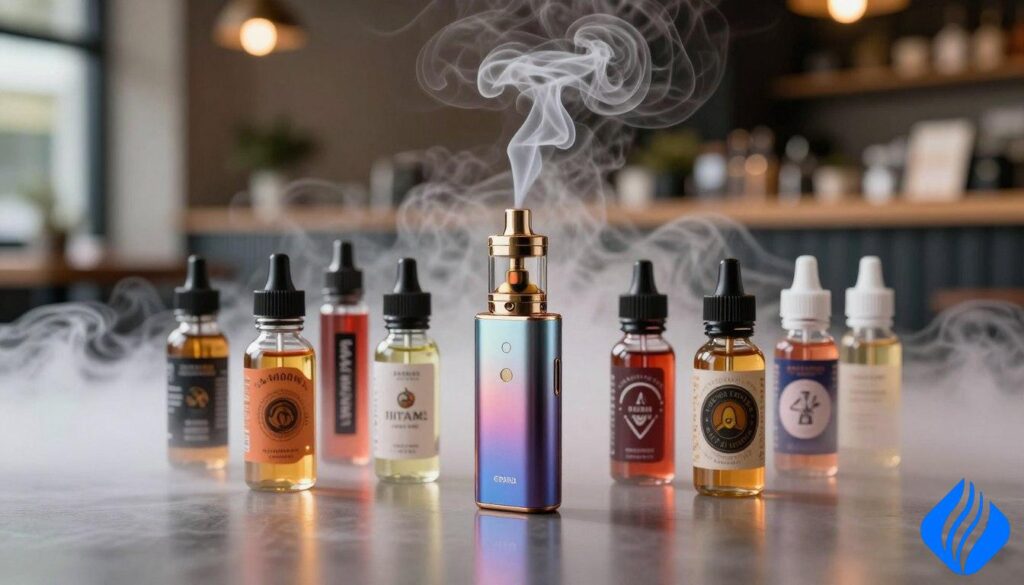
Nicotine and appetite control
Nicotine can suppress appetite and raise metabolism slightly by acting on brain circuits (NPY/POMC). That reduces hunger signals for some people while intake remains steady.
What happens when people stop
When quitting or reducing nicotine, taste and smell often rebound. Food can become more rewarding, increasing cravings and eating frequency. Average post-cessation gains range around 2–5 kg in some studies, but results vary widely.
Behavioral substitution and control strategies
Hand-to-mouth rituals lead many to replace inhalation with snacking during withdrawal. That behavioral swap often explains perceived weight change more than aerosol calories.
- Practical control: structured meals and protein snacks.
- Hydration: sip water during cravings to reduce urge to snack.
- Activity breaks: short walks to interrupt ritual-based eating.
What research says
Evidence is mixed. Some studies show vaping eases post-smoking weight shifts; others find no protective effect. Nicotine strength (2% vs 5% nic salt) can change satisfaction and thus how likely people are to substitute food. We do not recommend using nicotine for long-term weight loss; dependence risk and health tradeoffs matter.
Hands-on testing: throat hit, vapor production, and flavor after 5000 puffs
Our lab-style trials tracked throat hit, vapor output, and taste drift across extended use. We used a consistent draw method, stable ambient conditions, and logged sensory notes over time.
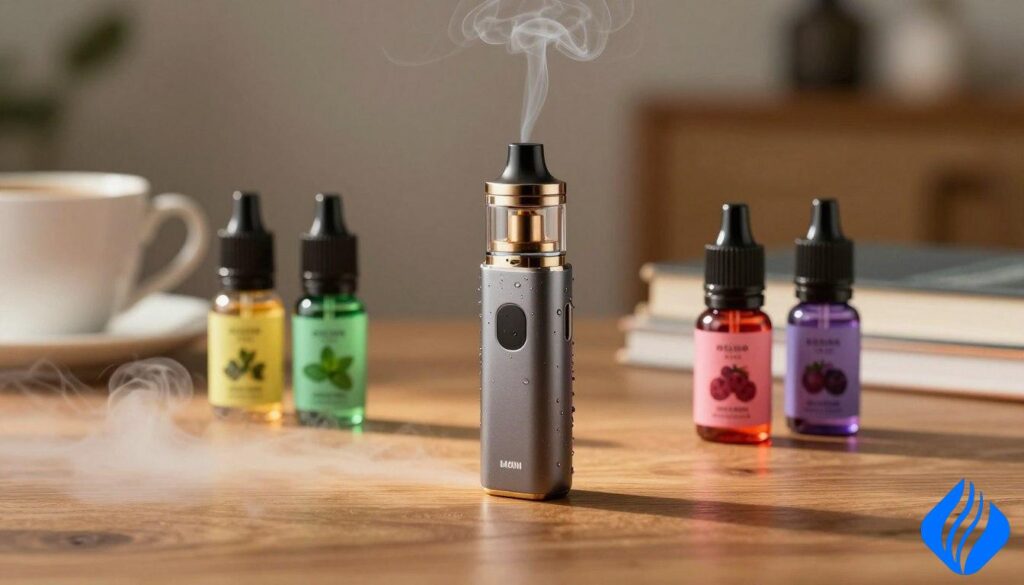
Smooth versus strong throat sensation
At 2% nicotine salt the throat is typically smoother. At 5% the hit feels stronger and more immediate. That difference alters satisfaction and overall daily use.
Vapor density and mesh coil influence
Mesh coil designs give steadier heating. They produce denser, warmer clouds and more uniform flavor. Better consistency can reduce chasing flavor and lower puff frequency during an activity.
Flavor evolution to late life and end-of-life cues
Sweetness often fades first. Cooling intensity can drop next. After roughly 5000 puffs notes may become muted and thin.
| Metric | Early life | Mid life | Late life (~5000 puffs) |
|---|---|---|---|
| Throat hit | Smooth (2%) / Strong (5%) | Stable | Slightly harsher |
| Vapor | Dense, warm | Consistent | Thinner, cooler |
| Flavor | Bright, sweet | Reduced sweetness | Muted notes, cooling shift |
Signs a disposable is ending include airflow change, sweetness drop, and thinner vapor. When flavor drifts, some users increase use or switch products. That behavioral shift can influence routines tied to appetite and satisfaction, but it is an effect of delivery, not a metabolic claim.
Technical specs that matter for weight-focused buyers: battery, e-liquid, coil, and charging
Hardware specs influence routine stability more than metabolic effects. We focus on data points that help prevent erratic use and late-session topping off. These choices support consistent delivery and clearer appetite signals.
Battery capacity (mAh) and daily consistency
Battery (mAh) predicts how long voltage stays steady. Higher mAh reduces voltage sag and keeps flavor and throat sensation consistent across the day.
That steadiness can lower impulsive extra puffs that some misread as appetite. For more on power options, see our guide to quality 510-thread batteries.
E-liquid volume (ml) and puff counts
E-liquid (ml) sets a practical puff budget. Larger ml capacity extends real puff count and supports long sessions without frequent refills or swapping.
Remember: longer sessions increase overall exposure even if nicotine percent is lower.
Nicotine strength: 2% vs 5% nic salt
Nicotine strength affects per-puff satisfaction. A 5% nic salt often delivers stronger hits and can reduce how often someone puffs that session.
We advise assessing dependence risk. Neither level is a safe appetite-control tool for the body.
Coil type: mesh vs. dual mesh
Mesh coil gives even heating and clean early-life flavor. Dual mesh spreads heat more and can maintain steadier flavor later into device life.
More consistent flavor can lower chasing behavior that leads to extra inhalations.
Charging port expectations: USB‑C
USB‑C offers stable power delivery and faster charging. Use quality cables and avoid charging while the device runs hot.
Safe charging preserves battery health and keeps delivery consistent day to day.
- Spec checklist: battery (mAh), e-liquid (ml), nicotine (2% or 5% nic salt), coil type (mesh vs dual mesh), USB‑C.
- Decision tip: choose specs for consistency, not appetite control.
Product comparison: puffs per dollar and flavor consistency vs Geek Bar, Lost Mary, and Raz
We compare RandM disposables against Geek Bar, Lost Mary, and Raz to show true value beyond sticker puff counts. Below are core specs pulled from product pages to help calculate realistic puffs per dollar.
How to estimate puffs per dollar
Compute: realistic puffs = listed puff count × flavor retention factor (0.6–0.9). Then divide price by realistic puffs. Discount high counts if flavor mutes early.
| Product | Battery (mAh) | E-liquid (ml) | Nicotine | Coil | Charging |
|---|---|---|---|---|---|
| RandM disposables | 600–850 | 10–16 | 2% / 5% | mesh / dual mesh | USB‑C |
| Geek Bar | 500–650 | 8–12 | 2% / 5% | mesh | USB‑C |
| Lost Mary | 650–900 | 12–18 | 2% / 5% | dual mesh | USB‑C |
| Raz | 450–700 | 8–14 | 2% / 5% | mesh | USB‑C |
Flavor consistency face-off
Mesh gives bright early notes. Dual mesh sustains sweetness and cooling later into life, reducing compensation puffs when flavor fades.
“Satisfaction loss drives extra pulls; consistent flavor reduces that behavioral drift.”
Value and reliability for U.S. shoppers
Look for USB‑C, leak-resistant seals, and coil design. Failures raise cost per usable puff and can alter eating or snacking habits tied to frustration.
For pricing checks and to compare models, browse Disposable Vapes, Hot Sale, RandM, and Bang.
Buying, authenticity, and safe use: what to check before you take a puff
A quick pre-use check prevents surprises and flags counterfeit or damaged units early. Inspect the seal, packaging labels, and airflow ports before first use. Confirm the device matches advertised specs and shows no leakage or corrosion.
How to know if it’s empty?
Signs include a sudden flavor drop, thinner vapor, harsher throat sensation, or blinking/weak output from the indicator. These are more reliable than elapsed time. If multiple signs appear, stop using the unit and replace it.
How to recharge safely?
Use a reputable USB‑C cable and a standard power source. Charge on a hard surface, do not leave unattended, and stop if the device gets hot. Avoid frayed cords, damaged ports, or high‑wattage fast chargers that the device does not list as compatible.
Is it authentic?
Scan the QR code and follow the verification flow via the Sokvape path (use the provided link to reach sokvape.com verification). If the code fails, return the item to the seller and avoid continued use.
Where to shop for verified options: Disposable Vapes, Hot Sale, RandM, and Bang.
WARNING: This product contains nicotine. Nicotine is an addictive chemical.
If avoiding nicotine is the goal, seek clinician guidance and quitline support or evidence-based nicotine replacement options. For related reading, see our note on effects at does vaping affect your weight.
Conclusion
Most measurable effects on body mass follow changes in nicotine exposure and habits rather than inhaled energy.
Direct aerosol calories are negligible, so routine caloric intake is the realistic driver of any weight gain.
When nicotine is reduced or stopped, taste and appetite can rebound. That shift can lead some to gain weight through increased snacking or larger portions. This outcome is common and manageable, not a failure.
We do not endorse vaping as a tool for weight loss or to lose weight. The evidence is mixed and health tradeoffs and dependence risk outweigh short-term appetite effects.
Practical support: use structured meals, hydration, activity breaks, and clinician guidance rather than nicotine for appetite control. Choose reputable, authentic products and charge safely to protect the body.
 English
  German
  Dutch
Dutch  Danish
  Czech
Czech  Italian
  Slovenian
  French
  Hungarian
  Spanish
  Polish