

Do vapes smell like weed is a common question for shared housing and rideshare users. We opened this topic with clear testing goals: measure odor intensity, track persistence, and compare disposable nicotine devices to cannabis vapor.
We will explain why terpenes create aroma in cannabis and why vaping avoids combustion by-products that linger. Then we present hands-on testing across brands such as Geek Bar, Lost Mary, and Raz.
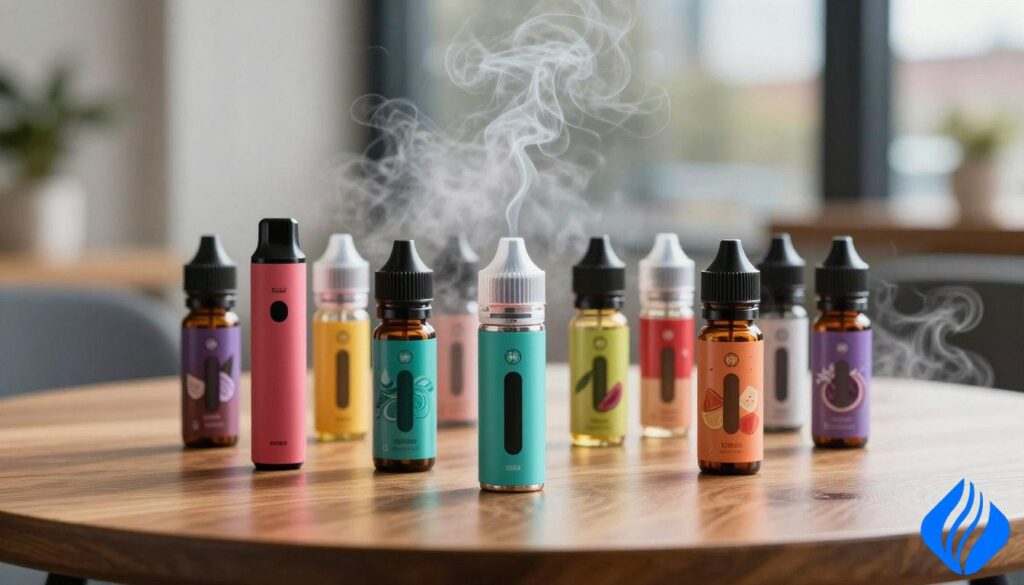
Our review will include specs (battery mAh, e-liquid ml, coil type, USB-C), value metrics like puffs per dollar, and notes on flavor consistency. Expect real-world scenarios: room, car, and outdoors, plus an FAQ and a nicotine warning at the end.
Key Takeaways
- Vapor can create a noticeable scent, but it usually dissipates faster than smoke.
- Terpenes explain cannabis aroma; vaping cuts combustion by-products that linger.
- We test odor intensity, cloud size, throat hit, and flavor stability up to 5000 puffs.
- Comparison covers battery, e-liquid capacity, coil type, and real-world persistence.
- Later sections include hands-on comparisons of Geek Bar, Lost Mary, and Raz.
- We conclude with an FAQ on safe charging and an authenticity QR check.
What Causes a Vape to Smell Like Weed (Terpenes, Vapor, and VOCs)
Odor from a vapor source comes primarily from volatile organic compounds and how they are heated. Terpenes are the main VOCs that give cannabis its earthy, pine, citrus, or skunky notes. Different strains have different terpene mixes, so aroma varies by profile.

Vaping heats below combustion. That means fewer combustion by-products and less particulate matter to cling to fabrics. The result is a cleaner, faster-dissipating scent compared with burned plant material.
Heat and heating style matter. Higher temperature volatilizes more terpenes and raises odor intensity. Conduction-style contact often pushes denser output than convection, which can be subtler.
Product form changes outcomes. Dry herb releases the most authentic cannabis aroma. Distillates and carts can smell less because extraction removes many terpenes and other aromatic compounds. In practice, terpene-heavy formulations feel more “recognizable,” while purified or sweet-flavored liquids read as low-odor vapor.
Do vapes smell like weed in real life? What to expect in a room, car, and outdoors
Here we turn technical odor factors into practical expectations for rooms, cars, and outdoor settings.
Room: In a well-ventilated room, most vapor traces clear in about 5–15 minutes. With windows closed and no fan, that window can stretch to ~30 minutes. Fabrics—curtains, bedding, and sofas—hold faint residue after repeated sessions.
Car: An enclosed vehicle traps condensed aerosol. Typical persistence is ~10–30 minutes. Opening windows or running the fan cuts clearance time dramatically.
Outdoors: Air movement disperses vapor almost immediately. Wind and open space reduce detection to seconds in most cases.
Where odor sticks and why
Soft surfaces and air channels in the device collect condensed vapor. A warm pocket or a used mouthpiece can re-release scent between uses. Regular cleaning reduces this residue.
Stealth factors and mitigation
- Amplifiers: higher heat, large clouds, frequent chain hits, and terpene-forward formulations.
- Risk reduction: ventilate early, lower cloud size, avoid hot/humid enclosed spaces, and store devices in sealed containers.
“Someone nearby may notice a general smell; recognizing it as cannabis depends on profile and familiarity.”
We will link these expectations to hands-on disposable testing in the next section, focusing on odor strength versus cloud size and flavor drift over long use.
Hands-on testing of disposable vapes: odor intensity, throat hit, vapor clouds, and flavor after 5000 puffs
We ran controlled trials in a typical US living room to measure immediate scent strength, room persistence, and how often an aroma read as cannabis. Tests used baseline ventilation states: window closed and cracked open. Timed checks were at exhale, 5 minutes, and 15 minutes.
Test setup and measured metrics
We scored: (1) immediate scent strength at exhale, (2) 5–15 minute room persistence, and (3) “recognizable” similarity versus candy or fruit. Scores were recorded for each device type.
Throat hit: 2% vs 5% nic salt
2% nic salt felt smoother on long draws and encouraged larger puffs. 5% nic salt produced a sharper hit, which led users to take shorter draws and sometimes reduced cloud size.
Vapor production and cloud density
Bigger, denser clouds carried more aromatic molecules. When clouds increased, scent detection rose even if the flavor profile was primarily sweet.
Flavor after 5000 puffs and residue
Top-notes (fruit) faded first. Sweet base notes flattened over time. Cooling agents varied: some softened, others became harsh with coil wear.
Condensation at the mouthpiece and internal buildup produced an aged, stale vapor odor. That residue can re-activate when a warm device sits in a pocket.
- Context: oil and dab pens often smell less plant-like than herb systems; smoke from smoking remains the most persistent.
- Note: disposables are nicotine devices; we are measuring why some aromas may be mistaken for cannabis in shared spaces.
For a closer look at ball-style designs referenced in our setup, see the ball vape.
Spec-based comparison: puffs per dollar and flavor consistency vs. Geek Bar, Lost Mary, and Raz
Below we translate battery, coil, and liquid specs into real signals for flavor stability and odor control. Check these items on any unit before purchase.
Main disposable pick: core technical data to check
Checklist: battery (mAh), e-liquid (ml), nicotine (2%/5% nic salt), coil type, USB-C. These specs shape vapor output and long-term taste.
Competitor comparison
We compare Geek Bar, Lost Mary, and Raz on measured axes: flavor consistency over time and odor profile. Geek Bar often reads sweeter; Lost Mary trends herbal; Raz sits between, with stronger initial clouds.
| Model | Battery (mAh) | E-liquid (ml) / Nic | Coil / Charge |
|---|---|---|---|
| Geek Bar | 650 | 13ml / 5% or 2% | Mesh / USB-C |
| Lost Mary | 700 | 12ml / 5% or 2% | Dual mesh / USB-C |
| Raz | 600 | 11ml / 5% or 2% | Mesh / USB-C |
Puffs-per-dollar and coil tech
Estimate value by dividing listed puffs by price, then verify with e-liquid ml. Mesh coils give sharp early flavor. Dual mesh keeps saturation and reduces burned off-notes under heavy use.
USB-C charging and higher mAh keep heat steady. That reduces sudden hotter draws that can change smell or create harsher vapor late in life.
Note: Nicotine disposables are not THC products, but candy or herbal aromas can still trigger a weed smell association in some settings.
For buying context, see our category links: Disposable Vapes, Hot Sale, RandM, Bang.
Conclusion
This final section ties measured odor data to practical steps for keeping aroma low.
Key finding: vapor can produce a noticeable scent that sometimes reads as cannabis, but it clears faster than smoke. In well-ventilated spaces most traces fade in 5–15 minutes; closed rooms may take up to ~30 minutes.
Control factors: cloud size, heat, ventilation, and residue. Dry herb systems smell more like plant material than purified oil pens.
FAQ
How to know if it’s empty? No visible vapor, weak throat hit, flatter flavor, blinking lights, or an empty e-liquid window.
How to recharge safely? Use reputable USB-C chargers, avoid damaged cables, stop if the battery gets hot, and follow the manual.
Is it authentic? Check packaging and scan the product QR. Verify via vendor resources or the Sokvape verification link: https://www.google.com/url?sa=E&source=gmail&q=sokvape.com
For deeper context on odor and timing, see our guide: Does vaping produce cannabis odor?
Responsible use: follow local rules for shared spaces. Even low-odor vapor can be a nuisance.
Nicotine warning: This product contains nicotine. Nicotine is an addictive chemical. Only for adults 21+. Keep out of reach of children and pets.
 English
  German
  Dutch
Dutch  Danish
  Czech
Czech  Italian
  Slovenian
  French
  Hungarian
  Spanish
  Polish