

does vape smoke smell is a common search. We start with a clear fact: modern kits with dual mesh coils and smart screens often produce larger visible vapor but less persistent odor than old products.
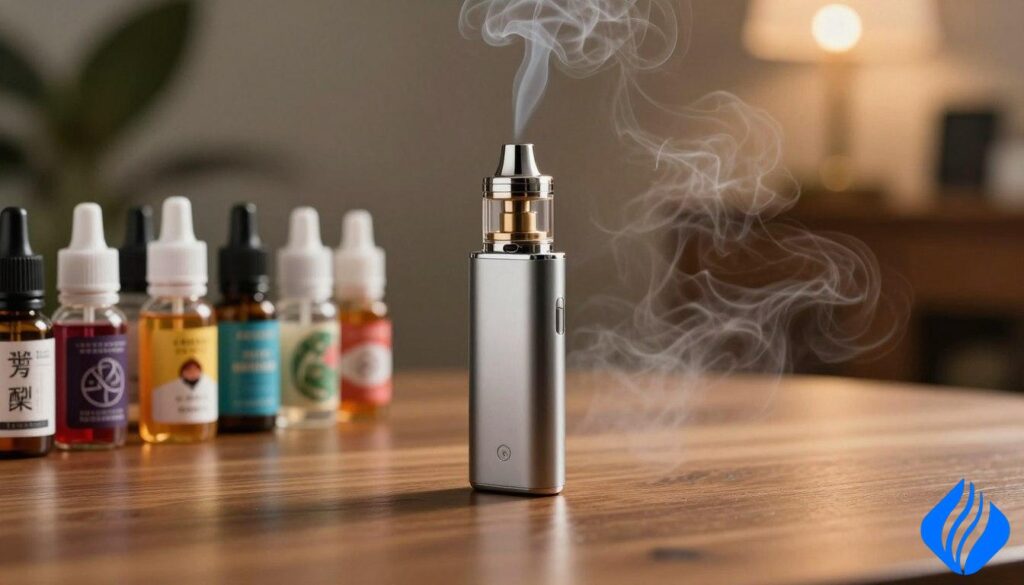
We define why people ask this and clarify the correct term is usually vapor, not smoke. Indoors, scented e-liquids can trap in fabrics, carpets, and walls when ventilation is poor.
Our guide is for adult users 21+. We preview the plan: causes of odor, how long it lasts, and practical fixes that remove residue rather than mask it.
Later sections will compare device specs like coil efficiency and cloud size. We also cover cleaning, filtration, and safety notes on nicotine handling and product authenticity.
Key Takeaways
- Vapor often smells lighter than cigarette smoke but can linger in soft materials.
- Poor ventilation increases odor absorption into fabrics and walls.
- Cleaning, fresh air, and HEPA/charcoal filtration remove residue most effectively.
- Device choice and e-liquid type change cloud size and odor intensity.
- This guide is for adults 21+ and stresses responsible nicotine handling.
What causes vape smell and lingering odors indoors
The scent profile people notice comes from volatile compounds, condensed films, and oxidized residues. We separate the process into clear steps so readers can pick the right fix.
How e-liquids create odor. Propylene glycol and vegetable glycerin act as carriers. Flavorings contain VOCs that evaporate into the air and form the immediate scent. Over time, some VOCs persist in the room.
Surface deposition and residue. VG/PG can condense on cool surfaces and leave a thin film. That film traps smell-active molecules and nicotine that oxidizes into stale notes. Porous items — carpets upholstery, curtains, and upholstery — hold the most scent.
Why sweet profiles stick around. Dessert and candy mixes use larger, complex molecules at higher concentration. Those molecules bind to fabrics and paint on walls, so the after-odor lasts longer than light menthol or citrus blends.

Ventilation and frequency matter
One session may clear quickly with good ventilation. Repeated sessions compound airborne VOCs and surface films. Ask this diagnostic question: is the issue in the air now (use filtration/air exchange) or on surfaces (cleaning and laundering)?
| Cause | Persistence | Best immediate remedy |
|---|---|---|
| Evaporated flavor VOCs | Short to medium (airborne) | Open windows; HEPA + carbon filtration |
| Condensed PG/VG film | Medium to long (surfaces) | Wipe walls; wash cushions; steam clean carpets |
| Oxidized nicotine and heavy flavor residues | Long (porous materials) | Launder textiles; deep clean upholstery; use baking soda |
For a practical read on detecting airborne versus surface buildup, see our guide on can you smell vapes indoors.
Does vape smoke smell in a room, on clothes, or in a car?
Room air, clothing, and vehicle interiors react differently when flavored aerosol is released. We assess each scenario and set realistic timelines so readers can judge whether odor is temporary or embedded.
What vaping typically smells like compared with cigarette smoke
Vaping usually carries a sweet, flavored note—fruit, vanilla, coffee, or tobacco-like extracts. It is less “burnt” than cigarette smoke and dissipates faster because it lacks combustion compounds.
How long vape smells usually linger and when it becomes noticeable
In a well-ventilated room, the vapor clears in minutes—often under 10. Repeated sessions or poor airflow extend that to hours or longer on soft surfaces. Clothing and upholstery can hold odor until laundered or cleaned.
Signs the smell is building up
Look for a persistent sweet scent, visible clouds that hang longer than expected, and fabrics that retain aroma after the air clears.
- Room: soft furnishings trap residues; open windows help.
- Clothes: closet areas and jackets absorb scent; wash or air out.
- Car: limited air exchange makes the cabin prone to buildup; crack windows and use activated carbon if needed.
“If the scent returns after a short absence, the issue is likely surface buildup rather than just air quality.”
How to get rid of vape smell fast with fresh air and filtration
Quick air exchange and targeted filtration cut odor most effectively. Start with fresh air because ventilation reduces concentrations fast. Then add filtration to remove what stays.
Open windows, cross-ventilation, and fans
Open windows on opposite sides of the room. Create cross-ventilation by placing a fan near one window to push stale air outside.
Keep runs short but repeated. This strategy helps you get rid of immediate airborne particles and gases.
Using exhaust fans in bathrooms and kitchens
Run exhaust fans during and for 10–20 minutes after use. These fans pull indoor air outside and lower indoor air concentration quickly.
Choosing an air purifier: HEPA vs activated carbon
HEPA captures fine particles. Activated carbon filters and carbon filters absorb gases and odors. For lingering scent, choose a purifier that combines both.
| Filter type | Primary role | When to use |
|---|---|---|
| HEPA | Particle capture | Removes aerosol particles |
| Activated carbon | Gas & odor adsorption | Removes lingering odors |
| Combined units | Particles + gases | Best for recurring odors |
Filter maintenance basics
Carbon media saturates. Replace activated carbon filters per manufacturer guidance or sooner with heavy use. Do not hide the purifier—place it near the source and select the right CADR for the room.
“Fresh air plus the right purifier reduces persistent odor faster than masking products.”
How to remove vape residue and smell from surfaces, carpets, and furniture
Air cleaning helps, but long-term control begins with removing residue from surfaces. Soft materials trap more particles and compounds than hard ones. That trapped film reinserts odors into indoor air after each use.
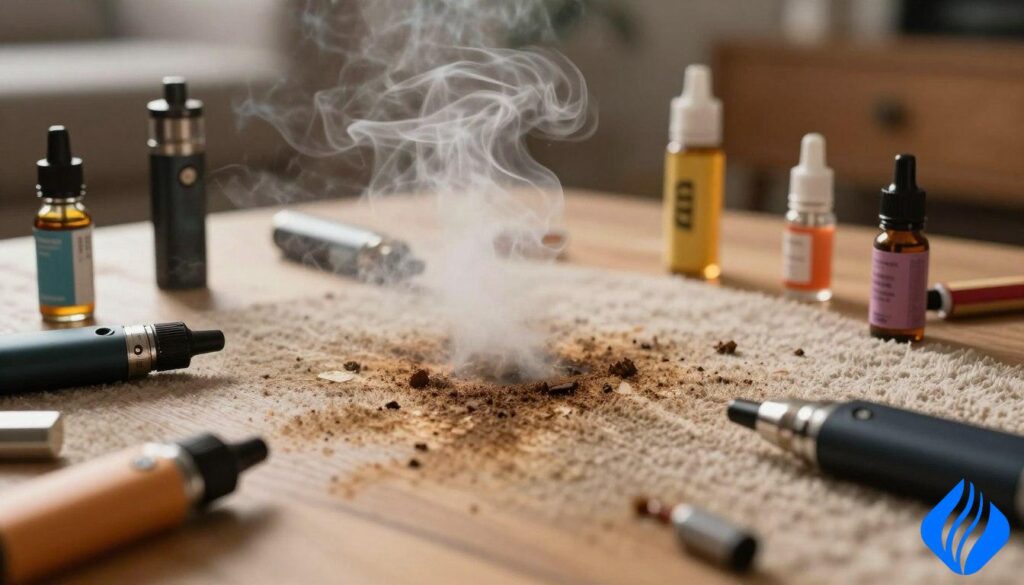
Lift embedded particles with a HEPA vacuum
Use a HEPA-equipped vacuum and make multiple slow passes over carpets and upholstery. Work in one direction, then perpendicular. This reduces re-release of particles and lowers the reservoir of residue.
Deodorize fabrics with baking soda
Lightly dust couches, pillows, and carpets with baking soda. Let it sit for several hours or overnight. Vacuum thoroughly. Baking soda neutralizes odors rather than masking them.
Wash curtains and removable covers with white vinegar
Add one cup of white vinegar to the laundry cycle for curtains and covers. Vinegar neutralizes odor molecules and usually does not leave a vinegar scent once items dry.
Steam cleaning and hard-surface wipe-downs
Use a steam cleaner for deeply embedded residues in upholstery. Heat and moisture loosen trapped compounds so extraction works better.
Wipe walls, baseboards, desks, and other hard surfaces with an approved cleaner. Focus on sticky VG/PG buildup to stop ongoing redeposition onto furniture and fabrics.
Work top to bottom: clean walls first, then furniture, then floors to avoid re-depositing residue.
By removing residue you get rid of vape smell at its source. Combine these steps with ventilation and filtration for the best results in apartments and home offices.
Long-term strategies to prevent vape smells in your home office or apartment
We define prevention as controlling three variables: where you vape, the intensity of e-liquids, and how often you reset the space with ventilation and cleaning.
Designate a contained area near a window
Choose a specific spot in your home office or apartment close to a window. Use that zone for sessions so clouds and gases exit quickly.
Containment cuts spread: fewer rooms will collect residues. Open the window and run a fan toward outdoors when you use the area.
Pick milder, less aromatic e-liquids
Switching to lighter, low-sweetness blends can significantly reduce lingering scent. Dessert and candy profiles are the most persistent.
Smaller flavor molecules leave less residue on textiles and walls, so mild choices significantly reduce long-term buildup.
Adopt a weekly cleaning and ventilation routine
Quick wipe-downs, rotating washable covers, and vacuuming stop residues from accumulating. For renters, keep workspaces clear of soft clutter.
Pair routines with an air purifier that combines HEPA and carbon filters. Filters help, but they work best with source control and regular ventilation.
| Measure | Effectiveness | Practical tip |
|---|---|---|
| Designated window zone | High | Use fan toward window; avoid bedrooms and closets |
| Milder e‑liquids | Medium–High | Choose low-sweet or menthol-light profiles |
| Weekly cleaning | High | Wipe surfaces, launder covers, vacuum with HEPA |
| Portable purifier & filters | Medium | Select combined HEPA+carbon unit sized for the room |
“Control location, cut aroma strength, and reset the room—those three steps prevent recurring odors.”
For a deeper guide on clearing airborne compounds and choosing a purifier, see our recommended steps on how to get rid vape smell. Measure improvement by fewer noticeable smells on re-entry and less sweet background in the room.
Device and product choices that affect odor, plus hands-on testing and competitor comparison
Small technical differences—coil pattern, battery output, and liquid strength—shift how persistent odors become.
- RandM Tornado 9000: 850 mAh; 18 ml; 2% or 5% nic salt; Mesh; USB‑C.
- Geek Bar Pulse: 650 mAh; 16 ml; 5% nic salt; Dual mesh; USB‑C.
- Lost Mary OS5000: 650 mAh; 13 ml; 5% nic salt; Mesh; USB‑C.
- Raz TN9000: 650 mAh; 12 ml; 5% nic salt; Mesh; USB‑C.
Hands-on, higher output means bigger clouds and more particles in the air. Throat hit varies by nicotine and airflow: 5% salts yield a stronger hit; 2% feels smoother.
After ~5000 puffs flavor can dull and cooling agents may sharpen. That can leave a lingering sweet background even when primary notes fade.
| Metric | Typical outcome | Notes |
|---|---|---|
| Puffs per Dollar | Calculate advertised puffs ÷ price | Real results vary by draw length |
| Flavor Consistency | Dual mesh often wins | Single mesh can fade sooner |
| Odor impact | Higher output = higher load | Ventilation and purifier + filters significantly reduce deposits |
“Test with the same draw length and record midlife flavor; that yields repeatable comparison data.”
Quick FAQ:
- How to tell if it’s empty? Weak vapor, flavor drop, blinking lights, or dry hits.
- Recharge safely: Use a quality USB‑C cable, avoid unsupported fast chargers, charge on a nonflammable surface and do not leave unattended.
- Authenticity: Verify the QR on packaging via sokvape listings and check product pages like Disposable Vapes and RandM.
For a broader method comparison see our lab-style writeup and the 10k experiment at vaping vs smoking 10k experiment.
Nicotine warning: Nicotine is an addictive chemical. Products are for adults 21+; keep away from children and pets. Consult a clinician if pregnant, breastfeeding, or you have heart or lung conditions.
Conclusion
Below is a compact action list that addresses immediate air quality and long-term surface deposits. For fast relief, open windows, run fans, and use a HEPA + carbon purifier to get rid vape quickly.
Core causes are flavor VOCs and PG/VG residue that settle on fabrics. To rid vape smell for good, follow air exchange, targeted filtration, then deep cleaning if odors return.
Prevention hierarchy: pick a single ventilated spot, use milder e‑liquids, maintain filters, and launder soft items regularly. Device output and flavor choice also shape how noticeable smells become.
For practical detection and cleanup steps see can you smell vapes indoors. Nicotine products are for adults 21+; use responsibly and respect shared spaces.
 English
  German
  Dutch
Dutch  Danish
  Czech
Czech  Italian
  Slovenian
  French
  Hungarian
  Spanish
  Polish