

Nicotine can be detected in urine for up to 4 days, and traces of vaping aerosol can leave a light, removable film on surfaces.
Scientific tests identify cotinine metabolites as the reliable marker for nicotine exposure, while particle sensors and photoelectric technology detect aerosols in indoor air.
This guide is the most updated for 2026 standards and aims to reduce anxiety by explaining what “staining” means in a real home.
In plain terms: typical vaping does not produce the classic yellow-brown discoloration caused by combustible cigarettes. Heavy, frequent use can form a thin residue on smooth surfaces and glass that is usually wipeable.
People worry about inspections, deposits, and indoor-air detectors. This article follows a clear framework: film vs. stain, aerosol chemistry, common accumulation zones, prevention, and safe cleaning.
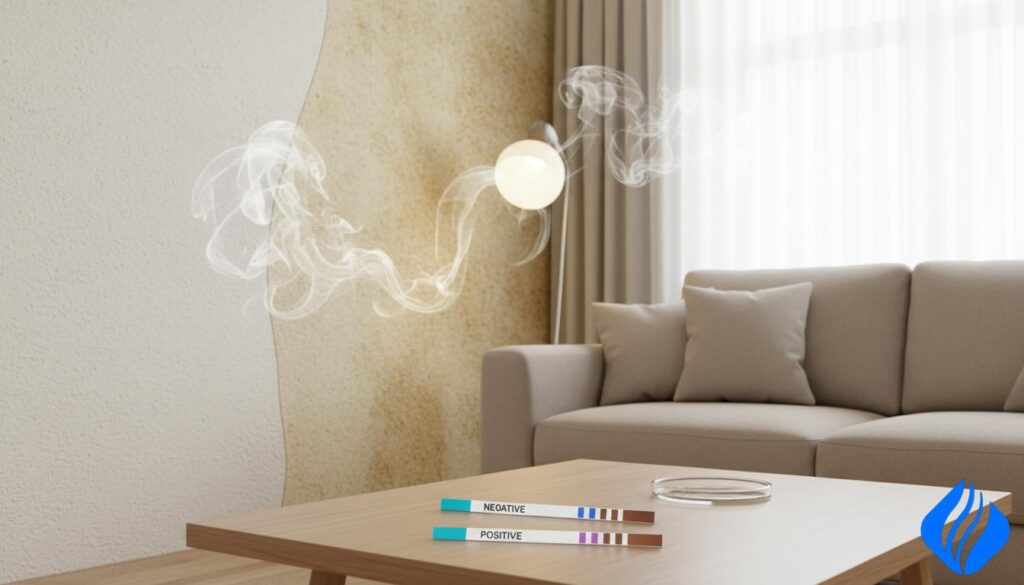
Key Takeaways
- Vaping rarely causes long-term yellowing like cigarettes; residue is generally removable.
- Cotinine metabolites explain scientific detection of nicotine exposure.
- Residue shows more on glass and smooth surfaces than textured paints.
- Ventilation and cleaning prevent buildup and reduce detector concerns.
- This 2026 guide focuses on practical, evidence-based prevention and cleaning.
What “Staining” Means for Walls, Furniture, and Indoor Air
Understanding what “staining” means helps separate permanent damage from removable buildup on indoor finishes.
Staining refers to a material change: yellowing, embedded discoloration, or a lasting paint tone shift. This is a chemical or physical alteration of the finish that cleaning cannot fully reverse.
Surface film is different. It is a thin, removable layer that can make a room look dull or foggy without changing the underlying paint or fabric. A damp microfiber cloth that restores shine is a quick diagnostic for film rather than permanent stain.
The science and the visual difference
Combustion-driven nicotine adheres and builds over time, producing true discoloration on ceilings, grout, and porous materials. By contrast, exhaled aerosol deposits mostly water vapor plus small chemical traces that behave more like haze.
- Smooth glass and polished finishes reveal haze and streaks first; a window or mirror shows buildup quickly.
- Matte painted walls and textured furniture hide early film until light hits at an angle.
- What appears on surfaces often matches what lingers in indoor air: fine particles collect dust and mild odor without being tar-like.
Practical takeaway: If routine wiping clears the dullness, the content is likely removable residue. The next section evaluates what truly happens in occupied homes over time.
Does vape smoke stain walls in real homes?
Household experience shows that aerosol from personal devices behaves very differently than cigarette emissions on interior finishes. Scientific and practical observations agree: vaping generally does not produce the yellowing linked to cigarettes, because it lacks combustion tar and soot.
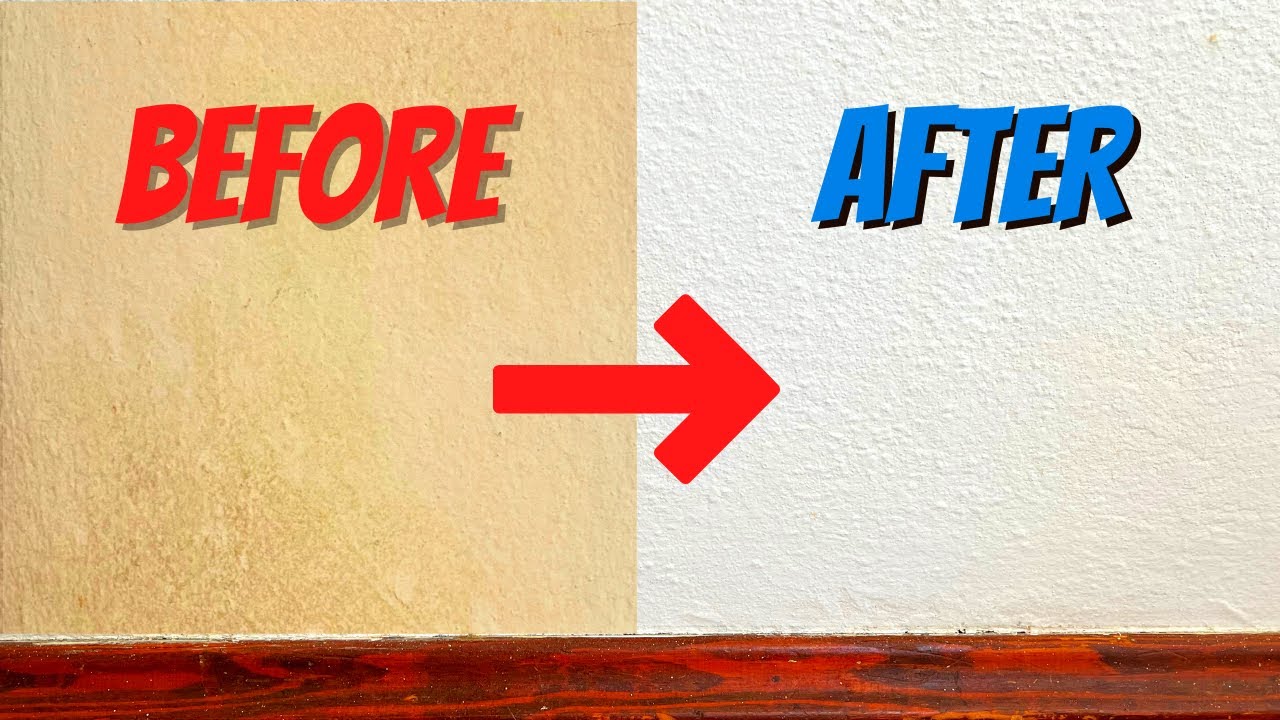
What the evidence says about vaping versus cigarette smoke staining
Evidence indicates vaporized nicotine dissipates faster and leaves less permanent residue than combustible cigarettes.
Most visible change from indoor vaping appears as a thin haze on glass or a dulled sheen on polished plastic and metal. Routine cleaning usually restores original finish.
When vaping can still make walls look dirty over time
- High-frequency clouds in a small room with poor ventilation increase visible buildup.
- Vaping close to ceilings or trim lets aerosol settle, catching dust and appearing grimy.
- Flavored aerosols can leave faint odors on fabrics if used indoors daily.
In short: occasional indoor use with decent airflow is unlikely to cause landlord-style damage. Persistent heavy use raises maintenance needs but rarely causes permanent color change. The next section explains the chemical reasons behind these differences.
Vape vs. Cigarette Smoke: Why One Yellows Walls and the Other Usually Doesn’t
The chemistry behind airborne deposits makes it clear why cigarette emissions often leave lasting discoloration while aerosolized nicotine usually does not.
Nicotine staining and the layer of scum from combustion
Traditional cigarettes burn tobacco and create smoke full of tar, soot, and sticky byproducts.
Those particles adhere to paint and ceiling corners. Over months they build a visible layer of scum and persistent odor.
Vapor vs. smoke chemistry
Vapour is an aerosol of tiny droplets, mostly water plus VG/PG and dissolved compounds.
These particles disperse and evaporate faster than combustion particles. That lowers long-term deposition on surfaces.
How VG/PG aerosol can leave a light film
Vegetable glycerin and propylene glycol can form a faint residue when many droplets settle.
Practical point: this film is more water-soluble than smoke tar and wipes away from glass and smooth paint.
| Source | Main Deposits | Typical outcome |
|---|---|---|
| Traditional cigarettes | Tar, soot, combustion byproducts | Yellowing, sticky scum, lasting odor |
| Vapour (VG/PG) | Water, glycerin/propylene glycol, small nicotine traces | Light removable film, faint odor if heavy use |
| High-output scenarios | Dense particles and trapped dust | Surface dulling; more frequent cleaning needed |
Caveat: “usually doesn’t” is not “never.” High output devices and constant indoor use can deposit enough particles to dull surfaces and trap dust. The next section reviews exact residue composition and where it accumulates first.
What Vape Residue Is Made Of and Where It Builds Up Most
When aerosol particles slow and settle, they leave a faint film that can attract dust and change a room’s sheen.
Core composition: Residue is predominantly water condensate with tiny amounts of nicotine and flavoring compounds. Vegetable glycerin and propylene glycol contribute to a slightly tacky surface where droplets land.
The mix varies with device output and e-liquid formula. Higher particle counts and richer liquids increase the fraction of non-water components.
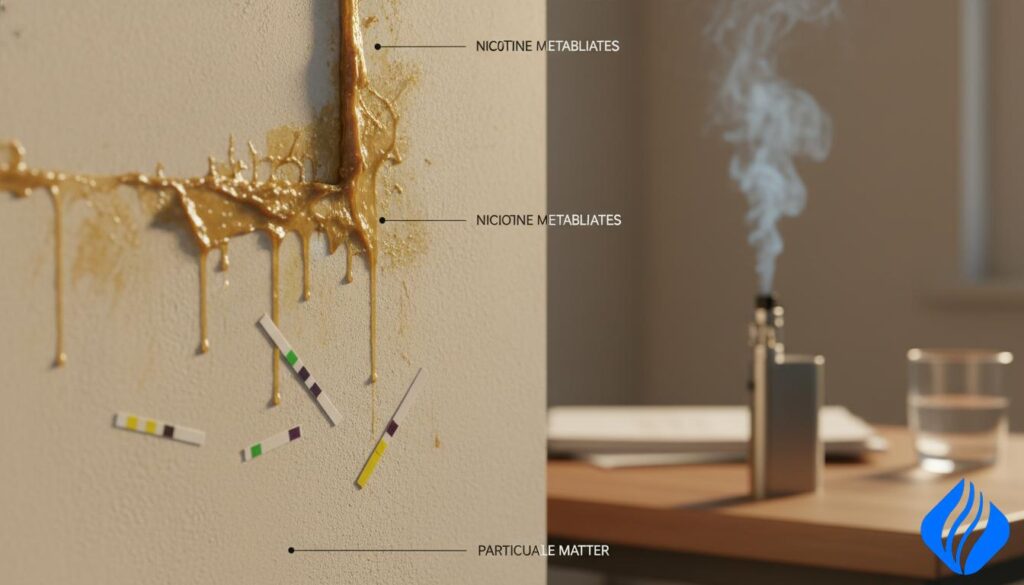
Where buildup appears first
- Windows, mirrors, and glass surfaces show haze quickly.
- Glossy cabinetry, TV screens, and polished metal reveal dulling.
- Any smooth plastic or countertop in the same corner as regular use will show film sooner than textured paint.
How dust and dirt make a film visible
A faint moist film captures airborne dust and dirt. Over time, particles adhere and the surface looks grayish or dull.
This adhesion turns an initially invisible condensate into a visible residue that affects perceived cleanliness and retains mild odor on soft furnishings.
High-use patterns that increase buildup
- Frequent sessions in a small room or enclosed space.
- High-wattage, sub-ohm setups that generate more particles.
- Chain use with limited ventilation or stagnant corners where air exchange is poor.
Practical effects: Even when paint color is not altered, accumulated film can make a room feel less clean and raise cleaning needs. Understanding where residue collects lets occupants use targeted ventilation and wiping to keep surfaces fresh.
| Factor | Main components | Visible outcome |
|---|---|---|
| Low-frequency use, ventilated room | Mostly water, minor glycerin/PG | Little to no visible film; quick drying |
| High-output device, small space | More VG/PG droplets, nicotine traces, flavoring | Noticeable haze on glass and glossy surfaces |
| Poor ventilation + dust | Condensate + adhered dust/dirt | Dull, grayish film and mild retained odor |
How to Prevent Vaping Indoors From Leaving Residue on Walls
Small adjustments to devices and airflow prevent most visible buildup in shared homes. Focus on cutting aerosol at the source and moving air so droplets exit before they settle.
Control cloud size
Lower device power and avoid high-output sub-ohm setups for indoor sessions. Spacing out use reduces daily particle load and limits how much deposits can form.
Boost ventilation
Open windows, create cross-breezes with fans, and aim airflow toward an exit. Proper ventilation and consistent room ventilation cut residue and help prevent dense clouds from lingering.
Choose a dedicated zone
Select one spot away from walls, ceiling trim, and electronics (TVs, monitors). Localizing use keeps any film small and easier to manage.
Protect fabrics and manage smell
Avoid exhaling onto furniture or clothes; wash throws and cover cushions regularly. Store work clothes away from the vaping area to limit odor pickup.
- Practical note: sensitive particle alarms can react to dense clouds; smaller clouds plus strong ventilation reduce false triggers.
- Prevention is easier than deep cleaning—consistent habits protect shared spaces and rental deposits.
Next: Even with good habits, some film can appear over time. The following section shows safe, paint-friendly cleaning methods.
How to Clean Vape Film Off Walls, Windows, and Surfaces Without Damage
Start cleaning with the gentlest option: light, regular wipe-downs prevent buildup and protect finishes. This approach reduces the need for strong chemicals and lowers risk to paint and drywall.
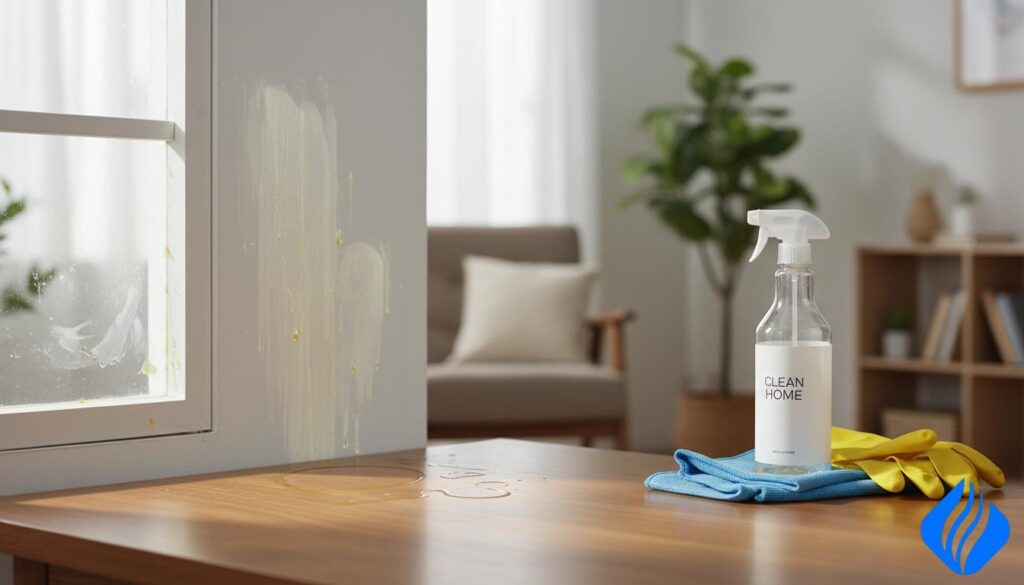
Microfiber routine for glass and smooth surfaces
Use a clean microfiber cloth to remove haze on windows and glossy surfaces. Dry buff first; if haze persists, lightly dampen the cloth with water and wipe in one direction.
Follow immediately with a dry cloth to avoid streaks and lint. This way works well for televisions, mirrors, and polished counters.
Safe basics for painted drywall and textured finishes
Test any damp cleaning in a small, hidden area. Use gentle pressure and avoid soaking the surface to prevent paint lift or dull spots.
Avoid oily cleaners; they can trap dust and make residue worse.
How often to clean
- Heavy indoor use in a small room with limited ventilation: wipe targeted zones weekly.
- Moderate use with good ventilation: monthly light cleaning is usually enough.
- Occasional indoor use with open windows: quarterly checks and spot wipes work well.
“Frequent light cleaning prevents heavy film and reduces the chance of needing harsh chemicals.”
Focus on the chair area, windowsills, and electronics where film first appears. For deeper guidance on nicotine-related residues and professional methods, see professional cleaning recommendations.
Spilled E-Liquid and Real Stains: How to Avoid and Remove Them
Liquid leaks—not airborne residue—are the usual source of persistent marks on textiles and soft finishes.
Why raw e-liquid can behave like grease: concentrated base ingredients and flavorings can leave a dark, oily smudge on cloth and upholstery. That mark often sits in fabric fibers and resists quick drying.
Safer refilling and maintenance habits
Perform refills and coil changes over a hard, wipeable surface such as a kitchen counter. Keep paper towels nearby to catch drips and wipe gear before setting it down.
Store bottles upright in a closed container and keep caps secured. This reduces the risk of spills and helps keep liquids out of reach of children and pets.
Immediate steps for clothes and soft furnishings
Act fast: blot, do not rub. Use a clean, damp cloth to lift the liquid repeatedly until no more transfers.
Apply a small amount of mild detergent to the spot, then continue blotting with clean water to rinse. Repeat until the mark lightens.
Upholstery and furniture guidance
Cushions and couch covers may need extra patience. Minimize spreading by blotting inward from the edge of the mark.
If the residue persists, consider a professional upholstery cleaner to avoid damaging fabric or finish.
- Key practical note: most concerns about “vaping stain walls” relate to removable film; direct liquid spills create the harder marks to explain and remove.
- Early action reduces cleaning time and lowers the risk of lasting damage to clothes, upholstery, and furniture in the home.
“Prompt blotting and gentle detergent work prevent many permanent marks.”
These simple habits cut the risk of visible deposits and protect shared living spaces. The conclusion summarizes how routine care, ventilation, and spill control keep a home looking fresh.
Conclusion
Summing up, aerosol from modern devices tends to clear and leave minimal deposition compared with cigarette emissions.
Vaping usually does not cause the yellowing that cigarette smoke creates. It can, however, leave a light residue that attracts dust and dirt if clouds build in a small room without ventilation.
Keep proper ventilation, avoid exhaling at ceilings or trim, and pick a single indoor zone away from glossy surfaces and electronics. Regular microfiber wipe-downs remove haze and protect paint before staining walls becomes an issue.
Odor is typically less persistent than smoke, but fabrics can hold smell—ventilation and laundering address this. For people who use devices heavily indoors every day, expect a cleaning cadence similar to other indoor sources like cooking or candles.
Practical takeaway: informed habits—cloud control, airflow, and light maintenance—preserve indoor air and shared comfort while minimizing long-term effects.
 English
  German
  Dutch
Dutch  Danish
  Czech
Czech  Italian
  Slovenian
  French
  Hungarian
  Spanish
  Polish