

Does vape smoke stain walls is the core question we answer up front. We note a clear fact: indoor aerosol rarely causes the yellow, tar-driven discoloration linked to cigarettes.
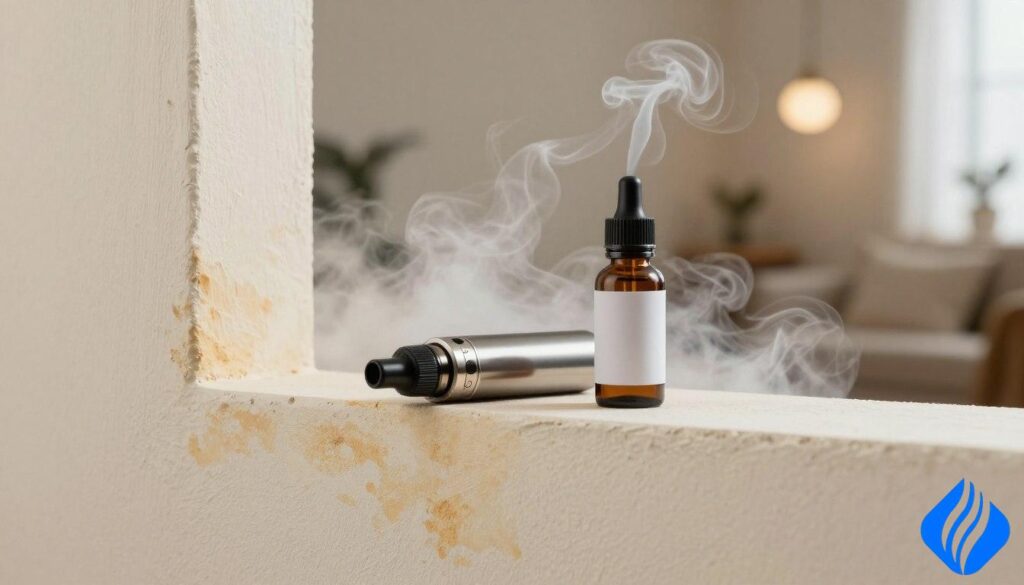
We define what “staining” means here — visible film or residue versus permanent color change. In a typical US home, glass shows haze first. Glossy finishes may dull before painted walls show slow change.
Our decision framework is simple: frequency + airflow + room size + device output predict buildup. We preview testing details next: core disposable specs (mAh, ml, nicotine strength, coil type, USB‑C), puffs-per-dollar comparisons, and hands-on notes.
We also link practical guidance and supply-chain context for readers who want device-level answers via this short guide: why moisture and residue form indoors. Later sections cover prevention steps — ventilation, wipe cadence, and spill control — so people can keep spaces clean and low-odor.
Key Takeaways
- Most indoor aerosol leaves removable film, not cigarette-style yellowing.
- Frequency and airflow drive buildup more than device type alone.
- Start with ventilation and regular wipe-downs to prevent film.
- We will test device specs and puffs-per-dollar for practical comparison.
- Scope: indoor surfaces and cleanliness, not medical claims.
Does vape smoke stain walls? What actually builds up on paint, windows, and furniture
We separate aerosol effects from combustion effects. Vaping produces an aerosol of tiny droplets. Cigarette smoke comes from combustion and carries tar and other sticky compounds. That difference matters for indoor surfaces.

Vapour versus cigarette smoke
Cigarette smoke deposits tar and carbon-rich particles that cling and yellow over time. By contrast, aerosol residue is mostly water with trace nicotine and flavoring. That residue usually wipes away.
What the residue contains
Tiny droplets can settle and form a light film. This film acts like a grab layer that attracts dust and dirt. A 2018 study found much moisture evaporates immediately, but some droplets can settle.
Where you see buildup first
Glossy and smooth surfaces show it first. Windows, mirrors, metal fixtures, glass tabletops and TV screens can look foggy or feel slightly tacky. Painted walls often remain unchanged unless cleaning is neglected for long time in small rooms with poor air flow.
- Risk factors: small room, heavy vaping, limited ventilation.
- Household check: haze in sunlight or dull electronics signals residue, not permanent damage.
How to prevent and remove vape residue indoors without damaging walls
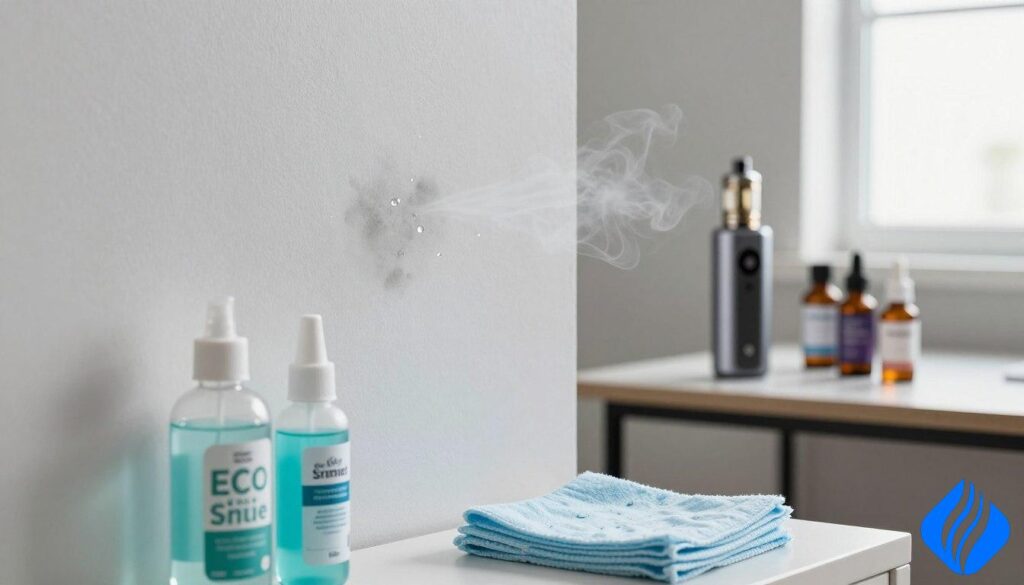
A few low-effort steps stop buildup on painted walls, windows, and furniture before it forms. Start with airflow and a regular wipe routine. These two controls reduce the chance of longer-term staining and preserve finishes.
Improve ventilation the simple way
Open a window and create crossflow with a fan. Avoid exhaling dense clouds toward ceilings, detectors, or people. For small rooms, step outside during longer sessions.
Wipe-down routine that works
Use a dry microfiber cloth first for light film. For stubborn haze, use a slightly damp microfiber and mild detergent on glass or glossy furniture. Repeat as needed.
Deep-clean triggers and spill management
Clean when surfaces feel tacky or look hazy in daylight. For raw e-liquid on clothes or upholstery: blot (don’t rub), apply mild detergent, rinse, and repeat. Treat e-liquid like a grease spot to avoid grinding it in.
Protect pets, plants, and alarms
Keep bottles secured and out of reach. Avoid blowing warm vapour near pets or plants; birds and small mammals can be sensitive. If particle alarms are nearby, increase distance and ventilation to reduce false triggers.
Device choices that affect residue, plus hands-on testing and disposable vape comparisons
Choosing the right hardware lowers airborne droplets and reduces the need for frequent cleaning. Device output and coil design control how much vapour fills a space. Dense clouds raise the chance of visible haze and can trip particle-sensitive alarms.
Hands-on testing insights
We test throat hit at common nic salt strengths. At 2% the hit is mild and smooth. At 5% it is noticeably stronger and tighter.
Vapor production ranges from low (discreet, MTL-like draw) to dense. Many disposables keep puff volume steady early, then flavor flattens around 5000 puffs. Expect sweetness drift or cooling fade while vapor output can remain acceptable.
Core specs checklist
- Battery capacity (mAh)
- E-liquid volume (ml)
- Nicotine strength — commonly 2% or 5% nic salt
- Coil type — mesh vs dual mesh
- Charging port — prefer USB‑C
Puffs-per-dollar and brand notes
Advertised puff counts are estimates. Compare price-to-puff claims alongside coil type and battery size. In our checks, Geek Bar and Lost Mary often score well on puffs per dollar; Raz sits between them depending on flavor consistency.
User checks
Know it’s empty by a flavor drop, reduced vapor, blinking lights, or a dry/burnt taste. Recharge safely via USB‑C with trusted adapters and stop if the device grows hot. Confirm authenticity by scanning the QR code and verifying at https://www.google.com/url?sa=E&source=gmail&q=sokvape.com/.
For smarter shopping, browse our Disposable Vapes or see Hot Sale, and explore brands like RandM and Bang. Choosing a lower-output setup and keeping airflow steady is the easiest way to reduce visible haze on walls and other surfaces.
Conclusion
The practical takeaway is simple: most aerosol leaves a removable film, not the tar-based yellowing of cigarettes. Routine care keeps surfaces looking fresh.
Prioritize airflow. Use cross-ventilation or a fan to dilute clouds in small spaces. Adopt a quick microfiber wipe for glass and glossy finishes.
Treat raw e-liquid like grease. Blot spills immediately, then clean with mild detergent to prevent permanent marks on fabric or upholstery.
Share responsibility with others in the house. Keep products away from children and pets, and control where exhaled vapor goes to protect household members and plants.
Device tip: pick consistent, well-built disposables with clear specs (mAh, ml, mesh/dual mesh, USB‑C) and verify authenticity via QR checks.
Nicotine warning: This content is for adults 21+ in the United States. Nicotine is an addictive chemical. Keep all products and e-liquid out of reach and seek help if ingested.
 English
  German
  Dutch
Dutch  Danish
  Czech
Czech  Italian
  Slovenian
  French
  Hungarian
  Spanish
  Polish