

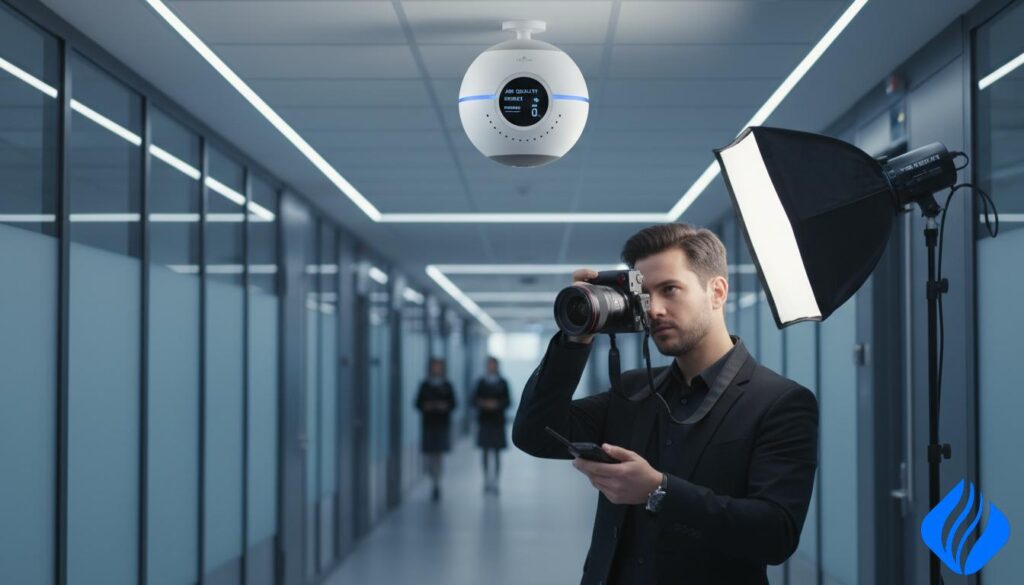
Vaping in schools and public areas has grown by over 200% in recent years. This increase led to the quick development of devices with advanced sensor systems. These devices are not just cameras. They act as sophisticated air quality stations, monitoring aerosol molecules in real time.
Our aim is to protect health and well-being, not to shame anyone. We know that e-cigarette aerosol is not just harmless water vapor. That’s why vape detector technology is so important. It detects and analyzes tiny particles released during atomization. This is how vape detectors work on a deeper level. They identify aerosol, not smoke, helping us promote safer indoor policies.
Key Takeaways
- Vaping indoors involves aerosol particles that are not empty mist
- Specialized detectors function like compact air quality labs
- They spot differences between vapor, steam, and smoke
- A primary goal is harm reduction, not public shaming
- Vape detector technology helps keep indoor spaces safer
- Data-driven alerts support clear policy enforcement
Understanding Vape Detection Technology
We use advanced engineering to find tiny vapor droplets before they spread. Our sensors can tell apart vapor particles from solid ones. This keeps places safe and comfy for everyone.
Aerosol Detection Basics
We count on aerosol detection systems to track tiny clouds from e-cigarettes. These systems use special hardware to spot vapor. They can tell vapor apart from smoke or water vapor.
Our devices quickly notice changes in particle density. This helps us spot vaping fast.
Real-Time Alerts and Air Quality Monitoring
Our devices send real-time alerts when vaping is found. This lets managers act quickly. We also keep an eye on air quality monitoring data.
This data shows even small changes that might affect health. It helps protect people while respecting their choices.
| Parameter | Key Benefit |
|---|---|
| Particle Size Range | Captures microscopic vapor droplets for thorough detection |
| Sensor Accuracy | Reduces false alarms by distinguishing vaping aerosols |
| Alert Integration | Provides timely notifications for rapid response |
Industry-Leading Hardware: Meet HALO Smart Sensors and Verkada
We count on these solutions to make our spaces safer. Each halo smart sensor watches for small changes in air. This helps administrators tackle problems early on.
These systems work well with what’s already in place. This makes setting them up easy and efficient.
Verkada sensors have powerful tools to track temperature, humidity, and more. They do more than just find vape, giving a full view of the environment. This helps in schools or offices.
One system gets data from many places and sends alerts right away. We’ve seen how focusing on air quality helps keep everyone’s privacy. It builds trust and supports safety in big places or busy areas.
Differentiating Vape Clouds from Smoke or Steam
Many ask how vapor is different from smoke or steam. Glycol-based solutions create aerosol droplets that move differently than smoke or steam. We aim to explain these differences to keep everyone safe and informed.
Why Vape Clouds Behave Differently
Vape aerosols come from propylene glycol or vegetable glycerin (PG or VG). These droplets are smaller than soot or ash in smoke. That’s why vape detectors use special tech for ultrafine particles.
Steam disperses faster because it’s mostly water. Our devices track specific aerosol traits to find where vapor comes from.
Identifying THC vs. Nicotine
We use sensors that catch chemical signs of cannabis. A thc sensor can spot unique markers in THC e-liquids. Nicotine has different signs, so our detectors can tell them apart.
This lets us offer targeted harm reduction and precise monitoring. It’s all about keeping safety a top priority.
PM2.5 Laser Scattering and VOC (Volatile Organic Compounds) Sensors
We use advanced tools to find tiny particles from vapor. PM2.5 sensors send a beam to detect air particles. This helps spot tiny droplets that show vaping.
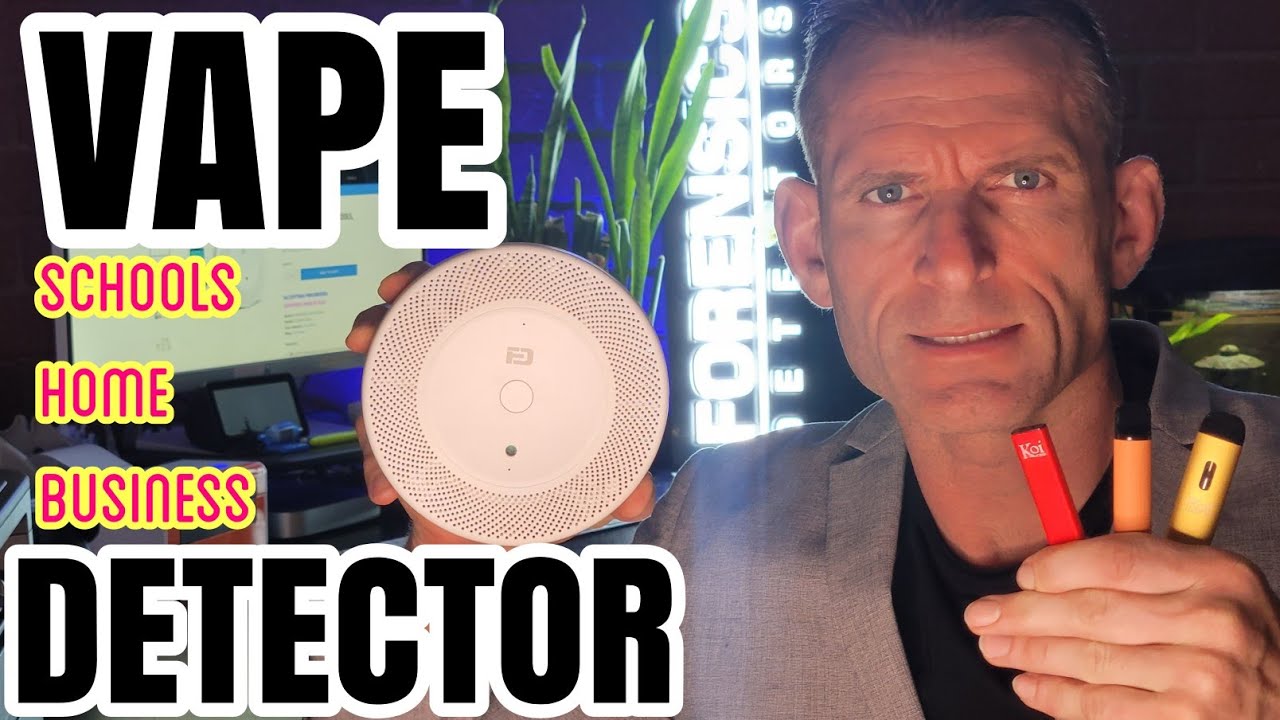
How Laser Scattering Technology Works
Our gear uses laser scattering to find changes in light from vapor. Each particle scatters light in a unique way, like a flashlight through mist. This shows size and density, helping us alert you.
It’s so sensitive it can tell if someone is vaping indoors. This gives us solid evidence.
Volatile Organic Compounds and Detection
VOC sensors find smells and chemicals from e-liquids. When heated, additives release chemicals that sensors pick up. These sensors work with laser tech to confirm vape emissions.
Our aim is to keep everyone safe, even those looking for safer options.
How Do Vape Detectors Work
Safety is key when using vapor devices. Our systems scan for tiny aerosols and chemical signs in the air. They alert us when air quality changes.
Special detectors use many sensors to check for particles and chemicals. They go beyond simple light sensors, catching small changes. This shows how vape detectors work and their smart design.
The Science Behind Vape Detector Technology
Laser modules in these detectors find aerosol droplets with great detail. They filter out dust, focusing on vapor. Chemical detectors find e-liquid compounds, proving vaping.
Vape Detector vs Smoke Detector
Smoke alarms look for smoke signs, using sensors for big particles. Vape detectors find vapor, using special tech for small bursts. This means fewer false alarms and better accuracy.
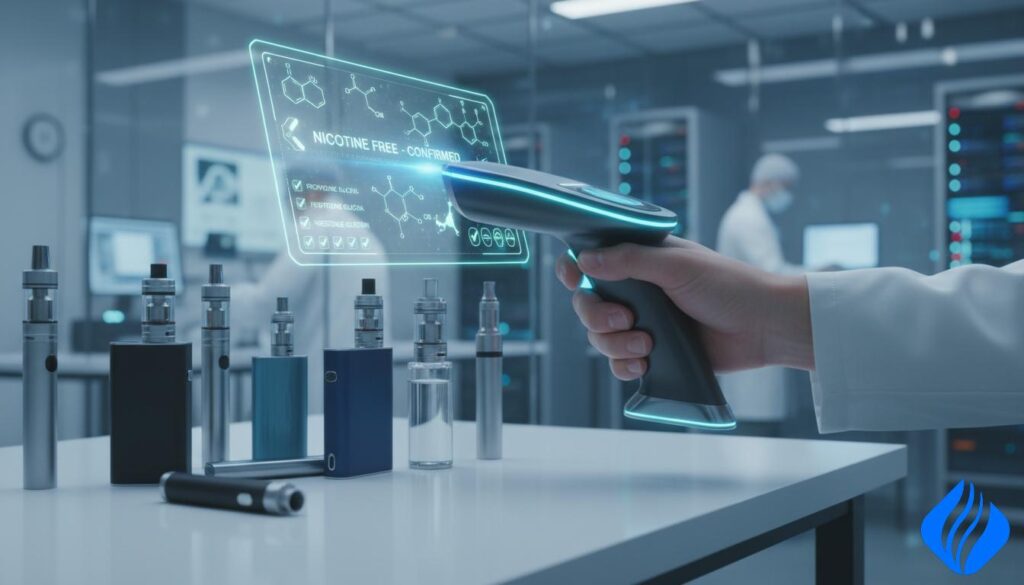
Do Vape Detectors Recognize Nicotine-Free E-Liquids?
Many ask if vape detectors can spot nicotine-free E-liquids. Our research shows that even without nicotine, these liquids leave behind tiny droplets and flavor chemicals. These particles are what the detectors pick up, not just the nicotine.
For detecting nicotine-free vapes, we use top-notch technology. It measures the aerosol signs in real time. This vapor cloud is what gets detected in places where vaping is banned.
“Any form of vapor, even when nicotine is absent, carries detectable aerosols that sensors can identify.”
Aerosol Particles and Flavorings
Flavorings like fruity or minty scents also get released in the vapor. These interact with the sensors, which are designed to catch volatile organic compounds. This is why the detectors can spot them.
Common Questions about Detection
- Accuracy: Regular calibration helps reduce false alarms.
- Maintenance: Cleaning sensor modules keeps readings reliable.
- Environment: Ventilation conditions can affect detection speed.
Where to Install Vape Detectors for Maximum Effectiveness
We often see vape detectors placed discreetly to catch vaping in bathrooms. This keeps the air clean and helps meet safety goals. We aim to find high-risk spots while keeping privacy and comfort in mind.
Many schools use a vape detector for schools to find hidden vapors in restrooms or corridors. Hotels put detectors near tubs and mirrors to stop odors or vapors from disturbing guests. Corporate offices place them near breakrooms or lounge areas to protect employees from secondhand smoke.
Installing detectors on ceilings or walls is best, as it catches particles before they spread. Bathrooms are a good spot for quick alerts and to reduce tampering. One unit can cover up to 150 square feet, so bigger spaces might need more sensors.
To learn more about coverage strategies, check out our guide in this helpful resource. Proper placement can help stop vaping in bathrooms or other private areas.
- Check ceiling height and airflow patterns
- Avoid obstructed corners or closed cabinets
- Ensure accessible power or Ethernet cables
| Location | Reason | Coverage Tip |
|---|---|---|
| School Restrooms | High-risk for concealed vaping | One detector per standard bathroom |
| Hotel Bathrooms | Maintain smoke-free environment | Place near vents or mirrors |
| Workplaces | Protect employees from secondhand aerosol | Mount above common break areas |
Linking Technology to Responsible Vaping
We support tools that help people vape responsibly. These tools protect others from secondhand smoke and remind users to vape in the right places. They also promote respect and health for everyone.
“Respecting shared spaces shows regard for our neighbors. Where there is courtesy, there is safety for everyone.”
Promoting Awareness
We think education is key to reducing harm. Vape detectors help users understand the importance of vaping responsibly. Some devices track aerosol levels, encouraging open talks about vaping in public.
Technology helps everyone in the vaping conversation. For more on detection technology, check out this guide. It shows how sensors lead to safer choices.
Balancing Personal Freedom and Public Health
We aim to protect personal freedom and public health. Vaping is less harmful than smoking, but it’s not without risks. Vape detectors send alerts to avoid vaping in sensitive spots, keeping others safe.
We believe in the right to choose, but safety comes first. Awareness leads to responsible vaping, making everyone feel safer in public places.
Conclusion
Vape detectors use PM2.5 laser scattering and VOC analytics to improve safety and follow rules. They help tell apart aerosol clouds from smoke or steam. They also find nicotine-free e-liquids and common vaping signs.
These tools guide policy and start important talks about indoor air. They make it clearer to monitor air quality indoors.
These systems are part of a big effort to reduce harm. They help users know what they breathe in and how it affects others. Schools, workplaces, and public places get help fast.
This creates a healthier space that values everyone’s choices but also looks out for everyone’s health.
Following practical tips for where and how to use these tools makes them work best. We’re all about safety, learning, and being responsible. For more on how they work, check out this resource.
We think making smart choices means cleaner air and safer habits for everyone.
 English
  German
  Dutch
Dutch  Danish
  Czech
Czech  Italian
  Slovenian
  French
  Hungarian
  Spanish
  Polish