

Did you know vaping THC gets into your bloodstream almost right away? But, how long the high lasts can change a lot. It depends on your vape device’s voltage and the type of oil you use. If you’ve wondered, “How long does a THC vape effect last?” you’re not alone.
The usual time is 2 to 4 hours. But, knowing how it starts and ends is key for a safe and enjoyable time in 2025.
Key Takeaways
- THC vaping effects can last between 2 to 4 hours on average.
- The duration varies based on device voltage and oil type.
- Instant THC absorption occurs when vaping.
- Knowledge of onset and comedown phases enhances safety.
- Understanding vape duration is key for safe use in 2025.
Introduction: Understanding THC Vaping
As cannabis use changes, THC vape basics are key to understanding this shift. We’ll explore THC vaping’s core, including the tech, types of devices and liquids, and why it’s becoming more popular.
What is THC Vaping?
THC vaping means inhaling THC vapor, not smoke. It uses vape pens with liquid or solid THC that’s heated to vaporize without burning. This method is efficient and effective for getting cannabinoids.
Popularity in 2025
THC vaping’s rise in 2025 is due to tech improvements and legal changes. New devices are better and more legal access has lowered stigma. This has made vaping more appealing, seen as healthier and easier to use.
The table below shows why vaping is becoming more popular:
| Reason | Description |
|---|---|
| Technological Advancements | Improved devices with better temperature control and atomization capabilities. |
| Legalization | Increased legal access reduces stigma and encourages safer use practices. |
| Health Perception | Vaping is seen as a cleaner alternative to smoking. |
| Convenience | Discrete and portable, suitable for on-the-go use. |
How Long Does THC Vape Effect Last?
Knowing the THC vape duration is key for a good vaping experience. The effects usually last from 2 to 4 hours. This covers the start, peak, and end phases.
Quick Answer
The effects of THC vape last from 2 to 4 hours. This time includes the start, peak, and end of the vaping experience.
Detailed Breakdown
Now, let’s look at the effect timeline of THC vape. Several things affect how long the effects last. These include the THC concentration and the user’s tolerance. Users go through different stages:
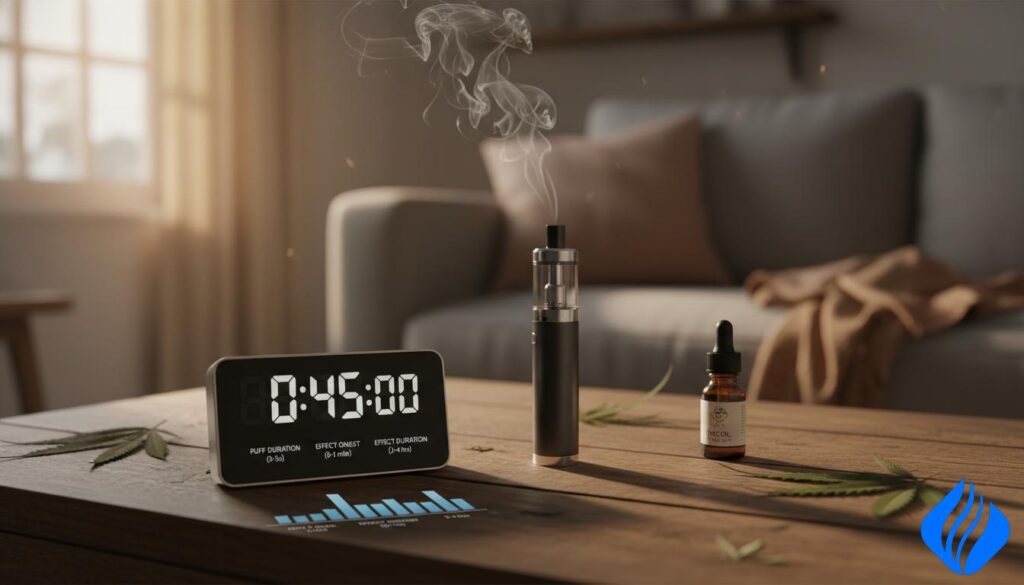
- Onset: The first effects of THC vape start almost right away, within minutes.
- Peak: The strongest effects are felt 30 minutes to an hour after use. This is when THC has the biggest impact.
- Plateau: The plateau phase can last up to two hours. During this time, the effects stay strong.
- Comedown: The comedown phase is when the effects start to fade. It usually ends around the 4-hour mark.
Understanding the THC vape duration and its effect timeline can improve your vaping experience. Knowing these stages and how they vary helps make better choices. It ensures a safe and enjoyable THC vaping journey.
The Timeline of THC Vape Effects
THC vaping effects start almost right away. Each stage, from the first signs to the comedown, has its own details. Knowing these phases helps us understand the whole experience.
Onset Time
THC vaping’s effects kick in fast. You might feel them in just 15 minutes after taking a hit. This quick start is because THC is absorbed quickly through the lungs into the blood.
Peak Effects
After the start, the strongest effects come in 30 minutes to an hour. This is when you feel the most euphoria and psychoactive effects. The fast rise to this peak is loved for its strong and clear effects.
Plateau Duration
After the peak, you enter a stable phase. This can last 1 to 3 hours. It’s a time of deep relaxation and clear thinking, thanks to THC staying in your blood.
Comedown Phase
The comedown is when THC’s effects start to fade. It’s a gradual drop-off that can take hours. You might feel tired or less energetic as it ends, marking the end of the vape experience.
Factors Influencing THC Vaping Duration
It’s important to know what affects how long THC vaping lasts. Things like THC potency, how well it’s absorbed, your metabolism, and how used to it you are all play a part. Understanding these can help you predict how long and strong the effects will be.
THC Concentration
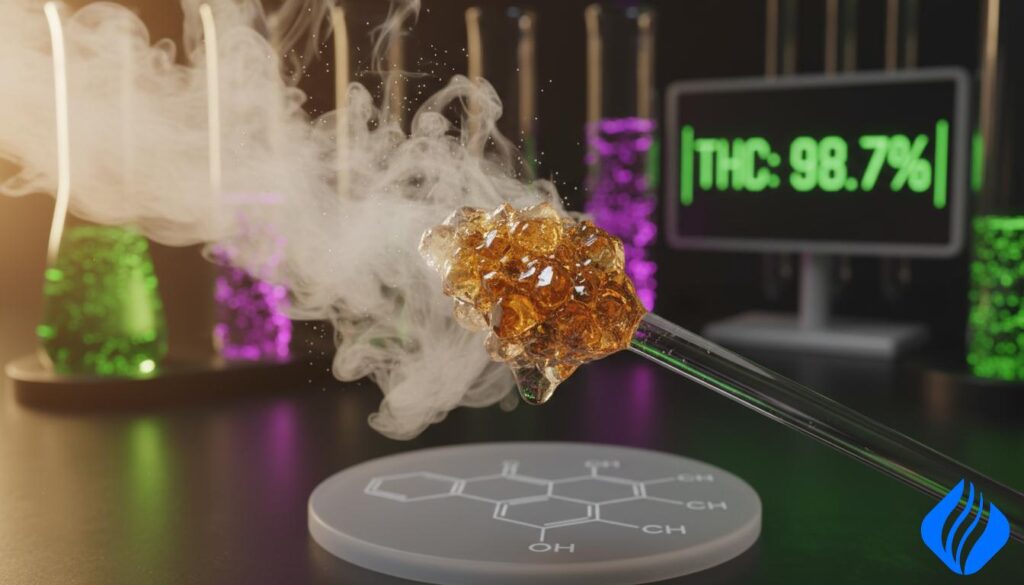
The amount of THC in a vape matters a lot. Vapes with more THC give stronger effects that last longer. For instance, a vape with 80% THC will have a longer and more intense effect than one with 50% THC. Knowing the THC level in your vape is key.
Bioavailability
How well THC is absorbed also affects how long it lasts. When you inhale, more THC gets into your blood, leading to quicker and possibly longer effects. This shows how important it is to consider how your body absorbs THC.
Metabolism
Your metabolism also plays a big role. If you metabolize fast, THC’s effects might wear off quicker. But if you metabolize slow, they could last longer. Things like age, body type, and health can change how fast you metabolize THC.
Tolerance Level
How used to THC you are also matters. Regular users might find effects shorter and less intense. But first-timers or those who don’t vape often will likely feel effects longer and stronger. Knowing your tolerance can help you enjoy vaping more.
| Factor | Impact on Duration |
|---|---|
| THC Potency | Higher potency typically leads to longer-lasting effects. |
| Bioavailability Factors | Higher bioavailability (inhalation) results in quicker onset and extended duration. |
| Metabolic Rate | Faster metabolism shortens effect duration; slower metabolism extends it. |
| Tolerance Effects | Higher tolerance reduces duration; lower tolerance increases it. |
THC Vape Products: Distillate vs. Live Resin
When looking at THC vape products, it’s key to know the difference between THC distillate and live resin. Each has its own special qualities and effects. They cater to different tastes and needs. Let’s explore what makes each unique and how they impact your vaping experience.
Distillate Characteristics
THC distillate is known for its high purity and potency. It’s made by distilling away unwanted stuff, leaving mostly THC. This makes it tasteless, odorless, and easy to measure.
Its high concentration makes THC distillate reliable and consistent. It’s great for those who want strong effects without extra cannabinoids or terpenes.
Live Resin Characteristics
Live resin, by contrast, is famous for its rich terpene profile. It’s made by freezing the cannabis plant quickly after picking. This keeps more of the plant’s compounds, giving it a strong flavor and smell. It also keeps all the cannabinoids and terpenes, for a more complete effect.
Its rich flavor and smell make live resin a favorite among those who enjoy a complex taste. It also offers a balanced effect from all the cannabis compounds, unlike THC distillate.
Entourage Effect
The entourage effect is when all the cannabis compounds work together for better effects. Live resin is perfect for this, with its full range of cannabinoids and terpenes.
THC distillate, being more refined, misses out on this complex interaction. It has lots of THC but doesn’t offer the full spectrum experience many seek for better health benefits.
In short, THC distillate and live resin both have their benefits. The choice depends on what you value more—purity and strength or flavor and the entourage effect.
Hardware Variables
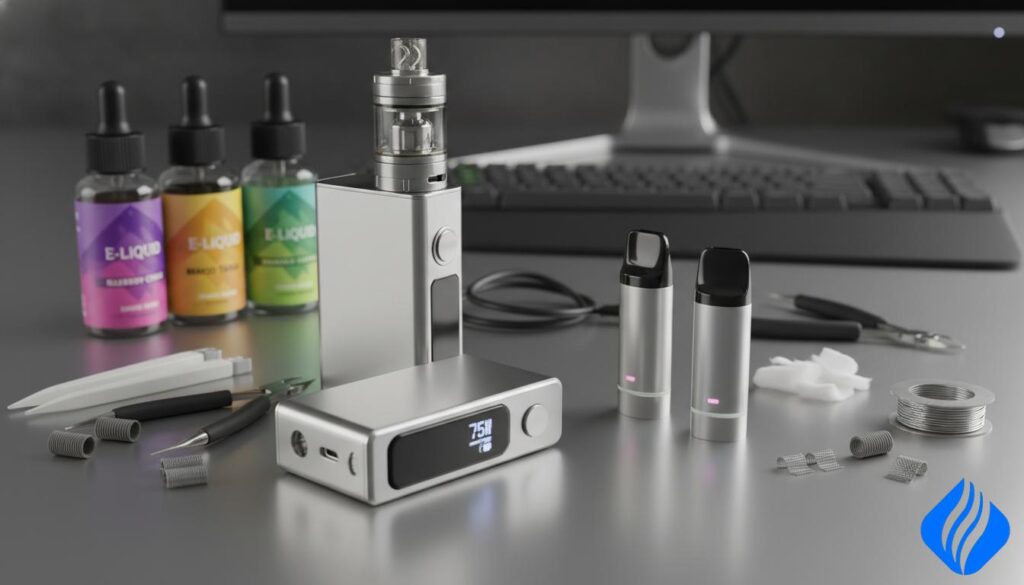
Understanding how different vape hardware parts work together can really improve your THC vaping experience. The right temperature settings, battery types, and how you inhale all affect the quality and efficiency of your vapor.
510-thread Battery Settings
Most vape cartridges use 510-thread batteries because they’re versatile and work well with many devices. It’s important to keep the voltage between 2.8 and 3.2 volts to avoid a burnt taste. Going over 3.8 volts can waste oil and reduce flavor.
Temperature Control
Getting the right temperature settings is key to good THC vaporization. Atomizers work best between 315°F and 440°F. This ensures THC is vaporized well without losing flavor. The best temperature is usually between 350°F and 400°F, for the best flavor and vapor.
Puff Duration
The way you inhale, or your inhalation technique, greatly affects your vaping experience. It’s best to take a three-second draw to use the oil well and avoid waste. Taking steady, controlled breaths helps keep the vapor flowing and prevents clogs.
For more tips on vaping techniques and keeping your hardware in good shape, check out our detailed article here.
| Cartridge Size | Puff Count | Average Oil Consumption (per puff) | Optimal Voltage (V) |
|---|---|---|---|
| 0.25g | 25-50 puffs | 3-5 mg | 2.8-3.2 V |
| 0.5g | 80-160 puffs | 3-5 mg | 2.8-3.2 V |
| 1g | 160-320 puffs | 3-5 mg | 2.8-3.2 V |
| 2g | 400-600 puffs | 3-5 mg | 2.8-3.2 V |
Medical Insights: THC’s Interaction with the Endocannabinoid System
THC’s effects on the body are complex and involve the endocannabinoid system. This system is a network of receptors and substances that control many functions. It plays a key role in how THC works.
Receptor Engagement
THC binds to CB1 and CB2 receptors, affecting how they work. The strength of this binding can change based on several factors. For example, THC can act as an antagonist in some tissues.
It’s important because it affects dopamine release. This is linked to THC’s effects on the mind and body. CB1 receptors in the brain are key to these effects.
Crossing the Blood-Brain Barrier
THC can get past the blood-brain barrier, which is a big deal. This barrier is tough to get through. But THC manages to do it, bringing its effects to the brain.
Using cannabis a lot can change how CB1 receptors work. But, after a break, they go back to normal. CB2 receptors are involved in the immune system and affect dopamine too.
Endocannabinoids like anandamide and 2-AG interact with CB1 and CB2 receptors. This shows how important the endocannabinoid system is. THC works through these interactions to cause its effects.
CBD, even though it doesn’t bind well to CB1 and CB2, can block their action. This can affect how THC works. It’s important to understand how THC and CBD interact.
Cannabis concentrates can have a lot of THC, up to 95%. This means we need to know how THC works in the body. Blood THC levels show how strong these products are. More research is needed to understand the effects of strong cannabis.
| Receptor Type | Function | Effect of THC |
|---|---|---|
| CB1 | Regulates cognition and reward | Stimulates dopamine release |
| CB2 | Modulates immune and inflammatory responses | Reduces dopaminergic activity |
How Tolerance Affects Duration
It’s important to know how THC tolerance affects vaping effects. When you use THC often, your body gets used to it. This means the effects don’t last as long as they used to.
This change in how THC works in your body can make your vaping experience different. It can feel shorter and less intense over time.
Developing Tolerance
People who use cannabis a lot might find that THC vaping doesn’t last as long. This is because your body needs more THC to feel the same effects. It’s like your body gets a “high” from THC, but it needs more to feel it again.
With strong concentrates, this effect is even stronger. These products have a lot of THC, which can make you build up tolerance faster.
A study shows that new users feel the effects of vaping for longer. But, regular users might find the effects don’t last as long.
Mitigating Tolerance Build-Up
There are ways to slow down building up THC tolerance. Taking breaks from THC is one good strategy. These breaks help your body reset and lower your tolerance.
- Adjusting Usage Patterns: Changing how you use THC can help. Try different methods like vaping, edibles, and tinctures.
- Full-Spectrum Products: Using full-spectrum extracts can give a better effect. This is because all the cannabinoids work together.
- Incorporating CBD: Adding CBD can make THC’s effects more balanced. This can lead to a longer-lasting experience without needing more THC.
In summary, knowing how THC tolerance works and using the right strategies can improve your vaping experience. Changing how you use THC can lead to better results. It makes your vaping more enjoyable and sustainable.
Personalizing Your THC Vape Experience
Customizing your THC vaping experience is key to getting the most benefits and avoiding bad effects. It’s important to focus on two main areas: personalized THC dosing and effect monitoring.
Individualized Dosing
Adjusting the THC amount in each vape session is vital. It depends on your body weight, metabolism, and how much cannabis you’ve used before. Start with a small dose and slowly increase it to see how you react.
This careful method helps you find the right amount. It gives you the effects you want without unwanted side effects.
Monitoring Effects
Keeping track of how THC affects you is essential for a safe and fun vaping experience. Write down the time, THC amount, and how you feel after each session. Smartphone apps can also help track your experiences.
This way, you can spot patterns and adjust your dosing based on what you learn. It helps you tailor your vaping to your needs, ensuring it’s both effective and safe.
Legal Considerations in the United States
The THC vaping law in the United States is complex. It involves both federal and state cannabis regulations. At the federal level, THC is a Schedule I substance, making its legal status unclear despite state laws.
State laws vary a lot. Some states allow recreational and medical cannabis, while others ban it. For example, California has strict rules for both types of cannabis. On the other hand, Idaho has a strict no-tolerance policy. These differences affect both users and businesses in the cannabis industry.
Businesses that operate in different states face big challenges. They must follow each state’s cannabis regulations to avoid legal trouble. This means they have to follow rules on packaging, labeling, and how to distribute products.
Here is a comparative snapshot of regulations across some key states:
| State | Recreational Use | Medical Use | Business Implications |
|---|---|---|---|
| California | Legal | Legal | Comprehensive license requirements, significant market opportunities |
| Texas | Illegal | Limited legality for low-THC products | Strict control, limited business opportunity |
| Colorado | Legal | Legal | Well-established market, clear regulatory guidelines |
Understanding the THC vaping law is essential. It requires keeping up with changes in laws and adjusting business practices. The changing cannabis regulations highlight the need for knowledge and compliance. This ensures the safe and legal use of THC vape products in the United States.
Conclusion
As we wrap up our guide on THC vaping, it’s key to highlight the importance of knowing how long THC vape effects last. Many factors, like THC concentration and how your body processes it, play a role. These elements affect the start, peak, and end of the effects.
We’ve explored the details of different THC vape products, like distillates and live resins. We’ve also looked at how the equipment you use, like batteries and temperature settings, can change your experience. Our medical insights into THC and the endocannabinoid system help you understand it better.
It’s our duty to ensure vaping is safe and enjoyable for everyone. By tailoring your THC vape experience and keeping an eye on your dosage, you can get the most out of it. Remember to stay up-to-date on vaping laws in the U.S. and always prioritize your safety. This guide is here to help you vape responsibly and enjoyably.
 English
  German
  Dutch
Dutch  Danish
  Czech
Czech  Italian
  Slovenian
  French
  Hungarian
  Spanish
  Polish