

Fact: manufacturers’ “long-lasting” coil claims vary widely; life depends on user style and e-liquid.
We present a compact, technical guide that defines what “time to replace” means in clear, performance terms rather than marketing language.
Our testing plan previews fast diagnostics: flavor shift, vapor drop, gurgling or leaks, and increased draw resistance. These are practical triggers for replacing a worn coil.
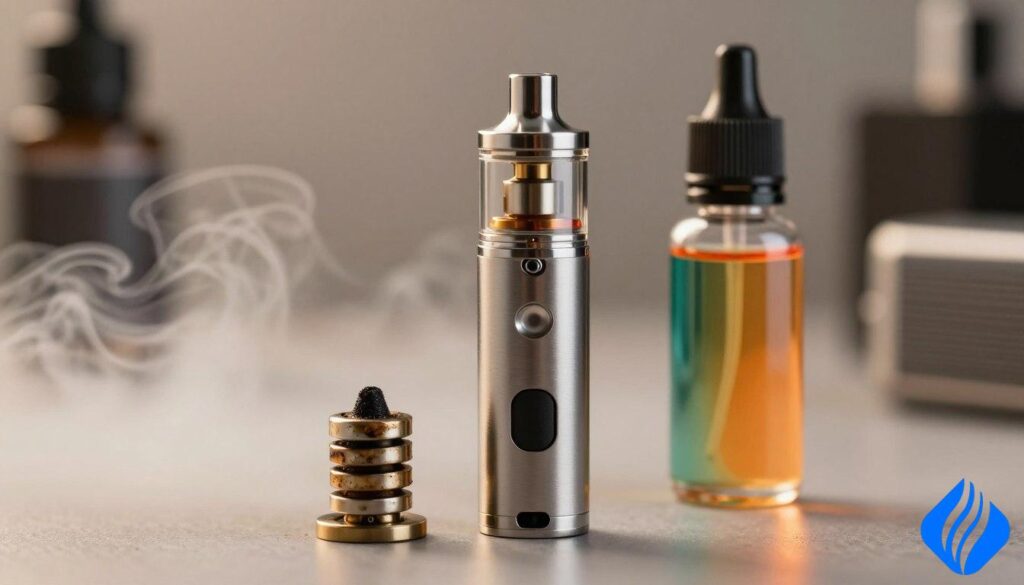
We set scope: refillable tanks and pods with replaceable heads, plus what replacement means for disposables. Safety matters: burnt hits and leaks can expose users to degraded vapor or hot e-liquid. We will include hands-on comparisons for disposables that track Puffs per Dollar, flavor consistency, and battery efficiency.
Finally, we flag nicotine warnings, authentication checks, and basic charging/empty FAQs that follow later. Throughout, we remain objective and data-driven. We aim to help you make sound, safe choices.
Key Takeaways
- We define replacement by performance, not calendar claims.
- Quick diagnostics: taste loss, less vapor, gurgles, harder draw.
- Usage and e-liquid dictate coil life; monitor the user experience.
- Disposable tests will report Puffs per Dollar and flavor consistency.
- Safety triggers include burnt hits and persistent leaks.
- Later sections cover nicotine warnings and authentication/charging FAQs.
How do you know when to change coil on vape?
Begin with a fast, behavior-based test you can run without tools or disassembly. This lets us isolate obvious faults before opening the tank or pod.

The quick “vape test” checklist: flavour, vapour, sound, draw resistance
- Flavour: A muted or dull taste is the earliest sign. If flavour shifts from bright to off or burnt, that is a clear red flag.
- Vapour output: Thinner clouds and a weaker throat hit with the same e-liquid and airflow setting suggest the part is worn.
- Sound: Normal noise is light sizzling. Persistent gurgling often indicates flooding or wick failure.
- Inhalation resistance: Increased draw resistance at the same device setting points at clogging or degraded wick saturation.
Timing depends on user experience and habits. Two users can get different lifespans from identical vape coils because of draw length, chain sessions, and sweet e-liquids that cause faster residue buildup.
Decision rule: If multiple items fail (bad taste + gurgling + harder draw), it’s generally time for a replacement rather than extended troubleshooting. Simple mistakes like overfilling can mimic these problems, so check fill level first.
Once this quick test indicates a likely issue, later sections explain why it happens, typical lifespan ranges, and the correct replacement and priming procedure.
What a vape coil does and why it wears out over time
A coil converts electrical energy into heat that vaporizes e‑liquid, but that repeated heating stresses both metal and fibre. Over many cycles the system loses efficiency. We track the mechanical and chemical causes below.
Coil wire and cotton wick basics
The current runs through a metal element or mesh. That element heats the saturated cotton path, the coil wick, and the liquid becomes aerosol.
This system depends on wick porosity, liquid viscosity, and airflow. A clogged wick or too‑thick e‑liquid cuts vapor production and alters flavours.
Mesh versus standard builds
Mesh offers much larger surface area and faster ramp. Traditional round‑wire builds heat a smaller area and can feel slower.
Both designs gather residue; mesh improves taste but still requires replacement under sustained load or high wattage.
Residue, caramelization, and wick breakdown
Each heat cycle leaves microscopic residue. Sweeteners accelerate gunk formation that blocks vapor paths and darkens e‑liquid.
Caramelization is the dark, thick film that forms after repeated overheating. The cotton can scorch or collapse, which changes wicking and causes leaks or poor draws.
For matching hardware, consider liquid type, recommended wattage, and whether your tank or pod suits MTL or DTL use. For a deeper replacement roadmap see our coil life guide.
Clear signs your coil needs changing
A worn head usually reveals itself through changes in taste, vapour, and airflow resistance. Detecting these signs early keeps use safer and prevents burnt hits.
Muted flavour that goes “off” or burnt
Muted taste that stays even after refilling fresh e-liquid is the most reliable sign. If flavour turns unpleasant or burnt, hotspots or scorched cotton are likely and replacement is required.
Reduced vapour and thinner throat hit
Lower cloud density and a weaker throat hit point at clogged wicking or inefficient heating. These symptoms often appear together and mean performance is degrading.
Gurgling, flooding, and leaking from the airflow
Gurgling or visible leaks at the airflow ports indicate wick failure or excess juice collecting in the chamber. This can siphon liquid into the device and cause messy leaks.
Harder draw and unusual inhalation resistance
Tighter pulls or inconsistent resistance usually mean the cotton has swelled, collapsed, or pockets of juice block airflow. This problem alters the user experience and signals replacement.
Visual cues: darkened e-liquid and browned/black-spotted cotton
Inspect the tank or pod window for darkened e-liquid or juice. Check exposed cotton for browning or black spots. These visual signs confirm residue and gunk buildup.
“If you ever draw hot e-liquid into your mouth, stop immediately. Replace the head and clean the airflow before resuming.”
One symptom can have other causes like overfilling or odd wattage. However, multiple signs together make it clear that it’s time for a new coil and routine maintenance.
How long should a vape coil last in real life?
Real-world lifespan depends more on usage patterns than calendar days.
Many vapers see about 1–2 weeks of solid performance. A broader real-world range is 7–28 days depending on habits and e-liquid choice.
Typical lifespan ranges
Average: roughly 1–2 weeks under normal use.
Range: 7–28 days for casual versus light heavy users.
Why calendar time is a weak metric
Coil wear follows heat cycles, draw length, wattage, and sweetener load rather than simple elapsed time. Chain sessions and long pulls compress life quickly.
Simple turnover method
- Note the install date on your kit.
- Watch for early symptoms: muted flavor, gurgling, harder draw.
- Replace early if multiple signs appear; that often saves e-liquid and mess.
Priming properly and running within the rated wattage keeps coils in the expected lifespan range. As a rule, most heads last at least about a week; faster turnover usually signals a setup mismatch or unsuitable e-liquid.
“Replacing earlier is often cheaper than vaping through degraded performance.”
What shortens coil life and makes you change vape coil more often
Specific liquids and usage patterns significantly shorten head lifespan. Sweet and dessert profiles leave sugary deposits that speed gunking. These deposits reduce wicking and blunt flavours rapidly.
Sweet profiles and gunk formation
Sweet/dessert e-liquid contains additives and darker compounds that caramelize under heat. That layer blocks the cotton and mesh, forcing frequent replacement of coils.
PG/VG ratio and resistance mismatch
Thin, high-PG vape juice can flood a high-power tank. Thick, high-VG liquids can starve low-power pods. Match the liquid type with MTL or DTL setups.
- MTL: higher resistance (~0.7–1.3Ω) and balanced PG/VG.
- DTL: lower resistance (~0.15–0.6Ω) and higher VG for thicker clouds.
Wattage, power, and vaping style
Running outside the coil’s rated wattage causes hotspots and scorched cotton. Chain vaping and long draws keep coils heat-soaked, thin the juice, and raise flood or dry-hit risk.
Storage, cleanliness, and airflow
Residue lodged in the chimney or airflow channels perpetuates gurgling even after a new coil is fitted. Regular cleaning of the tank and pod base reduces this issue.
“Pause between puffs, obey the printed wattage range, and pick an e-liquid that suits your kit—these are the simplest ways to extend coil life.”
Quick fixes: pause between draws, avoid pushing wattage for stronger hits, and keep cotton ports saturated. Correct these variables and the need to change vape heads becomes far less frequent.
How to replace and prime a new coil the right way
Start with simple safety and prep steps; the rest is a few quick, repeatable moves.
Step-by-step swap for tanks, pods, and replaceable heads
Prep: wash hands, power off the device, remove the tank or pod, and use a paper towel to control spills.
Tanks: unscrew the base, remove the old coil, inspect O‑rings and contact pins, then fit the new coil.
Pod systems: pull the press‑fit coil or replace the whole pod if integrated. Confirm the fit is snug.
Priming and wicking: the 5–10 minute soak
Apply a few drops of e‑liquid to the exposed wick ports when possible. Fill the tank or pod and wait 5–10 minutes for full saturation.
Why it works: saturated wick prevents dry hits and reduces scorching during the first heat cycle.
After-install setup
Start at the low end of the recommended wattage and raise power slowly over several puffs. Slightly more open airflow helps break‑in for DTL setups; tighten for MTL.
Take short, gentle draws at first and avoid chain sessions until the new coil settles. For more lifespan guidance, see our coil lifespan guide.
Disposable vs refillable coil maintenance, plus hands-on comparisons for value
Disposable units and refillable kits demand different upkeep; the economic math changes how we approach maintenance. With refillable pods you swap a single coil. With most disposables, replacing the part means replacing the entire device.
Core technical snapshot (check before buying)
- Battery: mAh rating (higher improves usable life).
- E-liquid: ml capacity (larger reduces rapid empty events).
- Nicotine: 2% or 5% nic salt options.
- Coil type: mesh vs dual mesh affects flavour life.
- Charging: USB‑C support for rechargable disposables.
Comparisons and testing highlights
Puffs per Dollar: use rated puffs ÷ price as a baseline. Real output varies with draw length and airflow.
| Product | Battery (mAh) | ml | Nic | Coil type | USB‑C |
|---|---|---|---|---|---|
| Main product | 950 | 12 | 2%/5% | Dual mesh | Yes |
| Geek Bar | 550 | 6 | 2%/5% | Mesh | No |
| Lost Mary | 850 | 13 | 5% | Dual mesh | Yes |
| Raz | 600 | 8 | 2%/5% | Mesh | Yes |
Hands-on: throat hit tends to stay smooth until about 5,000 puffs; flavour often mutes first, then top notes fade. Vapour production drops as battery voltage falls or e-liquid runs low.
“Gurgling or weak hits often mean low juice or condensation, not a serviceable part.”
Practical checkpoints & FAQ
- Empty signs: persistent weak vapour, sharp flavour loss, blinking LEDs.
- Recharge safely: use a reputable low‑output USB source, avoid overnight charging, stop if hot.
- Authenticity: scan the QR code and follow verification at Sokvape.
Where to browse: Disposable Vapes, Hot Sale, RandM, Bang on SokVape for hands‑on options and deals.
Nicotine warning: Nicotine is addictive. For adults 21+ only. Keep away from children and pets. If pregnant, breastfeeding, or with heart or respiratory conditions, consult a clinician before use.
Conclusion
In summary, a few clear checks keep performance steady and hazards low.
We recap the decision framework: muted or burnt taste, thinner clouds, gurgling or leaks, and increased draw resistance are primary signs to replace a worn coil.
Expect most users to see roughly 1–2 weeks of solid service; a 7–28 day span is possible with matched e‑liquid, correct wattage, and careful habits.
Best practices: prime new heads, stay inside the rated power range, avoid chain sessions, and keep airflow channels clean. Stop use if harsh taste or liquid backflow occurs and clean before resuming.
For disposables, check charge, empty status, and authenticity. For further practical timing guidance visit when to change your vape coil.
 English
  German
  Dutch
Dutch  Danish
  Czech
Czech  Italian
  Slovenian
  French
  Hungarian
  Spanish
  Polish