

how long do rechargeable vapes last is the central question we answer with data and hands-on testing. We set expectations for per-charge battery life and total device lifespan, then compare core specs and real usage.
We explain charge cycles for lithium-ion cells and show why two users get different results. Our testing covers mAh, e-liquid ml, 2% vs 5% nicotine salt mixes, mesh vs dual mesh coils, and USB‑C charging.
We translate lab puff counts into realistic puffs per day and months or years of ownership. Expect clear notes on throat hit, vapor stability, heat during chain sessions, and flavor shift after ~5000 puffs. We also run a head-to-head vs Geek Bar, Lost Mary, and Raz using puffs-per-dollar and flavor consistency as anchors.
Throughout, we keep the voice technical and transparent. Our goal is to help US adult vapers estimate device performance and make purchase decisions using measurable specs and hands-on observations.
Key Takeaways
- We separate per-charge runtime from total lifespan for practical clarity.
- Battery health is best judged by charge cycles, not calendar days.
- Core specs: mAh, ml, coil design, and USB‑C matter for performance.
- Puff counts are benchmarks; real results depend on draw style and frequency.
- Hands-on tests compare vapor, heat, and flavor over thousands of puffs.
What “lasting” really means for a rechargeable vape in 2026
Practical longevity requires two lenses: immediate runtime per session and cumulative life over many cycles. We define terms so later calculations are meaningful for real users.
Battery runtime between charges vs. total device lifespan
We use battery runtime to mean hours or sessions per single charge. This is what you notice day to day.
Device lifespan covers months or years of use and the wear on cells and coils. Typical lithium-ion cells endure roughly 300–500 cycles before capacity declines.
Why puff ratings are lab estimates, not real-life draw length
Manufacturers report puff counts from machine tests that often use ~1‑second pulls. Real users take 2–3 second draws. Longer pulls use more power and e-liquid, cutting rated puffs sharply.
Think in hours per charge, ml per day, and cycles per year rather than a single puff number. This mental model links specs to user experience and different vaping style choices.
| Metric | Lab context | Real impact |
|---|---|---|
| Rated puffs | 1s machine draws | Falls with 2–3s draws; fewer usable puffs |
| Per-charge runtime | Measured in mAh and average draw | Varies by wattage, coil, and user pull strength |
| Device lifespan | Charge cycles (300–500) | Capacity fade, flavor shift, coil wear |
For a deeper technical comparison and practical examples, see our reusable vape runtime guide.
How long do rechargeable vapes last: a practical lifespan baseline
We set a practical baseline by converting battery cycle metrics into clear ownership windows for US adult vapers. This gives a realistic view of device performance instead of relying on rated puffs alone.

Typical lithium-ion lifespan: 300–500 cycle range
Most modern batteries are lithium‑ion. A common window is 300–500 charge cycles before capacity loss becomes clear.
Put another way: a 300 500 charge expectation means measurable fade after a few hundred full charges. This is the repeatable technical anchor we use.
Real-world ownership: from months to 2+ years
If you charge daily, you approach the low end—roughly six months of heavy use. Charge every other day and the same battery can reach 2+ years.
Practical baseline: most adult users can expect a usable device for about 6 months to 2+ years, depending on care and charging habits.
Why disposables often stop near 500–600 puffs
Disposables pair a modest battery with limited e‑liquid. That design typically caps output around 500–600 puffs in many markets.
The difference is simple: rechargeable devices age by battery wear and coil fatigue, while disposables are sized to finish their charge and fluid at roughly the same time.
- Common failure modes: deep discharges, charging in heat, and chain vaping stress batteries and coils.
- Next, we translate this baseline into cost‑per‑puff by mapping daily puff counts and charging habits to real use.
How to estimate your vape’s lifespan using your daily habits
Start with a short audit. Identify your device class and note one full battery cycle plus one full pod or tank. This gives raw data you can scale to weekly and monthly use.
Step one: identify device type
Classify as prefilled pod kit, refillable pod, or mod. Each has different coil change needs and battery loads.
Step two: estimate daily puffs and draw length
Record average puffs per session and whether draws are short (MTL) or long (DTL). Draw length is the main hidden variable behind runtime complaints.
Step three: map charging frequency to cycle wear
Use the 300–500 full charge cycle range to convert charging frequency into months of usable life. Daily charge ≈ lower months; every-other-day extends life toward 2+ years.
Step four: translate e-liquid ml into puffs
Estimate puffs per ml (varies by draw). A 2 ml pod commonly yields ~200–600 puffs in real use. Multiply by tank size to get expected puffs per fill.
| Device | Typical puffs per fill | Charge frequency | Practical lifespan |
|---|---|---|---|
| Prefilled pod kit | 200–600 (2 ml) | Daily or every 2 days | 6–24 months |
| Refillable pod | 400–1200 (larger ml) | Every 2–4 days | 1–2+ years |
| Mod (replaceable cells) | Varies by tank | Less frequent, cell swap possible | 2+ years with care |
Sanity check: track one fill and one charge. Scale those numbers to a week to validate your estimate and spot the key factors that raise consumption.
Core technical specs that determine longevity and performance
We focus on five measurable specs that predict usable life and steady output for modern vape kits.
“Real durability comes from balanced capacity, sensible pod size, and stable charging standards.”
Battery capacity (mAh)
Higher mAh means fewer recharge events and milder depth-of-discharge stress. Kits range ~500 mAh to 1,000+ mAh, and greater capacity supports all-day use with less strain on cells.
Pod volume and e-liquid (ml)
Small 2 ml pods need frequent refills and pod swaps. Larger reservoirs reduce interruptions but may still hide coil wear in single-use formats.
Nicotine strength (2% vs 5%)
2% nic salt can extend sessions for some users. 5% often reduces intake per session, but it may prompt shorter, more frequent hits depending on tolerance.
Coil architecture
Mesh coils heat evenly and often keep flavor stable. Dual mesh raises vapor and power draw, which can shorten coil life and increase battery cycles.
USB‑C charging
USB‑C gives consistent voltage and less connector wear. Use proper adapters and avoid charging in high heat to protect battery life and device reliability.
Battery life and battery lifespan: what hands-on testing revealed
We ran device-level trials to map visible performance shifts across a full charge curve. Our goal was to describe practical changes you will notice during use and across months of ownership.
hands-on testing showed that a battery’s output rarely stays perfectly flat. Voltage falls steadily, and users sense that as softer hits or reduced warmth near the end of a single charge.
Throat hit patterns
Some kits stay smooth until the final segment of the charge. Others deliver a strong hit early and mellow mid-charge when regulation is weak. That change in the vaping experience is normal; abrupt drops are a sign of failing cells.
Vapor production consistency across a full charge
Devices with solid regulation held vapor density steady until the last 10–20% of charge. Unregulated models show a gradual fade that many call “it’s dying.”
Heat buildup, chain vaping, and when performance starts to dip
Chain use raises device temperature and spikes power draw. Hot batteries cut runtime and speed coil wear. Avoid deep drains and constant hot charging to protect battery lifespan.
“Consistent performance comes from sensible power demand, regulated output, and responsible charging.”
| Metric | Observed effect | Practical tip |
|---|---|---|
| Throat hit | Strong → smooth as voltage drops | Note gradual change vs sudden loss |
| Vapor density | Stable with regulation; fades on weak kits | Prefer regulated output for steady experience |
| Heat & power draw | Chain pulls increase temp and current | Space pulls; cool device between sessions |
In short, modest end-of-charge fade is normal. Sudden erratic output means batteries are aging or damaged. Follow basic charging good practices and you will get a better long vape and steadier performance over time.
Flavor consistency over time, including after 5000 puffs
Flavor consistency is the degree to which a taste profile stays the same from new to worn. We define it as similarity across early, mid, and end stages of use, not just peak intensity.
Mesh heating and even delivery
Mesh spreads heat across a larger surface. That reduces hot spots that scorch sweeteners and cooling agents. The result is steadier flavor and better performance for more puffs.
What changes first in the flavor stack
Top notes often flatten first. Sweetness can dull or turn syrupy. Cooling additives may feel thinner or harsher as the wick and coil age.
Dual mesh tradeoffs and coil fatigue signs
Dual mesh keeps intensity higher but raises heat and can speed wear. Watch for muted taste, gurgling, inconsistent vapor, and burnt edges—clear signs a coil needs replacement.
| Feature | Mesh | Dual mesh |
|---|---|---|
| Flavor stability | Higher over mid-life | Strong early, faster fade |
| Heat | Even, moderate | Higher, more stress |
| Common end signals | Muted taste, dry hits | Gurgling, burnt edges |
Practical tip: avoid chain pulls and pause between hits to make flavor last longer. For guidance on replacing a coil, see our vape coils lifespan guide.
Puffs per dollar: cost-per-puff math that actually helps you choose
We define puffs per dollar as a budgeting tool, not a marketing claim. Count every upfront cost and every ongoing spend to get an honest number you can act on.
What to include: add the device purchase, pod or coil replacements, and the small cost of charging. Factor in battery wear — charge cycles shorten usable life and shift replacement timing.
- Formula: (device cost + consumables) ÷ realistic total puffs = cost per puff.
- Use realistic draws, not factory puff counts. A disposable rated ~500–600 puffs will vary with draw style.
- Compare two profiles: light user vs chain user. Higher daily puffs raise the per-dollar value of larger kits fast.
| Example | Estimate | Outcome |
|---|---|---|
| Disposable | 500 puffs / $6 | $0.012 per puff |
| Rechargeable kit | 10,000 usable puffs (pods + device) | $0.003–0.005 per puff |
| Key driver | Battery life & regulation | Better-regulated devices deliver more usable puffs and more value that last. |
Bottom line: kits often become more cost-efficient once upfront cost is spread across many months. Next, we apply this math in a head-to-head against Geek Bar, Lost Mary, and Raz.
Head-to-head comparison: main rechargeable vs Geek Bar, Lost Mary, and Raz
A single comparison framework lets us read spec sheets and translate them into expected user outcomes across competing products.
We evaluate the main refillable device alongside Geek Bar, Lost Mary, and Raz using the same checklist and the same realistic draw assumptions.
Specs comparison checklist
- Battery capacity (mah): note the cell size and listed mah for runtime expectations.
- E-liquid volume (ml): check refill size or pod capacity.
- Nicotine profile: nic salt options, typically 2% or 5%.
- Coil type: mesh vs dual mesh and its impact on flavor and wear.
- Charging: presence of USB-C for consistent charging and lower connector wear.
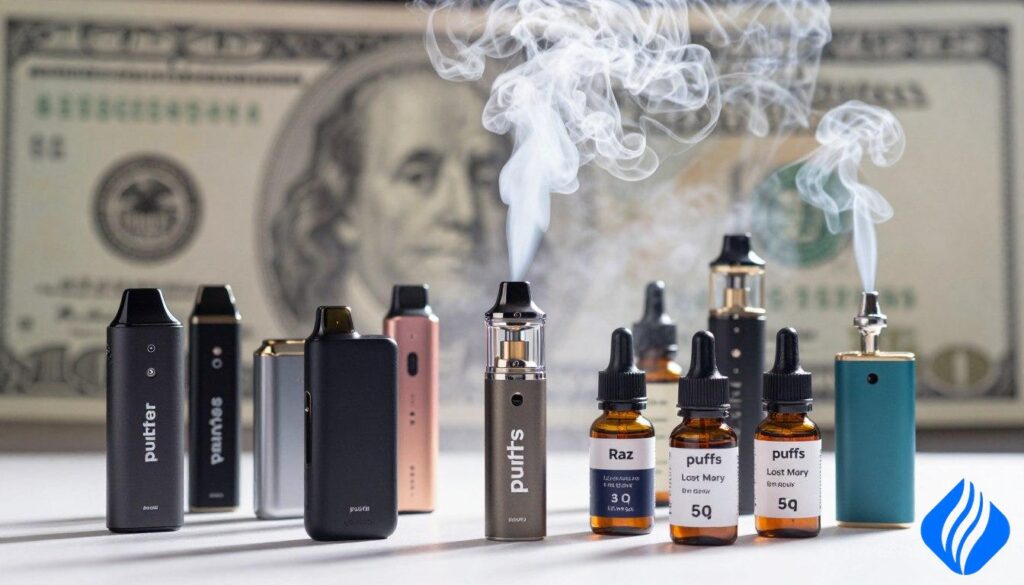
Puffs per dollar: which option stretches your budget furthest
We compare cost logic rather than rely on factory puff counts. Use device price, pod or replacement spend, and realistic service life to compute puffs per dollar.
Flavor consistency: which holds up past mid-life use
Mesh coil systems tend to keep steady taste through mid-life. Hotter, high-output designs show stronger early hits but often shift faster as the coil ages.
Who each device fits best
Light users who value convenience may prefer disposables for simple use. Moderate users gain the most from refillable devices because of cost efficiency and replaceable pods.
Heavy or chain users should choose regulated kits with larger mah, good heat management, and easy coil or pod swaps to protect battery health and overall performance.
“Compare the five spec fields on each product page and apply your typical daily draws to get a realistic comparison.”
| Field | Why it matters | How to check |
|---|---|---|
| mah | Fewer recharges and milder cycle wear | Product spec sheet / listing |
| ml | Refill interval and pod swaps | Pod or tank description |
| Coil | Flavor consistency and lifespan | Manufacturer coil spec |
| USB-C | Safer, more consistent charging | Charging port detail |
Where to shop on Sokvape for longer-lasting options
This section lays out clear browsing routes on Sokvape for buyers who prioritize battery life and steady performance.
Start with the Disposable Vapes page to set quick-use benchmarks. These items show typical short-run behavior and help you gauge expected puffs and convenience.
Check Hot Sale for value
Visit Hot Sale to find deals that improve your puffs per dollar. Still check core specs—mAh, ml, coil type, and USB‑C—before choosing.
Explore RandM and Bang collections
Browse brand pages for spec-forward comparisons. The RandM and Bang lines list coil architecture and pod sizes so you can compare kits head-to-head.
How to pick a product page that will last longer
Look for larger stated capacity, USB‑C charging, and mesh or dual‑mesh coil notes. Match the class—disposable, refillable pod, or mod—to your daily use so the chosen kits actually perform and last longer.
“Choose by measured specs, not marketing claims, to get predictable runtime and steady performance.”
| Where | What to check | Why it matters |
|---|---|---|
| Disposable Vapes | Rated puffs, pod ml | Benchmarks short-run behavior |
| Hot Sale | Price, listed mAh | Better puffs per dollar when specs match needs |
| Brand pages (RandM/Bang) | Coil type, pod size | Compare performance and coil longevity |
How to troubleshoot end-of-life signals and recharge safely
We start with a simple diagnostic: identify whether symptoms come from the pod/tank or the battery. The fixes differ, and so does the effect on overall lifespan and safety.
How to know if it’s empty?
Look for a clear flavor drop, thin or weak vapor, and early dry-hit signs. Stop using the pod if curling or burnt notes appear to avoid wick damage.
Note the gray zone: airflow blockages, condensation in the mouthpiece, or a fatigued coil can mimic an empty pod even with fluid still present. Check the pod first before blaming the battery.
How to recharge safely?
Use USB-C cables and adapters from reputable brands. Charge on a hard, cool surface and unplug when the indicator shows full. Avoid charging in direct sun, inside hot cars, or on soft surfaces that trap heat.
Topping up around 20% remaining reduces deep-discharge wear. Keep contacts clean and avoid repeated 0% cycles to protect the battery and improve device performance.
When to replace: clear replacement triggers
Replace consumables when flavor mutes, gurgling appears, or burnt tastes start. These usually point to coil or pod failure.
Replace the whole device when you see rapid drain that worsens over weeks, overheating during normal use or charging, bulging, or highly inconsistent output. Those are safety signals that indicate the battery has degraded.
Practical rule: treat a persistent rapid drain, swelling, or heat as end-of-life and retire the device for safety.
| Symptom | Likely cause | Action |
|---|---|---|
| Sudden flavor drop | Coil fatigue or empty pod | Inspect pod, replace coil/pod if needed |
| Weak vapor but fluid present | Airflow block or condensation | Clear airway, dry and re-seat pod |
| Rapid battery drain | Reduced cell capacity | Test charge cycle; prepare to replace device |
| Overheating during charge/use | Cell damage or bad charging environment | Stop use; retire device if issue repeats |
For step-by-step charging guidance and expected times for single-use kits, see our charge vape guide. Follow these care habits and you will preserve battery health, avoid common failures, and keep steady performance from your devices.
Authenticity, safety, and nicotine warning
Product authenticity and user safety are core concerns for anyone buying a vape. Counterfeit items can hide faulty batteries, unknown e-liquid contents, or substandard coil materials. We set a simple rule: if you cannot confirm authenticity, do not trust the device for regular use.
Is it authentic? Verify with the QR code
Check the product’s QR code or authentication label before first use. Scan the code and confirm the product name, variant, and validation status on Sokvape by visiting: https://www.google.com/url?sa=E&source=gmail&q=sokvape.com.
What to inspect: matching SKU or model, a clear validation response, and intact tamper-evident seals. If anything looks off, return the item to the seller or choose a verified retailer.
Safety and device care
Do not use devices with visible damage, swelling, or liquid inside the USB‑C port. Persistent overheating during normal use or charging is a safety red flag. Stop using and retire a unit that shows these signs.
Basic care tips: keep contacts clean, charge on a hard cool surface, and avoid extreme temperatures. These steps reduce battery stress and lower the chance of failure.
Nicotine warning
Nicotine warning: This product contains nicotine. Nicotine is an addictive chemical.
Our guidance is intended for adults 21+. Choose nicotine strength deliberately and start conservatively, especially if you are new to vape devices.
“If you can’t verify authenticity, you can’t reliably trust battery safety, e-liquid contents, or coil materials.”
Conclusion
Conclusion: we answer “how long do rechargeable vapes last” by converting specs and daily habits into clear expectations for any vape device.
Most lithium‑ion batteries show about 300–500 charge cycles. That usually maps to several months up to 2+ years of usable life depending on usage and care.
Estimate lifespan by identifying your kit type, tracking puffs per day and draw length, mapping charging frequency to the cycle budget, and converting e-liquid use into realistic puffs.
Prioritize two metrics: puffs per dollar for value and flavor consistency for satisfaction. Expect softer throat hit and lower vapor as voltage drops; avoid chain vaping and heat to protect batteries and coils.
Charge responsibly with USB‑C, verify authenticity via QR, and shop Sokvape sections (Disposable Vapes, Hot Sale, RandM, Bang) by specs not claims.
 English
  German
  Dutch
Dutch  Danish
  Czech
Czech  Italian
  Slovenian
  French
  Hungarian
  Spanish
  Polish