

Typical THC disposable life runs about 100–200 puffs, and battery efficiency often decides the device end. Heavy use can empty a 1g cartridge in roughly 3–5 days, while light users stretch that over weeks. We begin with that fact so expectations match real use.
We outline device lifespan versus effects duration. That means oil volume, battery mAh, and coil wear each matter. We will compare disposables, carts, and pods and list specs like ml, mAh, mesh coils, and USB‑C charging.
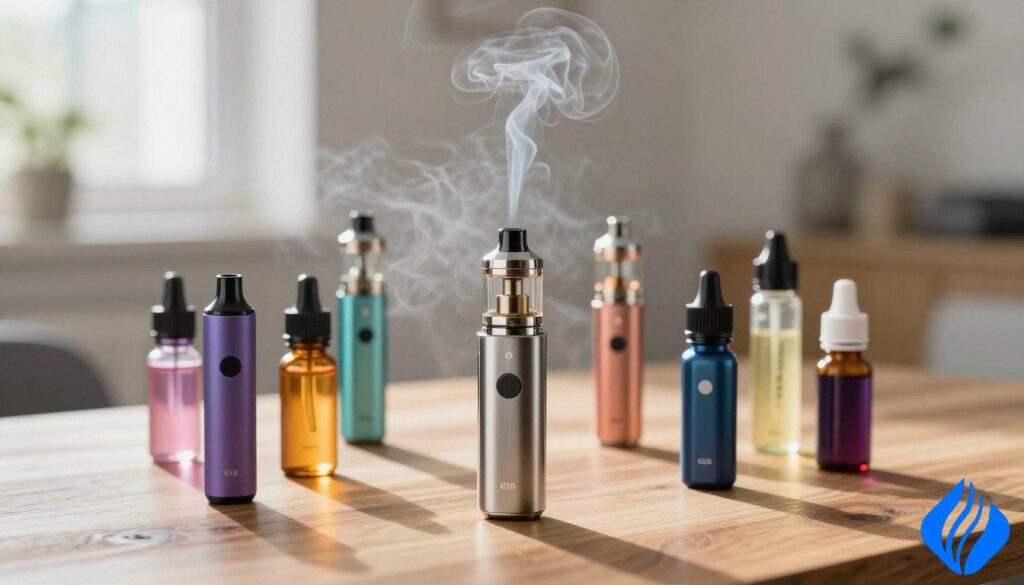
Our hands-on tests will measure throat hit, vapor output, and flavor fade through 5,000 puffs. We track draw length, voltage/heat, airflow, oil viscosity, and user frequency. That yields days/weeks estimates and puffs‑per‑dollar numbers for real buying decisions.
Safety first: we will cover recharge best practices, authenticity checks, and a required nicotine warning later in the guide.
Key Takeaways
- Device life depends on oil, battery, and coil, not the psychoactive time of a session.
- Disposable cartridges often give ~100–200 puffs; battery can fail sooner.
- Technical specs (mAh, ml, coil type, USB‑C) predict real-world lifespan.
- We test flavor and output over 5,000 puffs for realistic performance data.
- We’ll provide recharge, safety, and authenticity checks to protect users.
What “Lasts” Means for a Weed Vape: Oil, Battery, and Coil Lifespan
We treat device endurance as a three-way contest between oil, battery, and coil. Each part shapes usable life. The system ends when any one component makes use unacceptable.
Oil depletion often looks like simple emptying, but battery failure or coil flavor loss can signal the end first. In disposables the oil + battery combo usually determines service life.
Oil versus battery: the real race
Higher voltage and more heat increase vapor per pull. That gives bigger hits but cuts total puffs. Chain vaping speeds both oil burn and battery drain.
Heating efficiency and airflow
Restricted airflow forces harder draws. The coil runs hotter and oil consumption rises. That also raises the risk of burnt flavor and clogged wicks.
Why long draws and chain vaping shorten life
Sustained draws keep coils hotter longer. Terpenes fade and coils deteriorate faster. Many users stop when flavor turns harsh, even if oil remains.
“Treat draw length and cooldown time as controllable factors that extend usable life.”
Longevity mindset: prefer shorter pulls, let coils cool, and choose devices with higher mAh or mesh coils for steadier output. Different devices manage airflow and power differently, so habits produce varied results across vapes.
| Factor | Effect on life | Control |
|---|---|---|
| Oil (ml) | Limits total sessions | Choose larger cartridges |
| Battery (mAh) | Determines usable power and session count | Recharge, pick higher mAh |
| Coil type | Mesh = even heat; dual mesh = faster output | Select mesh for smoother longevity |
| Heat / voltage | Higher settings = more vapor, fewer puffs | Use moderate settings |
how long does a weed vape last in Real Use (Daily, Weekly, and Monthly Ranges)
Real-world use turns lab numbers into calendar spans — we translate puffs into days, weeks, and months.

Starting point: many THC carts and disposables list ~100–200 puffs. Draw length, voltage, and coil type change that number quickly.
Typical puff counts for THC carts and disposables in everyday use
For heavy users, a 1g cartridge often empties in ~3–5 days. Regular users who vape moderately can stretch the same cart across ~8–12 weeks, sometimes up to three months with careful draws.
How heavy vs. light users turn the same device into “days” or “months”
Short, measured pulls and lower power make cartridges last longer. Chain draws and higher voltage burn oil faster and drain batteries.
Why effects duration is different from device lifespan
Effects onset is fast: 3–10 minutes. Peak sits around 30–60 minutes. Total experience typically runs 1–3 hours. That period is separate from how many puffs remain in a cart.
“Stronger THC potency can reduce hits needed, but it doesn’t extend hardware life.”
- Shelf stability: oil can remain usable for months if stored cool and upright.
- Hardware wear: coil and battery degrade with heavy usage, regardless of oil left.
Device Type Matters Most: Disposables vs. Carts vs. Pods
Device selection defines most real-world performance, often before oil or potency enter the picture.
We compare three main platforms on power delivery, airflow, coil efficiency, recharge, and waste. This shows why the chosen type usually predicts usable life and perceived quality.
Disposables
Disposables offer the simplest way to use. They are single-unit pens with built-in oil and battery.
Tradeoff: low cost, limited battery (~250–500mAh). Batteries can die before oil is finished, creating waste.
510 cartridges
510 carts pair with rechargeable batteries. That allows adjustable voltage and custom settings.
This setup extends longevity. You replace only the cartridge and keep a high-capacity battery for better puffs-per-dollar.
Pods
Pods use closed-loop design for efficient heating and steady airflow. They often yield smoother hits and conserve oil.
Note: pods usually mean brand lock-in but deliver consistent performance for on-the-go users.
“Device type is the single biggest predictor of whether your unit runs for days or weeks.”
| Type | Typical Battery (mAh) | Key Strength | Primary Tradeoff |
|---|---|---|---|
| Disposable pen | 250–500 | Plug-and-play convenience | Battery may fail before oil |
| 510 cart + mod | 650–2000+ | Rechargeable, adjustable power | Higher upfront cost |
| Pod system | 500–1500 | Efficient heating, consistent hits | Brand cartridge lock-in |
Quick buying guide: casual users favor disposables. Daily users get value from 510 carts and good batteries. On-the-go users benefit from pod consistency.
Next, we will translate these contrasts into measurable specs—mAh, ml, coil design, and charging port—that predict true longevity.
Core Technical Specs That Predict Longevity (What to Check Before You Buy)
Before you buy, focus on measurable specs that predict usable life rather than marketing puff counts.
Battery capacity (mAh)
mAh defines usable power. Small disposables commonly use ~250–500mAh. Rechargeable setups often sit at ~650–2000mAh+.
Higher mAh means more sessions between charges and steadier output under higher voltage or higher heat settings.
Oil volume (ml) and session math
Common cartridges are 0.5–1.0 ml. With moderate draws, 0.5 ml can cover several days to a few weeks. Draw length and power settings still control consumption.
Nicotine vs THC strength
Disposable labels often state 2% or 5% nic salt. THC products list potency; stronger THC reduces dosing frequency but not hardware wear. Oil volume and heating efficiency drive device lifespan.
Coil type and heating
Mesh coil offers even heating and smoother flavor; dual mesh increases surface area for bigger vapor but may raise oil use if tuned hot.
Charging port
USB‑C improves charging reliability and reduces connector wear versus micro‑USB. Faster, safer charging supports true longevity.
“Prioritize specs — mAh, ml, coil design, and USB‑C — to compare products objectively.”
| Spec | Typical Range | Impact on lifespan |
|---|---|---|
| Battery (mAh) | 250–500 / 650–2000+ | Higher mAh = more sessions and steadier output |
| Oil (ml) | 0.5 / 1.0+ | More ml = more total puffs, but usage varies with draws |
| Coil | Mesh / Dual mesh | Mesh = even heat; Dual mesh = larger vapor, possible faster consumption |
| Port | USB‑C | Reliable charging, less wear, faster top-ups |
Pre‑purchase checklist: verify mAh, ml, coil type, and USB‑C. For cartridge specifics and lifespan examples, see our cartridge lifespan guide.
Puffs per Dollar: Estimating Value Without Guesswork
You can convert your typical draw and session count into a clear puffs-per-dollar metric. This keeps comparisons objective and ties real usage to price.
Quick calculation
Estimate your average draw length and daily hits. Count how many puffs that equals per day, then multiply by days of expected use.
Divide the total puffs by the product price. The result is your puffs-per-dollar. Use that figure to compare carts, cartridges, and disposables directly.
Why capacity often wins
Higher-capacity batteries and larger oil tanks usually give more usable puffs. Rechargeable systems and refillable carts tend to offer better puffs-per-dollar—provided coil quality holds flavor long enough to use the oil.
Hidden costs that cut value
- Clogs and residue: trapped oil reduces usable volume and forces earlier replacement.
- Burnt hits: bad coils or high heat ruin flavor and push users to discard units.
- Dead battery: many disposables show oil left when the battery fails, creating waste.
“Puffs-per-dollar is useful, but flavor consistency determines whether those puffs matter.”
Decision rule: if you aim for value, choose rechargeable carts or pods; if you want simple use, accept higher waste with disposables. Next, we examine flavor consistency and when taste fades after hundreds to thousands of puffs.
Flavor Consistency Over Time: What Changes After Hundreds to Thousands of Puffs
We tested devices across repeated sessions to trace flavor and throat-sensation shifts. Our hands-on testing focused on throat hit, vapor output, and flavor evolution through extended use. Results show clear patterns tied to coil design, airflow, and user settings.
Hands-on notes: smooth vs. strong throat hit
Disposables often start punchier. That initial strength can feel satisfying but can turn harsh after many puffs.
Carts and pods stay smoother when voltage and heat are controlled. Smooth hits usually mean efficient wicking and balanced power delivery.
Vapor production trends and warning signs
Consistent vapor means stable wicking and battery output. Sudden drops in vapor typically point to low battery, clogging, or coil saturation.
Long draws and chain sessions raise coil temperature and can dry the wick. That raises the risk of burnt hits and uneven flavor.
What to expect after 5000 puffs
At ~5000 puffs in high‑capacity units we saw: muted terpenes, a shift in sweetness, and more frequent harsh notes. Coil and wick aging produced a flat, toasted profile unless users reduced power.
Temperature, voltage, and terpene preservation
Lower heat and conservative voltage settings preserve delicate terpenes and reduce harshness. The tradeoff is less raw punch per hit but greater perceived quality over time.
“Higher power delivers stronger hits but shortens usable life and raises burnt‑taste risk.”
Practical takeaway: choose devices with good airflow, mesh coils, and adjustable settings to make flavor last longer. For coil care and lifespan guidance, see our coil durability resource at coil lifespan guide and the clinical resource on inhalation effects at published research.
Brand-Style Comparison: Main Disposable vs. Geek Bar vs. Lost Mary vs. Raz
We tested leading disposable styles side‑by‑side to spot design choices that drive real‑world value. The baseline is the Main Disposable style: higher capacity, mesh‑coil focus, and rechargeable options when available. That gives a fair frame for brand contrasts.
Puffs per dollar: marketing vs. reality
Claimed counts often assume tiny draws. Real puffs depend on draw length and power. We normalize by price, oil (ml), and battery (mAh) to compare true value.
Flavor consistency in hands‑on testing
Geek Bar shows steady flavor early but can sweeten as coils age. Lost Mary tends to keep terpenes clearer longer with mesh tuning. Raz favors punchy vapor at first, then the profile fades sooner under heavy settings.
Build cues that predict longevity
Airflow and coil type matter most. Airier designs cool the coil and protect flavor. Mesh coils yield even heating. USB‑C or rechargeability prevents oil waste when the battery would otherwise die.
| Brand / Style | Battery (mAh) | Oil (ml) | Coil | Rechargeable |
|---|---|---|---|---|
| Main Disposable (baseline) | 650–1200 | 1.0+ | Mesh / Dual mesh | Often yes |
| Geek Bar | 400–700 | 0.8–1.0 | Mesh | Some models |
| Lost Mary | 500–900 | 0.8–1.0 | Mesh tuned for flavor | Many options |
| Raz | 350–700 | 0.7–1.0 | Dual mesh / warmer | Limited |
“More puffs” is legitimate when larger oil capacity + efficient coil + stable airflow align. Otherwise, it’s marketing.
Practical takeaway: pick devices with higher mAh, mesh coils, and USB‑C if you want better puffs‑per‑dollar and quality that will last longer in daily use.
How to Make a Weed Vape Last Longer: Practical Habits That Work
Small daily habits yield the biggest gains in usable puffs and flavor. We outline clear, behavior-based steps tied to oil burn, battery drain, clog prevention, and flavor preservation.
Power and heat control
Lower voltage and heat reduce oil consumption and protect terpenes. That slows degradation and cuts burnt-taste risk.
Draw technique
Take shorter, controlled puffs. Shorter hits use less oil and save battery. Avoid chain vaping to prevent coil overheating.
Storage and cooling
Store upright in a cool, dry place and out of sunlight. Let the coil cool between draws to extend coil life and maintain flavor quality.
Cleaning and connections
Wipe threads and mouthpieces regularly. Clean contacts prevent clogs and airflow restriction that force harder pulls and waste oil.
“Control power, shorten draws, and keep parts clean—the combined effect multiplies device longevity.”
| Priority | Action | Reason | Impact |
|---|---|---|---|
| 1 | Lower voltage / heat | Slows oil burn; preserves terpenes | More puffs; better flavor |
| 2 | Short, controlled puffs | Reduces battery draw and oil use | Extended life; fewer replacements |
| 3 | Store upright, cool, dry | Prevents leaks; keeps viscosity stable | Less waste; consistent hits |
| 4 | Let coil cool & clean contacts | Protects wick and airflow | Improved quality; longer longevity |
How to Tell It’s Empty, Recharge Safely, and Check Authenticity
A few quick checks reveal if a device is out of oil, clogged, or just needs power. Follow these steps before discarding a unit.
Signs it’s empty or failing
Look and taste: no vapor, weaker flavor, or a burnt taste are red flags.
Lights: blinking patterns often indicate low battery or error states.
Quick Q&A: If you get no vapor but see oil in the tank, test with a known charger—if the unit charges, the problem was power, not the cartridge.
Safe recharge and handling
Use USB‑C when supported. That gives better charging reliability and less connector wear.
- Charge on a non‑flammable surface and away from heat.
- Stop charging once full and avoid overnight charging.
- Do not disassemble pens or devices, and replace damaged cables.
Verify authenticity
Scan the unit QR code and confirm on the official verification page at Sokvape. Counterfeits often fail early and show inconsistent flavor or poor battery performance.
Authentic products deliver stable power and predictable oil use across the expected period.
Nicotine warning: This product may contain nicotine. Nicotine is an addictive chemical.
Where to Buy and What to Browse Next on Sokvape
Choose products by purpose: convenience, value, brand consistency, or flavor range. We recommend comparing specs first. Look for battery (mAh), oil (ml), coil type, and USB‑C if recharge matters to you.
Browse by goal:
- Grab-and-go convenience: Shop disposable options on the Disposable Vapes page.
- Best puffs-per-dollar: Check trending deals in Hot Sale for price-focused picks.
- Brand consistency: Explore the RandM collection for matched device families.
- Flavor variety: Compare options from Bang while keeping flavor-consistency expectations in mind.
Quick checklist when evaluating listings: verify battery size, coil claims (mesh/dual mesh), and whether the design supports steady airflow. Those specs predict whether a unit will serve you for days, a week, or months.
Prioritize authentic, clearly specified products to protect quality and the overall vaping experience.
Conclusion
Conclusion
Choosing the right unit ties three things together: device type, clear specs, and daily habits. We recommend prioritizing battery (mAh), oil volume, and coil design such as mesh for steady output.
Value comes from measured metrics. Use puffs‑per‑dollar paired with flavor checks. Burnt or harsh hits cut real value faster than raw counts.
Practical steps extend lifespan: lower heat, shorter draws, cooldown pauses, upright storage, and clean contacts. Verify authenticity with the QR check and follow safe USB‑C charging guidance.
Note: effects run on the hours scale and depend on THC, dose, and personal factors. We include the nicotine warning and safety advice to support informed, responsible use.
 English
  German
  Dutch
Dutch  Danish
  Czech
Czech  Italian
  Slovenian
  French
  Hungarian
  Spanish
  Polish