

Did you know nicotine leaves your bloodstream in about one to three days? Its main metabolite, cotinine, stays longer. This makes many new vapers wonder how long vape stays detectable.
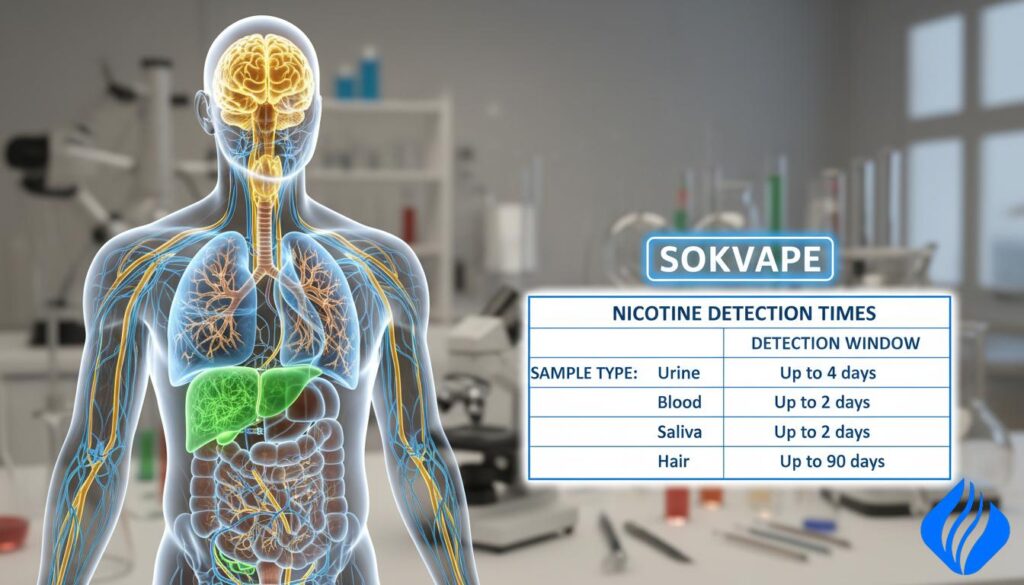
We will look into nicotine metabolism and cotinine levels. Urine tests can find them for three to four days. Blood tests last one to three days, and saliva tests up to four days. Hair tests can show use for up to 90 days.
Scientific data shows nicotine’s half-life is about two hours. But cotinine stays in the blood for several days. That’s why most tests look for cotinine, not nicotine.
Key Takeaways
- Nicotine usually exits the blood in one to three days
- Cotinine remains traceable for several days
- Tests emphasize cotinine levels over nicotine
- Urine (3–4 days), blood (1–3 days), and saliva (up to 4 days) each have unique windows
- Hair tests can detect signals for up to 90 days
- Shorter half-life for nicotine contrasts with longer cotinine presence
- Understanding these windows helps with harm reduction and health screenings
Understanding Nicotine vs. Cotinine
Nicotine leaves the bloodstream fast, but its byproduct, cotinine, stays longer. Nicotine itself is gone in about two hours. But cotinine, lasting nearly 18 hours, gives a longer detection window.
Cotinine levels are key in most tests, showing recent nicotine use. Knowing the difference between nicotine and cotinine can help ease testing worries. Our body’s rate, age, and health affect how fast we clear these substances.
How Long Does Vape Stay in Your System: Key Detection Windows
Many people wonder how long nicotine stays in their system. We aim to clear up common detection times. This helps people understand how long traces can last.
Each test type has its own range. This sets different expectations for those worried about lingering effects.
Urine Tests (3–4 Days)
A urine drug test can spot nicotine or cotinine for up to four days. Many workplaces use this method because it’s affordable and easy to collect samples.
Blood Tests (1–3 Days)
Blood tests have a shorter window but can show recent use. Blood circulation and metabolism mean these tests usually show vaping signs for one to three days.
Saliva Tests (Up to 4 Days)
Saliva tests can detect traces for up to four days. This method is fast and less invasive, making it good for insurance checks and on-site tests.
Hair Tests (Up to 90 Days)
Hair tests can find lasting markers. Nicotine’s mark stays in hair for up to 90 days, showing long-term use.
| Test Type | Detection Window | Key Note |
|---|---|---|
| Urine | 3–4 Days | Popular for cost-efficiency |
| Blood | 1–3 Days | Reflects active metabolism |
| Saliva | Up to 4 Days | Quick and convenient process |
| Hair | Up to 90 Days | Long-term residue |
The Role of Vaping Frequency in Nicotine Metabolism
When we vape often, our bodies take in more nicotine. Brands like Juul or Vuse make devices for quick hits. This can lead to more nicotine in our blood, affecting test results.
How devices work and user habits are key to longer detection times.
Casual Vapers vs. Heavy Users
There’s a big difference between someone vaping once a week and someone vaping every day. Heavy users might have nicotine in their system longer.
- Frequent vaping can increase cotinine levels.
- It gives the body less time to break down nicotine.
Why Cotinine Builds Up
Regular vaping leads to more cotinine, a byproduct found in saliva tests. This can also show up in hair follicle tests. We aim to lower this buildup by vaping wisely and in moderation.
Factors That Affect Nicotine and Cotinine Clearance
Many things can change how long nicotine stays in your system. How often you vape is a big factor. More frequent vaping can lead to more cotinine buildup.
Your body’s size also matters. People with more body fat might hold onto these substances longer.
Drinking enough water is key. It helps your body get rid of nicotine byproducts. Keeping up with your water intake is important for quick elimination.
Age can slow down how fast your body processes things. As you get older, it might take longer for nicotine to clear out. This is because your liver and kidneys work less efficiently with age.
Research supports these findings. It shows how our bodies break down nicotine and cotinine. Knowing this helps us understand how long they stay in our system.
Product Impact: High-Nicotine vs. Low-Nicotine Vapes
Choosing the right vape product can affect how long nicotine stays in our bodies. High-strength vapes give stronger hits, which can make nicotine last longer. On the other hand, low-nicotine vapes offer softer hits and might help reduce harm.
Disposable vapes usually have high levels of nicotine. Our body’s metabolic rate affects how fast we process nicotine. Some people clear nicotine faster, while others may have it linger longer.
Disposable Vapes vs. Refillable Tanks
Disposable vapes are easy to use because they’re pre-filled and don’t need cleaning. Refillable tanks, on the other hand, let you change the nicotine level. This flexibility can help you gradually cut down on nicotine, which is good for the long run.
Nicotinic Strength and Clearance Rates
When picking a vape, think about how long nicotine stays in your system. Stronger vapes might make nicotine detectable for longer if you vape often. Opting for a milder vape could lead to quicker clearance.
| Device Type | Key Consideration |
|---|---|
| High-Nicotine Disposable | Robust hit but may amplify detectability |
| Low-Nicotine Tank | Adjustable strength with less buildup risk |
Tips to Support Quicker Nicotine Clearing
We focus on actions that help our bodies process residual compounds at an efficient rate. Staying aware of e-liquid strength is one strategy for managing intake. Our goal is to maintain control and pursue nicotine clearing through balanced habits.
Hydration and Antioxidants
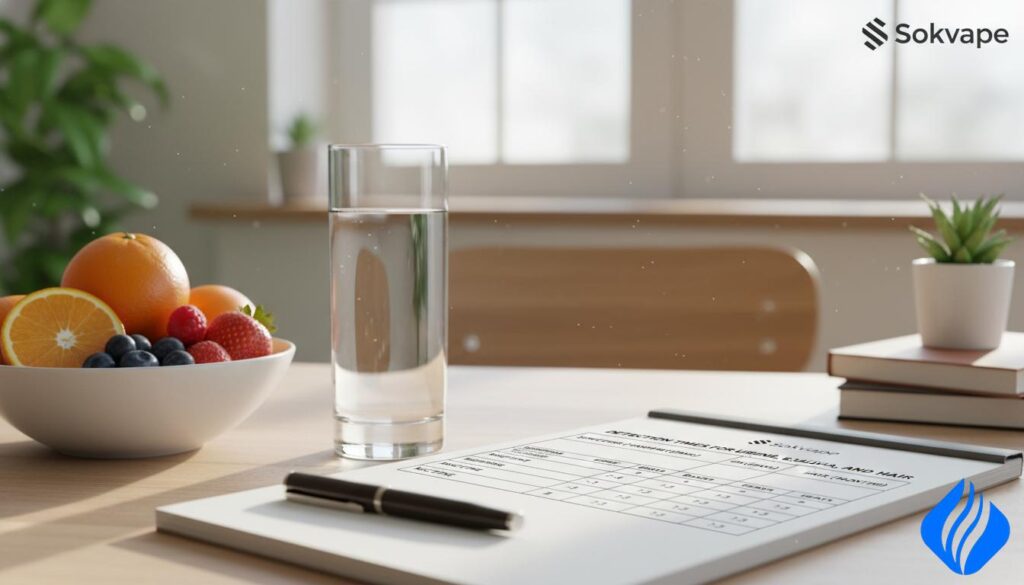
We encourage consistent water intake to promote the flushing of byproducts. Hydrating can ease strain on organs and support steady elimination. Antioxidants (berries, citrus fruits) defend cells, which helps protect internal systems.
Exercise and Body Mass Index
We boost metabolic activity through workouts, jogging, or brisk walks. Physical movement may assist with cravings and optimize nicotine clearing. Maintaining a balanced BMI can further enhance clearance speed by regulating how the body processes chemicals.
Liver and Kidney Function
These organs filter and break down toxins. Nutritious diets and moderate alcohol intake keep them performing at their best. We believe that a healthier lifestyle pairs well with stable e-liquid strength, reducing strain on liver and kidneys.
| Tip | Benefit |
|---|---|
| Drink Adequate Water | Helps flush leftover substances |
| Consume Antioxidants | Protects and supports cell integrity |
| Maintain Regular Exercise | Boosts metabolism and reduces cravings |
| Monitor E-Liquid Strength | Promotes balanced intake and quicker nicotine clearing |
Summary Table of Detection Windows and Factors
We created a simple guide to understand nicotine test timelines. The rate at which nicotine is cleared can vary. This is due to factors like body mass index (bmi), hydration, and liver enzymes. This guide helps vapers know when tests might show negative results.
Detailed Comparison Chart
Each test method has its own detection window. Below is a chart showing typical detection periods:
| Test Method | Detection Window |
|---|---|
| Urine | 3–4 days |
| Blood | 1–3 days |
| Saliva | Up to 4 days |
| Hair | Up to 90 days |
Our resource on nicotine clearance looks into how lifestyle and vaping habits affect clearance rates.
Practical Takeaways
- Moderate usage and enough fluid intake can shorten your detection period.
- Be extra careful if you use strong nicotine pods or vape every day.
- Eating well and exercising regularly can help clear nicotine faster.
Common Misconceptions About Nicotine Testing
Some people think they can get rid of nicotine by drinking special formulas or using household items. We know you want a quick solution. But, our experience shows that your body’s natural processes are key. Stopping nicotine suddenly can cause withdrawal symptoms, so it’s good to have support.

There’s a lot of false information about “detox beverages” that claim to clean you out fast. But, we’ve found that eating well, drinking enough water, and exercising regularly help more. There’s no quick fix for getting rid of nicotine. Our advice is to vape mindfully and know how your body works. This helps you make better choices and deal with withdrawal symptoms.
Conclusion
We urge readers to think about how often they vape, their body weight, and daily habits. These factors affect how long nicotine and cotinine stay in your system. Drinking water, exercising, and eating foods rich in antioxidants can help.
For health concerns or questions about tests, always seek professional advice. Making smart choices about vaping is important for your health. Your body’s unique chemistry affects how fast substances are cleared.
It’s essential to have realistic goals and be aware of the risks. Quitting smoking or reducing nicotine intake can be easier with a healthy diet and regular exercise. This approach supports your health.
We aim to reduce harm and promote responsible vaping. For more on nicotine detection times, check out this detection window guide. Discussing big lifestyle changes, like quitting smoking, with a doctor is wise. Taking care of yourself and understanding science is the best way to improve lung health and overall well-being.
 English
  German
  Dutch
Dutch  Danish
  Czech
Czech  Italian
  Slovenian
  French
  Hungarian
  Spanish
  Polish