

How long until you can vape after wisdom teeth is a common clinical question after an extraction. Dentists usually advise a 48–72 hour break, and a full week offers safer recovery for surgical sites.
We approach this as harm reduction. Our goal is to explain risk factors like suction, heat, and aerosol chemistry that threaten the clot and raise dry socket risk.
We will define what “safe to resume” means: a stable clot, falling pain, and no red-flag signs. We also preview device specs relevant later, including mAh, coil type, nicotine strength, and USB‑C charging.
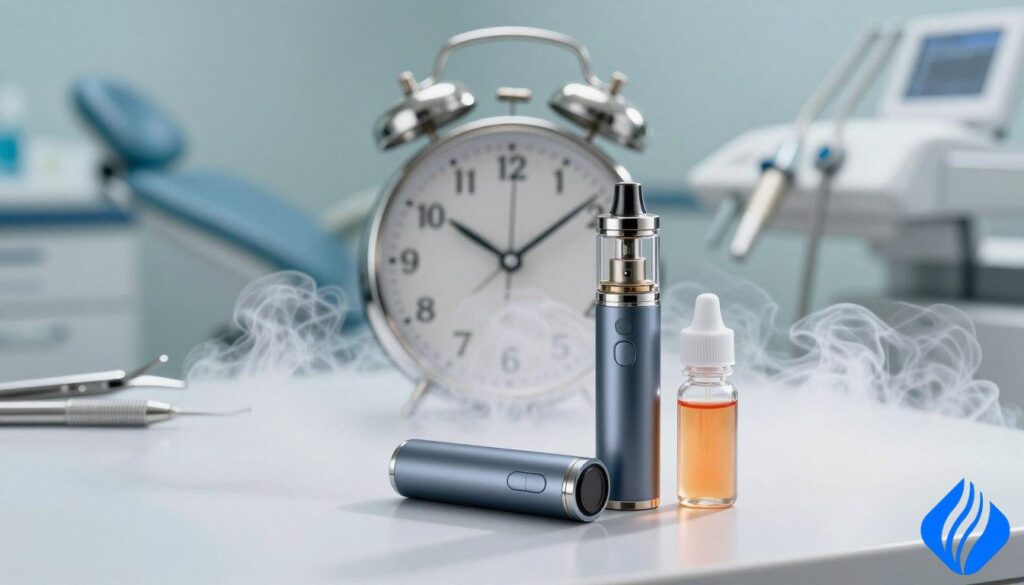
Later sections compare performance metrics such as Puffs per Dollar and Flavor Consistency, and link to sokvape.com categories for adult shoppers. For now, follow your oral surgeon’s guidance; timelines are conservative and clinical.
Key Takeaways
- Minimum break: 48–72 hours; one week is safer for complex extraction and healing.
- Protect the clot: avoid suction, heat, and aerosol exposure early in recovery.
- “Safe to resume” means stable clot, improving pain, and no infection signs.
- Device notes (mAh, coil type, nic strength) matter only once cleared by a clinician.
- We prioritize harm reduction and data-led device comparisons for adults 21+.
Why this question matters during wisdom teeth recovery
Post‑extraction healing is vulnerable; inhalation-related actions can convert routine recovery into a complication. We address this for adult vapers (21+) with clear, clinical language and harm‑reduction focus.
What’s happening in the mouth right after extraction
Each removed tooth leaves a socket that must be protected. Within hours a protective blood clot forms to shield bone and nerves and to start repair.
The clot forms quickly but is fragile. Small disruptions may dislodge it. A lost clot raises the chance of a painful dry socket and delayed healing.
Why vaping feels lighter but shares risks with smoking
Many report less harshness with certain devices. That perception does not remove mechanical hazards. The inhaling motion and device heat still create similar local effects as traditional smoking.
- Suction from inhalation can pull at the clot.
- Heat and aerosol chemicals can irritate the site.
- Nicotine reduces oxygen delivery and slows repair.
For more clinical guidance on post‑extraction inhalation and recovery, see our post-extraction smoking guidance.
What happens after wisdom tooth extraction during the healing process
Healing follows a clear timeline that patients can track day by day. We map the stages in the present tense so readers place themselves on the timeline right now after wisdom tooth removal. Expect practical checkpoints and simple signs to protect the surgical site.
Blood clot forms in the first 24 hours
The first priority in the initial hours is a stable blood clot. This clot shields bone and nerves and starts repair. Protect the socket from suction, spitting, or direct heat during this period.
Early tissue healing during days 2-3
During days 2–3 swelling and discomfort often peak as tissues begin to knit. Pain should be fading gradually; heavy bleeding or severe pain suggests the clot may be disrupted.
Gum closure and early bone recovery during days 4-7
By days 4–7 the gum edge narrows over the socket and early bone fill starts. Risk commonly decreases but is not eliminated. Continue gentle oral care and avoid actions that stress the site.
Remodeling over weeks to months
Deeper bone remodeling continues for weeks to months, which is why sensitivity can persist even when surface healing looks normal. Watch for signs that the clot was lost: sudden sharp pain, bad odor, or a visible empty socket.
“A visible, stable clot and steadily falling pain are the clearest signs of normal healing.”
How vaping can disrupt healing at the extraction site
Mechanical and chemical effects interact at the extraction site and may slow repair. We focus on clear mechanisms so readers judge risk realistically.
Suction can dislodge the clot
Even gentle pulls create negative pressure. That suction may pull the protective clot from the socket. Early days post‑procedure are the highest risk.
Heat and chemicals irritate healing tissues
Warm aerosol raises local temperature. Combined with flavoring solvents, it increases irritation of fragile tissues. Irritated tissue is slower to close over the socket.
Nicotine reduces oxygen delivery
Nicotine narrows blood vessels. Reduced blood flow lowers oxygen and nutrient delivery to the site. Slower repair follows.
Dry mouth and increased discomfort
Aerosol use often reduces saliva. Dry mouth raises infection risk and heightens discomfort at the socket.
- Device type does not remove suction risk; pods, disposables, and mods all produce pressure.
- Limit exposure while the clot is forming; conservative breaks reduce complications.
| Mechanism | Effect on extraction site | Practical note |
|---|---|---|
| Suction | Clot displacement, higher dry‑socket risk | Avoid inhalation motions that create negative pressure |
| Heat | Local irritation, delayed epithelial closure | Cooler environments and no direct heat near the mouth help |
| Chemicals | Mucosal irritation, altered healing response | Flavorings and solvents may increase local inflammation |
| Nicotine | Vasoconstriction, reduced oxygen delivery | Consider nicotine replacement that avoids oral suction |
How long until you can vape after wisdom teeth
How long until you can vape after wisdom teeth is best answered with a minimum-versus-safer framework. We separate the bare clinical window from a more cautious target so readers judge their personal risk and recovery clearly.
The minimum window many dentists give: at least 48–72 hours
Most clinicians advise a strict break for the first 48–72 hours. In those initial hours the clot is most fragile. Avoid any inhalation motion that creates suction.
The safer target: waiting a full week when possible
Waiting a full week is the safer target for routine surgical sites. By days 4–7 gum edges narrow and early stabilization reduces dry‑socket risk and other complications.
When longer breaks are recommended: complex or multiple extractions
Plan for extended abstinence after impacted or surgical extractions, flap work, bone removal, or if stitches were used. Infection or worsening pain is a cue to delay resumption.
- Decision rules: If pain worsens, a bad taste appears, or the socket looks empty, delay resuming inhaled products.
- Final authority: Follow your surgeon’s post‑op instructions for the specific procedure and trauma level.
Dry socket risk and why vaping raises the odds
Dry socket (alveolar osteitis) occurs when the protective blood clot is lost too early. This exposes bone and nerve and often causes disproportionate, throbbing pain.
Symptoms commonly appear around days 3–5. That timing may mislead patients who feel fine in the first 48 hours. Early onset makes vigilance important.
Common signs to watch for
- Intense throbbing pain that worsens rather than improves.
- Foul odor or bad breath not explained by food.
- A visible, “empty” looking socket where the clot is missing.
Why inhaling is a major trigger
Suction from smoking or vaping creates negative pressure. That mechanical force may dislodge the clot.
Inhaled aerosol also dries oral tissues. Reduced moisture and local irritation increase the risk dry socket.
“Each early session raises the odds of clot loss, especially with multiple sockets.”
Risk dry socket is one of the most common and painful setbacks after extraction. It often requires professional care. If symptoms appear, seek clinical evaluation rather than resuming inhaled products.
What if you vaped too soon after wisdom tooth removal?
If an inhalation session happened sooner than advised, act calmly and follow low‑risk steps to protect the extraction site.
Immediate steps without disturbing the clot
Stop inhaling immediately. Avoid any spitting or forceful swishing. Keep the mouth gently hydrated with small sips of water.
- Pause all inhaled products and avoid straws or suction motions.
- If no heavy bleeding exists, rest upright and apply a cold pack to reduce swelling.
- After 24 hours, if your clinician allows, use a gentle warm saltwater rinse—do not swish vigorously.
When to call your dentist or oral surgeon
Monitor each extraction site for warning signs. Call promptly if you notice:
- Increasing pain after initial improvement.
- Renewed or heavy bleeding, a persistent foul taste, or a bad odor.
- Fever, spreading swelling, or signs of infection.
“Avoid probing the socket or attempting home repairs; poking the area raises the chance of serious complications.”
| Symptom | Immediate action | When to call |
|---|---|---|
| Moderate pain | Rest, ice, OTC analgesic as directed | If pain worsens after 24–48 hours |
| Fresh or heavy bleeding | Bite on sterile gauze; stay upright | If bleeding soaks through bandage after 30–45 minutes |
| Foul taste/odor or visible empty socket | Stop oral suction; avoid rinsing hard | Contact provider immediately for evaluation |
Risk management: Early inhalation raises the odds of dry socket and other complications, but measured steps and timely clinical contact often limit severity. For more guidance on timing and recovery, see our post‑op resource.
How to reduce cravings without vaping or smoking
Nicotine cravings are common after extraction and deserve practical, low‑risk responses. We recommend temporary measures that protect the clot while addressing withdrawal.
Nicotine patches or lozenges as temporary alternatives
Nicotine patches deliver steady dosing without suction, heat, or aerosol. Lozenges offer short, mouth-based relief but avoid inhalation motions.
Safety note: Nicotine reduces blood flow. Follow your clinician’s guidance when using any nicotine product during healing.
Distractions that don’t increase suction or mouth dryness
Choose low‑suction activities: short walks, light stretching, puzzles, or phone-free breaks. Sip water often to keep the mouth comfortable.
What to avoid that mimics vaping suction
- Avoid straws, forceful rinsing, and deliberate “pull” motions that stress the socket.
- Delay any smoking or vaping during the high‑risk window; these habits materially raise complication risk.
“Short-term changes in habits for several days materially lower the odds of dry socket.”
Aftercare tips to protect the blood clot and speed healing
Protecting the surgical socket is the single most important focus in early recovery. We center aftercare on preserving the blood clot at every extraction site so healing proceeds on schedule.
Rinsing guidance
Begin gentle warm saltwater rinses per your clinician’s note, usually after 24 hours. Use small sips and tilt the head; do not swish forcefully.
Avoid spitting or vigorous motions that may dislodge the clot.
Eating and drinking
Choose soft, nutrient-rich foods and modest temperatures. Avoid hot liquids and crunchy items near the surgical area.
No straws or suction devices. Hydration helps tissue repair and reduces dry mouth discomfort.
Oral hygiene
Brush teeth as normal but work gently around the socket. Keep pressure away from the clot and gum edge.
Follow prescribed meds and keep scheduled follow-up visits to detect issues early.
- Primary goal: protect the clot to support predictable healing and recovery.
- Immediate actions: gentle rinses, soft diet, steady hydration, careful brushing.
- When concerned: contact your provider for advice rather than probing the site.
| Aftercare element | Why it matters | Practical tip |
|---|---|---|
| Rinsing | Maintains cleanliness without displacing clot | Warm saltwater, gentle tilt, no forceful swishing |
| Diet | Supports nutrition and avoids trauma | Soft foods, cool-to-lukewarm liquids, avoid straws |
| Oral hygiene | Prevents infection while protecting clot | Brush gently around site; avoid direct contact |
| Hydration & meds | Reduces dry mouth and supports tissue repair | Drink regularly; take meds as prescribed; attend follow-up |
“Early, conservative care helps faster healing and fewer complications.”
How to know you’re healing normally before you vape again
Tracking simple signs over the first week tells us when normal repair is progressing. We recommend a cautious checklist approach. Use observable cues and symptom trends rather than a fixed day count.
What normal pain and swelling patterns look like in the first week
Swelling and discomfort usually peak around days 2–3 and then trend down with proper care.
Normal pain eases day by day. Analgesics should help and doses decrease with time.
If pain improves steadily and activity tolerance rises, that indicates steady recovery.
Red flags for infection or delayed healing
Watch for warning signs that suggest complications or infection.
- Worsening pain after initial improvement or pain that radiates outward.
- Fever, increased swelling after day 3, or visible pus.
- Persistent foul taste or bad breath and a widening empty socket.
If any red flag appears, do not resume inhaled products. Such actions raise measurable risks and may deepen complications.
Readiness checklist (conceptual): the surgical site feels comfortable at rest; pain is falling without frequent analgesics; eating returns toward normal; no fever or foul odor.
Recovery varies. When in doubt, wait longer and confirm status at follow-up or consult a clinician. For further guidance on timing and safe resumption, see our post‑op resource.
| Sign | Normal pattern | Concerning pattern |
|---|---|---|
| Pain | Peaks day 1–3 then decreases | Worsens after day 3 or radiates |
| Swelling | Max at day 2–3, then reduces | Rising after day 3 or asymmetric spread |
| Socket appearance | White/yellow healing tissue; small scab | Empty-looking hole, heavy bleeding, or pus |
| Systemic signs | No fever; steady energy | Fever, chills, or overall malaise |
Vaping vs. smoking after oral surgery: what’s the difference for recovery?
Inhalation mechanics, not just product chemistry, drive many post‑extraction complications. Both smoking and vaping create the same negative pressure that may dislodge a clot and increase dry socket risk.
Why both can cause dry socket through the same inhaling motion
The act of drawing air produces suction. That force is the core mechanical threat to a forming clot.
Whether from a cigarette or a disposable, the motion is similar. Clinicians treat both behaviors as comparable risks during the early window.
Why nicotine-free vaping still isn’t risk-free
Removing nicotine lowers vasoconstriction but does not stop suction. Heated aerosol still brings chemicals, heat, and moisture loss that irritate tissue.
Nicotine‑free products thus remain a mechanical and thermal hazard while the socket is fragile.
Device notes for adults (21+) cleared to resume
After clinical clearance, consider draw style. Tighter MTL draws reduce mechanical pull compared with airy designs.
| Example device | Typical specs | Notes |
|---|---|---|
| Geek Bar Pulse | Battery: 500–650 mAh; E-liquid: 5–16 ml; Nic: 2%/5% nic salt; Coil: mesh; Port: USB‑C | Spec varies by model; verify on product page |
| Lost Mary (MO series) | Battery: 450–600 mAh; E-liquid: 6–12 ml; Nic: 2%/5%; Coil: mesh; USB‑C where shown | Flavor often stable early; check batch specs |
| RAZ / Raz disposables | Battery: 400–700 mAh; E-liquid: 5–15 ml; Nic: 2%/5%; Coil: mesh/dual mesh; USB‑C models exist | Dual mesh may boost vapor production |
Puffs per Dollar: we divide rated puffs by price, then adjust for real‑world drift. Rated puffs are optimistic.
Flavor consistency: in hands‑on tests flavor often mutes or turns sweet‑flat by ~5000 puffs on many disposables. Throat feel at 2% is smoother; 5% yields stronger throat hit. Vapor production ranges from modest MTL to heavier output with dual mesh.
For product browsing after full recovery, see Disposable Vapes and Hot Sale, or brand pages like RandM and Bang.
Medical priority: If within the first week or showing any sign of dry socket, do not use these products regardless of features, including those with mesh coils.
Conclusion
The safest path after extraction is conservative patience and close symptom monitoring. Wait the minimum 48–72 hours, and aim for a full week when possible to protect the blood clot and support normal healing.
Why this matters: suction may dislodge the clot, nicotine reduces oxygen delivery, and heat or chemicals increase irritation and infection risk. Delay smoking or vaping until the site shows steady improvement.
Technical checklist for purchase only after clinical clearance: battery capacity (mAh), e‑liquid volume (ml), nicotine strength (2% or 5% nic salt), coil type (mesh coil vs dual mesh), and USB‑C charging. We evaluate devices by Puffs per Dollar and Flavor Consistency, plus hands‑on notes (throat hit, vapor production, stability past ~5000 puffs).
FAQ (post‑clearance): Empty indicators: reduced vapor, muted flavor, blinking LED, or auto‑cutoff. Recharge safely: use reputable USB source, undamaged cable, avoid unattended charging and heat. Authenticity: scan the package QR or follow verification on https://www.google.com/url?sa=E&source=gmail&q=sokvape.com.
Nicotine warning: Nicotine is addictive. Products with nicotine are for adults 21+ only. Keep away from children and pets. If pain worsens, the socket looks empty, or a foul taste appears, contact your dentist promptly rather than resuming inhaled products. For product browsing after full recovery see Disposable Vapes and Hot Sale.
 English
  German
  Dutch
Dutch  Danish
  Czech
Czech  Italian
  Slovenian
  French
  Hungarian
  Spanish
  Polish