

how long does a vape pen battery last is the exact question many adult users bring to our lab. We open with data: rechargeables often run months, disposables run days. We measure runtime per charge and total usable life across charge cycles.
We set a clear scope for U.S. readers 21+. Our hands-on tests compare main products in the 20,000‑puff class versus Geek Bar and Lost Mary. We check throat hit, vapor output, and flavor at a 5,000‑puff checkpoint.
Real-world drain depends on capacity (mAh), power setting, and draw length. We explain why advertised puff counts diverge from observed results. We flag safety: follow correct charging habits, avoid overheating, and verify authenticity with QR checks.
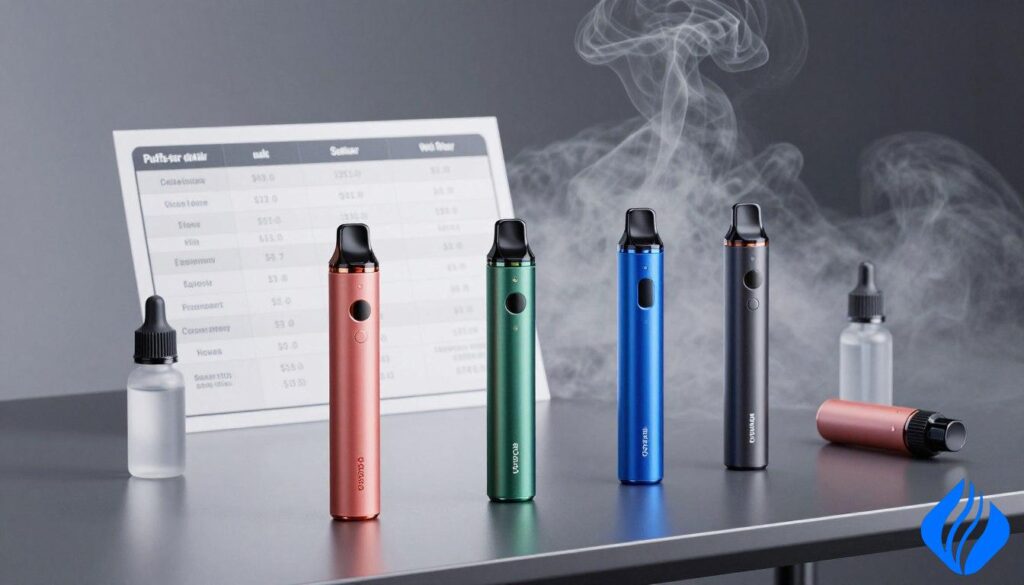
By the end, we’ll give rules of thumb, a buyer checklist, and daily tips to extend life. We’ll also note where we reference Sokvape categories for shopping context and cost comparisons.
Key Takeaways
- Runtime vs lifespan: measure per charge and charge cycle wear.
- Rechargeable vs disposable: months of use versus days.
- Test checkpoints: flavor and vapor at 5,000 puffs.
- Safety first: follow charging best practices and QR checks.
- Buying tip: compare puffs‑per‑dollar and flavor consistency.
What “Battery Life” Means for a Vape Pen (Runtime vs. Battery Lifespan)
Daily run time and overall service life are separate metrics that tell different parts of the ownership story. We use precise terms so expectations match results.
Battery runtime describes how long a device performs on one full charge. This is the measure most users notice during regular use.
Battery lifespan refers to the cell’s long-term health across months and charge cycles. Lithium-ion cells commonly reach ~300–500 full cycles, which often equates to roughly 6–12 months for typical use.
Full cycle means 100% down to 0% equivalent. Partial charges add up, so several partial sessions can equal one full cycle over time.
“We treat runtime and lifespan as linked but distinct. One affects daily convenience; the other defines ownership duration.”
| Metric | What it measures | Typical value |
|---|---|---|
| Runtime | Session length per full charge | Several hours to a day, depending on use |
| Battery lifespan | Cell health across cycles | 300–500 cycles (~6–12 months) |
| Disposable end | Often e‑liquid or coil depletion, not charge | 300–600 puffs typical |
Two identical users can report different runtime due to power level, draw length, and recharge habits. For ownership sense, rechargeable models often batteries last for months, while disposable devices are designed around finite liquid and coils. Next, we estimate real-world duration and the specs behind these numbers.
How long does a vape pen battery last in real-world use?
Practical drain depends on cell size, inhalation pattern, and device power. We separate daily runtime from overall battery lifespan so expectations match real usage.
Typical lifespan for rechargeable vape pen batteries
Most rechargeable cells show measurable decline after ~300–500 full cycles. In practice, that translates to roughly 4–6 months for average users and up to 6–12 months with careful charging and moderate use.
Typical runtime for disposable vape pens
Classic disposables commonly advertise ~300–600 puffs and often last ~3–5 days for typical users. Modern USB‑C disposables can run longer until e‑liquid or coil life ends.
Quick rule of thumb using mAh and puff style
Use capacity as a starting point: roughly 1100 mAh ≈ 1,000 puffs under moderate draws. Higher capacity gives more puffs, but long draws and high power cut that number.
Why two people with the same mAh can get different results
Draw length, chain sessions, ambient temperature, coil resistance, and device heat all change runtime. Personal habits often explain the biggest variance.
“Plan for months of service on rechargeables and days on classic disposables; tune habits to extend useful life.”
- Translate specs to ownership: daily charging habits push a rechargeable toward the 6–12 month window.
- Disposable expectations: 300–600 puffs is typical; USB‑C models shift runtime to liquid limits.
- Factors to quantify later: voltage/wattage, coil type, mesh vs dual mesh, and charging heat.
For charging specifics and timing rules for disposables, see our guide on charging disposable devices.
Core technical specs that determine battery life
Specs on the label tell part of the story; electrical design and coil load tell the rest. We parse key numbers so you can read product sheets with confidence.
mAh rating describes stored charge capacity. Higher mAh usually means more runtime, but it does not promise exact puff counts.
Voltage, wattage, and coil resistance
Voltage and wattage define output. More power produces bigger vapor and more heat, which accelerates drain.
Lower coil resistance allows higher current; push power too high and runtime falls while stress increases.
Coil architecture: mesh vs. dual mesh
Mesh coils spread heat evenly and can be efficient at moderate settings. Dual mesh raises output and throat hit but may increase draw load and reduce runtime depending on tuning.
Charging port and thermal management
USB‑C improves reliability and faster charging for many modern devices. Typical charge times run roughly 2–4 hours; fast‑charge models are quicker.
Heat during charging signals stress. Use a proper charger and good cable. A noticeably longer charge can indicate aging cells or port issues.
“Read mAh alongside voltage, coil type, and port to predict real-world performance.”
- Spec checklist: mah rating, coil type, voltage/wattage range, e‑liquid volume, and charging port.
- Safety note: lower resistance + higher power increases thermal risk; follow manufacturer guidance.
For coil lifespan details and maintenance guidance, see our guide on coil longevity.
Hands-on testing results: throat hit, vapor production, and flavor after 5000 puffs
We performed hands-on testing using a repeatable protocol to log sensory changes and electrical strain through 5,000 pulls. We kept draw length, rest time, and charge cycles consistent so results are comparable.
Testing setup
We set a fixed draw length and a 15‑second rest between pulls. Recharge frequency was tracked to estimate cycle stress. Charge events were logged with time and temperature.
Throat hit observations
Lower power felt smoother. Higher power and higher nicotine strength gave a sharper, more immediate hit. Nic salts changed perceived impact even when output stayed the same.
Vapor production
Open airflow plus higher output increased cloud size. That raised current draw and reduced runtime per charge. In short, more vapor usually costs more from the battery.
Flavor after 5,000 puffs
Sweetness and cooling notes tended to fade first. Base notes lasted longer. By midlife, flavor consistency separated higher‑end units from budget models.
Early warning signs
- Longer charge times or an unusually hot body often signal cell stress.
- Weaker hits can mean coil wear or connection resistance.
- If the device overheats, stop use and follow the safety checklist later in this guide.
Disposable vape benchmarks: specs, puffs-per-dollar, and flavor consistency comparisons
Specs can be misleading; our benchmarks map real performance to the numbers that matter for daily use.
Main product testing profile (20,000‑puff class)
Battery capacity (mAh): 4,000 mAh. E-liquid volume: 60 ml. Nicotine: 5% nic salts. Coil type: dual mesh. Charging: USB‑C.
Competitor snapshot: Geek Bar / Lost Mary / Raz
| Model | mAh | ml | nic | coil | port |
|---|---|---|---|---|---|
| Geek Bar (class) | 350 mAh | 2–3 ml | 5% | mesh | USB‑C |
| Lost Mary (class) | 450 mAh | 6–8 ml | 5% | dual mesh | USB‑C |
| Raz (optional) | 800 mAh | 15 ml | 2% or 5% | mesh | USB‑C |
Puffs per Dollar and Flavor Consistency
Puffs per Dollar: advertised puffs ÷ price. This gives cost efficiency but not real satisfaction. Higher liquid volume with USB‑C often outperforms low‑capacity units despite similar puff claims.
Flavor Consistency: score first 500 puffs vs midlife vs 5,000 puffs. Relative notes fade—sweet and cooling drop first; base flavors persist longer on dual‑mesh builds.
- Compare specs on Disposable Vapes and Hot Sale pages for current pricing links to RandM and Bang.
- Use the table above to scan what affects runtime and taste stability.
Rechargeable vape pen batteries: internal vs. external cells and what to buy for longer days
Choosing between sealed cells and removable packs affects uptime and serviceability more than most shoppers expect.
We break the tradeoffs so you can match purchase to usage. Internal batteries give convenience and compact size. They simplify charging and reduce user handling.
Internal cells: convenience and aging signs
Internal cells typically reach ~300–500 full cycles. That often maps to about 6–12 months of regular use. Over time users notice faster drain, weaker output, and more sensitivity to cold.
Tip: a quality charger and moderate charging habits extend serviceable life.
External cells (18650) and safe swapping
External batteries, like the common 18650, let you swap cells and carry spares for longer uptime. That makes them ideal for full‑day use and heavy sessions.
Safety rules matter. Inspect wraps before use. Do not use cells with torn insulation. Store cells in a case and avoid loose metal contact.
Picking the right size for your habits
Smaller devices favor travel and light users. Larger devices hold higher capacity cells and better support an all‑day routine.
Match size and capacity to your daily pattern. Light users can prioritize portability. Heavy users should pick higher capacity cells and conservative power settings.
“Replace compromised cells, choose quality external batteries, and pair them with a reliable charger to maximize lifespan.”
| Feature | Internal | External (18650) |
|---|---|---|
| Convenience | High | Moderate |
| Uptime | Depends on capacity | High with spares |
| Serviceability | Limited | High (swap/replace) |
| Safety notes | Follow charger guidance | Inspect wraps; case storage |
For practical buying guidance and specs comparison, see our hands‑on notes and the linked product guide on runtime and lifespan.
How to make your battery last longer (charging, storage, and daily habits)
Practical daily care reduces heat and electrical stress on lithium cells. Small changes to charging and storage yield measurable gains in runtime and lifespan.
Prioritized checklist:
- Don’t overcharge: avoid overnight charging. Holding cells at 100% and warm temperatures speeds degradation.
- Do not vape while charging: simultaneous draw and charge raises internal heat and can destabilize the charging circuit.
- Keep contacts clean: lint, oil, and e‑liquid increase resistance and force higher current draw.
- Use moderate power and voltage: higher settings increase drain and cell stress; balance output with conservation.
- Mind temperature: store at room temperature, avoid hot cars and freezing conditions.
Simple cleaning and handling steps
Power the device off. Use a dry cotton swab to wipe metal contacts. Gently inspect the USB‑C port for debris. Do not insert metal objects or liquids.
Why overnight charging and charging while in use are risky
Overcharge stress: lithium cells dislike being held at full charge and warm. That accelerates capacity loss.
Vaping while charging: creates extra heat and fluctuating current. This raises failure risk and may shorten usable life.
Temperature and storage tips
Cold reduces immediate output; heat speeds wear. Store devices in a cool, dry place and avoid leaving them in direct sun or hot vehicles.
| Action | Why it helps | Quick tip |
|---|---|---|
| Avoid overnight charging | Reduces time at 100% and lowers heat exposure | Charge to ~80–90% for daily use |
| No use while charging | Prevents combined thermal and electrical stress | Wait until charge completes before using |
| Clean contacts regularly | Reduces resistance and wasted energy | Dry cotton swab; inspect port |
| Moderate voltage/power | Balances vapor output with cell wear | Use mid-range settings for longer runtime |
| Proper storage temperature | Prevents capacity loss from heat or cold | Room temp, out of sun, do not leave in cars |
“Fewer top-ups, clean contacts, and sensible settings extend usable life and reduce risks.”
Troubleshooting and safety checks
Quick troubleshooting helps you spot performance decline before it becomes a safety issue.
Signs it’s empty or failing
Burnt taste, weak vapor despite normal settings, blinking lights, or sudden drop in satisfaction are common signals. Dry‑wick hits often mimic a drained cell, so check liquid levels first.
Safe recharging
Use the correct charger and a quality USB‑C cable that fits firmly. Do not use unknown high‑output bricks unless the manufacturer approves them.
Most devices reach fully charged within a few hours. Unusually fast or slow times, odd smells, or excessive heat mean stop and inspect the port, cable, and cell.
Authenticity check
Verify the product QR code through this verification pathway: Sokvape. Authenticity reduces counterfeit risk and improves safety.
Legal and shopping notes
“This product contains nicotine. Nicotine is an addictive chemical.”
For verified options, compare products on Disposable Vapes, Hot Sale, RandM, and Bang.
“Stop charging and inspect any unit that smells odd, heats unusually, or behaves inconsistently.”
Conclusion
Our final guidance focuses on estimating runtime, choosing between formats, and safe upkeep. ,
We summarize the core answer: per‑charge runtime and overall lifespan are different. Rechargeable models commonly deliver months of service (often 6–12 months) with proper care. Disposables end when liquid or coil depletes, even with USB‑C charging.
Use mAh as a ceiling; user draw, power setting, and coil load set real results. Compare offers by puffs‑per‑dollar and flavor consistency to assess value.
Protect life and safety: avoid overnight charging, do not vape while charging, keep ports clean, and stop use if you notice heat, swelling, or odd charge behavior. Verify authenticity and buy from reputable sellers.
Choose the device that fits your daily usage, then manage settings and care to preserve performance and lifespan.
 English
  German
  Dutch
Dutch  Danish
  Czech
Czech  Italian
  Slovenian
  French
  Hungarian
  Spanish
  Polish