

how many vape hits to get stoned is not a one-size answer. THC onset can start within seconds and may take up to ten minutes. Dosing varies because device output and inhalation length differ by product and user.
We outline a clear, clinical approach. We favor measurable steps: draw length, wait time, and label reading over chasing a count. This reduces the risk of overconsumption.
Later sections show hands-on testing of mainstream disposables, cost-per-puff comparisons versus Geek Bar, Lost Mary, and Raz, and a Sokvape buyer pathway. We separate THC intoxication guidance from nicotine device performance. Expect a practical dosing method that uses a 15-minute pacing rule and safety checks with a nicotine warning.
Key Takeaways
- No universal count: a single inhalation can carry widely varying THC doses.
- Measure not guess: focus on draw length and wait times.
- Safety first: apply a 15-minute pause before repeating a dose.
- Technical context: device design and formulation drive effects and performance.
- Comparative testing ahead: we will present puffs-per-dollar and performance data for popular brands.
What “stoned” means with THC vapes and why hits vary by user
We distinguish measurable intake markers from casual counting. Our goal is to define a working standard for noticeable psychoactive effects and explain why identical pulls produce different results.
Operational definition: we call someone stoned when they report clear psychoactive impairment or euphoria, not mere relaxation. That threshold requires more THC exposure and changes the expected number of pulls.
Psychoactive effects timeline
Onset after inhalation can appear within seconds and may take up to ~10 minutes to become clear. Effects can linger for hours depending on product and individual variables.
Why a pull is not a fixed dose
THC per draw varies by concentrate potency, coil power, and airflow. A 2–3 second inhalation can deliver ~2.5 mg THC in one product or ~9 mg in another. That range makes counting pulls an unreliable dosing method.
Key physiological variability
Inhaled THC moves quickly from lungs to the bloodstream and then to the brain. Response speed is faster than edibles but still requires pacing to avoid stacking.
- Tolerance: frequent use raises the threshold for effects.
- Metabolism: faster clearance reduces duration and intensity.
- Body weight / fat: THC is fat‑soluble; body composition changes storage and release.
- Endocannabinoid system: individual sensitivity shifts the effective dose.
Because of these factors, two users taking the same number of pulls from the same device can have different outcomes. We will use this technical framing when we present safety pacing and device comparisons later.
How many vape hits to get stoned: a practical dosing method you can follow
We recommend a repeatable dosing routine that emphasizes measurement and waiting over guesswork.

Start low and wait: take one measured 2–3 second pull, stop, and wait about 15 minutes before deciding on another pull.
Beginner, moderate, and experienced ranges
Beginners often reach noticeable effect around 1–3 hits. Moderate users commonly need 3–5. Experienced users may use 5–10, depending on cart potency and device output.
Inhalation technique that changes intensity
Slow, steady pulls deliver more vapor mass and raise per-hit THC. Quick puffs feel lighter. Keep draw length consistent and avoid back-to-back stacking.
“Assume the upper end of potency if mg-per-inhale is unknown; pace and document your response.”
| Step | Action | Why it matters |
|---|---|---|
| 1 | One 2–3s pull | Delivers a measurable dose without stacking |
| 2 | Wait ~15 minutes | Onset can lag; prevents overconsumption |
| 3 | Record response | Reproducible dosing for future use |
Cart warnings: high concentration carts or high-output hardware can make 1–2 hits feel strong. If labeling is unclear, assume more THC per puff and proceed cautiously.
Vape type matters: carts, disposables, dry herb vapes, and dab pens compared
Device architecture and formulation often dictate dose delivery more than a user’s pull count. We compare four common formats and focus on dose efficiency, predictability, and safety.
Oil-based cartridges and pens
Distillate, live resin, rosin, and liquid diamonds change potency and onset. A cart with live resin may feel faster and fuller than a distillate cart. Label clarity matters for safe pacing.
Disposables and fixed-format hardware
Disposables often have consistent draw activation and fixed airflow. That yields steady output across draws, though oil formulation still sets perceived intensity.
Dry herb vaporizers
Flower vaporization gives a slower, broader effect. Terpenes and minor cannabinoids remain intact. Users report a gradual onset and more nuanced strain character.
Dab pens and concentrates
Concentrates are dense in THC. One or two draws can be potent. We advise beginners to avoid high-output pens and follow measured pacing.
| Format | Dose predictability | Typical potency | Best fit for |
|---|---|---|---|
| Oil carts / pens | Variable (depends on concentrate) | Low–high (distillate → live resin) | Users needing modular devices |
| Disposables | High (fixed hardware) | Moderate–high | Beginners seeking consistency |
| Dry herb vaporizers | Moderate (slower extraction) | Low–moderate | Users preferring full-spectrum effects |
| Dab pens (concentrates) | Low predictability, high output | Very high | Experienced users only |
For a detailed guide on cartridge and pen selection, see our thc vape guide. We prioritize safety and clear labeling when recommending any product.
Potency and formulation: THC concentration, cannabinoids, and terpenes that shape the high
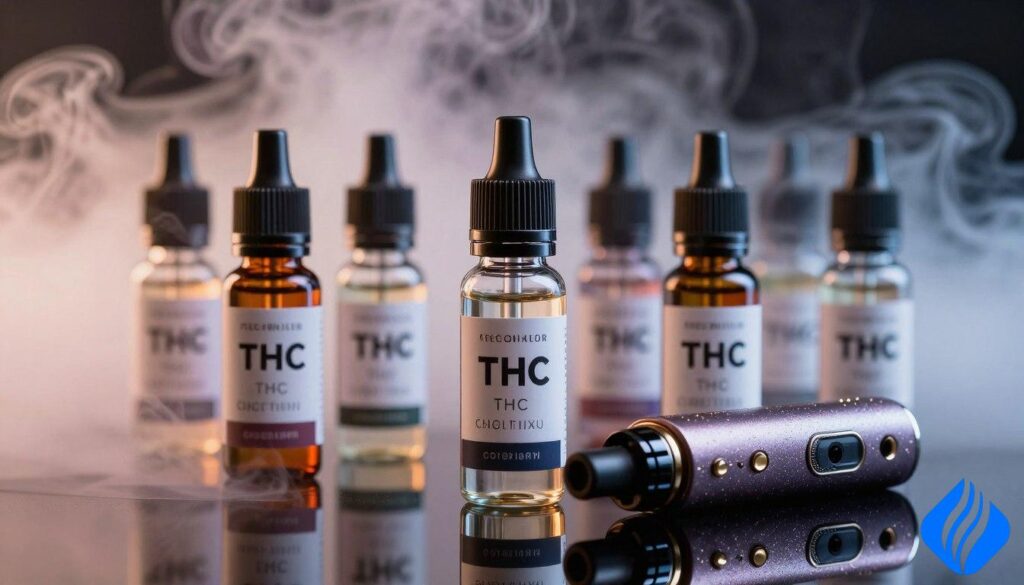
THC concentration ranges and why labels matter for “mg per inhale”
We define potency by estimated mg per inhale, not only by percentage. A clear label showing total THC and servings helps predict dosing.
Leafwell data shows a 2–3 second draw can equal ~2.5 mg THC in one product and ~9 mg in another. That gap changes the risk profile for people and the expected effects.
Delta‑9 vs. Delta‑8 vs. HHC vs. THCV vs. CBN
- Delta‑9: highest intoxication risk at comparable THC levels.
- Delta‑8: roughly half as intoxicating as Delta‑9 in practical terms.
- HHC: often ~70–80% potency of Delta‑9.
- THCV: minimal psychoactivity at typical doses.
- CBN: very mild; rarely drives strong intoxication.
Terpene profile and strain effects
Minor cannabinoids and terpenes modulate perception. The same number hits can feel alerting or sedating depending on profile and strain.
Practical takeaway: treat a new product as higher potency until a paced test session shows your response.
How to avoid “greening out” and manage uncomfortable effects
We define “greening out” as an acute overconsumption response that happens when THC amount increases too fast relative to tolerance and baseline stress. Early recognition prevents escalation.
Common signs
- Dizziness
- Anxiety
- Nausea or vomiting
- Sweating and rapid heartbeat
- Confusion
Immediate steps
Stop taking any more puffs. Give the body time. Time is the primary intervention.
- Hydrate: water or an electrolyte drink.
- Eat a light snack: carbs can blunt intensity.
- Slow breathing: controlled, steady breaths for a few minutes.
- Change environment: quiet, cool, low-stimulation space.
| Problem | Quick action | Why it helps |
|---|---|---|
| Dizziness / rapid heart | Hydrate and sit down | Stabilizes circulation and reduces risk |
| Anxiety / confusion | Slow breathing and calm voice | Down-regulates sympathetic arousal |
| Nausea | Small snack and cool air | Reduces gastric upset and overheating |
Risk amplifiers and safer session tips
Empty stomach, mixing alcohol, high stress, and rapid stacking without pacing raise risk. We advise planning a maximum number of draws, keeping draw length steady, and waiting ~15 minutes between doses.
If symptoms are severe or persistent, seek medical help. For more detailed safety guidance, see our guide on avoid greening out.
Mainstream nicotine disposable tech specs for context (hands-on tested)
Measured device metrics reveal why real‑world puff counts differ from marketing claims. We set a technical baseline for common disposable products in the US market. The goal is clarity: specs, coil design, charging, and observed performance.
Typical hardware and labeling
Most mainstream devices fall into predictable ranges:
- Battery: 650–1000 mAh.
- Capacity: 12–20 ml e-liquid.
- Nicotine: 2% or 5% nic salt (label shows nicotine strength).
Coil design and airflow effects
A single Mesh coil gives even heat and reduces dry‑hit risk. Dual mesh raises initial vapor density and flavor intensity.
Tighter airflow increases perceived throat hit and nicotine impact. Looser airflow boosts vapor production but can dilute flavor concentration.
Charging and heat management
USB‑C is the current standard. Expect full recharge cycles in 30–90 minutes depending on charger. Fast chargers raise device temperature; we avoid rapid cycling during testing.
“Heat management matters — sustained high temperature shortens coil life and alters flavor.”
Hands‑on testing notes
We logged throat hit, vapor production, and flavor across repeated use. Early sessions often show smooth throat hit on 2% nic salt and stronger impact on 5%.
Vapor production stays stable for many devices, then declines noticeably after heavy use. Around ~5000 puffs we observe sweetness fade and muted top notes on high‑sweetener profiles.
| Spec | Typical range | Observed effect |
|---|---|---|
| Battery | 650–1000 mAh | Consistent output for 1 device lifespan |
| Capacity | 12–20 ml | Real puffs count varies with draw length |
| Coil | Mesh / Dual mesh | Dual mesh = denser vapor early; mesh = steadier flavor life |
Practical takeaway: treat manufacturer puff claims as a rough guide. Device architecture and formulation determine real performance. We document these metrics so readers can compare products objectively.
Comparison: puffs per dollar and flavor consistency vs. Geek Bar, Lost Mary, and Raz
We tested value and flavor persistence across popular draw‑activated disposables under real use conditions. Our baseline is the Sokvape‑style disposable: draw‑activated, USB‑C, and mesh/dual mesh options. We compare that main product directly to Geek Bar, Lost Mary, and Raz.
How to calculate puffs per dollar honestly
Use your average draw length. Marketing puff counts use short test pulls. Instead, log your typical seconds per puff and count until flavor drops.
Simple formula: (realistic puffs you get) ÷ (price paid) = puffs per dollar. Track this over a week for reliable data.
Flavor consistency scorecard: first ~500 vs. ~5000 puffs
Score intensity and note off‑flavors at ~500 puffs, then reassess after ~5000 puffs. Record:
- Flavor intensity (1–10)
- Sweetness fade
- Off‑notes / burnt character
Our hands‑on tests show some brands keep steady intensity through 5000 puffs; others decline after ~2–3k depending on coil type.
Device differences that change experience
Dual meshoften feels stronger early. It uses more surface area and gives quicker vapor production. That can raise perceived value but may show sweetness fade sooner.
A single mesh coil typically preserves flavor life and throat hit stability longer. Watch for throat hit drift and overheating; consistent power regulation preserves vapor production over time.
| Brand | Early flavor (≈500) | After 5000 | Observed puffs per dollar |
|---|---|---|---|
| Sokvape baseline | High | Stable | Best when draw length is moderate |
| Geek Bar | High | Moderate decline | Depends on shorter test puffs |
| Lost Mary | Moderate | Variable | Lower if users take long draws |
Conclusion: prioritize devices that maintain flavor consistency and steady output over time. For a curated selection and further comparisons, see our best disposable list.
Where to shop and what to choose on Sokvape
We select devices by the metrics that matter: puffs per dollar, flavor consistency, and hardware fit. This keeps selection objective and repeatable.
Browse by format
For straightforward, consistent draws we point readers to Disposable Vapes. Choose mesh or dual mesh based on desired throat hit and vapor density.
Deals for value shoppers
Visit the Hot Sale section to compare price after adjusting for realistic draw length. The best deal lowers your puffs per dollar, not just the sticker price.
Brand shortcuts
For repeatable profiles we highlight RandM and Bang. These brands deliver predictable flavor consistency across batches for many users.
Selection checklist: check battery mAh, USB‑C recharge, coil type, and verify specs on the product page before purchase. Reassess puffs per dollar when you switch airflow or draw length.
How to tell it’s empty, how to recharge safely, and how to check authenticity
A clear signal that a disposable is near its end helps prevent burnt flavor and battery strain. We give direct checks and simple steps you can apply in real sessions.
How to know if it’s empty
Look for flavor drop‑off. If a consistent draw yields weak vapor and dull taste, the cartridge is likely near empty.
Repeated blinking lights, a noticeable burnt note, or reduced vapor on the same draw length are stop‑now signs. Continuing to puff can overheat the coil and harm the device.
How to recharge safely
Use a quality USB‑C cable and a moderate power source. Avoid overnight charging and unplug if the unit becomes hot to the touch.
After heavy use, allow cooling time before connecting the charger. Heat during charging signals stress; disconnect and let the unit rest.
Is it authentic?
Scan the QR code and follow the manufacturer verification pathway on sokvape.com (checking the QR code on https://www.google.com/url?sa=E&source=gmail&q=sokvape.com). If verification fails, stop use, do not recharge, and contact the retailer with photos of the code and packaging.
| Issue | Quick action | Why |
|---|---|---|
| Weak vapor / flavor | Stop and inspect | Prevents burnt draws |
| Hot charging | Unplug and cool | Reduces battery stress |
| Failed QR check | Do not use; contact support | Avoid counterfeit products |
Nicotine warning: This product contains nicotine. Nicotine is an addictive chemical.
Conclusion
Conclusion
We close with a safety‑first summary. Onset can appear within seconds and may take up to ten minutes. Treat each draw as a variable dose.
Practical rule: take one measured 2–3 second pull, wait about 15 minutes, then decide if another is needed. This pacing reduces stacking and overconsumption risk.
Device architecture and formulation change outcomes. Cartridges, dry herb vapes, and concentrates differ in delivery. Cannabinoid and terpene profiles alter perceived intensity even at the same number of draws.
Our nicotine disposable testing is technical context only. Battery, coil, and airflow affect vapor and flavor but do not define THC dosing. Prioritize clear labels, verified authenticity, and avoid rapid stacking or mixing substances.
Personal variability is expected. Two users can reach different effects from the same routine; document responses and adjust safely.
 English
  German
  Dutch
Dutch  Danish
  Czech
Czech  Italian
  Slovenian
  French
  Hungarian
  Spanish
  Polish